挫

挫 U+632B, 挫
CJK UNIFIED IDEOGRAPH-632B
← 挪
[U+632A]
CJK Unified Ideographs 挬 →
[U+632C]

Translingual

Han character

挫 (Kangxi radical 64, 手+7, 10 strokes, cangjie input 手人人土 (QOOG), four-corner 58014, composition ⿰扌坐)

References

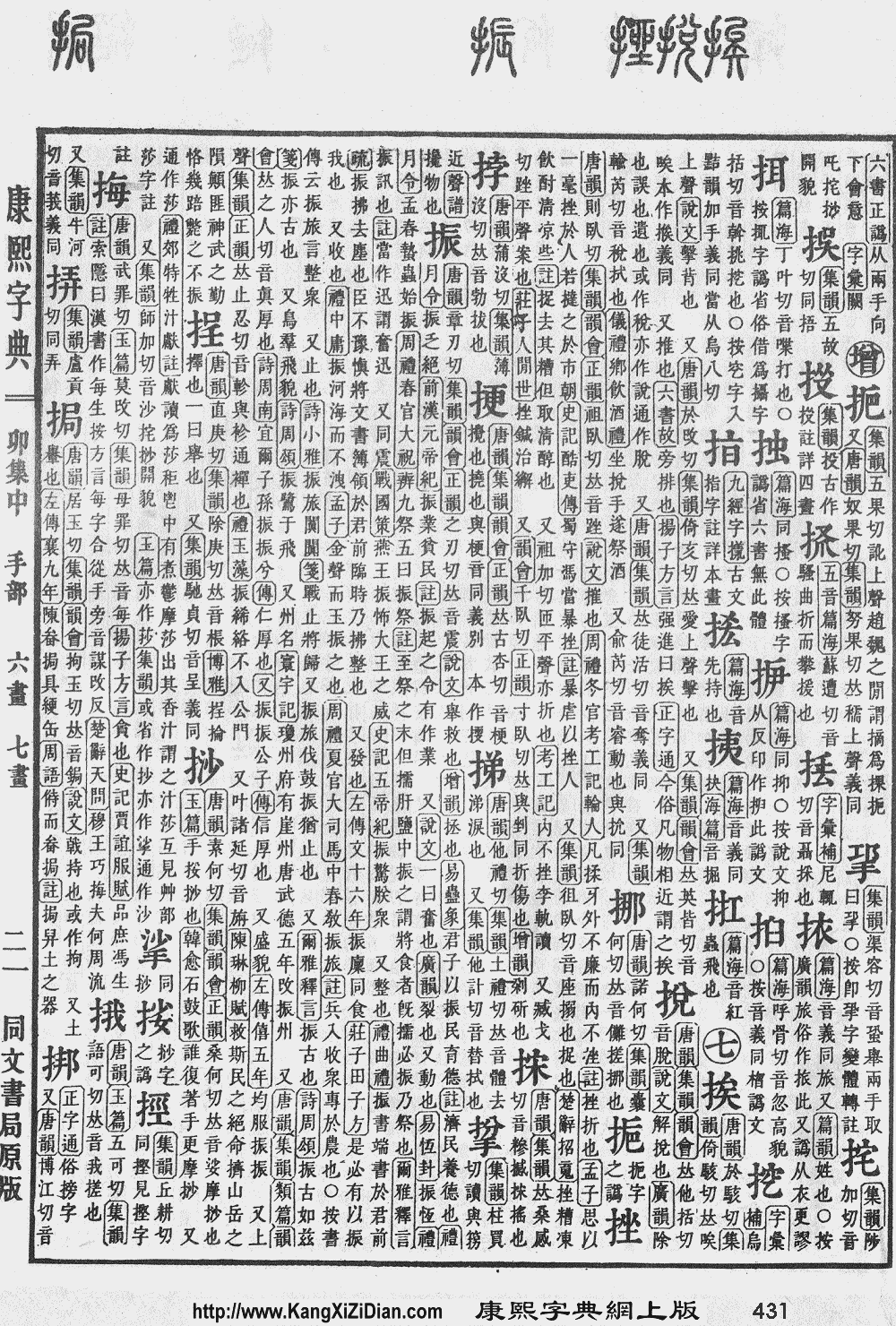
  • Kangxi Dictionary: page 431, character 22
  • Dai Kanwa Jiten: character 12087
  • Dae Jaweon: page 780, character 29
  • Hanyu Da Zidian (first edition): volume 3, page 1885, character 3
  • Unihan data for U+632B

Chinese

simp. and trad.
挫

Glyph origin

Phono-semantic compound (形聲/形声, OC *ʔsoːls) : semantic 扌 + phonetic 坐 (OC *zoːlʔ, *zoːls).

Pronunciation


Rime
Character 挫
Reading # 1/1
Initial (聲) 精 (13)
Final (韻) 戈 (95)
Tone (調) Departing (H)
Openness (開合) Closed
Division (等) I
Fanqie 則卧切
Baxter tswaH
Reconstructions
Zhengzhang
Shangfang
/t͡suɑH/
Pan
Wuyun
/t͡suɑH/
Shao
Rongfen
/t͡suɑH/
Edwin
Pulleyblank
/t͡swaH/
Li
Rong
/t͡suɑH/
Wang
Li
/t͡suɑH/
Bernard
Karlgren
/t͡suɑH/
Expected
Mandarin
Reflex
zuò
Expected
Cantonese
Reflex
zo3
Zhengzhang system (2003)
Character 挫
Reading # 1/1
No. 18051
Phonetic
component
坐
Rime
group
歌
Rime
subdivision
3
Corresponding
MC rime
Old
Chinese
/*ʔsoːls/

Definitions

挫

  1. to break (something); to crush; to smash; to push down
  2. to bend; to flex
  3. to dampen; to strike; to attack; to defeat; to frustrate; to deflate; to obstruct; to oppress
  4. setback; frustration; obstruction

Compounds

Japanese

Kanji

挫

(common “Jōyō” kanji)

  1. crush, break, sprain, discourage

Readings

Korean

Hanja

挫 (eumhun 꺾을 좌 (kkeokkeul jwa))

  1. Hanja form? of 좌 (“to bend; to flex”).

Compounds

Vietnamese

Han character

挫: Hán Nôm readings: dọa/doạ, dóa/doá, tỏa/toả, thọa/thoạ, thúa, thòa/thoà, thụa, sọa/soạ, sùa

  1. This term needs a translation to English. Please help out and add a translation, then remove the text {{rfdef}}.
This article is issued from Wiktionary. The text is licensed under Creative Commons - Attribution - Sharealike. Additional terms may apply for the media files.