朙
See also: 明
| ||||||||
Translingual
Han character
朙 (Kangxi radical 74, 月+7, 11 strokes, cangjie input 田月月 (WBB), composition ⿰囧月)
Derived characters
- 𥂗, 𦹩, 𪆌
References
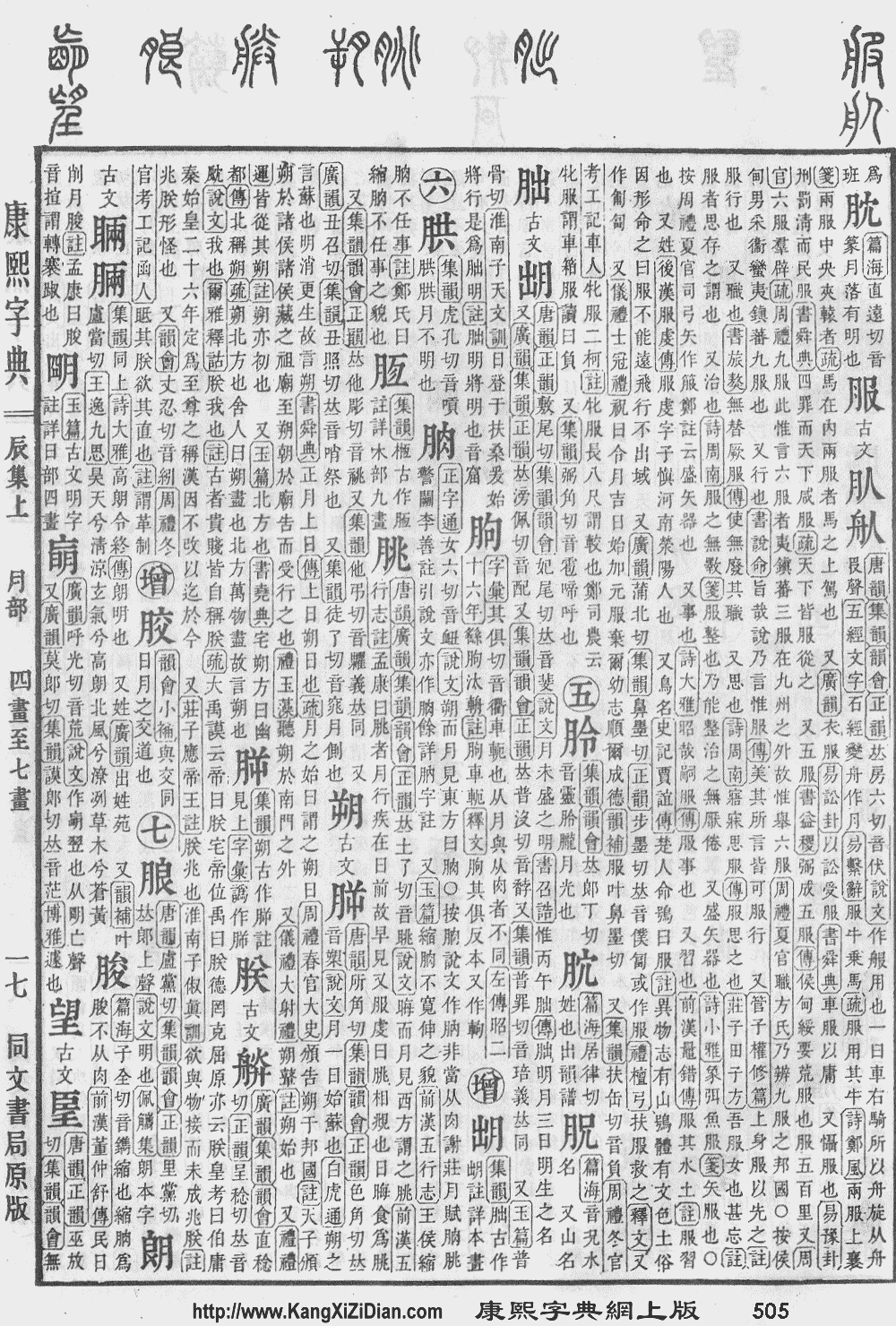
- Kangxi Dictionary: page 505, character 27
- Dai Kanwa Jiten: character 14366
- Dae Jaweon: page 884, character 21
- Hanyu Da Zidian (first edition): volume 3, page 2078, character 8
- Unihan data for U+6719
Chinese
Glyph origin
| Historical forms of the character 朙 | |||
|---|---|---|---|
| Shang | Western Zhou | Shuowen Jiezi (compiled in Han) | Liushutong (compiled in Ming) |
| Oracle bone script | Bronze inscriptions | Small seal script | Transcribed ancient scripts |
 |
 |
 |
 |
Ideogrammic compound (會意/会意) and phono-semantic compound (形聲/形声) : phonetic 囧 (OC *kʷaŋʔ, “window”) + semantic 月 (“moon”) – the moon shining through a window – moonlight; bright. See 明 (OC *mraŋ) for other forms.
Japanese
Kanji
朙
- This term needs a translation to English. Please help out and add a translation, then remove the text
{{rfdef}}.
Korean
Hanja
朙 • (myeong) (hangeul 명, revised myeong, McCune–Reischauer myŏng)
- This term needs a translation to English. Please help out and add a translation, then remove the text
{{rfdef}}.
This article is issued from Wiktionary. The text is licensed under Creative Commons - Attribution - Sharealike. Additional terms may apply for the media files.