柞
| ||||||||
Translingual
Han character
柞 (Kangxi radical 75, 木+5, 9 strokes, cangjie input 木人尸 (DOS), four-corner 48911, composition ⿰木乍)
References
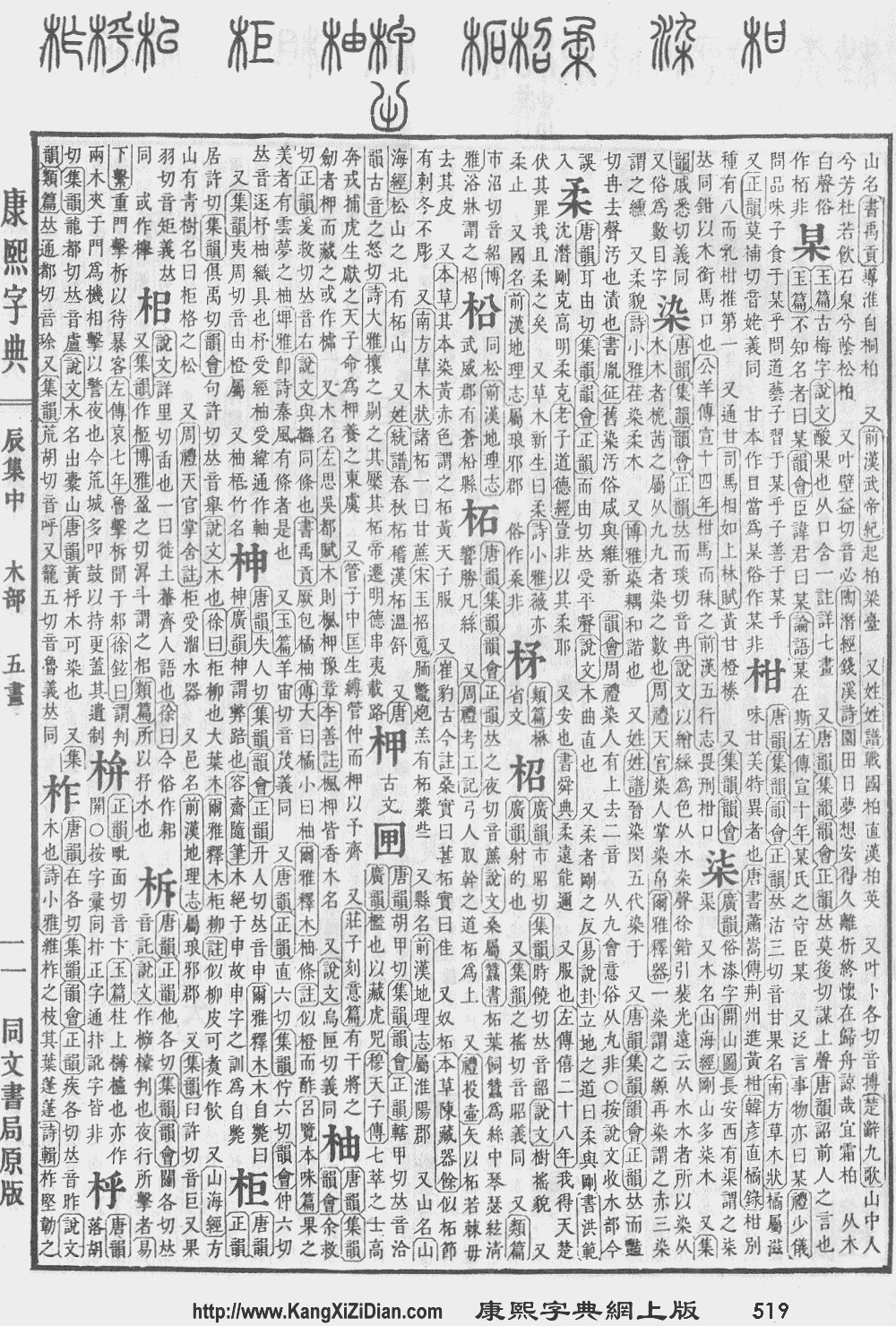
- Kangxi Dictionary: page 519, character 19
- Dai Kanwa Jiten: character 14636
- Dae Jaweon: page 907, character 16
- Hanyu Da Zidian (first edition): volume 2, page 1184, character 8
- Unihan data for U+67DE
Chinese
| simp. and trad. |
柞 | |
|---|---|---|
Glyph origin
| Historical forms of the character 柞 | ||
|---|---|---|
| Western Zhou | Shuowen Jiezi (compiled in Han) | Liushutong (compiled in Ming) |
| Bronze inscriptions | Small seal script | Transcribed ancient scripts |
 |
 |
 |
Characters in the same phonetic series (乍) (Zhengzhang, 2003)
| Old Chinese | |
|---|---|
| 作 | *ʔsaːɡs, *ʔsaːɡs, *ʔsaːɡ |
| 鲊 | *ʔsraːʔ |
| 痄 | *ʔsraːʔ |
| 厏 | *ʔsraːʔ, *zraːʔ |
| 詐 | *ʔsraːɡs |
| 咋 | *ʔsraːɡs, *zraːɡ, *ʔsreːɡ |
| 笮 | *ʔsraːɡs, *zaːɡ, *ʔsraːɡ |
| 榨 | *ʔsraːɡs |
| 炸 | *ʔr'aːɡs, *zreːb |
| 乍 | *zraːɡs |
| 拃 | *ʔsraːnʔ |
| 酢 | *sʰaːɡs, *zaːɡ |
| 祚 | *zaːɡs |
| 胙 | *zaːɡs |
| 阼 | *zaːɡs |
| 飵 | *zaːɡs, *zaːɡ |
| 秨 | *zaːɡs, *zaːɡ |
| 迮 | *ʔsaːɡ, *ʔsraːɡ |
| 柞 | *ʔsaːɡ, *zaːɡ |
| 昨 | *zaːɡ |
| 怍 | *zaːɡ |
| 砟 | *zaːɡ |
| 莋 | *zaːɡ |
| 岝 | *zaːɡ, *zraːɡ |
| 鈼 | *zaːɡ |
| 筰 | *zaːɡ |
| 葃 | *zaːɡ, *zreːɡ, *zaɡ |
| 舴 | *ʔr'aːɡ, *ʔsraːɡ |
| 窄 | *ʔsraːɡ |
| 蚱 | *ʔsraːɡ |
| 齚 | *zraːɡ |
| 泎 | *zraːɡ |
Pronunciation 1
Pronunciation 2
Pronunciation 3
Definitions
柞
- Only used in 柞鄂.
Pronunciation 4
Pronunciation 5
Compounds
- 柞水 (Zhàshuǐ)
References
- “柞”, in 漢語多功能字庫 (Multi-function Chinese Character Database), 香港中文大學 (the Chinese University of Hong Kong), 2014–
Japanese
Kanji
柞
- This term needs a translation to English. Please help out and add a translation, then remove the text
{{rfdef}}.
Korean
Vietnamese
Han character
柞: Hán Nôm readings: tạc, trách
- This term needs a translation to English. Please help out and add a translation, then remove the text
{{rfdef}}.
References
This article is issued from Wiktionary. The text is licensed under Creative Commons - Attribution - Sharealike. Additional terms may apply for the media files.