在
 | ||||||||
Translingual
| Stroke order | |||
|---|---|---|---|
 | |||
| Stroke order | |||
|---|---|---|---|
 | |||
Han character
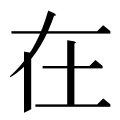
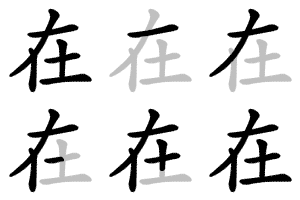
在 (Kangxi radical 32, 土+3, 6 strokes, cangjie input 大中土 (KLG), four-corner 40214, composition ⿸𠂇⿰丨土)
References
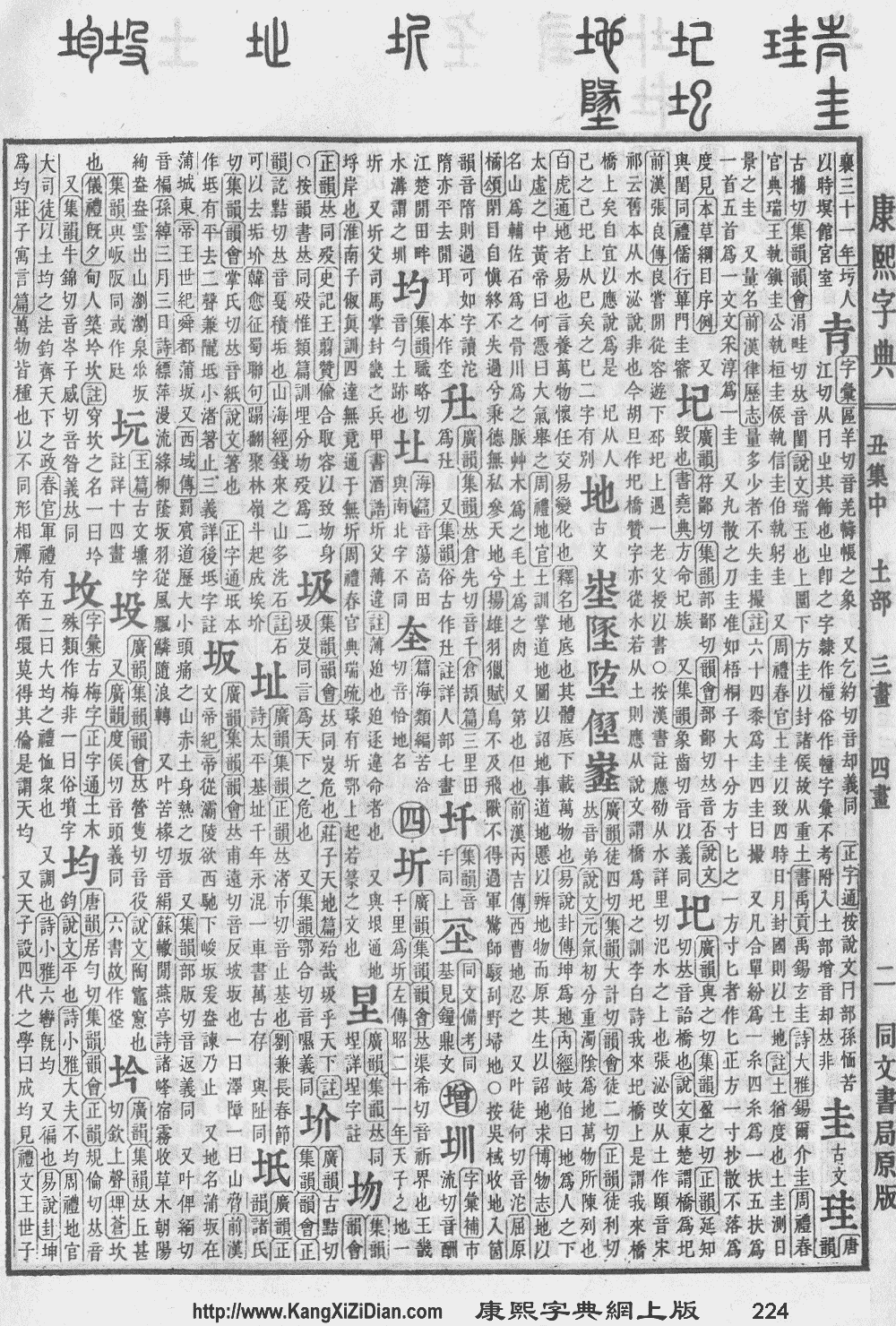
- Kangxi Dictionary: not present, would follow page 224, character 18
- Dai Kanwa Jiten: character 4881
- Dae Jaweon: page 455, character 14
- Hanyu Da Zidian (first edition): volume 1, page 418, character 7
- Unihan data for U+5728

Chinese
Glyph origin
| Historical forms of the character 在 | ||||||
|---|---|---|---|---|---|---|
| Shang | Western Zhou | Spring and Autumn | Warring States | Shuowen Jiezi (compiled in Han) | Liushutong (compiled in Ming) | Libian (compiled in Qing) |
| Oracle bone script | Bronze inscriptions | Bronze inscriptions | Qin slip script | Small seal script | Transcribed ancient scripts | Clerical script |
 |
 |
 |
 |
 |
 |
 |
Phonetic compound (OC *zlɯːʔ, *zlɯːs): phonetic 才 (OC *zlɯː, *zlɯːs) + phonetic 士 (OC *zrɯʔ).
Now phono-semantic compound (形聲/形声, OC *zlɯːʔ, *zlɯːs) : phonetic 才 (OC *zlɯː, *zlɯːs) + semantic 土 (“earth”).
在 was often visually identical to 才 (OC *zlɯː, *zlɯːs, “sprout”) in the oracle bone script and some of the bronze inscriptions. It may be either a phonetic loan or a figurative derivative.
Etymology 1
| simp. and trad. |
在 | |
|---|---|---|
| alternative forms | ||
Probably related to 栽 (OC *ʔslɯː, “to plant”) (Schuessler, 2007).
This etymology is incomplete. You can help Wiktionary by elaborating on the origins of this term.
Pronunciation
Definitions
在
- to exist; to be alive
- to be at; to be in; to be located
- be ...-ing; in the middle of doing something (indicating an action in progress)
- (located) in; at
- during; in
- to lie in; to rest with
- to be at the post
- Misspelling of 再 (zài).
- a surname
- (Hokkien) steady
- (Singapore Hokkien) solid, confident, and collected under pressure; skilled
- 伊真在咧 [Hokkien] ― i chin chāi leh [Pe̍h-ōe-jī] ― He's so talented!
Synonyms
- (to exist):
- (in):
- (during):
| Variety | Location | Words |
|---|---|---|
| Formal (Written Standard Chinese) | 正在, 刻正 | |
| Mandarin | Beijing | 正在, 在 |
| Taiwan | 正在, 在 | |
| Guilin | 在 | |
| Malaysia | 正在, 在 | |
| Singapore | 正在, 在 | |
| Cantonese | Guangzhou | 喺度, 喺處, 響度, 響處 |
| Hong Kong | 喺度, 喺處, 響度, 響處 | |
| Singapore (Guangfu) | 喺度 | |
| Hakka | Miaoli (N. Sixian) | 當, 在該, 當在 |
| Pingtung (Neipu; S. Sixian) | 當, 在該 | |
| Hsinchu County (Zhudong; Hailu) | 當, 在該 | |
| Taichung (Dongshi; Dabu) | 當, 在該 | |
| Hsinchu County (Qionglin; Raoping) | 當, 在該 | |
| Yunlin (Lunbei; Zhao'an) | 正在, 在遐 | |
| Eastern Min | Fuzhou | 著𡅏, 𡅏 |
| Fuqing | 著𡅏 | |
| Singapore (Fuqing) | 著𡅏 | |
| Southern Min | Xiamen | 佇咧, 咧, 當咧, 拄咧, 拄佇咧 |
| Quanzhou | 佇咧, 咧, 當咧, 拄咧, 拄佇咧 | |
| Zhangzhou | 咧, 當咧, 拄咧, 當時 | |
| Tainan | 佇咧, 咧, 當咧 | |
| Penang (Hokkien) | 佇 | |
| Singapore (Hokkien) | 佇, 佇咧 | |
| Manila (Hokkien) | 佇咧, 咧 | |
| Shantou | 在 | |
| Shantou (Chaoyang) | 在 | |
| Singapore (Teochew) | 在 | |
| Wu | Shanghai | 垃, 垃垃, 垃拉, 垃海, 垃該 |
| Ningbo | 來, 來的, 來該, 來當, 來東, 來勒 | |
| Wenzhou | 是, 是搭 | |
- (steady):
Compounds
- 一技在身
- 不在 (bùzài)
- 不在乎 (bù zàihu)
- 不在了
- 不在人間/不在人间
- 不在地主
- 不在少數/不在少数 (bùzàishǎoshù)
- 不在心上
- 不在意 (bùzàiyì)
- 不在意下
- 不在行
- 不在話下/不在话下 (bùzàihuàxià)
- 不自在
- 丟在腦後/丢在脑后
- 事在人為/事在人为 (shìzàirénwéi)
- 事在必行
- 人亡物在
- 人生在世
- 何在 (hézài)
- 健在 (jiànzài)
- 優游自在/优游自在
- 內在/内在 (nèizài)
- 內在美/内在美 (nèizàiměi)
- 內在論/内在论
- 出門在外/出门在外
- 功在漏刻
- 功在社稷
- 勝券在握/胜券在握
- 勢在必行/势在必行 (shìzàibìxíng)
- 危在旦夕 (wēizàidànxī)
- 只在 (zhǐzài)
- 叨在知己
- 同在 (tóngzài)
- 吃自在飯/吃自在饭
- 命在旦夕
- 在下 (zàixià)
- 在世 (zàishì)
- 在乎 (zàihū)
- 在任 (zàirèn)
- 在位 (zàiwèi)
- 在來米/在来米 (zàiláimǐ)
- 在先 (zàixiān)
- 在內/在内 (zàinèi)
- 在冊/在册
- 在劫難逃/在劫难逃 (zàijiénántáo)
- 在即 (zàijí)
- 在商言商
- 在在 (zàizài)
- 在城
- 在堂
- 在場/在场 (zàichǎng)
- 在外 (zàiwài)
- 在天之靈/在天之灵 (zàitiānzhīlíng)
- 在學/在学 (zàixué)
- 在官
- 在官言官
- 在室
- 在室女
- 在家 (zàijiā)
- 在家人
- 在家修
- 在家出家
- 在席
- 在幫/在帮
- 在座 (zàizuò)
- 在心 (zàixīn)
- 在意 (zàiyì)
- 在所不免
- 在所不惜 (zàisuǒbùxī)
- 在所不計/在所不计
- 在所不辭/在所不辞
- 在所難免/在所难免 (zàisuǒnánmiǎn)
- 在押 (zàiyā)
- 在握 (zàiwò)
- 在教
- 在數/在数
- 在於/在于 (zàiyú)
- 在日
- 在昔
- 在望 (zàiwàng)
- 在朝 (zàicháo)
- 在案 (zài'àn)
- 在業/在业
- 在此一舉/在此一举
- 在此存照
- 在理 (zàilǐ)
- 在當/在当
- 在疚
- 在編/在编 (zàibiān)
- 在線/在线 (zàixiàn)
- 在職/在职 (zàizhí)
- 在職教育/在职教育
- 在職進修/在职进修
- 在臺協會/在台协会
- 在苫
- 在莒
- 在行 (zàiháng)
- 在譜/在谱
- 在逃 (zàitáo)
- 在野 (zàiyě)
- 在野黨/在野党 (zàiyědǎng)
- 在陳/在陈
- 在陳之厄/在陈之厄
- 外在 (wàizài)
- 外在美 (wàizàiměi)
- 夙夜在公 (sùyèzàigōng)
- 大不自在
- 大有人在 (dàyǒurénzài)
- 大權在握/大权在握 (dàquánzàiwò)
- 太阿在握
- 女宗宛在
- 好不自在
- 好在 (hǎozài)
- 如在股掌
- 如箭在弦
- 好自在
- 如芒在背
- 如鯁在喉/如鲠在喉
- 如鷹在籠/如鹰在笼
- 存在 (cúnzài)
- 存在主義/存在主义 (cúnzài zhǔyì)
- 安在 (ānzài)
- 安靜自在/安静自在
- 定在
- 富貴在天/富贵在天
- 實在/实在
- 實在論/实在论
- 實實在在/实实在在 (shíshízàizài)
- 左券在握
- 常在 (chángzài)
- 得失在人
- 從容自在/从容自在
- 心不在焉 (xīnbùzàiyān)
- 心在魏闕/心在魏阙
- 志在千里
- 志在四方
- 志在必得 (zhìzàibìdé)
- 忝在愛末/忝在爱末
- 念茲在茲/念兹在兹 (niànzīzàizī)
- 恫瘝在抱
- 恫瘝在身
- 悠閒自在/悠闲自在
- 情在言外
- 意在筆先/意在笔先
- 意在筆前/意在笔前
- 意在言外
- 成事在人
- 成事在天
- 成竹在胸
- 所在 (suǒzài)
- 所在地 (suǒzàidì)
- 所在多有
- 拋在腦後/抛在脑后
- 振鷺在庭/振鹭在庭
- 提心在口
- 操之在我
- 擱在心上/搁在心上
- 擺在心上/摆在心上
- 擺在眼前/摆在眼前
- 放在心上
- 放在眼裡/放在眼里 (fàng zài yǎnlǐ)
- 新實在論/新实在论
- 晦在
- 有約在先/有约在先
- 有言在先 (yǒuyán zàixiān)
- 樂在其中/乐在其中 (lèzàiqízhōng)
- 樹頭徛予在,毋驚樹尾做風颱/树头徛予在,毋惊树尾做风台 (chhiū-thâu khiā hō͘ chāi, m̄ kiaⁿ chhiū-bóe chò-hong-thai) (Min Nan)
- 正在 (zhèngzài)
- 歲在龍蛇/岁在龙蛇
- 歷歷在目/历历在目 (lìlìzàimù)
- 毋忘在莒 (wúwàngzàijǔ)
- 毫不在乎
- 毫不在意
- 混在
- 滿不在乎/满不在乎
- 潛在/潜在 (qiánzài)
- 潛在危機/潜在危机
- 無所不在/无所不在 (wúsuǒbùzài)
- 無處不在/无处不在 (wúchùbùzài)
- 猶在/犹在 (yóuzài)
- 珊瑚在網/珊瑚在网
- 珠玉在側/珠玉在侧
- 珠玉在傍
- 現在/现在
- 留得青山在,不怕沒柴燒/留得青山在,不怕没柴烧 (liú dé qīngshān zài, bùpà méi chái shāo)
- 病在膏肓
- 痌瘝在抱 (tōngguānzàibào)
- 盈盈在目
- 盡其在我/尽其在我
- 目不在體/目不在体
- 矢在弦上
- 祭亡如在
- 禍在旦夕/祸在旦夕
- 禍在目前/祸在目前 (huò zài mùqián)
- 箭在弦上
- 簡在帝心/简在帝心
- 老在行
- 老神在在 (lǎoshénzàizài)
- 耿耿在心
- 聲容宛在/声容宛在
- 脊令在原
- 臥病在床/卧病在床 (wòbìngzàichuáng)
- 自在
- 自在畫/自在画
- 自在窗
- 自在逍遙/自在逍遥
- 自在飯/自在饭
- 自由自在 (zìyóuzìzài)
- 自繇自在 (zìyóuzìzài)
- 芒刺在背 (mángcìzàibèi)
- 英風宛在/英风宛在
- 蒙在鼓裡/蒙在鼓里 (méngzàigǔlǐ)
- 蜉蝣在世 (fúyóu zàishì)
- 行在 (Xíngzài)
- 見在/见在 (xiànzài)
- 見在佛/见在佛
- 觀自在/观自在
- 言猶在耳/言犹在耳 (yányóuzài'ěr)
- 謀事在人/谋事在人
- 車在馬前/车在马前
- 輕鬆自在/轻松自在
- 近在咫尺 (jìnzàizhǐchǐ)
- 近在眉睫
- 近在眼前
- 迫在眉睫 (pòzàiméijié)
- 逍遙自在/逍遥自在
- 道在屎溺 (dàozàishǐniào)
- 銘記在心/铭记在心
- 音容如在
- 音容宛在
- 飛龍在天/飞龙在天
- 駐在國/驻在国
- 驪駒在門/骊驹在门
- 骨鯁在喉/骨鲠在喉 (gǔgěngzàihóu)
- 高下在心 (gāoxià zài xīn)
- 高高在上 (gāogāozàishàng)
- 鳳凰在笯/凤凰在笯 (fènghuáng zài nú)
- 鶺鴒在原/鹡鸰在原
Pronunciation
References
- “在”, in 漢語多功能字庫 (Multi-function Chinese Character Database), 香港中文大學 (the Chinese University of Hong Kong), 2014–
- Dictionary of Chinese Character Variants (教育部異體字字典), A00743
Japanese
Readings
Compounds
Etymology 1
| Kanji in this term |
|---|
| 在 |
| ざい Grade: 5 |
| goon |
From Middle Chinese 在 (MC dzojX|dzojH). Attested in compounds since at least the 900s.[1]
Pronunciation
Etymology 2
| Kanji in this term |
|---|
| 在 |
| あ(り) Grade: 5 |
| kun’yomi |
| Alternative spelling |
|---|
| 有 (common) |
Alternative spelling for 有り (ari), the Classical and Old Japanese copula.
Definitions
| For pronunciation and definitions of 在 – see the following entry. | ||
| ||
| (This term, 在, is an alternative spelling of the above term.) |
References
- “在”, in 日本国語大辞典 (Nihon Kokugo Daijiten, “Nihon Kokugo Daijiten”) (in Japanese), concise edition, Tōkyō: Shogakukan, 2000
- Matsumura, Akira, editor (2006), 大辞林 [Daijirin] (in Japanese), Third edition, Tōkyō: Sanseidō, →ISBN
Korean
Old Korean
Verb
在 (*KYE-)
- to exist, to be at
- Synonym: 有叱 (*Is-)
- A common auxiliary verb or (more probably) verbal suffix, usually thought to denote the completive aspect, i.e. describing an action which has been completed and remains in such a state. An alternative but minority hypothesis holds that it honored the subject of the verb to a moderate degree, whereas 賜 (*-si) was more highly honorific.
Usage notes
- In both senses, it appears to have been wholly supplanted by the Middle Korean stage by 有叱 (*Is-) > Middle Korean 잇다〮 (ìstá), which is already more common for the independent verbal sense in the early first millennium and is first attested as an auxiliary in 1262. The word is not found in Middle Korean outside the two derived terms given below.
Reconstruction notes
- Conventionally read as *KYE- because Middle Korean Idu script manuals, which commonly preserve Old Korean readings, read this character as 견 (kyen), which is clearly an inflected form with the realis gerund ㄴ (-n).
- Although Old Korean writing does not mark pitch, the Middle Korean reflexes show rising pitch, which are the result of a merger of a low-pitch and high-pitch syllable. This means that the Old Korean verb stem was not in fact monosyllabic *kye- but really consisted of two syllables. However, this original pronunciation cannot be reconstructed.
Descendants
References
- 이승재 [iseungjae] (2001) “古代 吏讀의 尊敬法 '在[겨]'에 대하여 [On the deferential marker -kye- in Old Korean idu]”, in Eomun yeon-gu, volume 29, number 4, pages 53—70
- 남풍현 [nampunghyeon] (2004) “시상의 조동사 '在/𠂇/겨'의 발달' [sisang'ui jodongsa 在/𠂇/gyeo- ui baldal, The development of the aspectual auxiliary kye-]”, in Gugeo gukmunhak, volume 138, pages 5—34