殿上眉
Japanese
FWOTD – 23 April 2019
| Kanji in this term | ||
|---|---|---|
| 殿 | 上 | 眉 |
| てん Grade: S |
じょう Grade: 1 |
まゆ Grade: S |
| on’yomi | kun’yomi | |
| Alternative spellings |
|---|
| 天上眉 天井眉 |
Noun
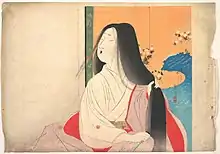
Illustration of "Kesa Gozen" by Tomioka Eisen, 1898. Her 殿上眉 (tenjō mayu) appear on her forehead high above her eyes.
殿上眉 • (tenjō mayu) ←てんじやうまゆ (tenzyau mayu)?
- (historical) false eyebrows drawn high on the forehead with ink or cosmetics
- Synonyms: 置眉 (okimayu), 引眉 (hikimayu)
- 2005, Rintarō Mayuzumi, Taiga dorama “Yoshitsune” ga dekiru made [Making of historical drama “Yoshitsune”], page 150:
- 美輪氏は総白髮のかつらに眉を剃り、殿上眉のメイク。
- Miwa-shi wa sō shirokami no katsura ni mayu o sori, tenjō mayu no meiku.
- Mr Miwa donned a wig of entirely white hair and shaved his eyebrows for tenjō mayu makeup.
- 美輪氏は総白髮のかつらに眉を剃り、殿上眉のメイク。
References
- Matsumura, Akira, editor (2006), 大辞林 [Daijirin] (in Japanese), Third edition, Tōkyō: Sanseidō, →ISBN
- Matsumura, Akira (1995) 大辞泉 [Daijisen] (in Japanese), First edition, Tōkyō: Shogakukan, →ISBN
- 2001, 日本国語大辞典 (Nihon Kokugo Daijiten), Second edition (in Japanese). Tōkyō: Shogakukan.
This article is issued from Wiktionary. The text is licensed under Creative Commons - Attribution - Sharealike. Additional terms may apply for the media files.