炎
| ||||||||
Translingual
Han character
| Stroke order | |||
|---|---|---|---|
 | |||
炎 (Kangxi radical 86, 火+4, 8 strokes, cangjie input 火火 (FF), four-corner 90809, composition ⿱火火)
Derived characters
- 烾, 㥕, 㷠, 𰟎, 𪹝, 𬫨, 𤎭, 𤎫, 𤎫, 𤐥, 𤑋
- 𠊌, 𡨼, 𤉞, 𤈹, 𢉘, 菼, 扊, 氮, 𭻞, 痰, 䆦, 𦋎, 𪐗, 𠪛, 𤐺, 𤑖, 𤒞, 𤓕
- 倓, 啖, 埮, 婒, 𢃔, 惔, 掞, 淡, 𤟇, 𮥐, 晱, 棪, 𣨬, 毯, 㷋, 𪺯, 琰, 腅, 𤯇, 𤲩, 𤾃, 睒, 𥟢, 裧, 䊏, 緂(𰬧), 䎦, 𦖠, 舕, 𦩗, 䗊
- 𧣹, 談(谈), 賧(赕), 𨁹, 𨌹, 醈, 𨤮, 錟(锬), 燄, 燅, 燚, 颷(𩙪), 餤(𱃿), 𮪋, 𩩧, 𭶟, 𮫣, 𩸥, 𪉧, 𮭽, 𪏋, 𪑓
- 剡, 郯, 𢻑, 敥, 𢽻, 欻, 㲜, 𤊼, 煔, 𭵞, 㷥, 𦧡, 𤌜, 𦫟, 覢(𬊦), 𤏭, 𤐞, 顃(𩖖), 𩗹, 𤐕, 𪂈(𬸖), 𤒳, 𤓧
References
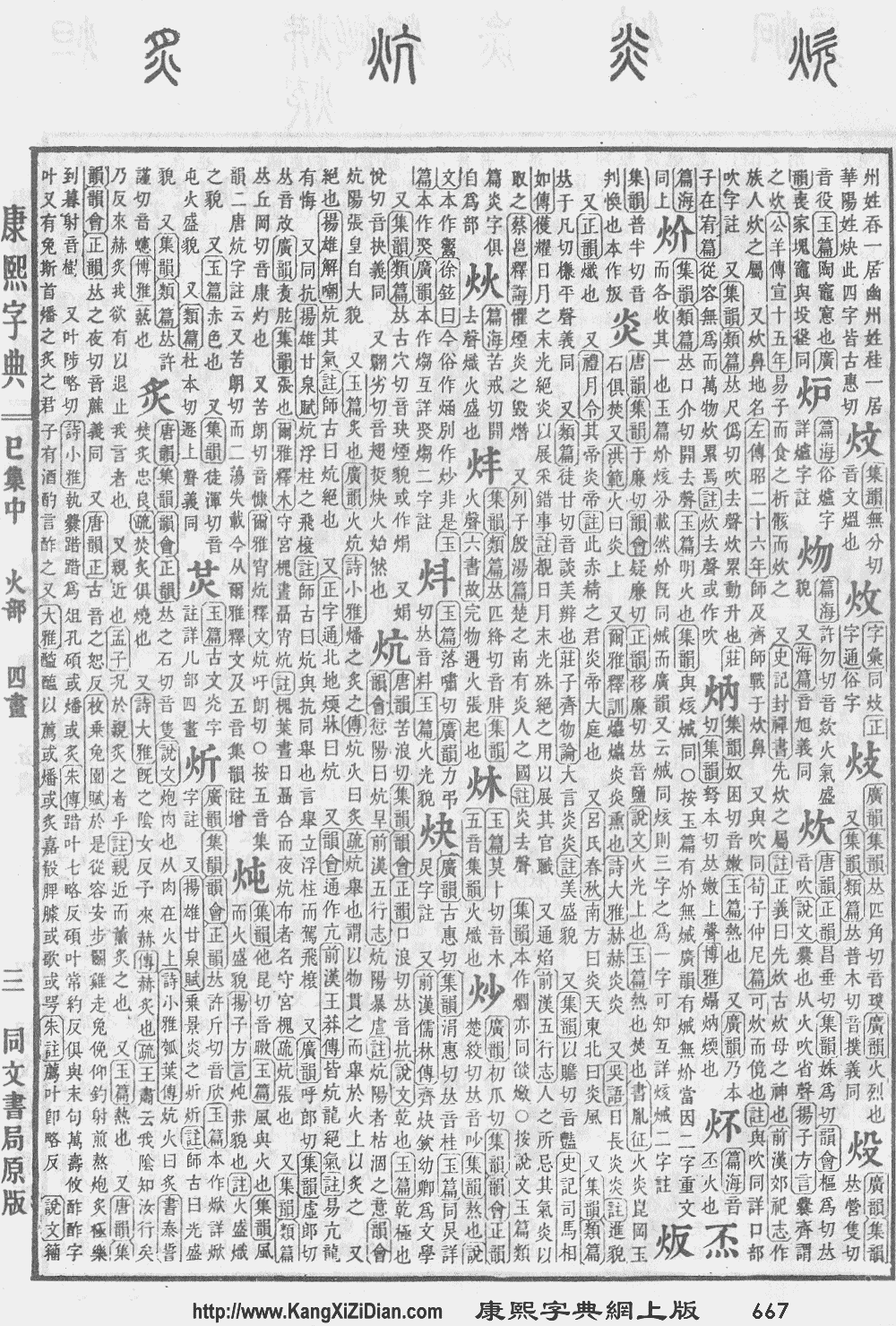
- Kangxi Dictionary: page 667, character 13
- Dai Kanwa Jiten: character 18910
- Dae Jaweon: page 1076, character 21
- Hanyu Da Zidian (first edition): volume 3, page 2193, character 6
- Unihan data for U+708E
Chinese
| trad. | 炎 | |
|---|---|---|
| simp. # | 炎 | |
| alternative forms | 炏 | |
Glyph origin
| Old Chinese | |
|---|---|
| 倓 | *l'oːmʔ, *l'aːm, *l'aːms |
| 緂 | *l̥ʰaːm, *l̥ʰaːmʔ, *l̥ʰjam |
| 毯 | *l̥ʰaːmʔ |
| 菼 | *l̥ʰaːmʔ |
| 裧 | *l̥ʰaːmʔ, *l̥ʰjam, *l̥ʰjams |
| 賧 | *l̥ʰaːms |
| 睒 | *l̥ʰaːms, *hljamʔ |
| 舕 | *l̥ʰaːms |
| 談 | *l'aːm |
| 郯 | *l'aːm |
| 惔 | *l'aːm, *l'aːmʔ, *l'aːms |
| 錟 | *l'aːm |
| 淡 | *l'aːm, *l'aːmʔ, *l'aːms, *lamʔ |
| 痰 | *l'aːm |
| 餤 | *l'aːm |
| 啖 | *l'aːmʔ, *l'aːms |
| 腅 | *l'aːms |
| 剡 | *ɦljamʔ, *lamʔ |
| 覢 | *hljamʔ |
| 掞 | *hljams |
| 炎 | *ɦlam |
| 琰 | *lamʔ |
| 棪 | *lamʔ |
| 扊 | *lamʔ |
Ideogrammic compound (會意/会意) : 火 (“fire”) + 火 (“fire”). Duplication of 火 (“fire”).
Etymology
From Proto-Sino-Tibetan *s-ljam (“tongue; lick; flame”) (STEDT). Cognate with Chepang लेम्ह्सा (lemh‑, “to lick”), Burmese အလျှံ (a.hlyam, “flame; iridescence”). Within Chinese, cognate with 焰 (OC *loms, “to flame up”), 舔 (OC *l̥ʰiːmʔ, “to lick”). Compare also Khmer លាម (liəm, “to flare up”) (Schuessler, 2007).
Pronunciation
Definitions
炎
Compounds
- 世態炎涼/世态炎凉 (shìtàiyánliáng)
- 中耳炎 (zhōng'ěryán)
- 乳腺炎 (rǔxiànyán)
- 內耳炎/内耳炎 (nèi'ěryán)
- 副鼻腔炎 (fùbíqiāngyán)
- 卵巢炎 (luǎncháoyán)
- 口炎
- 口角炎 (kǒujiǎoyán)
- 咽喉炎 (yānhóuyán)
- 咽頭炎/咽头炎
- 喉炎 (hóuyán)
- 大腸炎/大肠炎
- 子宮頸炎/子宫颈炎 (zǐgōngjǐngyán)
- 孫炎/孙炎
- 尿道炎 (niàodàoyán)
- 心內膜炎/心内膜炎 (xīnnèimóyán)
- 扁桃腺炎 (biǎntáoxiàn yán)
- 支氣管炎/支气管炎 (zhīqìguǎnyán)
- 日本腦炎/日本脑炎 (Rìběn nǎoyán)
- 會厭炎/会厌炎 (huìyànyán)
- 毛囊炎 (máonángyán)
- 氣管炎/气管炎 (qìguǎnyán)
- 消炎 (xiāoyán)
- 消炎片
- 消炎藥/消炎药 (xiāoyányào)
- 淚囊炎/泪囊炎
- 炎上 (yánshàng)
- 炎丘
- 炎光
- 炎土
- 炎夏 (yánxià)
- 炎天
- 炎帝 (Yándì)
- 炎徼
- 炎方 (yánfāng)
- 炎日
- 炎旱
- 炎暑 (yánshǔ)
- 炎氣/炎气
- 炎涼/炎凉 (yánliáng)
- 炎涼世態/炎凉世态
- 炎漢/炎汉
- 炎火
- 炎炎 (yányán)
- 炎炎夏日 (yányánxiàrì)
- 炎焰
- 炎熱/炎热 (yánrè)
- 炎症 (yánzhèng, “inflammation”)
- 炎精
- 炎精之數/炎精之数
- 炎陽/炎阳
- 炎陽炙人/炎阳炙人
- 炎黃/炎黄 (Yán-Huáng)
- 炎黃子孫/炎黄子孙 (Yán-Huáng zǐsūn)
- 牙髓炎
- 發炎/发炎 (fāyán)
- 皮膚炎/皮肤炎 (pífūyán)
- 皮膚肌炎/皮肤肌炎 (pífūjīyán)
- 盲腸炎/盲肠炎 (mángchángyán)
- 瞼腺炎/睑腺炎
- 筋膜炎 (jīnmóyán)
- 結膜炎/结膜炎 (jiémóyán)
- 肋膜炎
- 肝火上炎
- 肝炎 (gānyán)
- 肺炎 (fèiyán)
- 股關節炎/股关节炎
- 胃炎 (wèiyán)
- 胰腺炎 (yíxiànyán)
- 胸膜炎 (xiōngmóyán)
- 腎炎/肾炎 (shènyán)
- 腎盂炎/肾盂炎
- 腦炎/脑炎 (nǎoyán)
- 腸炎/肠炎 (chángyán)
- 腮腺炎 (sāixiànyán)
- 腹膜炎 (fùmóyán)
- 腦膜炎/脑膜炎 (nǎomóyán)
- 膀胱炎 (pángguāngyán, “cystitis”)
- 舌炎 (shéyán)
- 角膜炎 (jiǎomóyán)
- 貴勢炎炎/贵势炎炎
- 赫赫炎炎
- 趨炎奉勢/趋炎奉势
- 趨炎附勢/趋炎附势 (qūyánfùshì)
- 趨炎附熱/趋炎附热
- 闌尾炎/阑尾炎 (lánwěiyán)
- 關節炎/关节炎 (guānjiéyán)
- 附炎
- 骨膜炎
- 骨髓炎 (gǔsuǐyán)
- 髓膜炎
- 鼓膜炎
- 鼻炎 (bíyán)
- 鼻竇炎/鼻窦炎 (bídòuyán)
References
- “炎”, in 漢語多功能字庫 (Multi-function Chinese Character Database), 香港中文大學 (the Chinese University of Hong Kong), 2014–
Japanese
Readings
Etymology 1
| Kanji in this term |
|---|
| 炎 |
| ほのお Grade: S |
| kun’yomi |
| Alternative spellings |
|---|
| 焔 焰 燄 (rare) |
⟨po no2 po⟩ → */ponəpo/ → /ɸonoɸo/ → /ɸonowo/ → /honowo/ → /honoː/
From Old Japanese 炎 (pono2po).
Compound of 火 (ho, combining form of hi, “fire”) + の (no, possessive particle) + 穂 (ho, “ear, head”).[1][2][3]
Pronunciation
Noun
- a flame
- ハリー・ポッターと炎のゴブレット
- Harī Pottā to Honō no Goburetto
- Harry Potter and the Goblet of Fire
- 燃え広がる炎
- Moehirogaru Honō
- Catching Fire
- 1079, Konkōmyō Saishōōkyō Ongi, page 5 (front):[6]
- 燄 保乃保
- 2001 December 22, “真紅眼の黒竜 [Red-Eyes Black Dragon]”, in Premium Pack 5, Konami:
- 真紅の眼を持つ黒竜。怒りの黒き炎はその眼に映る者全てを焼き尽くす。
- Shinku no me o motsu kokuryū. Ikari no kuroki honō wa sono me ni utsuru mono subete o yakitsukusu.
- A black dragon with crimson eyes. Its black flames of fury burn away anything that’s reflected in those eyes.
- 真紅の眼を持つ黒竜。怒りの黒き炎はその眼に映る者全てを焼き尽くす。
- ハリー・ポッターと炎のゴブレット
- (figuratively) an intense emotion, passion
Derived terms
- 炎細胞 (honō saibō)
- 炎スペクトル (honō supekutoru)
- 踊り炎 (odori honō)
- 瞋恚の炎 (shin'i no honō)
- 胸の炎 (mune no honō)
Etymology 2
| Kanji in this term |
|---|
| 炎 |
| ほむら Grade: S |
| kun’yomi |
| Alternative spellings |
|---|
| 焔 焰 燄 (rare) |
Compound of 火 (ho, “fire”, combining form) + 群 (mura, “gathering, group”).[2][3]
Pronunciation
Derived terms
- 瞋恚の炎 (shin'i no homura)
- 胸の炎 (mune no homura)
Pronunciation
- IPA(key): [ẽ̞ɴ]
Derived terms
- 炎症 (enshō)
- 胃炎 (ien)
- 肝炎 (kan'en)
- 強膜炎 (kyōmakuen, “scleritis”)
- 筋炎 (kin'en, “myositis”)
- 結膜炎 (ketsumakuen)
- 虹彩炎 (kōsaien)
- 口内炎 (kōnaien)
- 細気管支炎 (saikikanshien, “bronchiolitis”)
- 腎盂炎 (jin'uen, “pyelitis”)
- 神経炎 (shinkeien, “neuritis”)
- 膵臓炎 (suizōen, “pancreatitis”)
- 脊髄炎 (sekizuien, “myelitis”)
- 舌炎 (zetsuen)
- 大腸炎 (daichōen)
- 胆嚢炎 (tannōen)
- 膣炎 (chitsuen, “vaginitis”)
- 虫垂炎 (chūsuien)
- 尿道炎 (nyōdōen)
- 肺炎 (haien)
- 葡萄膜炎 (budōmakuen)
- 膀胱炎 (bōkōen)
- 盲腸炎 (mōchōen)
- 網膜炎 (mōmakuen, “retinitis”)
Derived terms
Pronunciation
- IPA(key): [ẽ̞ɴ]
Derived terms
References
- Shōgaku Tosho (1988) 国語大辞典(新装版) [Unabridged Dictionary of Japanese (Revised Edition)] (in Japanese), Tōkyō: Shogakukan, →ISBN
- Matsumura, Akira (1995) 大辞泉 [Daijisen] (in Japanese), First edition, Tōkyō: Shogakukan, →ISBN
- Matsumura, Akira, editor (2006), 大辞林 [Daijirin] (in Japanese), Third edition, Tōkyō: Sanseidō, →ISBN
- NHK Broadcasting Culture Research Institute, editor (1998), NHK日本語発音アクセント辞典 [NHK Japanese Pronunciation Accent Dictionary] (in Japanese), Tōkyō: NHK Publishing, →ISBN
- Kindaichi, Kyōsuke et al., editors (1997), 新明解国語辞典 [Shin Meikai Kokugo Jiten] (in Japanese), Fifth edition, Tōkyō: Sanseidō, →ISBN
- Tsukishima, Hiroshi (1079) Kojisho Ongi Shūsei 12: Konkōmyō Saishōōkyō Ongi (in Japanese), Tōkyō: Kyūko Shoin, published 1979, →ISBN.
Korean
Etymology
From Middle Chinese 炎 (MC hjem). Recorded as Middle Korean 염 (yem) (Yale: yem) in Hunmong Jahoe (訓蒙字會 / 훈몽자회), 1527.
Compounds
- 간염 (肝炎, ganyeom)
- 폐렴 (肺炎, pyeryeom)
- 비염 (鼻炎, biyeom)
- 염증 (炎症, yeomjeung)
- 폭염 (暴炎, pogyeom)
- 위염 (胃炎, wiyeom)
- 뇌염 (腦炎, noeyeom)
- 냉염 (冷炎, naeng'yeom)
- 장염 (腸炎, jang'yeom)
- 피부염 (皮膚炎, pibuyeom)
- 건초염 (腱鞘炎, geonchoyeom)
- 맹장염 (盲腸炎, maengjang'yeom)
- 관절염 (關節炎, gwanjeoryeom)
- 중이염 (中耳炎, jung'iyeom)
- 인후염 (咽喉炎, inhuyeom)
- 후두염 (喉頭炎, huduyeom)
- 인두염 (咽頭炎, induyeom)
- 외이염 (外耳炎, oeiyeom)
Old Japanese
Etymology
Compound of 火 (po, combining form of pi2, “fire”) + の (no2, possessive particle) + 穗 (po, “ear, head”).[1][2][3]
Descendants
- Japanese: 炎 (honō)
References
- Shōgaku Tosho (1988) 国語大辞典(新装版) [Unabridged Dictionary of Japanese (Revised Edition)] (in Japanese), Tōkyō: Shogakukan, →ISBN
- Matsumura, Akira (1995) 大辞泉 [Daijisen] (in Japanese), First edition, Tōkyō: Shogakukan, →ISBN
- Matsumura, Akira, editor (2006), 大辞林 [Daijirin] (in Japanese), Third edition, Tōkyō: Sanseidō, →ISBN