産
| ||||||||
Translingual
| Traditional | 產 |
|---|---|
| Simplified | 产 |
| Japanese | 産 |
| Korean | 産 |
Han character
産 (Kangxi radical 100, 生+6, 11 strokes, cangjie input 卜竹竹手一 (YHHQM), composition ⿸产生)
References
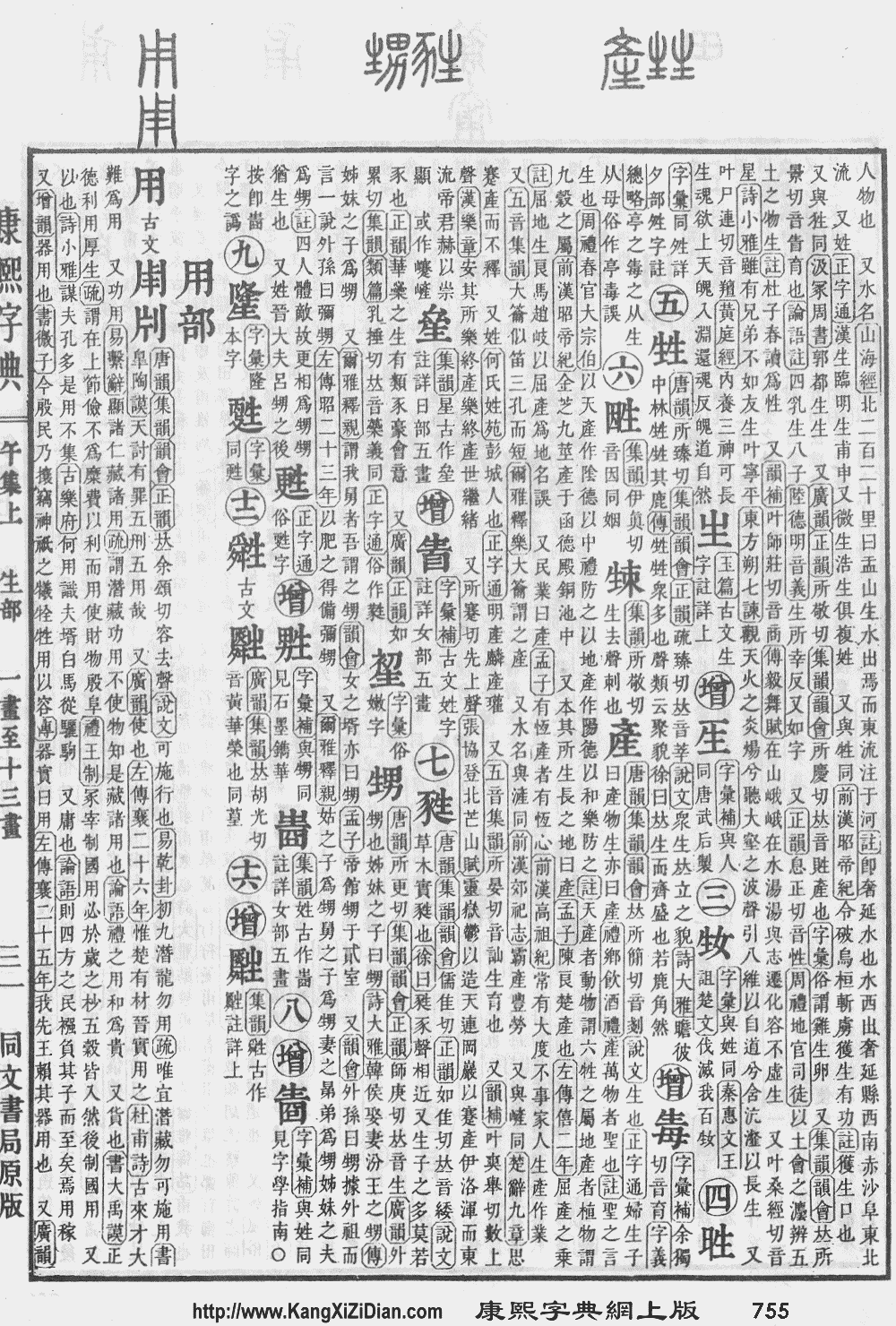
- Kangxi Dictionary: not present, would follow page 755, character 11
- Dai Kanwa Jiten: character 21684
- Hanyu Da Zidian (first edition): volume 4, page 2577, character 15
- Unihan data for U+7523
Chinese
Glyph origin
Definitions
| For pronunciation and definitions of 産 – see 產 (“to give birth; to bring forth; to produce; etc.”). (This character is a variant traditional form of 產). |
Usage notes
This character is considered the traditional form of 产 in mainland China based on the standardized form of characters (Xin Zixing) in use since 1965.
Japanese
Readings
References
- (for むす) Aikikai Foundation, (see "publications" - 合気道図書館)
Compounds
- 産院 (san'in): maternity hospital
- 産業 (sangyō): industry
- 産気 (sanke)
- 産後 (sango): the postpartum period
- 産児制限 (sanji seigen): birth control
- 産出 (sanshutsu): production, output
- 産褥 (sanjoku): postnatal recovery
- 産地 (sanchi): place of production
- 産物 (sanbutsu): product
- 産卵 (sanran): spawning
- 産声 (ubugoe): a baby's first cry
- 流産 (ryūzan)
- 日産 (nissan)
- 共産 (kyōsan): communist
- 共産主義 (kyōsanshugi): communism
- 共産党 (kyōsantō): communist party
- 共産党宣言 (kyōsantō sengen): communist party manifesto
Korean
Etymology
From Middle Chinese 産 (MC sreanX). Recorded as Middle Korean 산〮 (sán) (Yale: san) in Hunmong Jahoe (訓蒙字會 / 훈몽자회), 1527.
Compounds
Compounds
- 국산 (國産, guksan, “domestic product”)
- 다산 (多産, dasan)
- 산업 (産業, saneop, “industry”)
- 산물 (産物, sanmul, “product”)
- 산후 (産後, sanhu)
- 산지 (産地, sanji)
- 산기 (産期, san'gi)
- 산실 (産室, sansil)
- 산월 (産月, sanwol)
- 산출 (産出, sanchul)
- 생산 (生産, saengsan, “production”)
- 수산 (水産, susan, “marine products”)
- 유산/류산 (流産, yusan/ryusan)
- 재산 (財産, jaesan, “property”)
- 출산 (出産, chulsan, “childbirth”)
- 공산당 (共産黨, gongsandang, “communist party”)
- 공산주의 (共産主義, gongsanjuui, “communism”)
- 원산지 (原産地, wonsanji, “original place of production”)
- 임산부 (妊産婦, imsanbu, “pregnant woman”)
Vietnamese
This article is issued from Wiktionary. The text is licensed under Creative Commons - Attribution - Sharealike. Additional terms may apply for the media files.