畲
See also: 畬
| ||||||||
Translingual
Han character
畲 (Kangxi radical 102, 田+7, 12 strokes, cangjie input 人一一田 (OMMW), composition ⿱佘田)
References
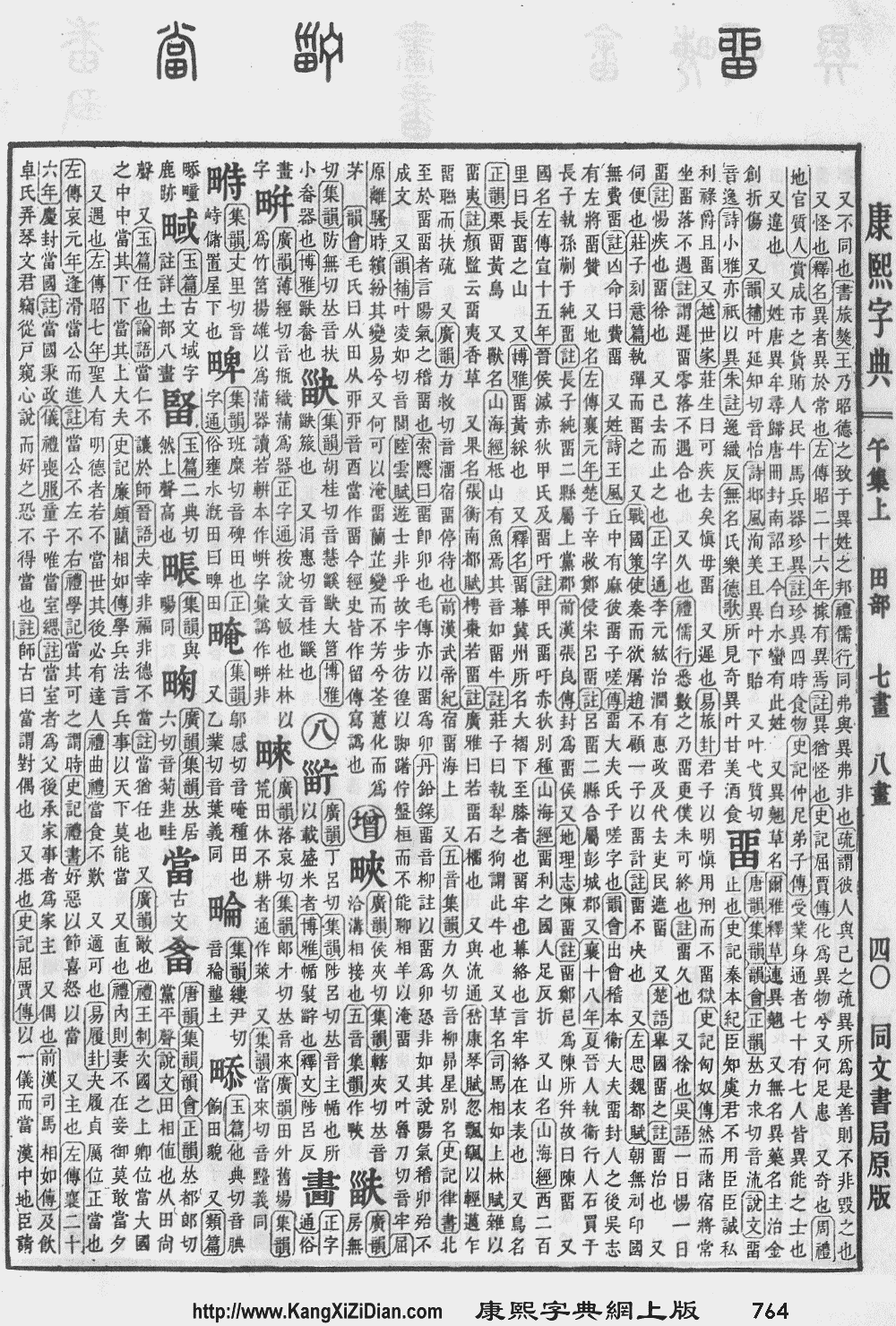
- Kangxi Dictionary: not present, would follow page 764, character 4
- Dai Kanwa Jiten: character 21862
- Hanyu Da Zidian (first edition): volume 4, page 2543, character 3
- Unihan data for U+7572
Chinese
| simp. and trad. |
畲 | |
|---|---|---|
| alternative forms | 輋/𪨶 畬 | |
Glyph origin
Variant of 畬 (yú).
Pronunciation
Pronunciation
Definitions
畲
- Alternative form of 畬 (“to slash and burn; slash-and-burn farmland”), now mostly used in place names.
Compounds
- 畲江
Japanese
Kanji
畲
- This term needs a translation to English. Please help out and add a translation, then remove the text
{{rfdef}}.
This article is issued from Wiktionary. The text is licensed under Creative Commons - Attribution - Sharealike. Additional terms may apply for the media files.