癇
See also: 痫
| ||||||||
Translingual
Han character
癇 (Kangxi radical 104, 疒+12, 17 strokes, cangjie input 大日弓月 (KANB), four-corner 00127, composition ⿸疒閒)
References
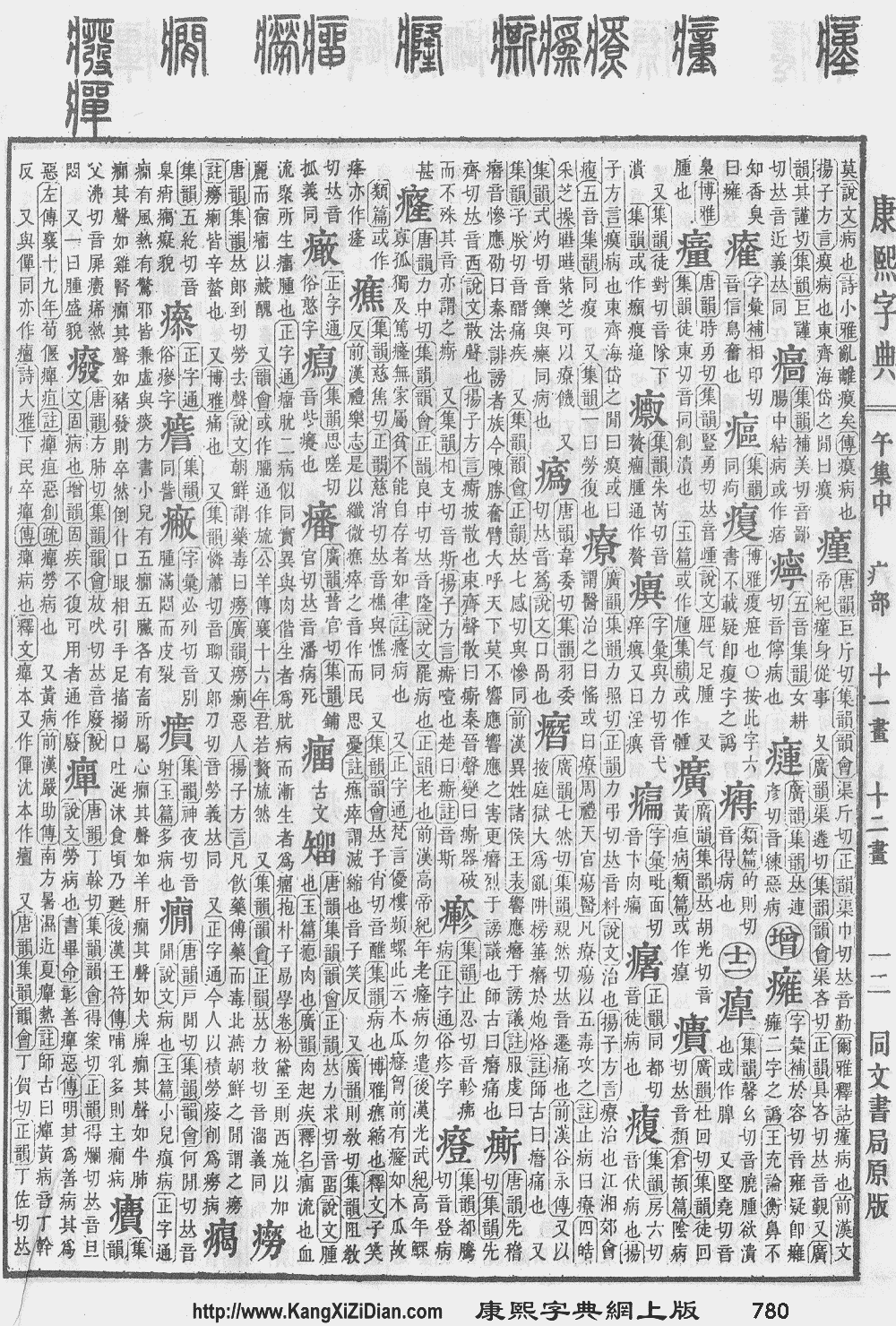
- Kangxi Dictionary: page 780, character 38
- Dai Kanwa Jiten: character 22518
- Dae Jaweon: page 1190, character 13
- Hanyu Da Zidian (first edition): volume 4, page 2698, character 14
- Unihan data for U+7647
Chinese
| trad. | 癇 | |
|---|---|---|
| simp. | 痫 | |
| alternative forms | 癎/𰣯 𤺛 𣩝 𣩞 | |
Glyph origin
| Historical forms of the character 癇 |
|---|
| Shuowen Jiezi (compiled in Han) |
| Small seal script |
 |
Characters in the same phonetic series (閒) (Zhengzhang, 2003)
Phono-semantic compound (形聲/形声, OC *ɡreːn) : semantic 疒 (“illness”) + phonetic 閒 (OC *ɡreːn).
Pronunciation
Japanese
Readings
This article is issued from Wiktionary. The text is licensed under Creative Commons - Attribution - Sharealike. Additional terms may apply for the media files.