確

See also: 确
確 U+78BA, 確
CJK UNIFIED IDEOGRAPH-78BA
← 碹
[U+78B9]
CJK Unified Ideographs 碻 →
[U+78BB]

Translingual

Han character

確 (Kangxi radical 112, 石+10, 15 strokes, cangjie input 一口人月土 (MROBG), four-corner 14614, composition ⿰石隺)

Derived characters

  • 𡃜, 𮣞

References

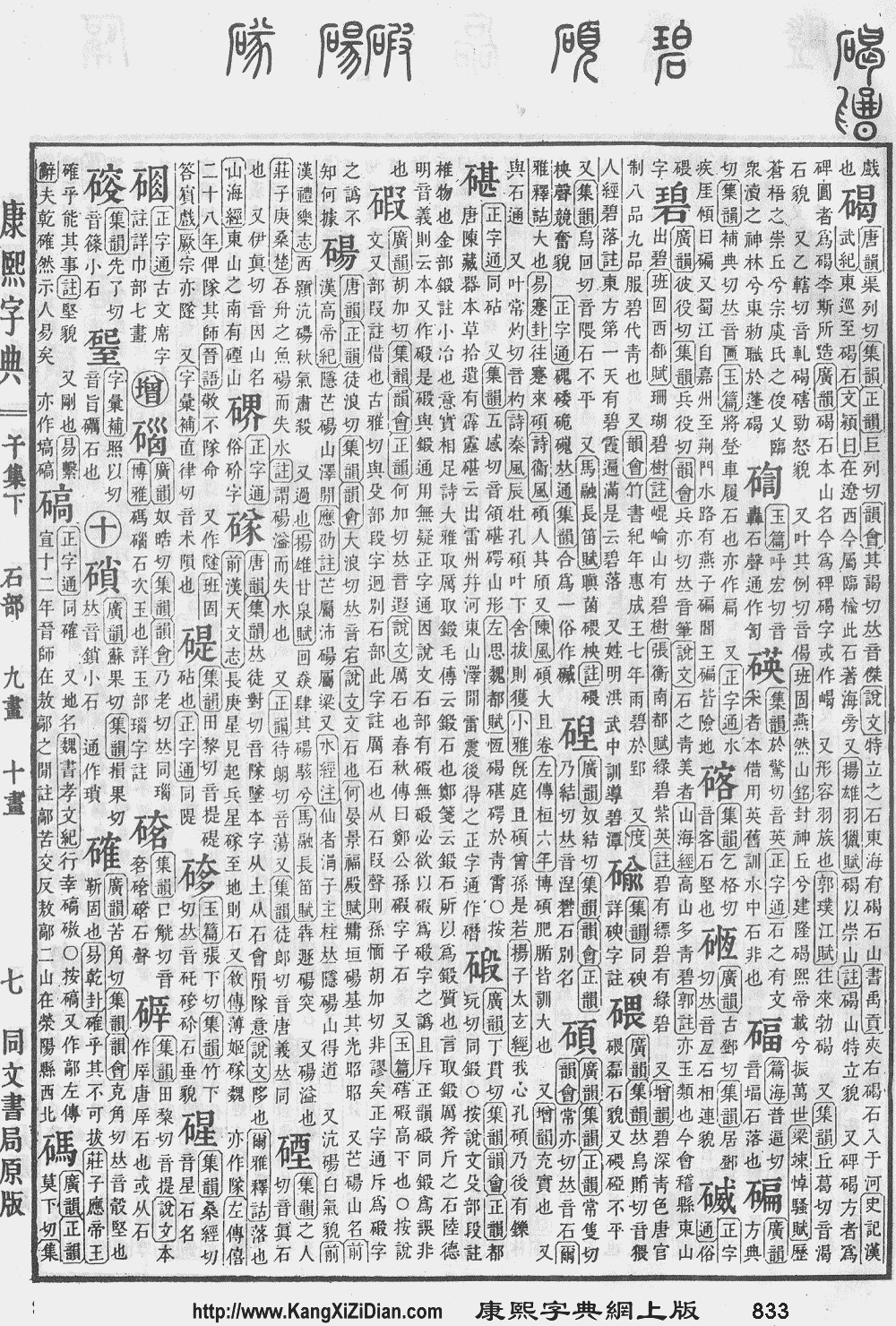
  • Kangxi Dictionary: page 833, character 31
  • Dai Kanwa Jiten: character 24366
  • Dae Jaweon: page 1250, character 20
  • Hanyu Da Zidian (first edition): volume 4, page 2450, character 4
  • Unihan data for U+78BA

Chinese

trad. 確
simp. 确*
alternative forms 确
碻
礭

Glyph origin

Phono-semantic compound (形聲/形声, OC *kʰroːwɢ) : semantic 石 (“rock”) + phonetic 寉 (OC *ɡluːwɢ) – rock-solid, as certain as a rock.

Pronunciation


  • Dialectal data
Variety Location 確
Mandarin Beijing /t͡ɕʰyɛ⁵¹/
Harbin /t͡ɕʰyɛ⁵³/
Tianjin /t͡ɕʰye⁵³/
Jinan /t͡ɕʰyə²¹³/
Qingdao /t͡ɕʰyə⁵⁵/
Zhengzhou /t͡ɕʰyo²⁴/
Xi'an /t͡ɕʰyo⁵³/
Xining /t͡ɕʰyu⁵³/
Yinchuan /t͡ɕʰye¹³/
Lanzhou /t͡ɕʰyə¹³/
Ürümqi /t͡ɕʰyɤ²¹³/
Wuhan /t͡ɕʰio²¹³/
Chengdu /t͡ɕʰyo³¹/
Guiyang /t͡ɕʰio²¹/
Kunming /t͡ɕʰio³¹/
Nanjing /t͡ɕʰioʔ⁵/
Hefei /t͡ɕʰyɐʔ⁵/
Jin Taiyuan /t͡ɕʰyəʔ²/
Pingyao /t͡ɕʰiʌʔ¹³/
Hohhot /t͡ɕʰyaʔ⁴³/
Wu Shanghai /t͡ɕʰioʔ⁵/
/t͡ɕʰyɪʔ⁵/
Suzhou /t͡ɕʰioʔ⁵/
Hangzhou /kʰoʔ⁵/
/t͡ɕʰioʔ⁵/
Wenzhou /kʰo²¹³/
Hui Shexian /kʰɔʔ²¹/
Tunxi /kʰo⁵/
Xiang Changsha /kʰo²⁴/
Xiangtan /kʰo²⁴/
Gan Nanchang /kʰɔʔ⁵/
Hakka Meixian /kʰok̚¹/
Taoyuan /kʰok̚²²/
Cantonese Guangzhou /kʰɔk̚³/
Nanning /kʰɔk̚³³/
Hong Kong /kʰɔk̚³/
Min Xiamen (Hokkien) /kʰak̚³²/
Fuzhou (Eastern Min) /kʰɔuʔ²³/
Jian'ou (Northern Min) /kʰɔ²⁴/
Shantou (Teochew) /kʰak̚²/
Haikou (Hainanese) /xɔk̚⁵/

Rime
Character 確
Reading # 1/1
Initial (聲) 溪 (29)
Final (韻) 覺 (10)
Tone (調) Checked (Ø)
Openness (開合) Open
Division (等) II
Fanqie 苦角切
Baxter khaewk
Reconstructions
Zhengzhang
Shangfang
/kʰˠʌk̚/
Pan
Wuyun
/kʰᵚɔk̚/
Shao
Rongfen
/kʰɔk̚/
Edwin
Pulleyblank
/kʰaɨwk̚/
Li
Rong
/kʰɔk̚/
Wang
Li
/kʰɔk̚/
Bernard
Karlgren
/kʰɔk̚/
Expected
Mandarin
Reflex
que
Expected
Cantonese
Reflex
hok3
Baxter–Sagart system 1.1 (2014)
Character 確
Reading # 1/1
Modern
Beijing
(Pinyin)
què
Middle
Chinese
‹ khæwk ›
Old
Chinese
/*[k]ʰˁrawk/
English solid, firm

Notes for Old Chinese notations in the Baxter–Sagart system:

* Parentheses "()" indicate uncertain presence;
* Square brackets "[]" indicate uncertain identity, e.g. *[t] as coda may in fact be *-t or *-p;
* Angle brackets "<>" indicate infix;
* Hyphen "-" indicates morpheme boundary;

* Period "." indicates syllable boundary.
Zhengzhang system (2003)
Character 確
Reading # 1/1
No. 5100
Phonetic
component
寉
Rime
group
藥
Rime
subdivision
3
Corresponding
MC rime
㱿
Old
Chinese
/*kʰroːwɢ/

Definitions

確

  1. real; true
    消息不確/消息不确  ―  xiāoxī bù què  ―  the information is not true
    準確/准确  ―  zhǔnquè  ―  accurate; precise
  2. firm; resolute
    確信/确信  ―  quèxìn  ―  to firmly believe
  3. truly; indeed
  4. Alternative form of 确 (què, “rocky and barren”)
  5. Alternative form of 搉 (què, “to knock; to hit; to beat”)

Compounds

Japanese

Kanji

確

(grade 5 “Kyōiku” kanji)

  1. certain

Readings

Compounds

Korean

Hanja

確 • (hwak) (hangeul 확, revised hwak, McCune–Reischauer hwak, Yale hwak)

  1. This term needs a translation to English. Please help out and add a translation, then remove the text {{rfdef}}.

Vietnamese

Han character

確: Hán Nôm readings: xác, xạc

  1. This term needs a translation to English. Please help out and add a translation, then remove the text {{rfdef}}.
This article is issued from Wiktionary. The text is licensed under Creative Commons - Attribution - Sharealike. Additional terms may apply for the media files.