菑
See also: 葘
| ||||||||
Translingual
Han character
菑 (Kangxi radical 140, 艸+8, 14 strokes, cangjie input 廿女女田 (TVVW), four-corner 44602, composition ⿱艹甾)
References
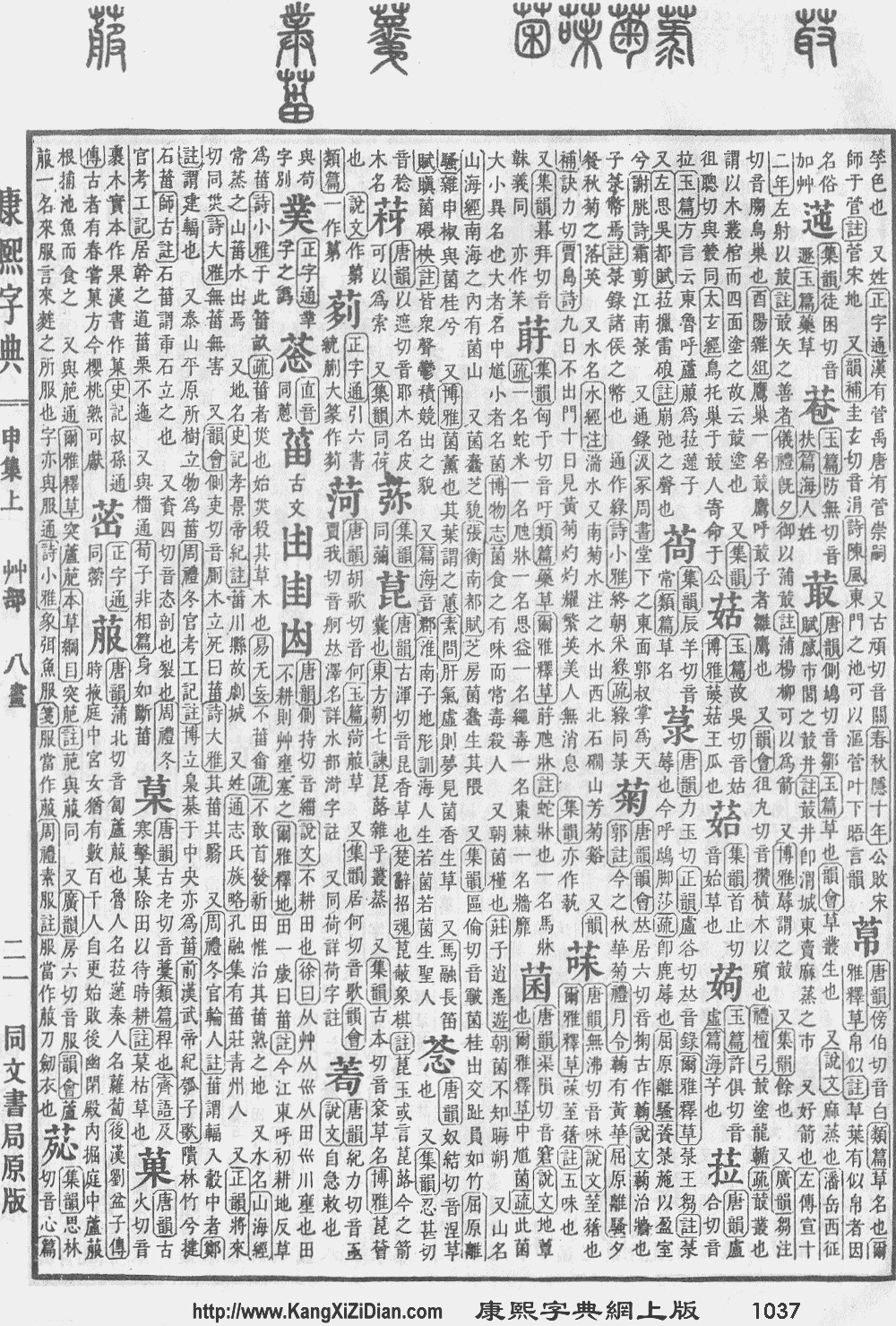
- Kangxi Dictionary: page 1037, character 24
- Dai Kanwa Jiten: character 31166
- Dae Jaweon: page 1496, character 3
- Hanyu Da Zidian (first edition): volume 5, page 3242, character 18
- Unihan data for U+83D1
Chinese
| simp. and trad. |
菑 | |
|---|---|---|
| alternative forms | 甾 䎩 葘 𱰭 | |
Glyph origin
Characters in the same phonetic series (甾) (Zhengzhang, 2003)
Phono-semantic compound (形聲/形声, OC *ʔsrɯ, *ʔsɯː, *ʔsɯː) : semantic 艸 (“grass”) + phonetic 甾 (OC *ʔsrɯ).
Etymology
菑 (OC *tsrə) is r-causative of 災 (OC *tsə̂) (Schuessler, 2007), both ultimately from Proto-Sino-Tibetan *tsa-t ~ dza-t (“hot, fever, hurt, ill, temper”) (STEDT)
Possibly same word as 緇 (OC *tsrə) "black < color of burnt soil?" (Schuessler, 2007)
Pronunciation 1
Definitions
菑
Compounds
- 菑畬
Pronunciation 2
Japanese
Korean
Hanja
菑 • (chi) (hangeul 치, revised chi, McCune–Reischauer ch'i, Yale chi)
- to weed grass
- land which has been under cultivation for one year
This article is issued from Wiktionary. The text is licensed under Creative Commons - Attribution - Sharealike. Additional terms may apply for the media files.