號
See also: 号
| ||||||||
Translingual
| Japanese | 号 |
|---|---|
| Simplified | 号 |
| Traditional | 號 |
Han character
號 (Kangxi radical 141, 虍+7, 13 strokes, cangjie input 口尸卜心弓 (RSYPN) or 口尸卜心山 (RSYPU), four-corner 61211, composition ⿰号虎)
References
- Kangxi Dictionary: page 1074, character 29
- Dai Kanwa Jiten: character 32726
- Dae Jaweon: page 1543, character 7
- Hanyu Da Zidian (first edition): volume 4, page 2824, character 4
- Unihan data for U+865F
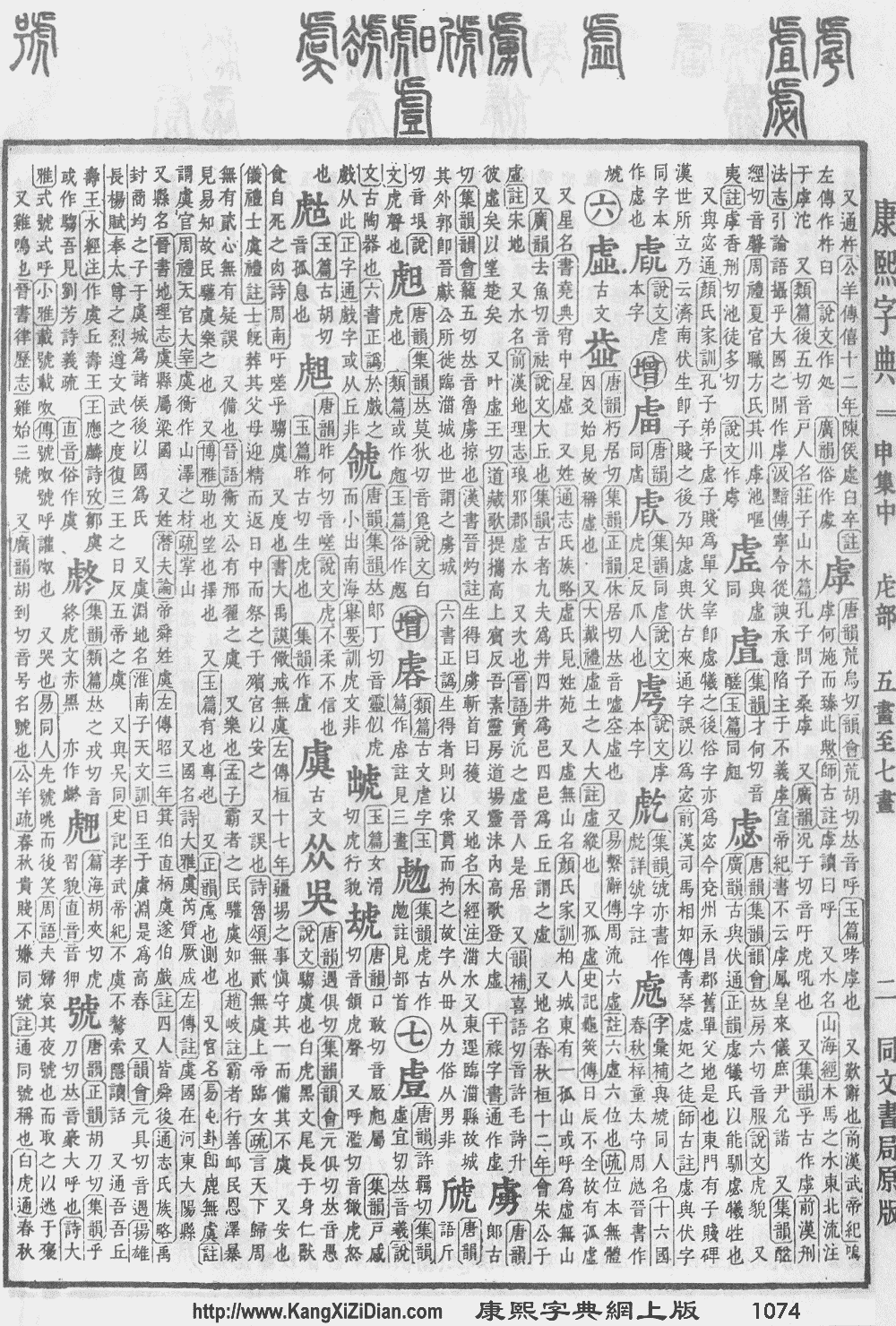
Chinese
| trad. | 號 | |
|---|---|---|
| simp. | 号 | |
| alternative forms | 𠳯 虠 | |
Glyph origin
| Historical forms of the character 號 | |
|---|---|
| Shuowen Jiezi (compiled in Han) | Liushutong (compiled in Ming) |
| Small seal script | Transcribed ancient scripts |
 |
 |
Characters in the same phonetic series (号) (Zhengzhang, 2003)
Phono-semantic compound (形聲/形声, OC *ɦlaːw, *ɦlaːws) : phonetic 号 (OC *ɦlaːws) + semantic 虎.
Etymology
From Proto-Sino-Tibetan *(g/k)aw (“to call”) (Schuessler, 2007, STEDT). Compare Kinnauri ku, Anong go, and Burmese ခေါ် (hkau). The extension of the meaning ‘shout, call’ to ‘ask, request’ is parallel to 呼 (hū).
Pronunciation 1 is the exopassive derivation of pronunciation 2, literally "what is called".
Pronunciation 1
Definitions
號
- name; alias
- (specifically) art name
- to order; to command
- shop; store
- mark; symbol
- number
- day of the month
- (music) brass instrument
- (typography) hao
- See also: 字號
- (Internet) account
- (Central Plains and Lanyin Mandarin, Sichuanese) to correct; to mark (school work)
Synonyms
- (day of the month): 日 (rì)
Compounds
- 一號/一号 (yīhào)
- 七號公園/七号公园
- 不等號/不等号 (bùděnghào)
- 乘號/乘号 (chénghào)
- 五月花號/五月花号
- 亞衛一號/亚卫一号
- 交通號誌/交通号志
- 代號/代号 (dàihào)
- 佛號/佛号 (fóhào)
- 信號/信号 (xìnhào)
- 信號彈/信号弹 (xìnhàodàn)
- 信號槍/信号枪 (xìnhàoqiāng)
- 信號機/信号机 (xìnhàojī)
- 信號燈/信号灯 (xìnhàodēng)
- 傷號/伤号 (shānghào)
- 僭號/僭号
- 八號分機/八号分机
- 公司行號/公司行号
- 六號分機/六号分机
- 冒號/冒号 (màohào)
- 出號/出号
- 分號/分号 (fēnhào)
- 刪節號/删节号 (shānjiéhào)
- 別號/别号 (biéhào)
- 加號/加号 (jiāhào)
- 勾號/勾号 (gōuhào)
- 化學符號/化学符号
- 十一號/十一号
- 升記號/升记号
- 原子符號/原子符号
- 口號/口号 (kǒuhào)
- 句號/句号 (jùhào)
- 名號/名号 (mínghào)
- 名號侯/名号侯
- 問號/问号 (wènhào)
- 商號/商号 (shānghào)
- 單號/单号 (dānhào)
- 國光號/国光号
- 國號/国号 (guóhào)
- 土巴號/土巴号
- 型號/型号 (xínghào)
- 堂號/堂号 (tánghào)
- 報值掛號/报值挂号
- 外號/外号 (wàihào)
- 大號/大号 (dàhào)
- 天字號/天字号
- 夾注號/夹注号
- 學號/学号 (xuéhào)
- 定時號誌/定时号志
- 寶號/宝号 (bǎohào)
- 封號/封号 (fēnghào)
- 專名號/专名号 (zhuānmínghào)
- 尊號/尊号 (zūnhào)
- 對不上號/对不上号
- 對號/对号
- 對號入座/对号入座 (duìhàorùzuò)
- 對號列車/对号列车
- 對號快車/对号快车
- 對號鎖/对号锁
- 小號/小号 (xiǎohào, “trumpet”)
- 山西票號/山西票号
- 差號/差号
- 帝號/帝号
- 年號/年号 (niánhào)
- 座號/座号 (zuòhào)
- 廟號/庙号 (miàohào)
- 延長記號/延长记号
- 引號/引号 (yǐnhào)
- 彩號/彩号 (cǎihào)
- 徽號/徽号 (huīhào)
- 打信號/打信号
- 打個問號/打个问号
- 打暗號/打暗号
- 打眼號/打眼号
- 拍子記號/拍子记号
- 括號/括号 (kuòhào)
- 掌號/掌号
- 掛號/挂号 (guàhào)
- 掛號信/挂号信 (guàhàoxìn)
- 掛號處/挂号处 (guàhàochù)
- 掛號費/挂号费
- 提鈴喝號/提铃喝号
- 撇號/撇号 (piěhào)
- 撥號系統/拨号系统
- 政治號召/政治号召
- 敝號/敝号
- 旗號/旗号 (qíhào)
- 星號/星号 (xīnghào)
- 暗號/暗号 (ànhào)
- 書名號/书名号 (shūmínghào)
- 枷號/枷号
- 查號臺/查号台 (cháhàotái)
- 根號/根号 (gēnhào)
- 標號/标号 (biāohào)
- 標點符號/标点符号 (biāodiǎn fúhào)
- 正號/正号 (zhènghào)
- 歸號/归号
- 法國號/法国号 (fǎguóhào)
- 泡病號/泡病号
- 法號/法号 (fǎhào)
- 注音符號 (zhùyīn fúhào)
- 流水號/流水号 (liúshuǐhào)
- 混號/混号
- 減號/减号 (jiǎnhào)
- 渾號/浑号
- 溜號/溜号
- 燈號/灯号
- 牌號/牌号 (páihào)
- 番號/番号 (fānhào)
- 疑問號/疑问号
- 病號/病号 (bìnghào)
- 癸字號/癸字号
- 發號令/发号令
- 發號出令/发号出令
- 發號布令/发号布令
- 發號施令/发号施令 (fāhàoshīlìng)
- 百分號/百分号 (bǎifēnhào)
- 省略號/省略号 (shěnglüèhào)
- 破折號/破折号 (pòzhéhào)
- 砥礪名號/砥砺名号
- 票號/票号 (piàohào)
- 禪號/禅号
- 私名號/私名号
- 稱號/称号 (chēnghào)
- 空號/空号 (kōnghào)
- 竊號/窃号
- 立國號/立国号
- 符號/符号 (fúhào)
- 符號邏輯/符号逻辑 (fúhào luójí)
- 等號/等号 (děnghào)
- 索書號碼/索书号码
- 綽號/绰号 (chuòhào)
- 線上掛號/线上挂号
- 編號/编号 (biānhào)
- 老字號/老字号 (lǎozìhào)
- 聲調符號/声调符号 (shēngdiào fúhào)
- 自號/自号 (zìhào)
- 薩克號/萨克号
- 號令/号令 (hàolìng)
- 號令如山/号令如山
- 號令森嚴/号令森严
- 號兵/号兵
- 號召/号召 (hàozhào)
- 號召力/号召力 (hàozhàolì)
- 號坎兒/号坎儿
- 號外/号外 (hàowài)
- 號子/号子 (hàozi)
- 號帖/号帖
- 號房/号房 (hàofáng)
- 號手/号手
- 號掛子/号挂子
- 號數/号数 (hàoshù)
- 號板/号板
- 號次/号次
- 號燈/号灯
- 號砲/号炮 (hàopào)
- 號碼/号码 (hàomǎ)
- 號碼機/号码机
- 號碼盤/号码盘
- 號稱/号称 (hàochēng)
- 號筒/号筒 (hàotǒng)
- 號筒子/号筒子
- 號箭/号箭
- 號脈/号脉 (hàomài)
- 號舍/号舍
- 號衣/号衣
- 號角/号角 (hàojiǎo)
- 號誌/号志 (hàozhì)
- 號誌燈/号志灯
- 號音/号音
- 號頂/号顶
- 號頭/号头 (hàotóu)
- 蛇號/蛇号 (shéhào)
- 螺號/螺号 (luóhào)
- 行號/行号 (hánghào)
- 裝飾記號/装饰记号
- 訊號/讯号 (xùnhào)
- 記號/记号 (jìhào)
- 記號環/记号环
- 調號/调号 (diàohào)
- 諡號/谥号 (shìhào)
- 謚號/谥号 (shìhào)
- 識別信號/识别信号
- 譜號/谱号 (pǔhào)
- 警號/警号
- 譯音符號/译音符号
- 負號/负号 (fùhào)
- 賣大號/卖大号
- 跳號/跳号
- 車號/车号
- 軍號/军号 (jūnhào)
- 連號/连号
- 逗號/逗号 (dòuhào)
- 這號事/这号事
- 道字號/道字号
- 運算符號/运算符号
- 道號/道号
- 郵遞區號/邮递区号 (yóudì qūhào)
- 銀號/银号 (yínhào)
- 鐵達尼號/铁达尼号 (Tiědání-hào)
- 長號/长号 (chánghào)
- 間隔號/间隔号 (jiàngéhào)
- 除號/除号 (chúhào)
- 隔音符號/隔音符号 (géyīn fúhào)
- 雅號/雅号 (yǎhào)
- 雙掛號/双挂号
- 電話號碼/电话号码 (diànhuà hàomǎ)
- 音界號/音界号
- 音部記號/音部记号
- 頓號/顿号 (dùnhào)
- 頭號/头号 (tóuhào)
- 類比信號/类比信号
- 馬號/马号 (Mǎhào)
- 驚嘆號/惊叹号 (jīngtànhào)
- 點號/点号 (diǎnhào)
Pronunciation 2
Definitions
號
Compounds
- 乾號/干号 (gānháo)
- 叫號/叫号
- 呼號/呼号
- 哀號/哀号 (āiháo)
- 啼飢號寒/啼饥号寒 (tíjīháohán)
- 寒號蟲/寒号虫 (hánháochóng)
- 怒號/怒号 (nùháo)
- 悲號/悲号 (bēiháo)
- 浪吼風號/浪吼风号
- 烏號/乌号
- 狼號鬼叫/狼号鬼叫
- 狼號鬼哭/狼号鬼哭
- 神號鬼哭/神号鬼哭
- 號咷/号咷 (háotáo)
- 號咷痛哭/号咷痛哭
- 號哭/号哭 (háokū)
- 號啕/号啕 (háotáo)
- 號啕大哭/号啕大哭
- 號啕痛哭/号啕痛哭
- 號喪/号丧 (háosāng)
- 號天叩地/号天叩地
- 號天哭地/号天哭地
- 號天大哭/号天大哭
- 號天扣地/号天扣地
- 號天拍地/号天拍地
- 號天號地/号天号地
- 號寒啼飢/号寒啼饥 (háohántíjī)
- 號泣/号泣 (háoqì)
- 行號巷哭/行号巷哭
- 街號巷哭/街号巷哭
- 調弓號猿/调弓号猿
- 隳突叫號/隳突叫号
- 鬼哭狼號/鬼哭狼号
- 鬼哭神號/鬼哭神号
References
- “號”, in 漢語多功能字庫 (Multi-function Chinese Character Database), 香港中文大學 (the Chinese University of Hong Kong), 2014–
- Dictionary of Chinese Character Variants (教育部異體字字典), A03612
- “Entry #10008”, in 臺灣閩南語常用詞辭典 [Dictionary of Frequently-Used Taiwan Minnan] (overall work in Mandarin and Hokkien), Ministry of Education, R.O.C., 2023.
Korean
Etymology 1
From Middle Chinese 號 (MC hawH, “name; command”).
| Historical readings |
|---|
|
Pronunciation
- (SK Standard/Seoul) IPA(key): [ɸʷo̞(ː)]
- Phonetic hangul: [호(ː)]
- Though still prescribed in Standard Korean, most speakers in both Koreas no longer distinguish vowel length.
Compounds
Compounds
- 구호 (口號, guho)
- 기호 (記號, giho)
- 번호 (番號, beonho)
- 부호 (符號, buho)
- 암호 (暗號, amho)
- 연호 (年號, yeonho)
- 칭호 (稱號, chingho)
- 상호 (商號, sangho)
- 국호 (國號, gukho)
- 명호 (名號, myeongho)
- 호령 (號令, horyeong)
- 호실 (號室, hosil)
- 호수 (號數, hosu)
- 자호 (自號, jaho)
- 호각 (號角, hogak)
- 군호 (軍號, gunho)
- 등호 (等號, deungho)
- 아호 (雅號, aho)
- 신호 (信號, sinho)
- 통호 (通號, tongho)
- 법호 (法號, beopho)
- 신호등 (信號燈, sinhodeung)
- 적신호 (赤信號, jeoksinho)
- 청신호 (靑信號, cheongsinho)
Etymology 2
From Middle Chinese 號 (MC haw, “shout; cry”).
| Historical readings |
|---|
|
Pronunciation
- (SK Standard/Seoul) IPA(key): [ɸʷo̞(ː)]
- Phonetic hangul: [호(ː)]
- Though still prescribed in Standard Korean, most speakers in both Koreas no longer distinguish vowel length.
Vietnamese
This article is issued from Wiktionary. The text is licensed under Creative Commons - Attribution - Sharealike. Additional terms may apply for the media files.