呼
| ||||||||
| ||||||||
Translingual
| Stroke order | |||
|---|---|---|---|
 | |||
Han character
呼 (Kangxi radical 30, 口+5, 8 strokes, cangjie input 口竹火木 (RHFD), four-corner 62049, composition ⿰口乎)
References
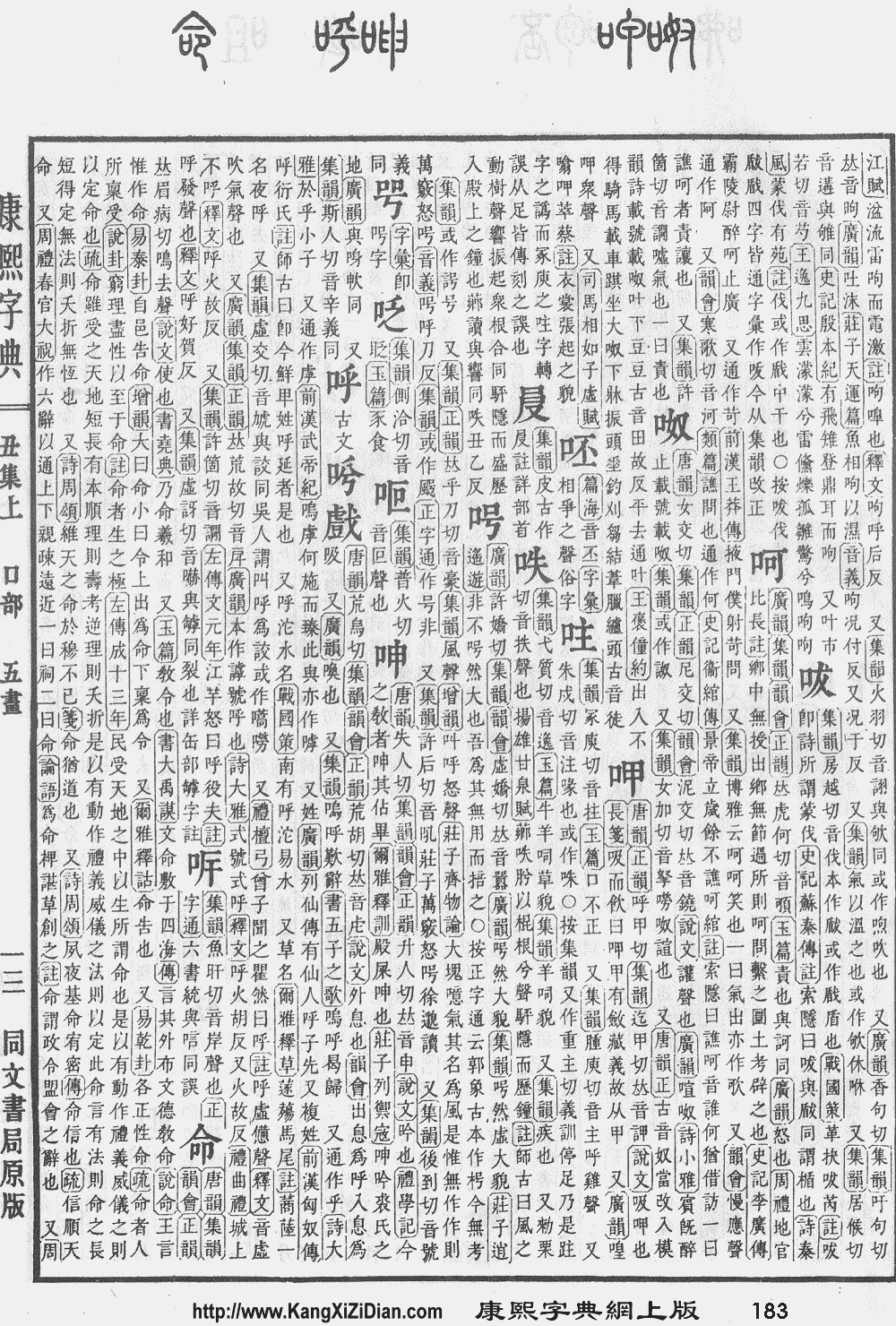
- Kangxi Dictionary: page 183, character 14
- Dai Kanwa Jiten: character 3471
- Dae Jaweon: page 402, character 14
- Hanyu Da Zidian (first edition): volume 1, page 605, character 2
- Unihan data for U+547C
Chinese
| simp. and trad. |
呼 | |
|---|---|---|
Glyph origin
Characters in the same phonetic series (乎) (Zhengzhang, 2003)
Phono-semantic compound (形聲/形声, OC *qʰaː) : semantic 口 (“mouth”) + phonetic 乎 (OC *ɢaː) – to exhale, call, or shout from the mouth.
Pronunciation 1
Definitions
呼
Antonyms
- (antonym(s) of “to breathe out”): 吸 (xī)
Compounds
- 一呼再諾/一呼再诺
- 一命嗚呼/一命呜呼 (yīmìngwūhū)
- 一呼百應/一呼百应 (yīhūbǎiyìng)
- 一呼百諾/一呼百诺
- 上呼吸道 (shànghūxīdào)
- 三呼萬歲/三呼万岁
- 人工呼吸 (réngōng hūxī)
- 傳呼/传呼 (chuánhū)
- 傳呼機/传呼机 (chuánhūjī)
- 內呼吸/内呼吸
- 八方呼應/八方呼应
- 前呼後應/前呼后应
- 前呼後擁/前呼后拥 (qiánhūhòuyǒng)
- 千呼萬喚/千呼万唤 (qiānhūwànhuàn)
- 合口呼 (hékǒuhū)
- 吆呼
- 同類相呼/同类相呼
- 吹呼
- 呼三喝四
- 呼么喝六
- 呼之欲出 (hūzhīyùchū)
- 呼倫池/呼伦池
- 呼兄喚弟/呼兄唤弟
- 呼叱
- 呼叫 (hūjiào)
- 呼叫器 (hūjiàoqì)
- 呼名叫陣/呼名叫阵
- 呼吼 (hūhǒu)
- 呼吸 (hūxī)
- 呼吸作用 (hūxī zuòyòng)
- 呼吸吐納/呼吸吐纳
- 呼吸器 (hūxīqì)
- 呼吸器官
- 呼吸孔
- 呼吸根
- 呼吸相通 (hūxīxiāngtōng)
- 呼吸系統/呼吸系统 (hūxī xìtǒng)
- 呼吸道 (hūxīdào)
- 呼吸運動/呼吸运动
- 呼吸音 (hūxīyīn)
- 咋呼 (zhàhu)
- 呼呼 (hūhū)
- 呼呼大睡
- 呼哨 (hūshào)
- 呼喝 (hūhè)
- 呼喊 (hūhǎn)
- 呼喚/呼唤 (hūhuàn)
- 呼噓/呼嘘
- 呼嘯/呼啸 (hūxiào)
- 呼噪
- 呼嚕/呼噜 (hūlū)
- 呼圖克圖/呼图克图 (hūtúkètú)
- 呼天搶地/呼天抢地 (hūtiānqiāngdì)
- 呼奴使婢
- 呼家將/呼家将
- 呼庚呼癸
- 呼張喚李/呼张唤李
- 呼應/呼应 (hūyìng)
- 呼拉圈 (hūlāquān)
- 呼拉舞
- 呼搧
- 呼救 (hūjiù)
- 呼朋引伴
- 呼朋引類/呼朋引类
- 呼氣/呼气 (hūqì)
- 呼牛作馬/呼牛作马
- 呼牛呼馬/呼牛呼马
- 呼瑪/呼玛 (Hūmǎ)
- 呼畢勒罕/呼毕勒罕
- 呼盧/呼卢
- 呼盧喝雉/呼卢喝雉
- 呼籲/呼吁 (hūyù)
- 呼紅叫六/呼红叫六
- 呼聲/呼声 (hūshēng)
- 呼蘭/呼兰 (Hūlán)
- 呼蘭河/呼兰河 (Hūlánhé)
- 呼號/呼号
- 呼蚩 (hūchī)
- 呼語/呼语 (hūyǔ)
- 呼風喚雨/呼风唤雨 (hūfēnghuànyǔ)
- 呼麥/呼麦 (hūmài)
- 喝六呼么
- 喳呼
- 喝雉呼盧/喝雉呼卢
- 嗚呼/呜呼 (wūhū)
- 嗎呼/吗呼
- 嗚呼哀哉/呜呼哀哉 (wūhū'āizāi)
- 嚾呼
- 四呼 (sìhū)
- 圖呼其/图呼其 (Túhūqí)
- 外呼吸
- 大呼 (dàhū)
- 大呼小叫 (dàhūxiǎojiào)
- 大呼小喊
- 大呼過癮/大呼过瘾
- 大呼隆
- 大聲疾呼/大声疾呼 (dàshēngjíhū)
- 山呼
- 嵩呼
- 庚癸之呼
- 引類呼朋/引类呼朋
- 後擁前呼/后拥前呼
- 愴地呼天/怆地呼天
- 愴天呼地/怆天呼地
- 打呼 (dǎhū)
- 打呼嚕/打呼噜
- 打招呼 (dǎ zhāohū)
- 扯呼
- 招呼 (zhāohū)
- 招呼站
- 振臂一呼 (zhènbìyīhū)
- 振臂高呼
- 搶呼/抢呼
- 搶地呼天/抢地呼天
- 撮口呼 (cuōkǒuhū)
- 攘臂一呼
- 於呼哀哉/于呼哀哉 (wūhū'āizāi)
- 有氧呼吸
- 歡呼/欢呼 (huānhū)
- 歡呼雷動/欢呼雷动
- 氣呼呼/气呼呼 (qìhūhū)
- 深呼吸 (shēnhūxī)
- 烏呼/乌呼 (wūhū)
- 熱呼呼/热呼呼 (rèhūhū)
- 燕語鶯呼/燕语莺呼
- 疾呼
- 疾聲大呼/疾声大呼
- 登高一呼
- 直呼其名
- 瞎扎呼
- 稱呼/称呼 (chēnghū)
- 肺呼吸
- 腹式呼吸
- 蔫呼呼
- 見兔呼狗/见兔呼狗
- 語笑喧呼
- 謊喳呼/谎喳呼
- 讙呼/欢呼
- 邪呼
- 開口呼/开口呼 (kāikǒuhū)
- 阿呼地獄/阿呼地狱
- 韓市呼天/韩市呼天
- 順風而呼/顺风而呼
- 驚呼/惊呼 (jīnghū)
- 高呼 (gāohū)
- 麻麻呼呼
- 鼓掌歡呼/鼓掌欢呼
- 齊齒呼/齐齿呼 (qíchǐhū)
Pronunciation 2
Pronunciation 3
Pronunciation 4
Definitions
呼
- † Expression of anger.
Pronunciation 5
Japanese
Pronunciation
- IPA(key): [ko̞]
Korean
Etymology
From Middle Chinese 呼 (MC xu). Recorded as Middle Korean 호 (hwo) (Yale: hwo) in Hunmong Jahoe (訓蒙字會 / 훈몽자회), 1527.
Pronunciation
- (SK Standard/Seoul) IPA(key): [ɸʷo̞]
- Phonetic hangul: [호]
Compounds
Vietnamese
This article is issued from Wiktionary. The text is licensed under Creative Commons - Attribution - Sharealike. Additional terms may apply for the media files.