襁
| ||||||||
| ||||||||
Translingual
Han character
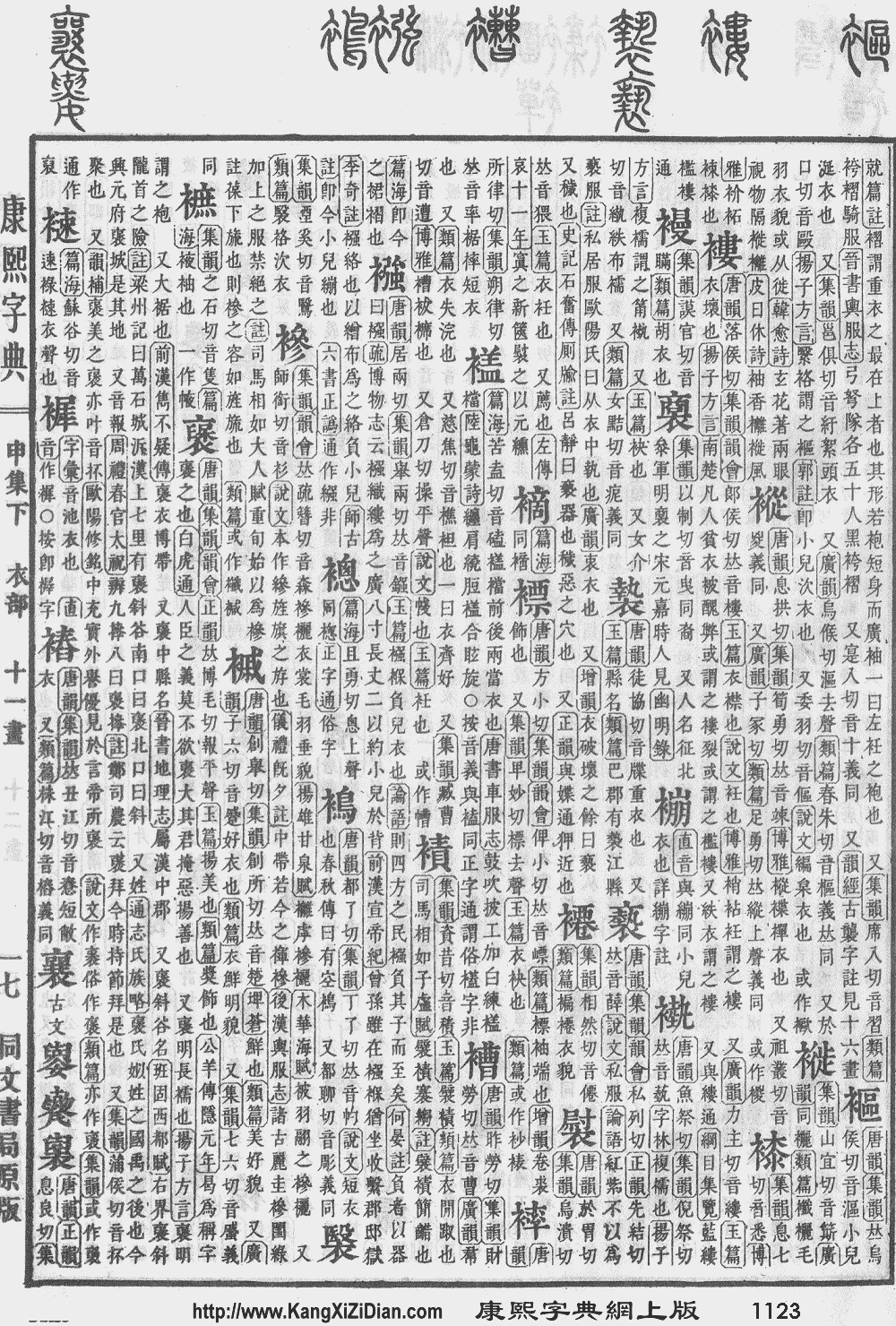
襁 (Kangxi radical 145, 衣+11, 17 strokes, cangjie input 中弓戈戈 (LNII) or 中弓口戈 (LNRI), four-corner 36236, composition ⿰衤强 or ⿰衤強)
- swaddling clothes
References
- Kangxi Dictionary: page 1123, character 20
- Dai Kanwa Jiten: character 34545
- Dae Jaweon: page 1591, character 11
- Hanyu Da Zidian (first edition): volume 5, page 3116, character 6
- Unihan data for U+8941
- Unihan data for U+FAB6
Chinese
| trad. | 襁 | |
|---|---|---|
| simp. # | 襁 | |
| alternative forms | 繈/繦 | |
Glyph origin
Pronunciation
Definitions
襁
Compounds
- 襁抱
- 襁褓 (qiǎngbǎo)
- 襁褓之年
- 襁負/襁负
Japanese
Kanji
襁
- This term needs a translation to English. Please help out and add a translation, then remove the text
{{rfdef}}.
Korean
Hanja
襁 • (gang) (hangeul 강, revised gang, McCune–Reischauer kang, Yale kang)
- This term needs a translation to English. Please help out and add a translation, then remove the text
{{rfdef}}.
This article is issued from Wiktionary. The text is licensed under Creative Commons - Attribution - Sharealike. Additional terms may apply for the media files.