兩
| ||||||||
| ||||||||
Translingual
| Traditional | 兩 |
|---|---|
| Shinjitai | 両 |
| Simplified | 两 |
| Stroke order | |||
|---|---|---|---|
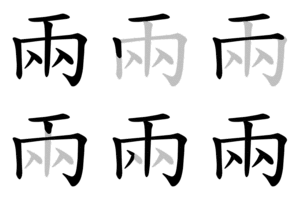 | |||
Han character
兩 (Kangxi radical 11, 入+6, 8 strokes, cangjie input 一中月人 (MLBO), four-corner 10227, composition ⿻帀𠓜)
Derived characters
References
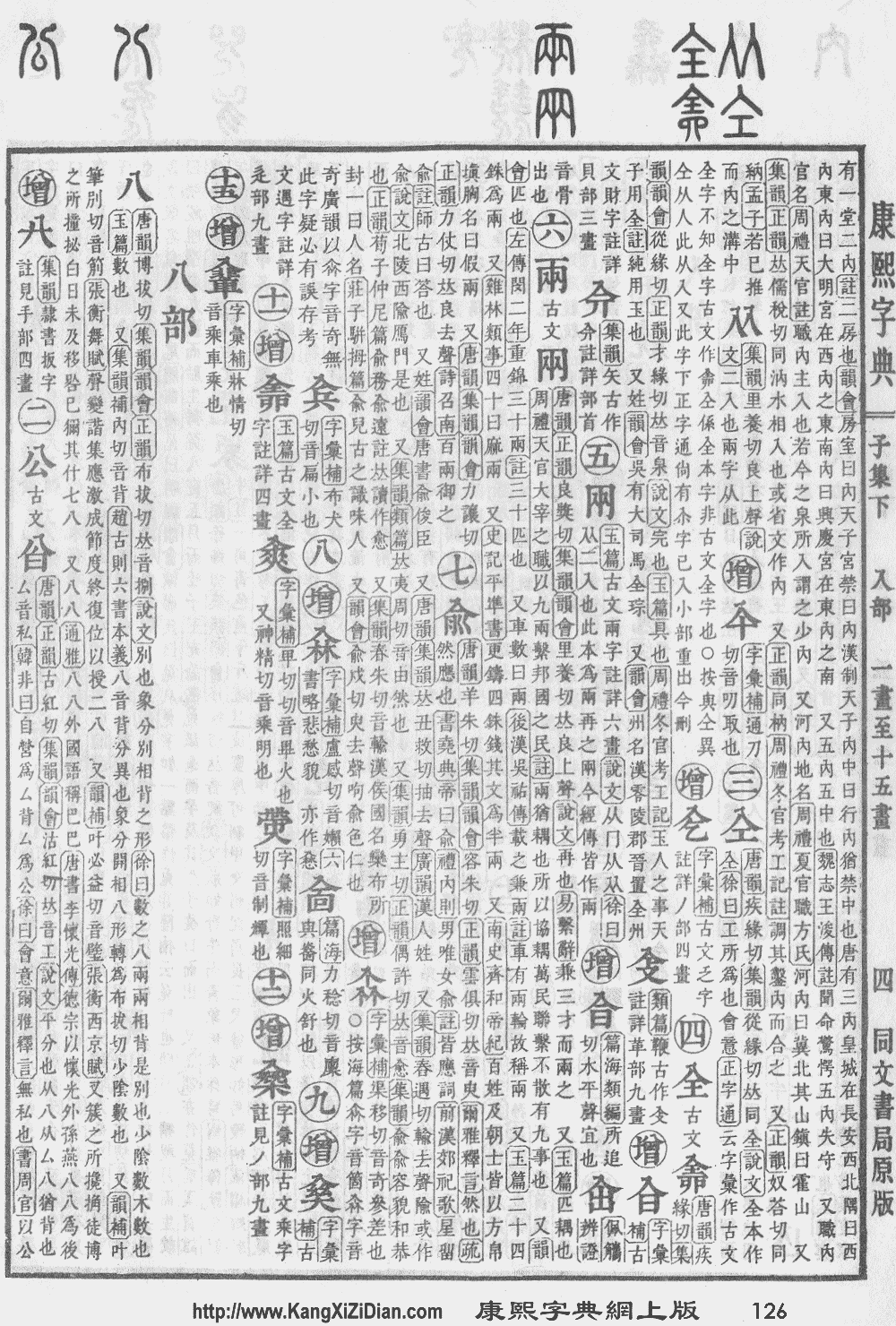
- Kangxi Dictionary: page 126, character 13
- Dai Kanwa Jiten: character 1436
- Dae Jaweon: page 272, character 11
- Hanyu Da Zidian (first edition): volume 1, page 24, character 2
- Unihan data for U+5169
- Unihan data for U+F978
Chinese
Glyph origin
| Historical forms of the character 兩 | ||||||||||||||||||
|---|---|---|---|---|---|---|---|---|---|---|---|---|---|---|---|---|---|---|
| ||||||||||||||||||
|
References: Mostly from Richard Sears' Chinese Etymology site (authorisation),
|


According to Shuowen Jiezi an ideogrammic compound (會意/会意) : 一 + 㒳. Baxter (1992) observes that, in historical forms, the character is two 丙 (OC *praŋʔ) joined together; this would make 丙 the phonetic component in a sort of phono-ideogrammic compound (see also Baxter & Sagart (2014)).
Etymology
Unknown. Schuessler (2007) proposes two possible etymologies:
- Borrowing from Kra-Dai; compare Proto-Tai *rawᴬ (“we”) > Thai เรา (rao, “we”), Zhuang raeuz (“we (inclusive)”); Proto-Kam-Sui *hra¹ (“two”) > Southern Kam yac (“two”), Sui xgaz (“two”).
- Cognate with Tibetan སྲང (srang, “balance; scale; weight; unit of weight”).
Derivative: 輛 (OC *raŋs, “chariot”) (literally “that which is paired”, i.e. “a set of wheels”).
Definitions
兩
Usage notes
Synonyms
- 二 (èr, “two”)
Compounds
- 一刀兩斷/一刀两断 (yīdāoliǎngduàn)
- 一刀兩段/一刀两段
- 一口兩匙/一口两匙
- 一國兩制/一国两制 (yī guó liǎng zhì)
- 一床兩好/一床两好
- 一搭兩用/一搭两用
- 一石兩鳥/一石两鸟
- 一簧兩舌/一簧两舌
- 一絲兩氣/一丝两气
- 一絲兩縷/一丝两缕
- 一舉兩便/一举两便
- 一舉兩得/一举两得 (yījǔliǎngdé)
- 一舉兩用/一举两用
- 一街兩巷/一街两巷
- 一言兩語/一言两语
- 一身兩役/一身两役 (yīshēnliǎngyì)
- 一長兩短/一长两短
- 一雙兩好/一双两好
- 一魚兩吃/一鱼两吃
- 三三兩兩/三三两两 (sānsānliǎngliǎng)
- 三三兩兩/三三两两 (sānsānliǎngliǎng)
- 三兩/三两 (sānliǎng)
- 三兩步/三两步
- 三冬兩夏/三冬两夏
- 三口兩口/三口两口
- 三回兩轉/三回两转
- 三天兩頭/三天两头 (sāntiānliǎngtóu)
- 三天兩頭/三天两头 (sāntiānliǎngtóu)
- 三好兩怯/三好两怯
- 三好兩歉/三好两歉
- 三好兩歹/三好两歹
- 三差兩錯/三差两错
- 三步兩步/三步两步
- 三湯兩割/三汤两割
- 三瓦兩舍/三瓦两舍
- 三男兩女/三男两女
- 三番兩次/三番两次 (sānfānliǎngcì)
- 三窩兩塊/三窝两块
- 三腳兩步/三脚两步
- 三般兩樣/三般两样
- 三言兩句/三言两句
- 三言兩語/三言两语 (sānyánliǎngyǔ)
- 三長兩短/三长两短 (sānchángliǎngduǎn)
- 三頭兩日/三头两日 (sāntóuliǎngrì)
- 三頭兩緒/三头两绪
- 二心兩意/二心两意
- 人地兩疏/人地两疏
- 人財兩失/人财两失 (réncáiliǎngshī)
- 人財兩空/人财两空 (réncáiliǎngkōng)
- 依違兩可/依违两可
- 依阿兩可/依阿两可
- 兩下/两下 (liǎngxià)
- 兩三下/两三下
- 兩三天/两三天
- 兩下子/两下子 (liǎngxiàzi)
- 兩下裡/两下里
- 兩上領/两上领
- 兩不找/两不找
- 兩不相下/两不相下
- 兩不相欠/两不相欠 (liǎngbùxiāngqiàn)
- 兩世姻緣/两世姻缘
- 兩世為人/两世为人
- 兩丱/两丱
- 兩事家/两事家
- 兩京/两京 (liǎngjīng)
- 兩件套/两件套
- 兩伊戰爭/两伊战争 (Liǎngyī Zhànzhēng)
- 兩便/两便 (liǎngbiàn)
- 兩個聲/两个声 (liǎnggèshēng)
- 兩側/两侧
- 兩儀/两仪 (liǎngyí)
- 兩全/两全 (liǎngquán)
- 兩全其美/两全其美 (liǎngquánqíměi)
- 兩兩/两两 (liǎngliǎng)
- 兩兩三三/两两三三
- 兩兩相比/两两相比
- 兩公婆/两公婆
- 兩利/两利
- 兩勢/两势
- 兩勢下/两势下
- 兩半/两半 (liǎngbàn)
- 兩半兒/两半儿 (liǎngbànr)
- 兩口/两口 (liǎngkǒu)
- 兩口兒/两口儿 (liǎngkǒur)
- 兩口子/两口子 (liǎngkǒuzi)
- 兩可/两可 (liǎngkě)
- 兩句半/两句半
- 兩合公司/两合公司
- 兩回事/两回事 (liǎnghuíshì)
- 兩回事兒/两回事儿
- 兩坐/两坐
- 兩坪/两坪 (Liǎngpíng)
- 兩姓之好/两姓之好
- 兩姨親/两姨亲
- 兩娘女/两娘女
- 兩婦三妻/两妇三妻
- 兩宋/两宋 (Liǎng-Sòng)
- 兩小無猜/两小无猜 (liǎngxiǎowúcāi)
- 兩岸/两岸 (liǎng'àn)
- 兩峪/两峪 (Liǎngyù)
- 兩廂/两厢
- 兩廂情願/两厢情愿
- 兩廣/两广 (Liǎngguǎng)
- 兩張皮/两张皮
- 兩心/两心
- 兩性/两性 (liǎngxìng)
- 兩情相悅/两情相悦 (liǎngqíngxiāngyuè)
- 兩意/两意
- 兩截/两截
- 兩截子/两截子
- 兩扇皮/两扇皮
- 兩手/两手 (liǎngshǒu)
- 兩手兒/两手儿
- 兩手空空/两手空空 (liǎngshǒukōngkōng)
- 兩手過膝/两手过膝
- 兩把刷子/两把刷子
- 兩把頭/两把头
- 兩抵/两抵
- 兩接/两接
- 兩撇鬍/两撇胡
- 兩敗俱傷/两败俱伤 (liǎngbàijùshāng)
- 兩旁/两旁 (liǎngpáng)
- 兩日三朝/两日三朝
- 兩晉/两晋 (Liǎng-Jìn)
- 兩曜/两曜
- 兩棲/两栖 (liǎngqī)
- 兩棲作戰/两栖作战
- 兩棲動物/两栖动物 (liǎngqī dòngwù)
- 兩棲植物/两栖植物
- 兩棲演員/两栖演员
- 兩棲部隊/两栖部队
- 兩極/两极 (liǎngjí)
- 兩極化/两极化
- 兩極觀點/两极观点
- 兩榜/两榜
- 兩樣/两样 (liǎngyàng)
- 兩樣三般/两样三般
- 兩次三番/两次三番 (liǎngcìsānfān)
- 兩次運球/两次运球
- 兩歧/两歧
- 兩氏旁人/两氏旁人
- 兩江/两江 (Liǎngjiāng)
- 兩河/两河 (Liǎnghé)
- 兩河口/两河口 (Liǎnghékǒu)
- 兩河流域/两河流域 (Liǎnghé Liúyù)
- 兩浙/两浙
- 兩淮/两淮
- 兩湖/两湖 (Liǎnghú)
- 兩漢/两汉 (Liǎng-Hàn)
- 兩無猜疑/两无猜疑
- 兩爺子/两爷子
- 兩片罐/两片罐
- 兩犀/两犀
- 兩班倒/两班倒
- 兩用/两用 (liǎngyòng)
- 兩當一/两当一
- 兩白日/两白日
- 兩目昏花/两目昏花
- 兩相好/两相好
- 兩相情願/两相情愿
- 兩眼/两眼
- 兩眼圓睜/两眼圆睁
- 兩眼發直/两眼发直
- 兩眼翻白/两眼翻白
- 兩着兒/两着儿
- 兩瞪眼/两瞪眼
- 兩瞽相扶/两瞽相扶
- 兩破三/两破三
- 兩碼事/两码事 (liǎngmǎshì)
- 兩稅法/两税法
- 兩立/两立 (liǎnglì)
- 兩端/两端
- 兩粵/两粤 (Liǎngyuè)
- 兩翼/两翼 (liǎngyì)
- 兩老/两老 (liǎnglǎo)
- 兩者/两者 (liǎngzhě)
- 兩股勁/两股劲
- 兩股勁兒/两股劲儿
- 兩腋生風/两腋生风
- 兩腳寫字/两脚写字
- 兩腳書櫥/两脚书橱
- 兩腳直跳/两脚直跳
- 兩腳規/两脚规
- 兩腳貨/两脚货
- 兩腿發軟/两腿发软
- 兩舌/两舌
- 兩葉掩目/两叶掩目
- 兩虎共鬥/两虎共斗
- 兩虎相爭/两虎相争
- 兩虎相鬥/两虎相斗
- 兩處為難/两处为难
- 兩袒/两袒
- 兩袖清風/两袖清风 (liǎngxiùqīngfēng)
- 兩言/两言
- 兩訖/两讫
- 兩說着/两说着
- 兩豆塞耳/两豆塞耳
- 兩賴子/两赖子
- 兩越/两越
- 兩路人/两路人
- 兩造/两造
- 兩道三科/两道三科
- 兩邊/两边 (liǎngbiān)
- 兩邊倒/两边倒
- 兩邊廂/两边厢
- 兩部鼓吹/两部鼓吹
- 兩都/两都
- 兩都賦/两都赋
- 兩重人格/两重人格
- 兩重親/两重亲
- 兩院制/两院制 (liǎngyuànzhì)
- 兩難/两难 (liǎngnán)
- 兩難論證/两难论证
- 兩面/两面 (liǎngmiàn)
- 兩頰/两颊 (liǎngjiá)
- 兩頭/两头 (liǎngtóu)
- 兩頭三緒/两头三绪
- 兩頭三面/两头三面
- 兩頭不著/两头不著
- 兩頭做大/两头做大
- 兩頭兒/两头儿
- 兩頭大/两头大
- 兩頭春/两头春
- 兩頭白面/两头白面
- 兩頭白麵/两头白面
- 兩頭蛇/两头蛇 (liǎngtóushé)
- 兩鬢飛霜/两鬓飞霜
- 兩點水/两点水 (liǎngdiǎnshuǐ)
- 兩點水兒/两点水儿
- 兩黨制/两党制 (liǎngdǎngzhì)
- 兩鼠鬥穴/两鼠斗穴
- 公私兩便/公私两便
- 公私兩全/公私两全
- 公私兩濟/公私两济
- 公私兩盡/公私两尽
- 判若兩人/判若两人 (pànruòliǎngrén)
- 勢不兩存/势不两存
- 勢不兩立/势不两立 (shìbùliǎnglì)
- 參兩/参两
- 命運兩濟/命运两济
- 執兩用中/执两用中
- 夫妻兩口/夫妻两口
- 小兩口兒/小两口儿
- 左右兩難/左右两难
- 德容兩全/德容两全
- 心口兩樣/心口两样
- 心懸兩地/心悬两地
- 忠孝兩全/忠孝两全 (zhōngxiàoliǎngquán)
- 持兩端/持两端
- 摸棱兩可/摸棱两可 (mōléngliǎngkě)
- 摸稜兩可/摸棱两可 (mōléngliǎngkě)
- 明兩/明两
- 有兩下子/有两下子 (yǒu liǎngxiàzi)
- 有兩日/有两日
- 模棱兩可/模棱两可 (móléngliǎngkě)
- 模稜兩可/模棱两可 (móléngliǎngkě)
- 每兩/每两 (měiliǎng)
- 沒有兩樣/没有两样 (méiyǒu liǎngyàng)
- 海峽兩岸/海峡两岸
- 清風兩袖/清风两袖
- 無兩/无两 (wúliǎng)
- 翻兩番/翻两番
- 臺兩/台两
- 色藝兩絕/色艺两绝
- 話分兩頭/话分两头
- 誓不兩立/誓不两立
- 這兩天/这两天
- 進退兩難/进退两难 (jìntuìliǎngnán)
- 過兩天/过两天
- 銀貨兩訖/银货两讫
- 陰陽兩隔/阴阳两隔
- 難以兩全/难以两全
- 音問兩絕/音问两绝
- 首尾兩端/首尾两端 (shǒuwěiliǎngduān)
- 首施兩端/首施两端 (shǒushīliǎngduān)
- 首鼠兩端/首鼠两端 (shǒushǔliǎngduān)
- 騎兩頭馬/骑两头马
- 麥秀兩歧/麦秀两歧
- 麥穗兩歧/麦穗两歧
- 黑白兩道/黑白两道
Usage notes
Compounds
- 不識斤兩/不识斤两
- 偷斤減兩/偷斤减两
- 八兩半斤/八两半斤
- 公兩/公两 (gōngliǎng)
- 六兩河/六两河 (Liùliǎnghé)
- 分斤掰兩/分斤掰两
- 分斤撥兩/分斤拨两
- 分斤較兩/分斤较两
- 分星擘兩/分星擘两
- 分金掰兩/分金掰两
- 半斤八兩/半斤八两 (bànjīnbāliǎng)
- 四兩棉花/四两棉花
- 幾斤幾兩/几斤几两 (jǐjīnjǐliǎng)
- 彈斤估兩/弹斤估两
- 彈觔估兩/弹斤估两
- 掂斤估兩/掂斤估两
- 掂斤抹兩/掂斤抹两
- 掂斤播兩/掂斤播两
- 搬斤播兩/搬斤播两
- 擘兩分星/擘两分星
- 斤兩/斤两 (jīnliǎng)
- 有斤兩/有斤两
- 短斤缺兩/短斤缺两
- 秤斤注兩
- 缺斤少兩/缺斤少两 (quējīnshǎoliǎng)
- 缺斤短兩/缺斤短两 (quējīnduǎnliǎng)
- 臺兩/台两
- 英兩/英两 (yīngliǎng)
- 觔兩/斤两
- 論斤估兩/论斤估两
- 銀兩/银两 (yínliǎng)
- 銖兩/铢两
- 銖兩悉稱/铢两悉称
Pronunciation 3
Definitions
兩
- Original form of 輛/辆 (liàng).
- 之子于歸,百兩御之。 [Pre-Classical Chinese, trad.]
- From: The Classic of Poetry, c. 11th – 7th centuries BCE, translated based on James Legge's version
- Zhīzǐ yúguī, bǎi liàng yù zhī. [Pinyin]
- This young lady is going to her future home;
A hundred carriages are meeting her.
之子于归,百两御之。 [Pre-Classical Chinese, simp.]
Pronunciation 4
| For pronunciation and definitions of 兩 – see 魎. (This character is a variant form of 魎). |
Further reading
- “兩”, in 漢語多功能字庫 (Multi-function Chinese Character Database), 香港中文大學 (the Chinese University of Hong Kong), 2014–
- Southern Min
- “Entry #3599”, in 臺灣閩南語常用詞辭典 [Dictionary of Frequently-Used Taiwan Minnan] (overall work in Mandarin and Hokkien), Ministry of Education, R.O.C., 2023.
Korean
Compounds
Vietnamese
Han character
兩: Hán Nôm readings: lưỡng[1][2][3][4][5][6], lượng[1][2][4][5][6], lạng[1][2][3][5][6][7]
References
- Génibrel (1898).
- Bonet (1899).
- Thiều Chửu (1942).
- Nguyễn (1974).
- Trần (1999).
- Nguyễn et al. (2009).
- Hồ (1976).