訁
| ||||||||
Translingual
| Stroke order | |||
|---|---|---|---|
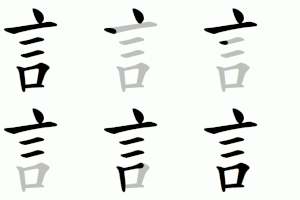 | |||
Alternative forms
Note that in Japanese and Korean, the 亠 component on top of the character is written 二, similar to the form found in the Kangxi dictionary.
Han character
訁 (Kangxi radical 149, 言+0, 7 strokes, cangjie input 難難卜一一 (XXYMM) or 卜一一口 (YMMR), composition ⿳丶三口(GHTV) or ⿱亖口(JK))
- Kangxi radical #149, 言.
References
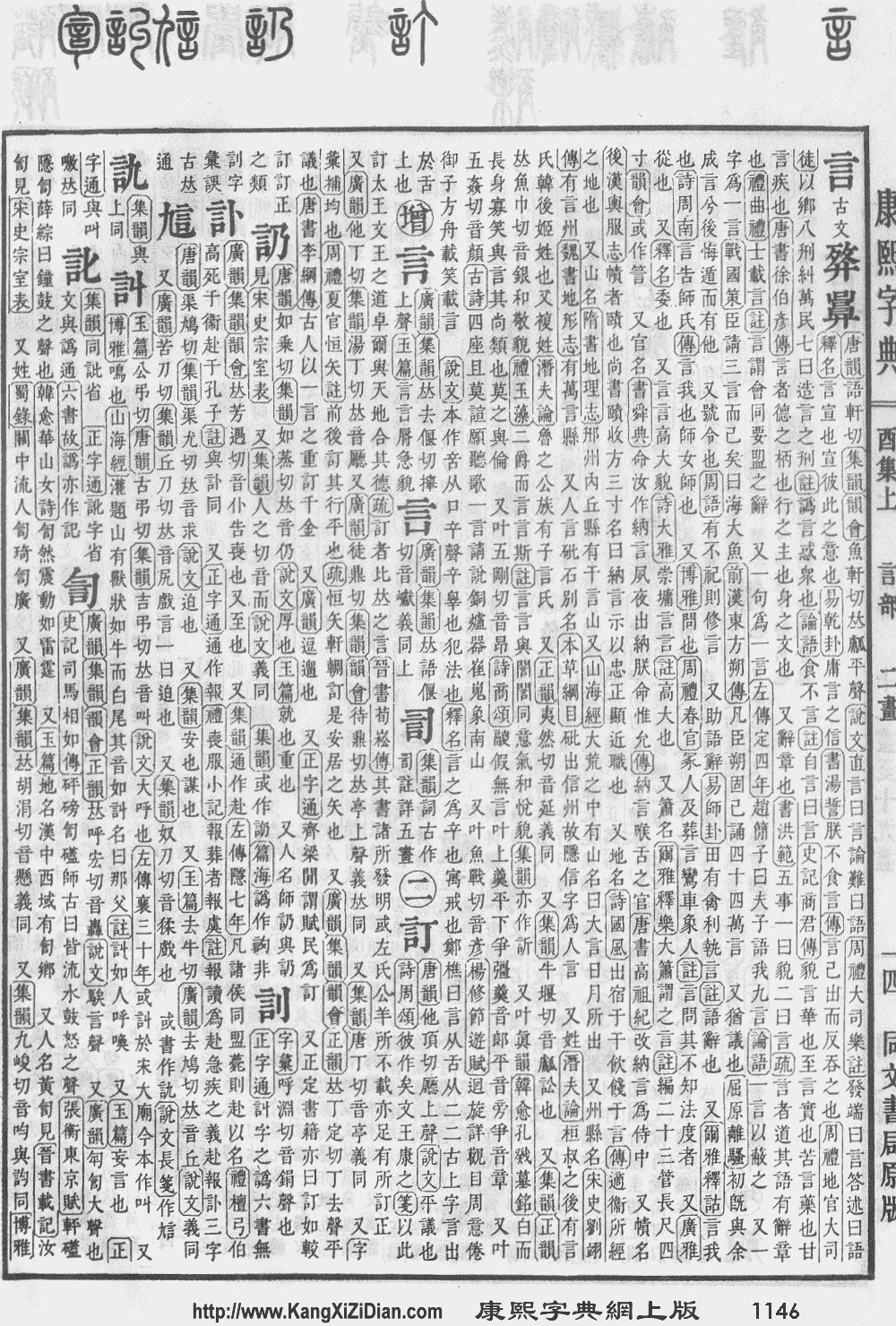
- Kangxi Dictionary: not present, would follow page 1146, character 1
- Hanyu Da Zidian (first edition): not present, would follow volume 6, page 3936, character 1
- Unihan data for U+8A01
Vietnamese
This article is issued from Wiktionary. The text is licensed under Creative Commons - Attribution - Sharealike. Additional terms may apply for the media files.