言
| ||||||||
| ||||||||
Translingual
| Stroke order | |||
|---|---|---|---|
 | |||
| Japanese | 言 |
|---|---|
| Simplified | 言 |
| Traditional | 言 |
Alternative forms
Note that in Japanese and Korean (printed forms), the 亠 component on top is written 二 (as found in the Kangxi dictionary). In traditional/simplified Chinese and Vietnamese, the top component is written 丶. In written Japanese, the top component may be written either 一, 丶 or 丨 (small vertical stroke).
Han character
言 (Kangxi radical 149, 言+0, 7 strokes, cangjie input 卜一一口 (YMMR), four-corner 00601, composition ⿳亠𠄠口(GHTV) or ⿱亖口(JK))
- Kangxi radical #149, ⾔.
- Shuowen Jiezi radical №56
Derived characters
References
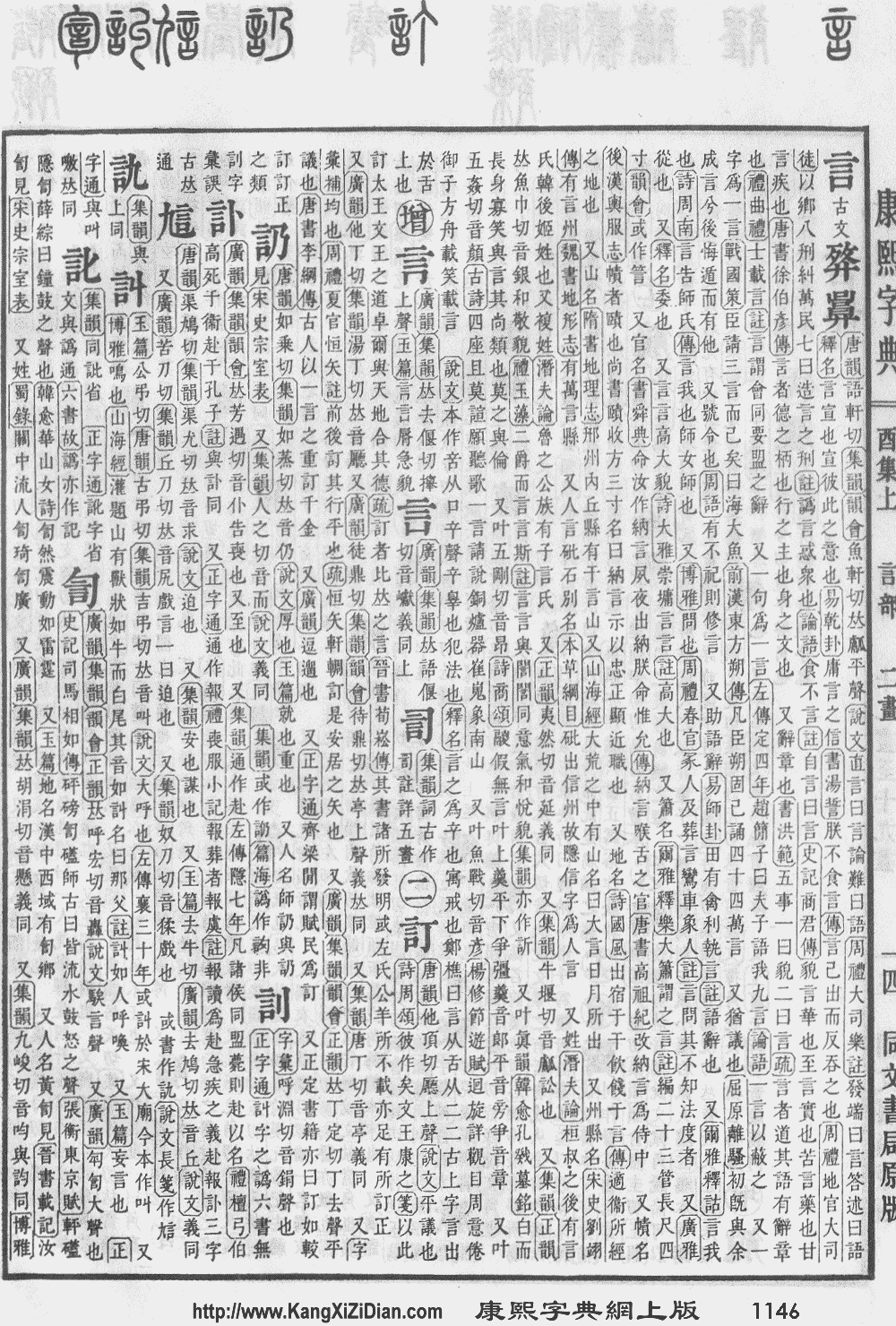
- Kangxi Dictionary: page 1146, character 1
- Dai Kanwa Jiten: character 35205
- Dae Jaweon: page 1612, character 20
- Hanyu Da Zidian (first edition): volume 6, page 3936, character 1
- Unihan data for U+8A00
Chinese
| simp. and trad. |
言 | |
|---|---|---|
Glyph origin
| Historical forms of the character 言 | |||
|---|---|---|---|
| Shang | Western Zhou | Shuowen Jiezi (compiled in Han) | Liushutong (compiled in Ming) |
| Oracle bone script | Bronze inscriptions | Small seal script | Transcribed ancient scripts |
 |
 |
 |
 |
Ideogram (指事) : 言 was created by adding a mark to 舌 to indicate movement of the tongue.[1] This indicates speech where 舌 is a mouth (口) with a tongue sticking out.
Shuowen erroneously analyzes the glyph as a phono-semantic compound (形聲/形声) : phonetic 䇂 () + semantic 口 (“mouth”).
Etymology
According to Schuessler (2007: 74) this word is derived from 語 (OC *ŋaʔ, “to speak”) + -n nominal suffix.
Pronunciation
Definitions
言
- to say; to speak; to talk
- to discuss; to comment
- to state; to describe; to explain
- to write down; to record
- to ask; to inquire
- to inform; to tell; to let know
- spoken language; speech
- opinion; view; perspective
- words; language appropriate to the occasion
- proposal; idea; plan
- government decree; order
- character; word
- sentence; writing; works
- † A meaningless sentence-initial mood particle.
- 陟彼南山,言采其蕨 [Classical Chinese, trad. and simp.]
- From: The Classic of Poetry, c. 11th – 7th centuries BCE, translated based on James Legge's version
- zhì bǐ nán shān, yán cǎi qí jué [Pinyin]
- (please add an English translation of this usage example)
- a surname
Synonyms
Compounds
- 一家之言 (yījiāzhīyán)
- 一家言
- 一概而言
- 一般而言 (yībān'éryán)
- 一言 (yīyán)
- 七言 (qīyán)
- 七言八語/七言八语
- 七言詩/七言诗 (qīyánshī)
- 三復斯言/三复斯言
- 下筆千言/下笔千言
- 三言二拍
- 三言兩句/三言两句
- 三言兩語/三言两语 (sānyánliǎngyǔ)
- 不可勝言/不可胜言 (bùkěshèngyán)
- 不可言
- 不可言喻 (bùkěyányù)
- 不可言宣
- 不忍言 (bùrěnyán)
- 不知所言
- 不言不語/不言不语 (bùyánbùyǔ)
- 不言之教
- 不言而化
- 不言而喻 (bùyán'éryù)
- 中冓之言
- 亂言/乱言 (luànyán)
- 五言古詩/五言古诗
- 五言詩/五言诗 (wǔyánshī)
- 五言長城/五言长城
- 交淺言深/交浅言深
- 人微言輕/人微言轻 (rénwēiyánqīng)
- 人言 (rényán)
- 仁言利博
- 以人廢言/以人废言 (yǐrénfèiyán)
- 仗義執言/仗义执言 (zhàngyìzhíyán)
- 代言 (dàiyán)
- 以言取人
- 位卑言高
- 佞言
- 侈言 (chǐyán)
- 例言
- 佯言 (yángyán)
- 便言
- 俚言
- 倡言 (chàngyán)
- 倚馬千言/倚马千言
- 偏言 (piānyán)
- 偈言
- 側言/侧言
- 假言命題/假言命题
- 備言/备言 (bèiyán)
- 傳言/传言 (chuányán)
- 儳言 (chànyán)
- 兩言/两言
- 八言詩/八言诗
- 六言詩/六言诗
- 冷言
- 冷言冷語/冷言冷语 (lěngyán lěngyǔ)
- 冷言熱語/冷言热语
- 出言 (chūyán)
- 刮言
- 前言 (qiányán)
- 創意造言/创意造言
- 劖言訕語/劖言讪语
- 千言萬語/千言万语 (qiānyánwànyǔ)
- 卮言
- 危言 (wēiyán)
- 去梯言
- 口不擇言/口不择言 (kǒubùzéyán)
- 口出穢言/口出秽言
- 口無擇言/口无择言
- 可言 (kěyán)
- 同日而言
- 名正言順/名正言顺 (míngzhèngyánshùn)
- 吉言 (jíyán)
- 名言 (míngyán)
- 同言線/同言线 (tóngyánxiàn)
- 哽噎難言/哽噎难言
- 喻世明言
- 嘖有煩言/啧有烦言
- 嘉言 (jiāyán)
- 嘉言善行
- 嘉言懿行
- 噧言/𱒀言
- 四言詩/四言诗
- 在商言商
- 在官言官
- 坐言起行
- 坦言 (tǎnyán)
- 多言 (duōyán)
- 大言 (dàyán)
- 大辯不言/大辩不言
- 大體而言/大体而言
- 失言 (shīyán)
- 好言 (hǎoyán)
- 妄言 (wàngyán)
- 奸言
- 妙不可言
- 妖言 (yāoyán)
- 妙言要道
- 姑妄言之
- 婦言/妇言
- 婉言 (wǎnyán)
- 媒妁之言
- 宣言 (xuānyán)
- 寓言 (yùyán)
- 寡言 (guǎyán)
- 察言觀色/察言观色 (cháyánguānsè)
- 導言/导言 (dǎoyán)
- 小小不言
- 小言
- 巧言 (qiǎoyán)
- 巧語花言/巧语花言
- 巽言
- 常言 (chángyán)
- 幣厚言甘/币厚言甘
- 幣重言甘/币重言甘
- 序言 (xùyán)
- 庸言
- 廣開言路/广开言路 (guǎngkāiyánlù)
- 建言 (jiànyán)
- 弁言 (biànyán)
- 引言 (yǐnyán)
- 後言/后言
- 徒託空言/徒托空言
- 得意忘言
- 微言 (wēiyán)
- 德容言功
- 德言容功
- 德言工貌
- 徽言
- 忘言
- 忿言
- 忠言 (zhōngyán)
- 忠言嘉謨/忠言嘉谟
- 忠言奇謀/忠言奇谋
- 忠言讜論/忠言谠论
- 忠言逆耳 (zhōngyánnì'ěr)
- 急不擇言/急不择言
- 怨而不言
- 怨言 (yuànyán)
- 急言
- 恆言/恒言 (héngyán)
- 情在言外
- 情見乎言/情见乎言
- 惡言/恶言 (èyán)
- 意切言盡/意切言尽
- 感言 (gǎnyán)
- 慎言
- 懇言/恳言
- 懿言
- 成一家言
- 成言
- 戲言/戏言 (xìyán)
- 把手言歡/把手言欢
- 捫蝨而言/扪虱而言
- 握手言歡/握手言欢
- 揚言/扬言 (yángyán)
- 換言之/换言之 (huànyánzhī)
- 摭言
- 攙言接語/搀言接语
- 放言
- 放言高論/放言高论
- 敘言/叙言 (xùyán)
- 敢言
- 文言 (wényán)
- 文言文 (wényánwén)
- 斷言/断言 (duànyán)
- 方言 (fāngyán)
- 日試萬言/日试万言
- 明言 (míngyán)
- 昌言 (chāngyán)
- 星言夙駕/星言夙驾
- 晤言
- 智小言大
- 暢所欲言/畅所欲言 (chàngsuǒyùyán)
- 書不盡言/书不尽言
- 有口難言/有口难言 (yǒukǒunányán)
- 有苦難言/有苦难言
- 有言在先 (yǒuyán zàixiān)
- 杜口絕言/杜口绝言
- 果如其言
- 果如是言
- 格言 (géyán)
- 棄言/弃言
- 樂不可言/乐不可言
- 欲言又止
- 款語溫言/款语温言
- 正言
- 毀言/毁言
- 氣盛言宜/气盛言宜
- 沉重少言
- 沉靜少言/沉静少言
- 治家格言
- 法言
- 流言 (liúyán)
- 海口浪言
- 海岳名言
- 浪言
- 浮言 (fúyán)
- 涎言涎語/涎言涎语
- 清言
- 深言
- 渾言/浑言
- 游言
- 溢於言表/溢于言表 (yìyúyánbiǎo)
- 潔言汙行/洁言污行
- 無庸贅言/无庸赘言
- 無稽之言/无稽之言
- 無言/无言 (wúyán)
- 煩言/烦言 (fányán)
- 片言 (piànyán)
- 片面之言
- 犯言
- 狂言 (kuángyán)
- 甘言 (gānyán)
- 甜言 (tiányán)
- 甜語花言/甜语花言
- 由中之言
- 由衷之言
- 留言 (liúyán)
- 異言/异言 (yìyán)
- 疾言厲色/疾言厉色 (jíyánlìsè)
- 疾言遽色
- 發言/发言 (fāyán)
- 百家之言
- 盡言/尽言
- 直言 (zhíyán)
- 相機而言/相机而言
- 真言 (zhēnyán)
- 眷言
- 瞽言妄舉/瞽言妄举
- 瞽言芻議/瞽言刍议
- 矢言 (shǐyán)
- 知無不言/知无不言 (zhīwúbùyán)
- 知而不言
- 知言 (zhīyán)
- 矯言偽行/矫言伪行
- 碩言/硕言
- 社會方言/社会方言 (shèhuì fāngyán)
- 禽言
- 萬言書/万言书
- 萬語千言/万语千言
- 私言
- 穢言/秽言 (huìyán)
- 穢語汙言/秽语污言
- 空言 (kōngyán)
- 窕言
- 立掃千言/立扫千言
- 立言
- 立言豎辭/立言竖辞
- 童言無忌/童言无忌 (tóngyánwújì)
- 竫言
- 箴言 (zhēnyán)
- 粗言
- 約言/约言
- 納言/纳言 (nàyán)
- 結言/结言
- 緒言/绪言 (xùyán)
- 緘口不言/缄口不言
- 總而言之/总而言之 (zǒng'éryánzhī)
- 縱言/纵言
- 繁言吝嗇/繁言吝啬
- 繩墨之言/绳墨之言
- 罕言寡語/罕言寡语
- 美言 (měiyán)
- 耳食之言
- 聲言/声言 (shēngyán)
- 肆言無忌/肆言无忌
- 肆言詈辱
- 肺腑之言 (fèifǔzhīyán)
- 胡言 (húyán)
- 胡言亂語/胡言乱语 (húyánluànyǔ)
- 胡言漢語/胡言汉语 (húyánhànyǔ)
- 能言 (néngyán)
- 能言鳥/能言鸟 (néngyánniǎo)
- 自不待言 (zìbùdàiyán)
- 自言自語/自言自语 (zìyánzìyǔ)
- 至言 (zhìyán)
- 舉言/举言
- 良言 (liángyán)
- 芻言/刍言
- 花言巧語/花言巧语 (huāyánqiǎoyǔ)
- 苦不堪言 (kǔbùkānyán)
- 苦言
- 苟言
- 荒唐之言
- 莠言
- 薄脣輕言/薄唇轻言
- 藥石之言/药石之言
- 藥言/药言
- 蘭言/兰言
- 虛言/虚言 (xūyán)
- 行不及言
- 行不顧言/行不顾言
- 行濁言清/行浊言清
- 裡言/里言
- 要而言之
- 要言
- 規言矩步/规言矩步
- 言下之意 (yánxiàzhīyì)
- 言三語四/言三语四
- 言不及私
- 言不及義/言不及义 (yánbùjíyì)
- 言不應點/言不应点
- 言不由中
- 言不由衷 (yánbùyóuzhōng)
- 言不盡意/言不尽意 (yán bù jìn yì)
- 言不詭隨/言不诡随
- 言不諳典/言不谙典
- 言不踐行/言不践行
- 言不逮意
- 言不顧行/言不顾行
- 言之不渝
- 言之不盡/言之不尽
- 言之不預/言之不预
- 言之成理 (yánzhīchénglǐ)
- 言之有物
- 言之有理 (yánzhīyǒulǐ)
- 言之無物/言之无物 (yánzhīwúwù)
- 言之過早/言之过早 (yánzhīguòzǎo)
- 言之過甚/言之过甚
- 言之鑿鑿/言之凿凿 (yánzhīzáozáo)
- 言事若神
- 言人人殊 (yánrénrénshū)
- 言來語去/言来语去
- 言傳/言传 (yánchuán)
- 言兒語子/言儿语子
- 言出如山
- 言出必行 (yánchūbìxíng)
- 言出患入
- 言出法隨/言出法随 (yánchūfǎsuí)
- 言十妄九
- 言和 (yánhé)
- 言和意順/言和意顺
- 言外 (yánwài)
- 言多傷行/言多伤行
- 言多失實/言多失实
- 言多必失 (yánduōbìshī)
- 言多語失/言多语失
- 言大而夸
- 言字旁 (yánzìpáng)
- 言官
- 言容 (yánróng)
- 言對/言对
- 言差語錯/言差语错
- 言從計納/言从计纳
- 言從計行/言从计行
- 言微旨遠/言微旨远
- 言必有中 (yánbìyǒuzhòng)
- 言必有據/言必有据
- 言情 (yánqíng)
- 言揚行舉/言扬行举
- 言教 (yánjiào)
- 言旁
- 言明 (yánmíng)
- 言歸于好
- 言歸和好/言归和好
- 言歸於好/言归于好 (yánguīyúhǎo)
- 言歸正傳/言归正传 (yánguīzhèngzhuàn)
- 言泉 (yánquán)
- 言淺意深/言浅意深
- 言清行濁/言清行浊
- 言為心聲/言为心声 (yánwéixīnshēng)
- 言無不盡/言无不尽
- 言無二價/言无二价
- 言狀/言状
- 言狂意妄
- 言猶在耳/言犹在耳 (yányóuzài'ěr)
- 言真道假
- 言笑 (yánxiào)
- 言筌
- 言簡意賅/言简意赅 (yánjiǎnyìgāi)
- 言絕/言绝
- 言而不信 (yán'érbùxìn)
- 言而有信
- 言而無信/言而无信 (yán'érwúxìn)
- 言聽行從/言听行从
- 言聽計從/言听计从 (yántīngjìcóng)
- 言聽計用/言听计用
- 言聽計行/言听计行
- 言若懸河/言若悬河
- 言行
- 言言
- 言詞/言词 (yáncí)
- 言誓
- 言說/言说 (yánshuō)
- 言語/言语
- 言談/言谈 (yántán)
- 言論/言论 (yánlùn)
- 言責/言责
- 言路 (yánlù)
- 言身寸
- 言辭/言辞 (yáncí)
- 言近指遠/言近指远
- 言近旨遠/言近旨远
- 言過其實/言过其实 (yánguòqíshí)
- 言重 (yánzhòng)
- 言靈/言灵
- 言類懸河/言类悬河
- 言顛語倒/言颠语倒
- 言高語低/言高语低
- 託言/托言 (tuōyán)
- 訟言/讼言
- 訛言/讹言 (éyán)
- 設言托意/设言托意
- 詢事考言/询事考言
- 詩以言志/诗以言志
- 誆言詐語/诓言诈语
- 語四言三/语四言三
- 誑言/诳言 (kuángyán)
- 誓言 (shìyán)
- 語言/语言
- 誦言/诵言
- 諍言/诤言 (zhèngyán)
- 誹言/诽言
- 談言微中/谈言微中
- 課語訛言/课语讹言
- 諾言/诺言 (nuòyán)
- 諱言/讳言 (huìyán)
- 諺言/谚言
- 諫言/谏言 (jiànyán)
- 諛言/谀言 (yúyán)
- 謊言/谎言 (huǎngyán)
- 謠言/谣言 (yáoyán)
- 謎言謎語/谜言谜语
- 謹言/谨言
- 謬言/谬言
- 證言/证言 (zhèngyán)
- 譖言/谮言
- 警世通言
- 譫言/谵言
- 讆言/𬣀言
- 讕言/谰言 (lányán)
- 讒言/谗言 (chányán)
- 讜言/谠言
- 豪言壯語/豪言壮语 (háoyánzhuàngyǔ)
- 貌言
- 貴不可言/贵不可言 (guì bùkě yán)
- 貳言/贰言 (èryán)
- 質言/质言 (zhìyán)
- 贅言/赘言 (zhuìyán)
- 贈言/赠言 (zèngyán)
- 踐言/践言 (jiànyán)
- 踰言/逾言
- 身輕言微/身轻言微 (shēnqīngyánwēi)
- 載笑載言/载笑载言
- 輕言/轻言
- 辟言
- 迂言
- 退有後言/退有后言
- 逆耳之言
- 迷言迷語/迷言迷语
- 造言惑眾/造言惑众
- 造言生事
- 進言/进言 (jìnyán)
- 違心之言/违心之言
- 過言/过言 (guòyán)
- 違言/违言
- 遺言/遗言 (yíyán)
- 還言/还言
- 邇言/迩言
- 鄙言
- 醒世恆言/醒世恒言 (Xǐngshì Héngyán)
- 釋言/释言
- 重言
- 野叟曝言
- 金口玉言
- 金玉之言
- 金石之言
- 金言 (jīnyán)
- 開言/开言 (kāiyán)
- 閒言/闲言
- 附耳低言
- 陳言/陈言 (chényán)
- 陳言務去/陈言务去
- 隻字片言/只字片言
- 隻言片語/只言片语 (zhīyánpiànyǔ)
- 雅俗稽言
- 雅言 (yǎyán)
- 雜言/杂言
- 難以言喻/难以言喻 (nányǐyányù)
- 難言之隱/难言之隐 (nányánzhīyǐn)
- 難說難言/难说难言
- 靜言/静言
- 非言
- 預言/预言 (yùyán)
- 顧左右而言他/顾左右而言他 (gù zuǒyòu ér yán tā)
- 風聞言事/风闻言事
- 風裡言/风里言
- 風言/风言
- 食言 (shíyán)
- 食言而肥 (shíyán'érféi)
- 高言
References
- <言> at the Glyph Database from the Institute of History and Language of the Academia Sinica and the Institute of Information Science
Japanese
Readings
Compounds
Synonyms
- (parole): パロール (parōru)
References
- Matsumura, Akira, editor (2006), 大辞林 [Daijirin] (in Japanese), Third edition, Tōkyō: Sanseidō, →ISBN
- NHK Broadcasting Culture Research Institute, editor (1998), NHK日本語発音アクセント辞典 [NHK Japanese Pronunciation Accent Dictionary] (in Japanese), Tōkyō: NHK Publishing, →ISBN
- Yamada, Tadao et al., editors (2011), 新明解国語辞典 [Shin Meikai Kokugo Jiten] (in Japanese), Seventh edition, Tōkyō: Sanseidō, →ISBN
- Matsumura, Akira (1995) 大辞泉 [Daijisen] (in Japanese), First edition, Tōkyō: Shogakukan, →ISBN
Korean
Etymology 1
From Middle Chinese 言 (MC ngjon).
| Historical readings |
|---|
|
Pronunciation
- (SK Standard/Seoul) IPA(key): [ʌ̹n]
- Phonetic hangul: [언]
Compounds
- 언어 (言語, eoneo)
- 언행 (言行, eonhaeng)
- 언론 (言論, eollon)
- 발언 (發言, bareon)
- 선언 (宣言, seoneon)
- 언급 (言及, eon'geup)
- 증언 (證言, jeung'eon)
- 망언 (妄言, mang'eon)
- 격언 (格言, gyeogeon)
- 화편 (花片, hwapyeon)
- 언동 (言動, eondong)
- 대언 (對言, daeeon)
- 폭언 (暴言, pogeon)
- 전언 (傳言, jeoneon)
- 조언 (助言, jo'eon)
- 언중 (言衆, eonjung)
- 허언 (虛言, heo'eon)
- 언사 (言辭, eonsa)
- 언약 (言約, eonyak)
- 유언 (遺言, yueon)
- 잠언 (箴言, jameon)
- 눌언 (訥言, nureon)
- 공언 (公言, gong'eon)
- 고언 (苦言, go'eon)
- 이언 (俚言, ieon)
- 확언 (確言, hwageon)
- 오언 (五言, o'eon)
- 진언 (眞言, jineon)
- 제언 (提言, jeeon)
- 명언 (名言, myeong'eon)
- 부언 (浮言, bueon)
- 좌언 (左言, jwa'eon)
- 예언 (豫言, yeeon)
- 호언 (豪言, ho'eon)
- 단언 (端言, daneon)
- 언변 (言辯, eonbyeon)
- 정언 (正言, jeong'eon)
- 창언 (昌言, chang'eon)
- 가언 (嘉言, ga'eon)
- 언설 (言舌, eonseol)
- 간언 (諫言, ganeon)
- 방언 (方言, bang'eon)
- 언쟁 (言爭, eonjaeng)
- 언필칭 (言必稱, eonpilching)
- 가언판단 (假言判斷, ga'eonpandan)
Etymology 2
Related to Middle Chinese 誾 (MC ngin).
Hanja
Compounds
- 은은 (言言, euneun)
Okinawan
Readings
- Kun: くとぅ (kutu, 言), っいゅん ('yun, 言ゅん)