躂
See also: 跶
| ||||||||
Translingual
Han character
躂 (Kangxi radical 157, 足+13 in traditional Chinese and Japanese, 足+12 in mainland China, 20 strokes in traditional Chinese and Japanese, 19 strokes in mainland China, cangjie input 口一卜土手 (RMYGQ), four-corner 64135, composition ⿰𧾷達)
Related characters
References
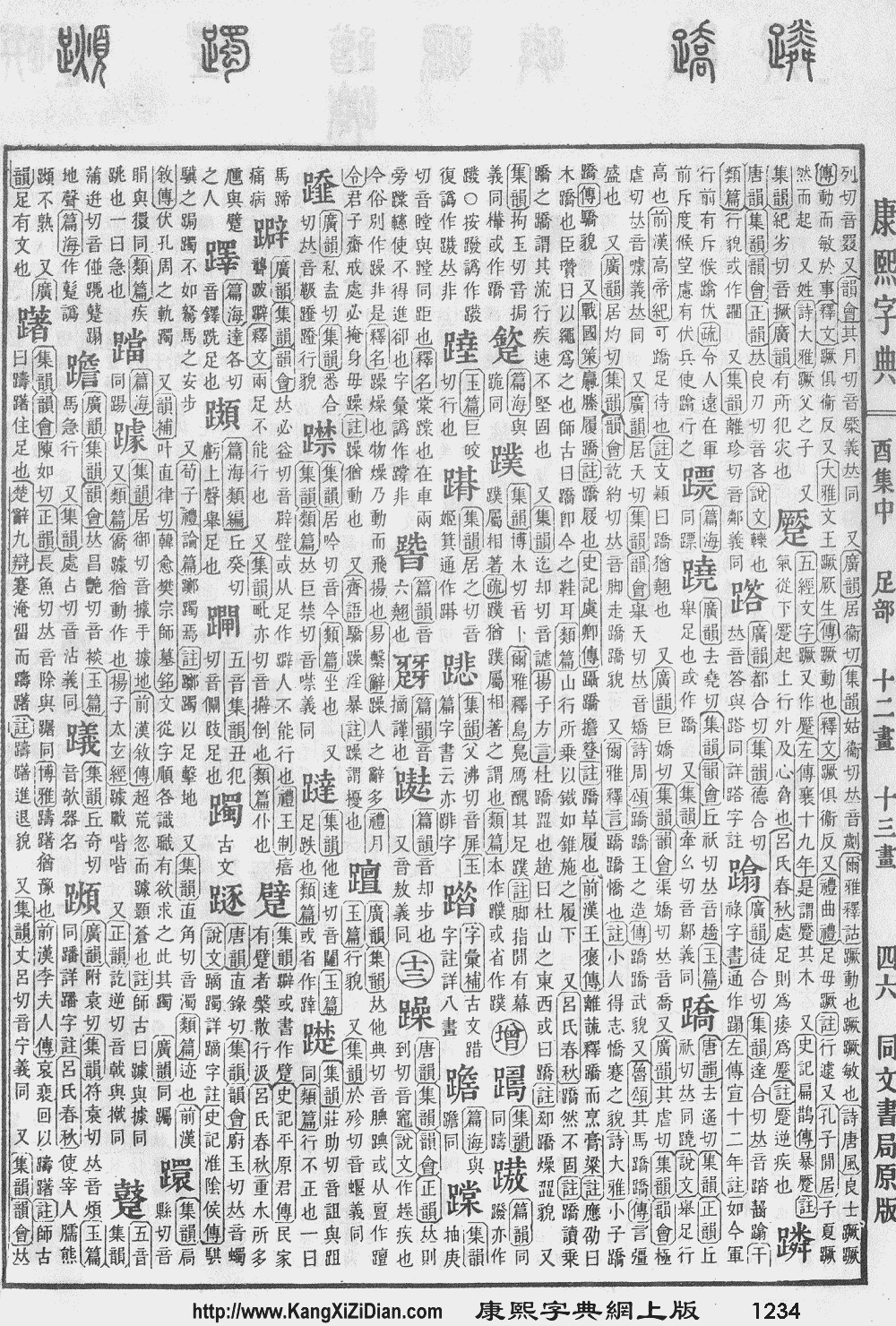
- Kangxi Dictionary: page 1234, character 25
- Dai Kanwa Jiten: character 37910
- Dae Jaweon: page 1707, character 1
- Hanyu Da Zidian (first edition): volume 6, page 3737, character 11
- Unihan data for U+8E82
Chinese
| trad. | 躂 | |
|---|---|---|
| simp. | 跶 | |
| alternative forms | ||
Glyph origin
Characters in the same phonetic series (羍) (Zhengzhang, 2003)
Phono-semantic compound (形聲/形声, OC *tʰaːd) : semantic 足 (“foot”) + phonetic 達 (OC *tʰaːd, *daːd).
Pronunciation 1
Pronunciation 2
Pronunciation 3
Compounds
- 踢躂舞/踢跶舞
References
- Dictionary of Chinese Character Variants (教育部異體字字典), A04050
- “躂”, in 漢語多功能字庫 (Multi-function Chinese Character Database), 香港中文大學 (the Chinese University of Hong Kong), 2014–
Japanese
Kanji
躂
- This term needs a translation to English. Please help out and add a translation, then remove the text
{{rfdef}}.
This article is issued from Wiktionary. The text is licensed under Creative Commons - Attribution - Sharealike. Additional terms may apply for the media files.