躁
| ||||||||
Translingual
Han character
躁 (Kangxi radical 157, 足+13, 20 strokes, cangjie input 口一口口木 (RMRRD), four-corner 66194, composition ⿰𧾷喿)
References
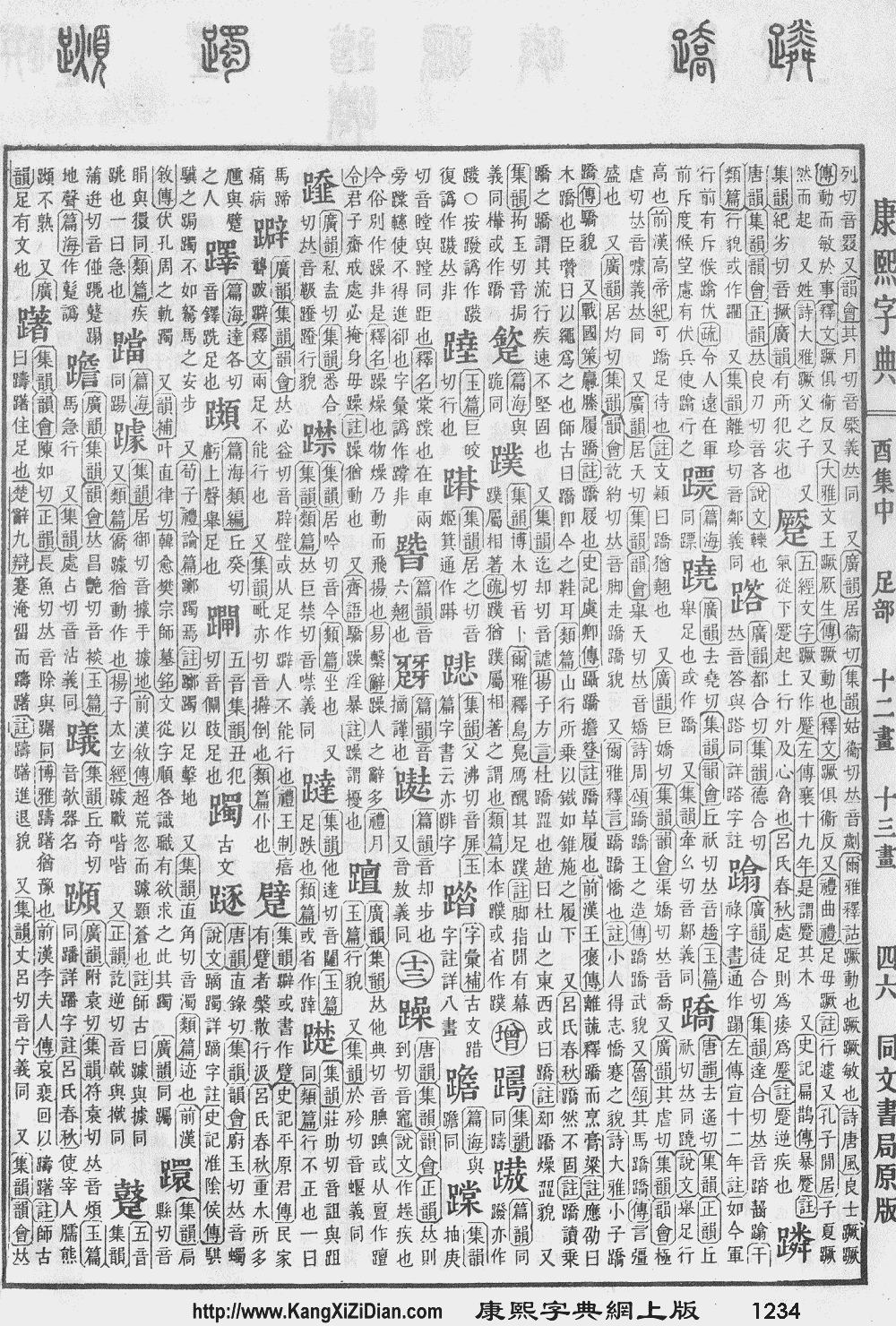
- Kangxi Dictionary: page 1234, character 21
- Dai Kanwa Jiten: character 37906
- Dae Jaweon: page 1706, character 32
- Hanyu Da Zidian (first edition): volume 6, page 3743, character 18
- Unihan data for U+8E81
Chinese
| trad. | 躁 | |
|---|---|---|
| simp. # | 躁 | |
Pronunciation
Compounds
Japanese
Kanji
躁
- This term needs a translation to English. Please help out and add a translation, then remove the text
{{rfdef}}.
Korean
Hanja
躁 • (jo) (hangeul 조, revised jo, McCune–Reischauer cho, Yale co)
- This term needs a translation to English. Please help out and add a translation, then remove the text
{{rfdef}}.
Vietnamese
This article is issued from Wiktionary. The text is licensed under Creative Commons - Attribution - Sharealike. Additional terms may apply for the media files.