逿
| ||||||||
Translingual
Han character
逿 (Kangxi radical 162, 辵+9, 13 strokes, cangjie input 卜日一竹 (YAMH), four-corner 36302, composition ⿺辶昜)
References
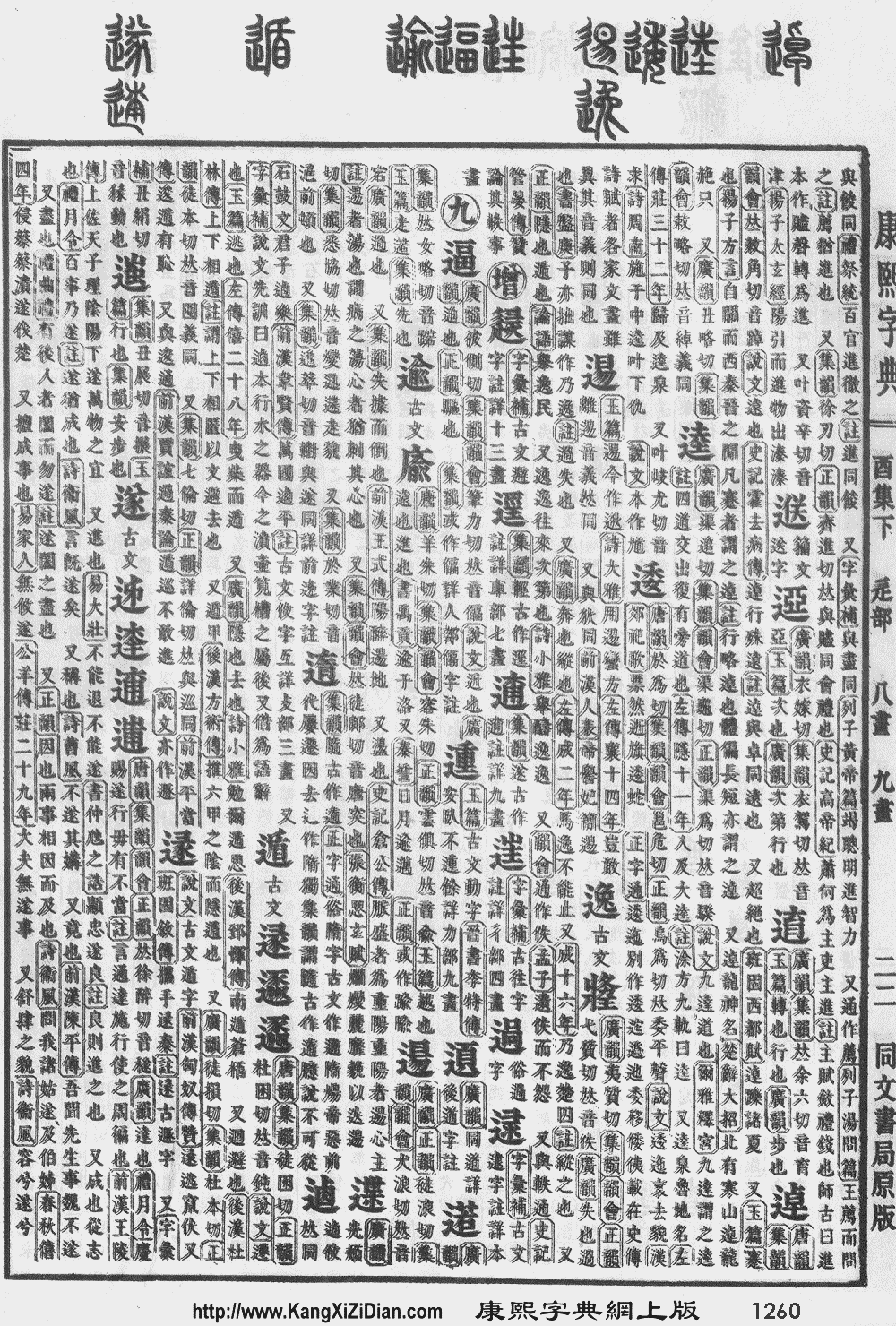
- Kangxi Dictionary: page 1260, character 22
- Dai Kanwa Jiten: character 38978
- Dae Jaweon: page 1750, character 24
- Hanyu Da Zidian (first edition): volume 6, page 3857, character 14
- Unihan data for U+903F
Chinese
| trad. | 逿 | |
|---|---|---|
| simp. | 𰺲 | |
Pronunciation
Definitions
逿
- † to stumble; to topple, to fall over
- (Eastern Min) to fall
- 天逿其石 [Eastern Min, trad.]
- tiĕng dâung gì siŏh / [tʰieŋ⁵⁵ tɑuŋ²⁴² ki⁵³ suoʔ⁵] [Bàng-uâ-cê / IPA]
- a rock that has fallen from the sky
天𰺲其石 [Eastern Min, simp.]
- (Eastern Min) to be lost, to be mislaid
- 逿無去/𰺲无去 [Eastern Min] ― dâung mò̤ kó̤>ó̤ / [tɑuŋ²⁴² mo⁵³ ɔ²¹³] [Bàng-uâ-cê / IPA] ― to be completely lost, to be given up as lost
Japanese
Kanji
逿
- This term needs a translation to English. Please help out and add a translation, then remove the text
{{rfdef}}.
This article is issued from Wiktionary. The text is licensed under Creative Commons - Attribution - Sharealike. Additional terms may apply for the media files.