其
| ||||||||
Translingual
| Stroke order | |||
|---|---|---|---|
 | |||
| Stroke order | |||
|---|---|---|---|
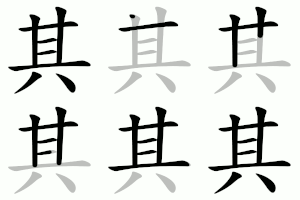 | |||
Han character
其 (Kangxi radical 12, 八+6, 8 strokes, cangjie input 廿一一金 (TMMC), four-corner 44801, composition ⿴共𠄠)
Derived characters
See also
References
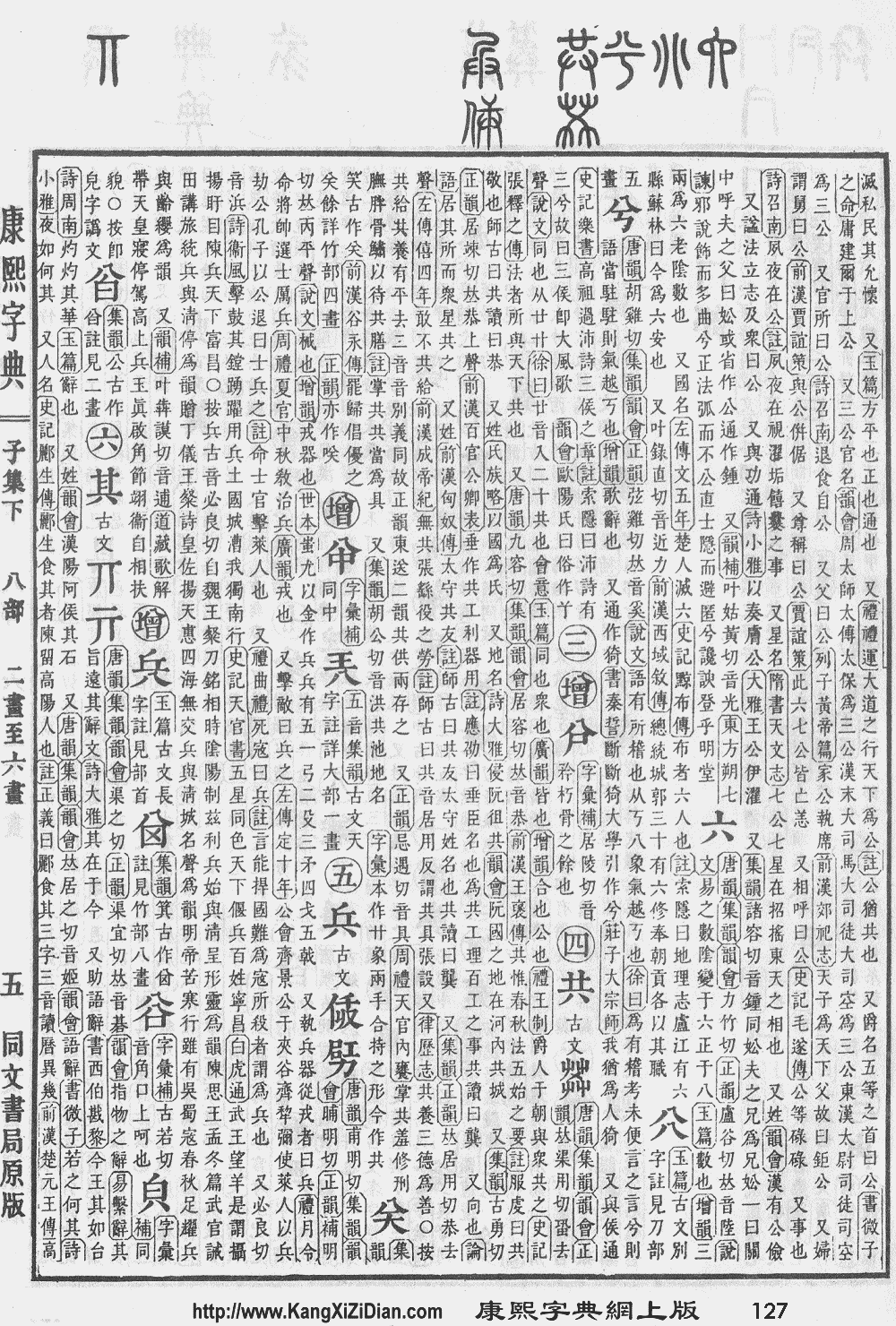
- Kangxi Dictionary: page 127, character 18
- Dai Kanwa Jiten: character 1472
- Dae Jaweon: page 286, character 10
- Hanyu Da Zidian (first edition): volume 1, page 245, character 1
- Unihan data for U+5176
Bala
Chinese
| simp. and trad. |
其 | |
|---|---|---|
| 2nd round simp. | ⿱卄人 | |
| alternative forms | 丌 ancient 亓 𢍌 𠀠 ancient | |
Glyph origin
| Historical forms of the character 其 | ||||||||||||||
|---|---|---|---|---|---|---|---|---|---|---|---|---|---|---|
| Shang | Western Zhou | Shuowen Jiezi (compiled in Han) | Liushutong (compiled in Ming) | |||||||||||
| Oracle bone script | Bronze inscriptions | Small seal script | Transcribed ancient scripts | |||||||||||
 |
 |
 |
 | |||||||||||
|||
|
References: Mostly from Richard Sears' Chinese Etymology site (authorisation),
| ||||||||||||||


Characters in the same phonetic series (其) (Zhengzhang, 2003)
In the oracle bone script, it was originally 𠀠, a pictogram (象形) of a basket.
In the bronze inscriptions, 丌 was added under the basket to represent a stand. It may also have acted as a phonetic component.
Later borrowed for an Old Chinese pronoun. The derivative 箕 (OC *kɯ) refers to the original word.
Etymology
- third-person possessive pronoun
- Schuessler (2007) notes its origin is not certain because in the linguistic area pronouns tend to be of the shape KV (K=velar stop; V=vowel). Perhaps Sino-Tibetan; compare Mizo khi (“that”), Tibetan -ཀྱི, -གྱི (-kyi, -gyi, “genitive suffix”), but a Tibeto-Burman /a/ should be expected in this set. Alternatively, Proto-Austroasiatic *ki/ke ~ *ku/ko (“third person pronoun”) whose earliest form is perhaps *kɨ (Pinnow, 1965) appears to be phonologically closest to the OC word. 其 (OC *ɡɯ) may be related to 渠 (OC *ɡa, “he”).
Pronunciation 1
Definitions
其
- his; her; its; their
- 子曰:「父在,觀其志;父沒,觀其行;三年無改於父之道,可謂孝矣。」 [Classical Chinese, trad.]
- From: The Analects of Confucius, c. 475 – 221 BCE, translated based on James Legge's version
- Zǐ yuē: “Fù zài, guān qí zhì; fù mò, guān qí xíng; sān nián wú gǎi yú fù zhī dào, kěwèi xiào yǐ.” [Pinyin]
- The Master said, "While a man's father is alive, look at the bent of his will; when his father is dead, look at his conduct. If for three years he does not alter from the way of his father, he may be called filial."
子曰:「父在,观其志;父没,观其行;三年无改于父之道,可谓孝矣。」 [Classical Chinese, simp.]
- he; she; it; they; one
- 投其所好 ― tóuqísuǒhào ― to adapt to somebody's taste (lit. to cater to that which one likes)
- that; those
- (literary) among which; therein
- 寺僧使小僮持斧,於亂石間,擇其一二叩之,硿硿然。 [Classical Chinese, trad.]
- From: 1084, 蘇軾 (Su Shi), 石鐘山記
- Sìsēng shǐ xiǎotóng chí fǔ, yú luànshí jiān, zé qí yī'èr kòu zhī, kōngkōng rán. [Pinyin]
- The temple monk let his young servant hold an axe, and among the rocks pick one or two spots and strike at them. A sonorous sound was produced.
寺僧使小僮持斧,于乱石间,择其一二叩之,硿硿然。 [Classical Chinese, simp.]
- (literary) probably; perhaps
- 知進退存亡而不失其正者,其唯聖人乎! [Pre-Classical Chinese, trad.]
- From: I Ching, 11th – 8th century BCE
- Zhī jìntuì cúnwáng ér bù shī qí zhèng zhě, qí wéi shèngrén hū! [Pinyin]
- The person who knows to advance and to retire, to maintain and to let perish, without ever acting incorrectly, can probably only be the sage!
知进退存亡而不失其正者,其唯圣人乎! [Pre-Classical Chinese, simp.]- 子曰:「不怨天,不尤人。下學而上達。知我者,其天乎!」 [Classical Chinese, trad.]
- From: The Analects of Confucius, c. 475 – 221 BCE, Wiktionary translation
- Zǐyuē: “Bù yuàn tiān, bù yóu rén. Xià xué ér shàng dá. Zhī wǒ zhě, qí tiān hū!” [Pinyin]
- The Master replied, "I do not murmur against Heaven. I do not grumble against men. My studies lie low, and my penetration rises high. There is probably only Heaven who knows me!"
子曰:「不怨天,不尤人。下学而上达。知我者,其天乎!」 [Classical Chinese, simp.]- 微管仲,吾其被髮左衽矣。 [Classical Chinese, trad.]
- From: The Analects of Confucius, c. 475 – 221 BCE, Wiktionary translation
- Wēi Guǎn Zhòng, wú qí pīfàzuǒrèn yǐ. [Pinyin]
- But without Guan Zhong, we should now be wearing our hair unbound, and the lappets of our coats buttoning on the left side.
微管仲,吾其被发左衽矣。 [Classical Chinese, simp.]- 是故聖益聖,愚益愚,聖人之所以為聖,愚人之所以為愚,其皆出於此乎! [Classical Chinese, trad.]
- From: 8th–9th century, 韓愈 (Han Yu), 師說 (Shīshuō)
- Shìgù shèng yì shèng, yú yì yú, shèngrén zhīsuǒyǐ wèi shèng, yúrén zhīsuǒyǐ wèi yú, qí jiē chū yú cǐ hū! [Pinyin]
- Thus saints become more saintly, and fools become more foolish. The fact that saints become saintly and fools become foolish perhaps entirely originates from this!
是故圣益圣,愚益愚,圣人之所以为圣,愚人之所以为愚,其皆出于此乎! [Classical Chinese, simp.]
- (obsolete) particle indicating intention; let, shall, will
- 吾其奔也。 [Classical Chinese, trad. and simp.]
- From: Commentary of Zuo, c. 4th century BCE
- Wú qí bēn yě. [Pinyin]
- I had better flee.
- (literary) adverb indicating a rhetorical question
- 若火之燎于原,不可向邇,其猶可撲滅? [Classical Chinese, trad.]
- From: The Book of Documents, circa 4th – 3rd century BCE
- Ruò huǒ zhī liáo yú yuán, bùkěxiàng'ěr, qí yóu kě pūmiè? [Pinyin]
- When a fire is blazing in the flames so that it cannot be approached, can it still be beaten out?
若火之燎于原,不可向迩,其犹可扑灭? [Classical Chinese, simp.]- 晉不可啟,寇不可玩;一之謂甚,其可再乎! [Classical Chinese, trad.]
- From: Commentary of Zuo, c. 4th century BCE
- Jìn bùkě qǐ, kòu bùkě wán; yī zhī wèi shèn, qí kě zài hū! [Pinyin]
- The greed of Jin is not to be triggered; robbers are not to be ignored. Once is already too much; how can there be a second occurrence?
晋不可启,寇不可玩;一之谓甚,其可再乎! [Classical Chinese, simp.]
- (literary) adverb indicating imperative
- 秦王使人謂安陵君曰:「寡人欲以五百里之地易安陵,安陵君其許寡人!」 [Classical Chinese, trad.]
- From: Zhanguo Ce, circa 5th – 3rd centuries BCE
- Qín wáng shǐ rén wèi Ānlíng Jūn yuē: “Guǎrén yù yǐ wǔbǎi lǐ zhī dì yì Ānlíng, Ānlíng Jūn qí xǔ guǎrén!” [Pinyin]
- The king of Qin dispatched envoys to tell Anling Jun, "I would like to exchange five hundred li of land for Anling. Please accept my offer!"
秦王使人谓安陵君曰:「寡人欲以五百里之地易安陵,安陵君其许寡人!」 [Classical Chinese, simp.]
- (obsolete) if
- 湯其無郼,武其無岐,賢雖十全,不能成功。 [Classical Chinese, trad.]
- From: Lü Buwei, Master Lü's Spring and Autumn Annals, 239 BCE
- Tāng qí wú Yī, Wǔ qí wú Qí, xián suī shíquán, bùnéng chénggōng. [Pinyin]
- If Tang did not have Yi, if Wu did not have Qi, even though they were perfectly capable, they would not have been able to succeed.
汤其无郼,武其无岐,贤虽十全,不能成功。 [Classical Chinese, simp.]
- (obsolete) conjunction indicating a question with choices; or
- 今老邪?其欲干酒肉之味邪?其寡人亦有社稷之福邪? [Classical Chinese, trad. and simp.]
- From: Zhuangzi, circa 3rd – 2nd centuries BCE
- Jīn lǎo yé? Qí yù gān jiǔròu zhī wèi yé? Qí guǎrén yì yǒu shèjì zhī fú yé? [Pinyin]
- Are you now old? Or are you seeking the taste of wine and meat? Or may I enjoy the happiness derived from the spirits of the altars of the Land and Grain?
- 晏子避席曰:「請飲而後辭乎?其辭而後飲乎?」 [Classical Chinese, trad.]
- From: Annals of Master Yan, c. 3rd century BCE
- Yànzǐ bìxí yuē: “Qǐng yǐn érhòu cí hū? Qí cí érhòu yǐn hū?” [Pinyin]
- Yanzi stood up from his seat and asked, "Should I drink the cup of wine before explaining? Or should I explain before drinking the cup of wine?"
晏子避席曰:「请饮而后辞乎?其辞而后饮乎?」 [Classical Chinese, simp.]
- (Eastern Min or obsolete) possessive particle.
- a surname
Synonyms
Dialectal synonyms of 他 (“he”) [map]
Dialectal synonyms of 的 (“possessive particle”) [map]
Compounds
- 上下其手 (shàngxiàqíshǒu)
- 三緘其口/三缄其口 (sānjiānqíkǒu)
- 不乏其人 (bùfáqírén)
- 不其然
- 不勝其擾/不胜其扰
- 不勝其煩/不胜其烦 (bùshèngqífán)
- 不厭其煩/不厌其烦 (bùyàn qí fán)
- 不厭其詳/不厌其详 (bùyàn qí xiáng)
- 不堪其擾/不堪其扰 (bùkānqírǎo)
- 不安其室
- 不得其死 (bùdéqísǐ)
- 不憚其煩/不惮其烦
- 不解其故
- 不計其數/不计其数 (bùjì-qíshù)
- 乘其不備/乘其不备
- 乘其不意
- 二三其德
- 二三其意
- 五世其昌
- 以售其奸
- 以售其技
- 伊里其 (Yīlǐqí)
- 何其 (héqí)
- 依力克其 (Yīlìkèqí)
- 依蓋爾其/依盖尔其 (Yīgài'ěrqí)
- 允執其中/允执其中
- 充其量 (chōngqíliàng)
- 兩全其美/两全其美 (liǎngquánqíměi)
- 其中 (qízhōng)
- 其今
- 其他 (qítā)
- 其來有自/其来有自
- 其內/其内
- 其勢洶洶/其势汹汹 (qíshìxiōngxiōng)
- 其味無窮/其味无穷
- 其外 (qíwài)
- 其實/其实 (qíshí)
- 其後/其后 (qíhòu)
- 其從如雲/其从如云
- 其情可憫/其情可悯
- 其應若響/其应若响
- 其樂不窮/其乐不穷
- 其樂無比/其乐无比
- 其樂無窮/其乐无穷 (qílèwúqióng)
- 其樂融融/其乐融融 (qílèróngróng)
- 其次 (qícì)
- 其程
- 其貌不揚/其貌不扬 (qímàobùyáng)
- 其間/其间 (qíjiān)
- 其餘/其余 (qíyú)
- 其高
- 出其不備/出其不备
- 出其不意 (chūqíbùyì)
- 出其東門/出其东门
- 勉為其難/勉为其难 (miǎnwéiqínán)
- 卡其布 (kǎqíbù)
- 反其真
- 名副其實/名副其实 (míngfùqíshí)
- 各司其事
- 各展其長/各展其长
- 各得其宜
- 各從其志/各从其志
- 各得其所 (gèdéqísuǒ)
- 各為其主/各为其主
- 各異其趣/各异其趣
- 各盡其用/各尽其用
- 名符其實/名符其实 (míngfúqíshí)
- 各行其志
- 各行其是 (gèxíngqíshì)
- 名過其實/名过其实 (míngguòqíshí)
- 吞吐其辭/吞吐其辞
- 含糊其辭/含糊其辞 (hánhúqící)
- 吠非其主
- 哲人其萎
- 圖呼其/图呼其 (Túhūqí)
- 土耳其 (Tǔ'ěrqí)
- 土耳其浴 (tǔ'ěrqí yù)
- 土耳其語/土耳其语 (tǔ'ěrqíyǔ)
- 地盡其利/地尽其利
- 坐享其成 (zuòxiǎngqíchéng)
- 大張其詞/大张其词
- 大抬其槓/大抬其杠
- 大異其趣/大异其趣
- 大行其道 (dàxíngqídào)
- 天誘其衷/天诱其衷
- 奉其正朔
- 尤其 (yóuqí)
- 居其大半
- 巴格其 (Bāgéqí)
- 康其 (Kāngqí)
- 廁身其間/厕身其间
- 張大其事/张大其事
- 張大其詞/张大其词
- 徒有其名 (túyǒuqímíng)
- 得其三昧
- 得其所
- 得其所哉
- 復蹈其轍/复蹈其辙
- 微乎其微 (wēihūqíwēi)
- 忘其所以
- 恰如其分 (qiàrúqífèn)
- 恭逢其盛
- 慎重其事
- 懷璧其罪/怀璧其罪 (huáibìqízuì)
- 我行其野
- 投其所好 (tóuqísuǒhào)
- 掩其不備/掩其不备
- 掩其無備/掩其无备
- 捨我其誰/舍我其谁 (shěwǒqíshéi)
- 擊其不意/击其不意
- 支吾其詞/支吾其词 (zhīwuqící)
- 攻其不備/攻其不备 (gōngqíbùbèi)
- 攻其無備/攻其无备 (gōngqíwúbèi)
- 文如其人 (wénrúqírén)
- 普恰克其 (Pǔqiàkèqí)
- 曲盡其妙/曲尽其妙
- 會逢其適/会逢其适
- 有其父必有其子 (yǒu qí fù bì yǒu qí zǐ)
- 望其肩背
- 望其肩項/望其肩项
- 望其項背/望其项背 (wàngqíxiàngbèi)
- 果不其然 (guǒbùqírán)
- 果如其言
- 杼軸其空/杼轴其空
- 梁木其壞
- 極其/极其 (jíqí)
- 樂在其中/乐在其中 (lèzàiqízhōng)
- 樂觀其成/乐观其成 (lèguānqíchéng)
- 欺以其方
- 死得其所
- 殷其靁
- 求其友聲/求其友声
- 泰山其頹/泰山其颓
- 洞察其奸
- 洞燭其奸
- 烏爾其/乌尔其 (Wū'ěrqí)
- 無出其右/无出其右 (wúchūqíyòu)
- 物傷其類/物伤其类 (wùshāngqílèi)
- 物盡其用/物尽其用 (wùjìnqíyòng)
- 獨善其身/独善其身
- 獨行其是/独行其是
- 獨行其道/独行其道
- 玉成其事
- 玉成其美
- 玉爾其/玉尔其 (Yù'ěrqí)
- 理過其辭/理过其辞
- 用其所長/用其所长
- 用非其人
- 盡其在我/尽其在我
- 盡其所長/尽其所长
- 直呼其名
- 瞠乎其後/瞠乎其后 (chēnghūqíhòu)
- 知幾其神/知几其神
- 確有其事/确有其事 (quèyǒuqíshì)
- 神乎其技 (shénhūqíjì)
- 神乎其神
- 突如其來/突如其来 (tūrúqílái)
- 窮極其妙/穷极其妙
- 繩其祖武/绳其祖武
- 罄其所有
- 置身其中
- 聽其自然/听其自然
- 自取其咎 (zìqǔqíjiù)
- 自取其禍/自取其祸 (zìqǔqíhuò)
- 自取其辱 (zìqǔqírǔ)
- 自圓其說/自圆其说 (zìyuánqíshuō)
- 自得其樂/自得其乐 (zìdéqílè)
- 自食其力 (zìshíqílì)
- 自食其果 (zìshíqíguǒ)
- 與其/与其 (yǔqí)
- 舍我其誰/舍我其谁 (shěwǒqíshéi)
- 莫名其妙 (mòmíngqímiào)
- 莫明其妙 (mòmíngqímiào)
- 薩其馬/萨其马 (sàqímǎ)
- 虛有其表/虚有其表 (xūyǒuqíbiǎo)
- 言過其實/言过其实 (yánguòqíshí)
- 誇大其辭/夸大其辞 (kuādàqící)
- 誇張其辭/夸张其辞
- 誇誇其談/夸夸其谈 (kuākuāqítán)
- 譽過其實/誉过其实
- 貨暢其流/货畅其流
- 身當其境/身当其境
- 身臨其境/身临其境 (shēnlínqíjìng)
- 躬逢其盛
- 這其間/这其间
- 遂其所願/遂其所愿
- 過甚其實/过甚其实
- 過甚其詞/过甚其词
- 適得其反/适得其反 (shìdéqífǎn)
- 適得其所/适得其所 (shìdéqísuǒ)
- 適逢其會/适逢其会
- 鄭重其事/郑重其事
- 閃爍其詞/闪烁其词 (shǎnshuòqící)
- 闊其坎/阔其坎 (Kuòqíkǎn)
- 闃其無人/阒其无人
- 阿其克 (Āqíkè)
- 阿其所好
- 隱約其辭/隐约其辞
- 難辭其咎/难辞其咎 (náncíqíjiù)
- 靜觀其變/静观其变 (jìngguānqíbiàn)
- 順其自然/顺其自然 (shùnqízìrán)
- 首當其衝/首当其冲 (shǒudāngqíchōng)
- 高下其手
- 鬼瞰其室
Pronunciation 2
Definitions
其
- (obsolete) Used at the end of a sentence to show doubt.
- 夜如何其? [Pre-Classical Chinese, trad. and simp.]
- From: The Classic of Poetry, c. 11th – 7th centuries BCE, translated based on James Legge's version
- Yè rúhé jī? [Pinyin]
- How goes the night?
- (obsolete) Used in personal names.
Pronunciation 3
Definitions
其
- (archaic) Only used in 彼其.
References
- (Hakka) Lau, Chun-fat. Hakka Pinyin Dictionary (Chinese). Hong Kong: The Chinese University Press, 1997 (Chinese IME supplement) →ISBN.
- (Min Nan) “Entry #3600”, in 臺灣閩南語常用詞辭典 [Dictionary of Frequently-Used Taiwan Minnan] (overall work in Mandarin and Hokkien), Ministry of Education, R.O.C., 2023.
- “其”, in 漢語多功能字庫 (Multi-function Chinese Character Database), 香港中文大學 (the Chinese University of Hong Kong), 2014–
- Dictionary of Chinese Character Variants (教育部異體字字典), A00292
Japanese
Readings
Korean
Etymology
From Middle Chinese 其 (MC gi).
| Historical readings |
|---|
|
Pronunciation
- (SK Standard/Seoul) IPA(key): [ki]
- Phonetic hangul: [기]
Compounds
Compounds
- 기간 (其間, gigan)
- 기타 (其他, gita)
- 각기 (各其, gakgi)
- 기여 (其餘, giyeo)
- 급기 (及其, geupgi)
- 기외 (其外, gioe)
- 기역 (其亦, giyeok)
- 기수 (其數, gisu)
- 기중 (其中, gijung)
- 기처 (其處, gicheo)
- 기차 (其次, gicha)
- 급기야 (及其也, geupgiya)
- 급기시 (及其時, geupgisi)
- 기역시 (其亦是, giyeoksi)
- 즉기시 (卽其時, jeukgisi)
- 사기사 (事其事, sagisa)
- 득기소 (得其所, deukgiso)
- 적기시 (適其時, jeokgisi)
- 거기중 (居其中, geogijung)
- 어기중 (於其中, eogijung)
- 출기불의 (出其不意, chulgiburui)
Vietnamese
This article is issued from Wiktionary. The text is licensed under Creative Commons - Attribution - Sharealike. Additional terms may apply for the media files.