魂
| ||||||||
Translingual
Han character
魂 (Kangxi radical 194, 鬼+4, 14 strokes, cangjie input 一戈竹戈 (MIHI), four-corner 16713, composition ⿰云鬼)
Derived characters
- 𡂃, 𱴹, 𡄬
References
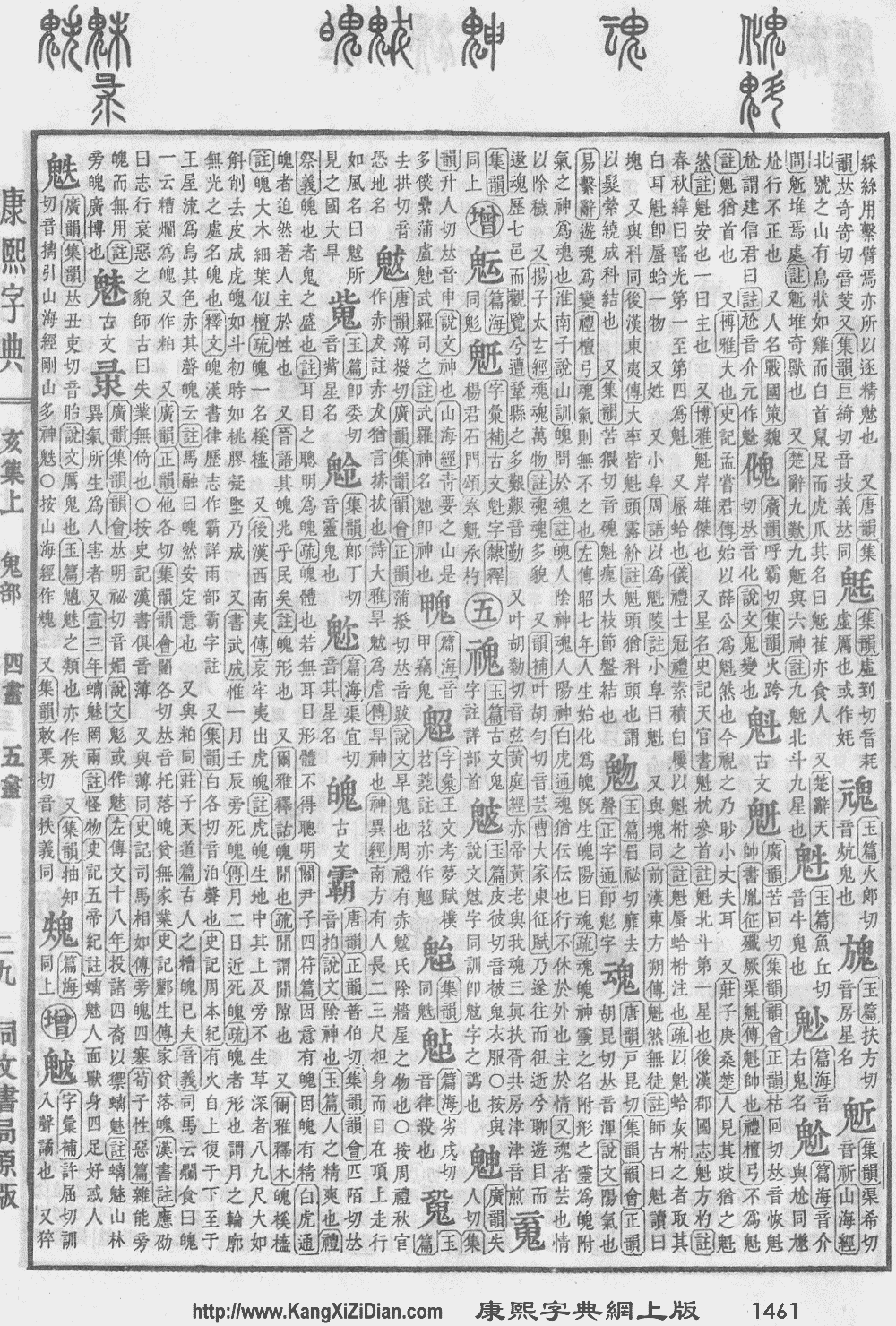
- Kangxi Dictionary: page 1461, character 12
- Dai Kanwa Jiten: character 45787
- Dae Jaweon: page 1994, character 20
- Hanyu Da Zidian (first edition): volume 7, page 4428, character 9
- Unihan data for U+9B42
Chinese
| trad. | 魂 | |
|---|---|---|
| simp. # | 魂 | |
| alternative forms | 䰟 | |
Glyph origin
| Historical forms of the character 魂 |
|---|
| Shuowen Jiezi (compiled in Han) |
| Small seal script |
 |
Characters in the same phonetic series (云) (Zhengzhang, 2003)
Phono-semantic compound (形聲/形声, OC *ɢuːn) : phonetic 云 (OC *ɢun) + semantic 鬼.
Etymology
Cognate with 雲 (OC *ɢun, “cloud”) (Carr, 1985).
Pronunciation
Definitions
魂
Compounds
- 七魄三魂
- 三魂七魄 (sānhúnqīpò)
- 三魂唔見七魄/三魂唔见七魄
- 亡魂 (wánghún)
- 亡魂喪膽/亡魂丧胆
- 亡魂喪魄/亡魂丧魄
- 亡魂失魄
- 倩女離魂/倩女离魂
- 借屍還魂/借尸还魂 (jièshīhuánhún)
- 催魂
- 冤魂 (yuānhún)
- 冤魂不散
- 冰魂
- 冰魂雪魄
- 剩魄殘魂/剩魄残魂
- 勾魂
- 勾魂攝魄/勾魂摄魄
- 叫魂
- 喪膽亡魂/丧胆亡魂
- 喪膽銷魂/丧胆销魂
- 喪蕩游魂/丧荡游魂
- 喪魂落魄/丧魂落魄
- 國魂/国魂 (guóhún)
- 夢勞魂想/梦劳魂想
- 夢斷魂勞/梦断魂劳
- 夢斷魂消/梦断魂消
- 夢魂/梦魂 (mènghún)
- 夢魂顛倒/梦魂颠倒
- 失魂
- 失魂喪魄/失魂丧魄
- 失魂落魄 (shīhúnluòpò)
- 失魂魚/失魂鱼
- 奪魂/夺魂
- 孤魂 (gūhún)
- 孤魂野鬼
- 安魂曲 (ānhúnqǔ)
- 宮魂/宫魂
- 少魂失魄
- 少魂沒識/少魂没识
- 幽魂 (yōuhún)
- 弄精魂
- 引魂旛
- 心魂 (xīnhún)
- 心魂不定
- 忘魂
- 忠魂
- 招魂 (zhāohún)
- 招魂旛
- 拉魂腔
- 掉魂
- 揚幡招魂/扬幡招魂
- 攝魂/摄魂
- 攝魄鉤魂/摄魄钩魂
- 斷魂/断魂 (duànhún)
- 有魂沒識/有魂没识
- 梧丘之魂
- 步步驚魂/步步惊魂
- 沒魂少智/没魂少智
- 消魂 (xiāohún)
- 狂魂怨鬼
- 生魂 (shēnghún)
- 目斷魂消/目断魂消
- 目斷魂銷/目断魂销
- 目眩魂搖/目眩魂摇
- 破膽喪魂/破胆丧魂
- 神搖魂蕩/神摇魂荡
- 神魂 (shénhún)
- 神魂搖蕩/神魂摇荡
- 神魂撩亂/神魂撩乱
- 神魂蕩漾/神魂荡漾
- 神魂蕩颺/神魂荡飏
- 神魂顛倒/神魂颠倒 (shénhúndiāndǎo)
- 神魂飄蕩/神魂飘荡 (shénhúnpiāodàng)
- 神魂飛蕩/神魂飞荡
- 神魂飛越/神魂飞越
- 神魂馳蕩/神魂驰荡
- 膽裂魂飛/胆裂魂飞
- 色授魂與/色授魂与
- 芳魂
- 芳魂已杳
- 英魂 (yīnghún)
- 軍人魂/军人魂
- 返魂
- 返魂乏術/返魂乏术 (fǎnhúnfáshù)
- 返魂草
- 迷魂 (míhún)
- 迷魂奪魄/迷魂夺魄
- 迷魂寨
- 追魂攝魄/追魂摄魄
- 迷魂湯/迷魂汤 (míhúntāng)
- 迷魂陣/迷魂阵
- 遊魂/游魂
- 還魂/还魂 (huánhún)
- 還魂記/还魂记
- 釜底遊魂/釜底游魂
- 銷魂/销魂 (xiāohún)
- 銷魂奪魄/销魂夺魄
- 長役夢魂/长役梦魂
- 陰魂/阴魂 (yīnhún)
- 陰魂不散/阴魂不散
- 離魂病/离魂病
- 離魂記/离魂记
- 雨魄雲魂/雨魄云魂
- 靈魂/灵魂 (línghún)
- 靈魂之窗/灵魂之窗
- 靈魂人物/灵魂人物 (línghún rénwù)
- 領魂車/领魂车
- 顯魂/显魂
- 風鶴魂驚/风鹤魂惊
- 驚魂/惊魂 (jīnghún)
- 鬼魂 (guǐhún)
- 魂不守宅
- 魂不守舍 (húnbùshǒushè)
- 魂不附體/魂不附体 (húnbùfùtǐ)
- 魂亡膽落/魂亡胆落
- 魂子
- 魂消氣泄
- 魂牽夢縈/魂牵梦萦 (húnqiān-mèngyíng)
- 魂衣
- 魂車/魂车
- 魂轎/魂轿
- 魂銷魄散/魂销魄散
- 魂靈/魂灵 (húnlíng)
- 魂飄魄散/魂飘魄散
- 魂飛天外/魂飞天外 (húnfēitiānwài)
- 魂飛魄喪/魂飞魄丧
- 魂飛魄散/魂飞魄散 (húnfēipòsàn)
- 魂魂
- 魂魄 (húnpò)
- 魄散魂飛/魄散魂飞
- 黯然銷魂/黯然销魂
Japanese
Readings
Compounds
Compounds
- 魂胆 (kontan)
- 魂柱 (konchū)
- 魂魄 (konpaku)
- 英魂 (eikon)
- 還魂 (kankon)
- 気魂 (kikon)
- 吟魂 (ginkon)
- 香魂 (kōkon)
- 士魂 (shikon)
- 詩魂 (shikon)
- 入魂 (jikkon)
- 商魂 (shōkon)
- 招魂 (shōkon)
- 消魂, 銷魂 (shōkon)
- 蜀魂 (shokkon)
- 入魂 (jukon)
- 入魂 (jukkon)
- 心魂, 神魂 (shinkon)
- 身魂 (shinkon)
- 精魂 (seikon)
- 奪魂 (dakkon)
- 脱魂 (dakkon)
- 忠魂 (chūkon)
- 鎮魂 (chinkon)
- 闘魂 (tōkon)
- 入魂 (nyūkon)
- 反魂 (hangon)
- 亡魂 (bōkon)
- 芳魂 (hōkon)
- 夢魂 (mukon)
- 幽魂 (yūkon)
- 遊離魂 (yūrikon)
- 離魂病 (rikonbyō)
- 霊魂 (reikon)
- 神魂命 (Kamimusubi no Mikoto)
- 蜀魂 (hototogisu)
Etymology 1
| Kanji in this term |
|---|
| 魂 |
| たましい Grade: S |
| kun’yomi |
| Alternative spelling |
|---|
| 魄 |
⟨tamasipi1⟩ → */tamasipʲi/ → /tamaɕifi/ → /tamaɕiwi/ → /tamaɕiː/
From Old Japanese, from Proto-Japonic *tamasipi.
Compound of 魂 (tama, “soul, spirit”, see below) and an uncertain shii, possibly 強ひ (shihi → shii), the 連用形 (ren'yōkei, “stem or continuative form”) of classical verb 強ふ (shifu → shiu), modern 強いる (shiiru, “to force, compel”). (Can this(+) etymology be sourced?)
Noun
魂 • (tamashī) ←たましひ (tamasifi)?
- (religion, folklore) a soul, spirit
- , text here
- 多麻之比波安之多由布敝尓多麻布礼杼安我牟祢伊多之古非能之氣吉尓 [Man'yōgana]
- 魂は朝夕にたまふれど我が胸痛し恋の繁きに [Modern spelling]
- tamashī wa ashita-yūbe ni tamafuredo aga mune itashi koi no shigeki ni
- (please add an English translation of this example)
- , text here
- mind, spirit, vigour, willpower
- (figurative) spirit (manner or style of something, enthusiasm)
- (figurative, by extension) attitude, readiness
- Synonym: 気構え (kigamae)
- discretion, judgement, prudence
- character, genius, talent, wisdom
- (from a warrior's "spirit") a katana (single-edged Japanese sword)
- Synonym: 刀 (katana)
Derived terms
Idioms
Idioms
- 魂が抜ける (tamashī ga nukeru)
- 魂を入れ替える (tamashī o irekaeru)
- 魂を消す (tamashī o kesu)
- 魂を天外に飛ばす (tamashī o tengai ni tobasu)
- 魂を冷やす (tamashī o hiyasu)
- 大小は武士の魂 (daishō wa bushi no tamashī)
- 三つ子の魂百まで (mitsugo no tamashī hyaku made)
Proverbs
- 一寸の虫にも五分の魂 (issun no mushi ni mo gobu no tamashī)
- 仏作って魂入れず (hotoke tsukutte tamashī irezu)
Etymology 2
| Kanji in this term |
|---|
| 魂 |
| たま Grade: S |
| kun’yomi |
| Alternative spellings |
|---|
| 魄 霊 |
From Old Japanese, from Proto-Japonic *tama.
Noun
- a soul, spirit
- 905, Kokin Wakashū (book 10, poem 448)
- 空蟬のからは木ごとにとどむれどたまのゆくへを見ぬぞかなしき
- utsusemi no kara-wa-ki-goto ni todomuredo tama no yukue o minu zo kanashiki
- (please add an English translation of this example)
- 空蟬のからは木ごとにとどむれどたまのゆくへを見ぬぞかなしき
- Synonym: 霊魂 (reikon)
- 905, Kokin Wakashū (book 10, poem 448)
Derived terms
Derived terms
- 魂合う (tamāu)
- 魂送り (tamaokuri)
- 魂緒の星 (Tamao no Hoshi)
- 魂消る (tamagiru)
- 魂極る (tama kiwaru, pillow word)
- 魂消る (tamageru)
- 魂離る (tamasakaru)
- 鎮魂 (tamashizume)
- 魂棚 (tamadana)
- 魂殿 (tamadono)
- 魂振り (tamafuri)
- 魂讃星 (Tamahomeboshi)
- 魂祭 (tama-matsuri), 魂祭り (tama-matsuri)
- 魂迎え (tamamukae)
- 魂結び (tamamusubi)
- 魂屋 (tamaya)
- 魂呼ばい (tamayobai), 魂呼び (tamayobi)
- 悪魂 (akudama)
- 稲魂 (inatama), 稲魂 (inadama)
- 肝魂 (kimodama), 肝魂 (kimotama), 肝っ魂 (kimottama)
- 国魂 (kunitama)
- 心魂 (kokorodama)
- 木魂 (kodama), 木魂 (kotama)
- 根性魂 (konjō-dama)
- 亡き魂 (nakitama)
- 和魂 (nikitama)
- 人魂 (hitodama)
- 船魂 (funadama)
- 御魂 (mitama)
Noun
魂 • (kon)
References
- Matsumura, Akira, editor (2006), 大辞林 [Daijirin] (in Japanese), Third edition, Tōkyō: Sanseidō, →ISBN
Korean
Etymology
From Middle Chinese 魂 (MC hwon).
| Historical readings |
|---|
|
Pronunciation
- (SK Standard/Seoul) IPA(key): [ɸʷo̞n]
- Phonetic hangul: [혼]
Compounds
Okinawan
Etymology 1
| Kanji in this term |
|---|
| 魂 |
| たまし Grade: S |
| kun’yomi |
Etymology 2
| Kanji in this term |
|---|
| 魂 |
| たましー Grade: S |
| kun’yomi |
Vietnamese
Yonaguni
References
- “たまち【魂】” in JLect - Japonic Languages and Dialects Database Dictionary, 2019.
This article is issued from Wiktionary. The text is licensed under Creative Commons - Attribution - Sharealike. Additional terms may apply for the media files.