ló
See also: Appendix:Variations of "lo"
Emilian
Etymology
From Late Latin illūi, from Latin illī (dative singular of ille), ultimately from Proto-Indo-European *h₂el- (“beyond, other”). Cognates include French lui.
Pronunciation
- IPA(key): /ˈlo/
- Hyphenation: ló
Related terms
Emilian personal pronouns (strong forms)
| Number | Person | Gender | Disjunctive (tonic) |
Nominative (subject) |
Accusative (direct complement) |
Dative (indirect complement) |
Reflexive (-self) |
Comitative (with) |
|---|---|---|---|---|---|---|---|---|
| Singular | First | — | mè | a | me | mêg | ||
| Second | — | tè | et | te | têg | |||
| Third | Masculine | ló | al | ge | se | sêg | ||
| Feminine | lê | la | ||||||
| Plural | First | Masculine | nuēter | a | se | nōsk | ||
| Feminine | nuētri | |||||||
| Second | Masculine | vuēter | a | ve | vōsk | |||
| Feminine | vuētri | |||||||
| Third | Masculine | lôr | i | ge | se | sêg | ||
| Feminine | el | li | ||||||
Hungarian
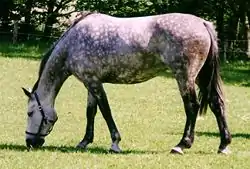
ló (sense 1)
Etymology
From Proto-Ugric *luɣe ~ *luwɜ; further from possibly Proto-Tocharian *l(ə)wa (“prey, livestock”) (cf. Tocharian B luwo (“animal”)).[1][2][3] Compare Northern Mansi лув (luw) and Eastern Khanty ԓӑв (łăw).

Noun
ló (plural lovak)
- horse
- Synonyms: see Thesaurus:ló
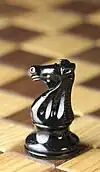
- (chess) knight
- Synonym: huszár
- (gymnastics) pommel horse
Declension
| Inflection (stem in -a-, back harmony) | ||
|---|---|---|
| singular | plural | |
| nominative | ló | lovak |
| accusative | lovat | lovakat |
| dative | lónak | lovaknak |
| instrumental | lóval | lovakkal |
| causal-final | lóért | lovakért |
| translative | lóvá | lovakká |
| terminative | lóig | lovakig |
| essive-formal | lóként | lovakként |
| essive-modal | — | — |
| inessive | lóban | lovakban |
| superessive | lovon | lovakon |
| adessive | lónál | lovaknál |
| illative | lóba | lovakba |
| sublative | lóra | lovakra |
| allative | lóhoz | lovakhoz |
| elative | lóból | lovakból |
| delative | lóról | lovakról |
| ablative | lótól | lovaktól |
| non-attributive possessive - singular |
lóé | lovaké |
| non-attributive possessive - plural |
lóéi | lovakéi |
| Possessive forms of ló | ||
|---|---|---|
| possessor | single possession | multiple possessions |
| 1st person sing. | lovam | lovaim |
| 2nd person sing. | lovad | lovaid |
| 3rd person sing. | lova | lovai |
| 1st person plural | lovunk | lovaink |
| 2nd person plural | lovatok | lovaitok |
| 3rd person plural | lovuk | lovaik |
Derived terms
Compound words
Expressions
See also
| Chess pieces in Hungarian · sakkfigurák, sakkbábuk (layout · text) | |||||
|---|---|---|---|---|---|
 |
 |
 |
 |
 |
 |
| király | vezér (királynő) | bástya (rare: torony) | futó (futár) | huszár (ló) | gyalog (paraszt) |
References
- Entry #1794 in Uralonet, online Uralic etymological database of the Hungarian Research Centre for Linguistics.
- ló in Zaicz, Gábor (ed.). Etimológiai szótár: Magyar szavak és toldalékok eredete (‘Dictionary of Etymology: The origin of Hungarian words and affixes’). Budapest: Tinta Könyvkiadó, 2006, page 442, →ISBN. (See also its 2nd edition.)
- Napolskikh, Vladimir (1996) “Происхождение угорского названия лошади”, in Linguistica Uralica (in Russian), volume 32, number 2, retrieved 17 September 2020, pages 116-118
Further reading
- ló in Bárczi, Géza and László Országh. A magyar nyelv értelmező szótára (‘The Explanatory Dictionary of the Hungarian Language’, abbr.: ÉrtSz.). Budapest: Akadémiai Kiadó, 1959–1962. Fifth ed., 1992: →ISBN
Anagrams
Icelandic
Etymology
From Proto-Germanic *wlōhō.
Pronunciation
- IPA(key): /louː/
- Rhymes: -ouː
Noun
ló f (genitive singular lóar, nominative plural lær)
Declension
Derived terms
Irish
Lashi
Pronunciation
- IPA(key): /lo˥/
Old Irish
Old Norse
Etymology 1
From Proto-Germanic *lauhō f, *lauhaz m, from Proto-Indo-European *lówkos, from the root *lewk- (“bright, to shine”). Cognate with Latin lūcus and Lithuanian laũkas.
Declension
Derived terms
- Folló
- Hafrsló
- Ósló
References
- J.Fritzners ordbok over Det gamle norske sprog, dvs. norrøn ordbok ("J.Fritnzer's dictionary of the old Norwegian language, i.e. Old Norse dictionary"), on ló.
- Ásgeir Blöndal Magnússon (1989) Íslensk orðsifjabók (in Icelandic), Reykjavík: Árni Magnússon Institute for Icelandic Studies, →ISBN
Etymology 2
(This etymology is missing or incomplete. Please add to it, or discuss it at the Etymology scriptorium.)
Alternative forms
Declension
Descendants
References
- “ló”, in Geir T. Zoëga (1910) A Concise Dictionary of Old Icelandic, Oxford: Clarendon Press
- ló in A Concise Dictionary of Old Icelandic, G. T. Zoëga, Clarendon Press, 1910, at Internet Archive.
Vietnamese
Pronunciation
- (Hà Nội) IPA(key): [lɔ˧˦]
- (Huế) IPA(key): [lɔ˨˩˦]
- (Hồ Chí Minh City) IPA(key): [lɔ˦˥]
This article is issued from Wiktionary. The text is licensed under Creative Commons - Attribution - Sharealike. Additional terms may apply for the media files.