乗
| ||||||||
Translingual
| Japanese | 乗 |
|---|---|
| Simplified | 乘 |
| Traditional | 乘 |
| Stroke order | |||
Japan | |||
Han character
乗 (Kangxi radical 4, 丿+8, 9 strokes, cangjie input 竹木廿 (HDT), four-corner 20905, composition ⿻千⿱卄𣎴)
Derived characters
- 剰, 𡹴, 𢜼, 𢾦, 𭼜, 𰹛, 𱄥
References
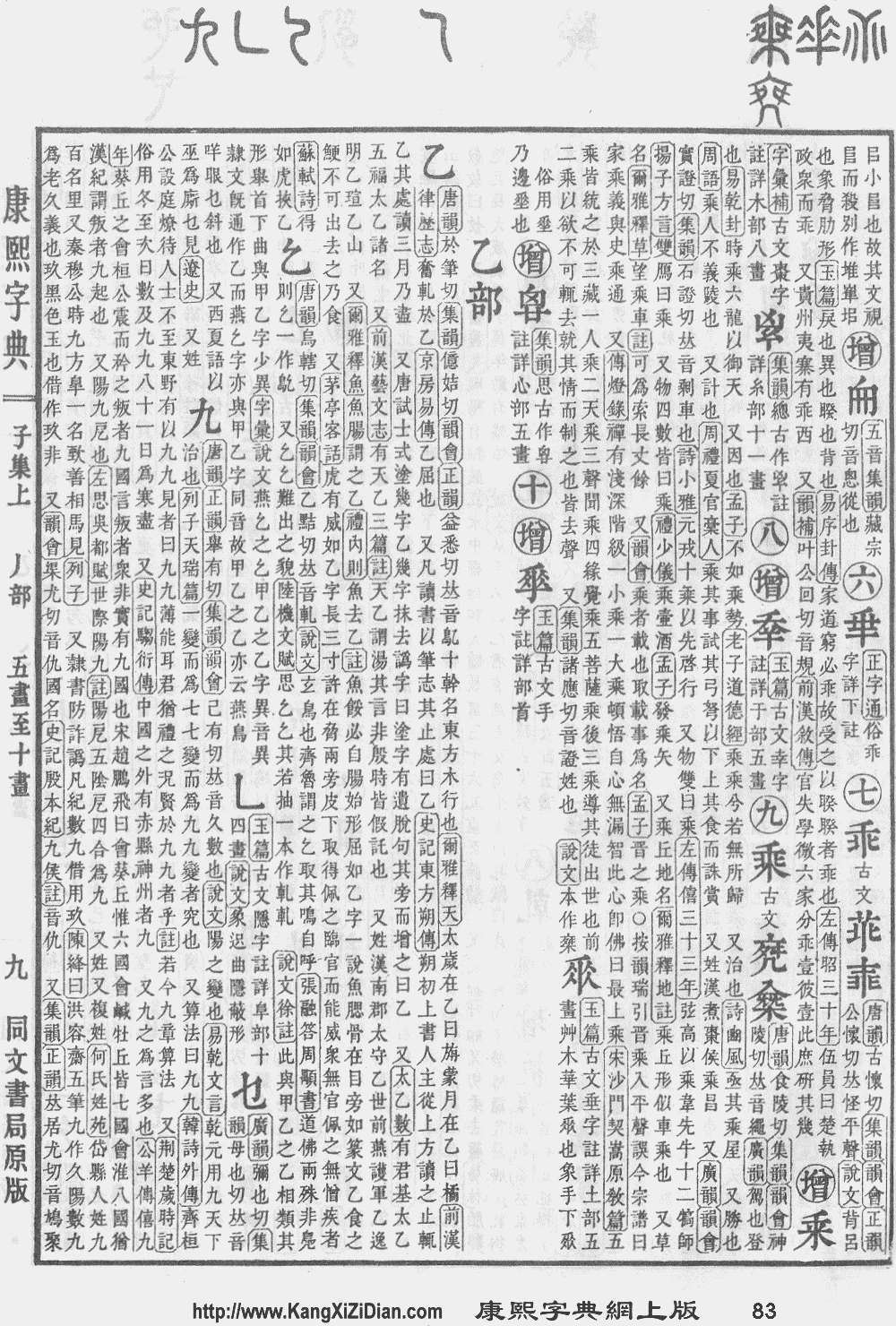
- Kangxi Dictionary: not present, would follow page 83, character 8
- Dai Kanwa Jiten: character 153
- Dae Jaweon: page 166, character 30
- Hanyu Da Zidian (first edition): volume 1, page 39, character 8
- Unihan data for U+4E57
Chinese
Glyph origin
Variant form of 乘 written in clerical script found in the 《魯峻碑陰》 stone tablet of the eastern Han period.
Japanese
| 乗 | |
| 乘 |
Kanji
乗
(grade 3 “Kyōiku” kanji, shinjitai kanji, kyūjitai form 乘)
- to ride (e.g. a vehicle or a horse)
- (mathematics) multiplication
Readings
From Middle Chinese 乘 (MC zying); compare Mandarin 乘 (chéng):
From Middle Chinese 乘 (MC zyingH); compare Mandarin 乘 (shèng):
From native Japanese roots:
Compounds
- 乗員 (jōin)
- 乗鶴 (jōkaku)
- 乗艦 (jōkan)
- 乗機 (jōki)
- 乗客 (jōkyaku)
- 乗降 (jōkō)
- 乗号 (jōgō)
- 乗算 (jōzan)
- 乗矢 (jōshi)
- 乗車 (jōsha)
- 乗除 (jōjo)
- 乗数 (jōsū)
- 乗積 (jōseki)
- 乗船 (jōsen)
- 乗田 (jōden)
- 乗伝 (jōden)
- 乗馬 (jōba)
- 乗羃 (jōbeki)
- 乗法 (jōhō)
- 乗務 (jōmu)
- 乗輿 (jōyo)
- 乗用 (jōyō)
- 乗竜 (jōryū)
- 乗合 (noriai)
- 乗換 (norikae)
- 乗気 (noriki)
- 乗組 (norikumi)
- 乗手 (norite)
- 乗物 (norimono)
- 移乗 (ijō)
- 階乗 (kaijō)
- 岩乗 (ganjō)
- 騎乗 (kijō)
- 警乗 (keijō)
- 下乗 (gejō)
- 三乗 (sanjō)
- 座乗, 坐乗 (zajō)
- 史乗 (shijō)
- 試乗 (shijō)
- 自乗 (jijō)
- 小乗 (shōjō)
- 小乗的 (shōjōteki)
- 上乗 (jōjō)
- 相乗 (sōjō)
- 大乗 (daijō)
- 大乗的 (daijōteki)
- 添乗 (tenjō)
- 搭乗 (tōjō)
- 同乗 (dōjō)
- 二乗 (nijō)
- 配乗 (haijō)
- 陪乗 (baijō)
- 万乗 (banjō)
- 便乗 (binjō)
- 分乗 (bunjō)
- 冪乗 (bekijō)
- 累乗 (ruijō)
Derived terms
Korean
This article is issued from Wiktionary. The text is licensed under Creative Commons - Attribution - Sharealike. Additional terms may apply for the media files.