乘
| ||||||||
Translingual
| Japanese | 乗 |
|---|---|
| Simplified | 乘 |
| Traditional | 乘 |
| Stroke order | |||
Japan | |||
Han character
乘 (Kangxi radical 4, 丿+9, 10 strokes, cangjie input 竹木中心 (HDLP), four-corner 20901, composition ⿻禾北 or ⿻乖人)
Descendants
- (chiefly Japanese): 乗
References
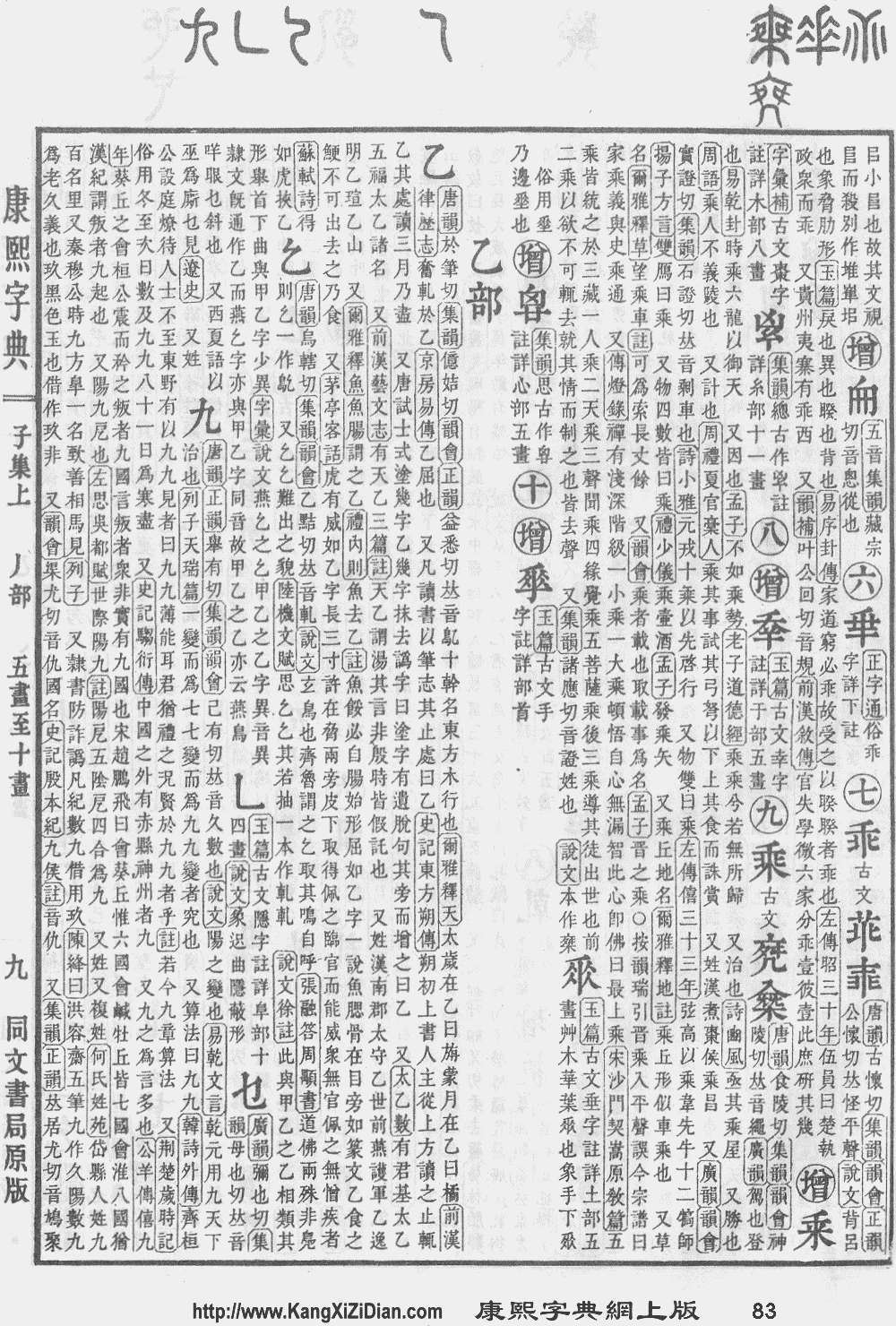
- Kangxi Dictionary: page 83, character 9
- Dai Kanwa Jiten: character 154
- Dae Jaweon: page 166, character 40
- Hanyu Da Zidian (first edition): volume 1, page 40, character 1
- Unihan data for U+4E58
Chinese
| trad. | 乘 | |
|---|---|---|
| simp. # | 乘 | |
| alternative forms | 乗 椉/乘 | |
Glyph origin
| Historical forms of the character 乘 | ||||||||||||||||||||||||||||||||||||||||||||||||||||||||||||||||||||||||||||||||||
|---|---|---|---|---|---|---|---|---|---|---|---|---|---|---|---|---|---|---|---|---|---|---|---|---|---|---|---|---|---|---|---|---|---|---|---|---|---|---|---|---|---|---|---|---|---|---|---|---|---|---|---|---|---|---|---|---|---|---|---|---|---|---|---|---|---|---|---|---|---|---|---|---|---|---|---|---|---|---|---|---|---|---|
| Shang | Western Zhou | Shuowen Jiezi (compiled in Han) | Liushutong (compiled in Ming) | |||||||||||||||||||||||||||||||||||||||||||||||||||||||||||||||||||||||||||||||
| Oracle bone script | Bronze inscriptions | Small seal script | Transcribed ancient scripts | |||||||||||||||||||||||||||||||||||||||||||||||||||||||||||||||||||||||||||||||
 |
 |
 |
 | |||||||||||||||||||||||||||||||||||||||||||||||||||||||||||||||||||||||||||||||
|||
|
References: Mostly from Richard Sears' Chinese Etymology site (authorisation),
| ||||||||||||||||||||||||||||||||||||||||||||||||||||||||||||||||||||||||||||||||||


Pictogram (象形) – a person 大 climbing a tree 木, with the feet visible. Etymology clearer in alternative form 椉. In this form, simplified to 禾 (“tree and top”) + 北 (“feet”).
Pronunciation 1
Definitions
乘
- (literary) to ascend; to go up
- (literary) to drive (a horse, cart, etc.)
- to take (a form of transport)
- to make use of; to take advantage of
- (literary) to pursue; to attack
- (arithmetic) to multiply
- a surname
Antonyms
- (antonym(s) of “to multiply”): 除 (chú)
Compounds
- 三乘比
- 乘亂/乘乱
- 乘亂坐大/乘乱坐大
- 乘人不備/乘人不备
- 乘人之危 (chéngrénzhīwēi)
- 乘人之厄
- 乘便
- 乘偽行詐/乘伪行诈
- 乘傳/乘传
- 乘其不備/乘其不备
- 乘其不意
- 乘冪/乘幂
- 乘凶完配
- 乘務員/乘务员 (chéngwùyuán)
- 乘勝追擊/乘胜追击 (chéngshèngzhuījī)
- 乘勝逐北/乘胜逐北
- 乘勢/乘势 (chéngshì)
- 乘化
- 乘危
- 乘員/乘员 (chéngyuán)
- 乘坐 (chéngzuò)
- 乘堅策肥/乘坚策肥
- 乘堅驅良/乘坚驱良
- 乘夜 (chéngyè)
- 乘奔御風/乘奔御风
- 乘客 (chéngkè)
- 乘搭 (chéngdā)
- 乘數/乘数 (chéngshù)
- 乘方 (chéngfāng)
- 乘時/乘时 (chéngshí)
- 乘月 (chéngyuè)
- 乘桴
- 乘槎
- 乘機/乘机 (chéngjī)
- 乘機坐大/乘机坐大
- 乘機應變/乘机应变
- 乘法 (chéngfǎ)
- 乘流
- 乘涼/乘凉 (chéngliáng)
- 乘火打劫 (chénghuǒdǎjié)
- 乘田
- 乘積/乘积
- 乘空
- 乘肩
- 乘肥衣輕/乘肥衣轻
- 乘興/乘兴
- 乘興而來/乘兴而来
- 乘船 (chéngchuán)
- 乘虛/乘虚 (chéngxū)
- 乘虛而入/乘虚而入 (chéngxū'érrù)
- 乘號/乘号 (chénghào)
- 乘車/乘车 (chéngchē)
- 乘車戴笠/乘车戴笠
- 乘軒/乘轩
- 乘軒鶴/乘轩鹤
- 乘輕驅肥/乘轻驱肥
- 乘輿/乘舆
- 乘輿播越/乘舆播越
- 乘輿播遷/乘舆播迁
- 乘酒
- 乘間/乘间 (chéngjiàn)
- 乘間投隙/乘间投隙
- 乘除 (chéngchú)
- 乘隙 (chéngxì)
- 乘隙而入 (chéngxì'érrù)
- 乘雲/乘云 (chéngyún)
- 乘風破浪/乘风破浪 (chéngfēngpòlàng)
- 乘鶴/乘鹤
- 乘鶴駕雲/乘鹤驾云
- 乘鸞跨鳳/乘鸾跨凤
- 乘黃/乘黄
- 乘龍/乘龙 (chénglóng)
- 乘龍佳婿/乘龙佳婿 (chénglóngjiāxù)
- 乘龍快婿/乘龙快婿 (chénglóng kuàixù)
- 伍員乘潮/伍员乘潮
- 共乘 (gòngchéng)
- 出乘
- 加減乘除/加减乘除 (jiājiǎn chéngchú)
- 可乘之機/可乘之机 (kěchéngzhījī)
- 可乘之隙
- 因利乘便 (yīnlìchéngbiàn)
- 搭乘 (dāchéng)
- 摶柱乘梁
- 有機可乘/有机可乘 (yǒujīkěchéng)
- 有隙可乘 (yǒuxìkěchéng)
- 服冕乘軒/服冕乘轩
- 無勢可乘/无势可乘
- 無機可乘/无机可乘
- 無隙可乘/无隙可乘 (wúxìkěchéng)
- 琴高乘鯉/琴高乘鲤
- 盛衰相乘
- 竊幸乘寵/窃幸乘宠
- 老鶴乘軒/老鹤乘轩
- 自乘 (zìchéng)
- 被乘數/被乘数 (bèichéngshù)
- 變亂紛乘/变乱纷乘
- 貨幣乘數/货币乘数
- 超乘
- 跨鳳乘鸞/跨凤乘鸾
- 跨鳳乘龍/跨凤乘龙
- 迭乘
- 陪乘
- 階乘/阶乘 (jiēchéng)
- 飛蓬乘風/飞蓬乘风
- 飛龍乘雲/飞龙乘云
- 騎乘/骑乘 (qíchéng)
- 鶴乘軒/鹤乘轩
- 黃帝乘龍/黄帝乘龙
Pronunciation 2
Definitions
乘
Compounds
References
- “乘”, in 漢語多功能字庫 (Multi-function Chinese Character Database), 香港中文大學 (the Chinese University of Hong Kong), 2014–
Vietnamese
Han character
乘: Hán Nôm readings: thừa, thặng, thắng
- This term needs a translation to English. Please help out and add a translation, then remove the text
{{rfdef}}.