伴
See also: 件
| ||||||||
Translingual
| Stroke order | |||
 | |||
Han character
伴 (Kangxi radical 9, 人+5, 7 strokes, cangjie input 人火手 (OFQ), four-corner 29250, composition ⿰亻半)
References
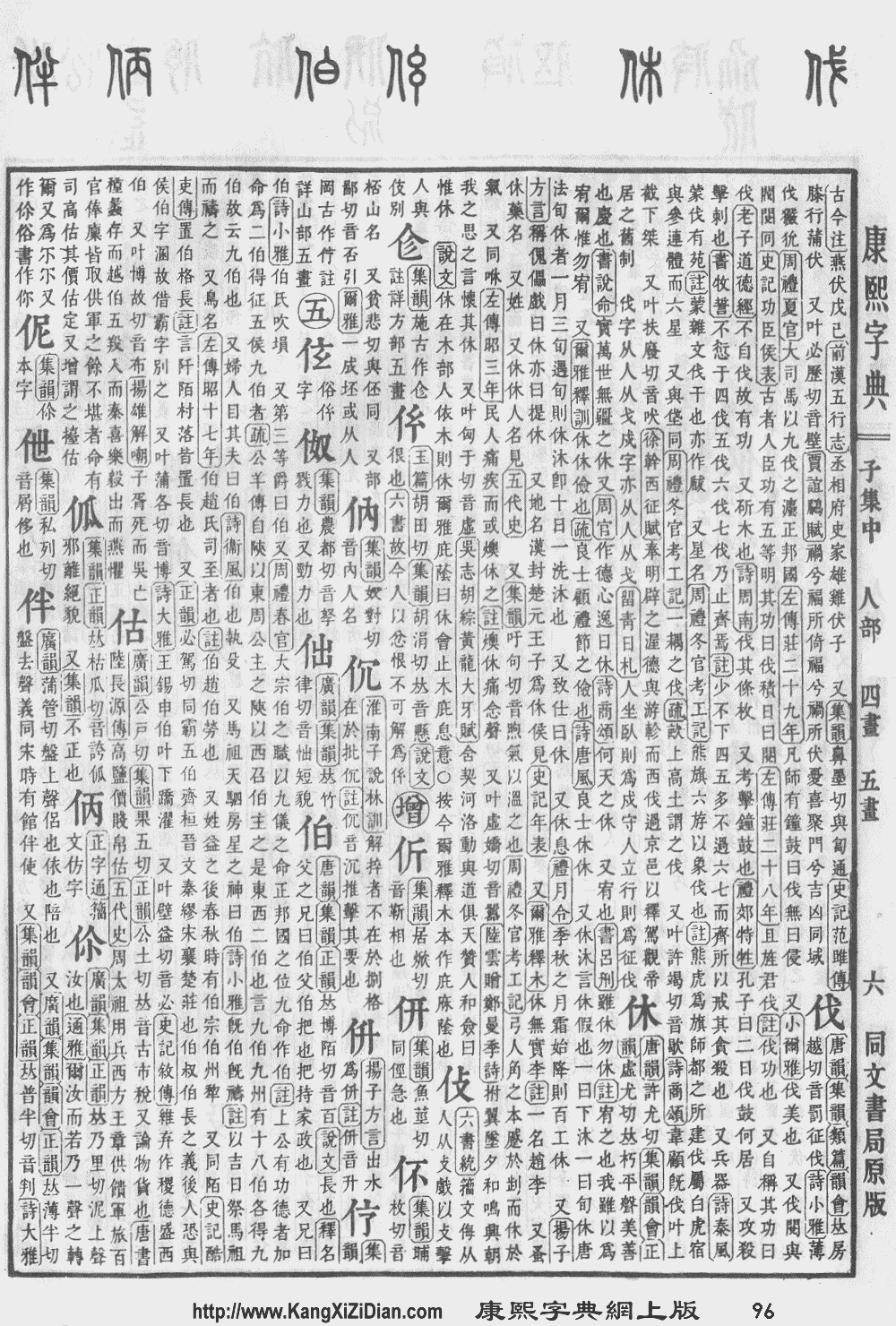
- Kangxi Dictionary: page 96, character 23
- Dai Kanwa Jiten: character 475
- Dae Jaweon: page 205, character 9
- Hanyu Da Zidian (first edition): volume 1, page 139, character 1
- Unihan data for U+4F34
Chinese
| simp. and trad. |
伴 | |
|---|---|---|
Glyph origin
| Historical forms of the character 伴 | |||||
|---|---|---|---|---|---|
| |||||
|
References: Mostly from Richard Sears' Chinese Etymology site (authorisation),
|


Characters in the same phonetic series (半) (Zhengzhang, 2003)
Phono-semantic compound (形聲/形声, OC *baːnʔ, *baːns) : semantic 亻 + phonetic 半 (OC *paːns).
Pronunciation 1
Compounds
- 伙伴 (huǒbàn)
- 作伴 (zuòbàn)
- 伴侶/伴侣 (bànlǚ)
- 伴侶動物/伴侣动物 (bànlǚ dòngwù)
- 伴同 (bàntóng)
- 伴哥
- 伴唱 (bànchàng)
- 伴唱帶/伴唱带
- 伴唱影碟
- 伴唱機/伴唱机
- 伴夥/伴伙
- 伴大夜
- 伴奏 (bànzòu)
- 伴姑
- 伴姑兒/伴姑儿
- 伴娘 (bànniáng)
- 伴宿 (bànsù)
- 伴手 (bànshǒu)
- 伴星 (bànxīng)
- 伴材
- 伴當/伴当 (bàndāng)
- 伴等
- 伴舞 (bànwǔ)
- 伴讀/伴读 (bàndú)
- 伴送
- 伴郎 (bànláng)
- 伴隨/伴随 (bànsuí)
- 伴食
- 伴食中書/伴食中书
- 伴食宰相
- 做伴 (zuòbàn)
- 偷偷伴伴
- 同伴 (tóngbàn)
- 呼朋引伴
- 夥伴/伙伴 (huǒbàn)
- 女伴 (nǚbàn)
- 學伴/学伴
- 廝伴/厮伴
- 搭伴 (dābàn)
- 旅伴 (lǚbàn)
- 木伴哥
- 火伴 (huǒbàn)
- 玩伴 (wánbàn)
- 男伴 (nánbàn)
- 相伴
- 窩伴/窝伴
- 終身伴侶/终身伴侣
- 結伴/结伴 (jiébàn)
- 老伴 (láobàn)
- 舞伴 (wǔbàn)
- 良伴 (liángbàn)
- 遊伴/游伴
- 陪伴 (péibàn)
- 館伴/馆伴
Descendants
Others:
- Tai Languages
- Proto-Southwestern Tai
- Thai: เพื่อน (pʉ̂ʉan, “companion, friend”)
- → Khmer: ភឿន (phɨən, “companion, friend”)
- → Northern Khmer: พฺืน (“companion, friend”)
- Lao: ເພື່ອນ (phư̄an, “companion, friend”), ເພິ່ນ (phœn, “he, she, it, him, her”)
- Northern Thai: ᨻᩮᩬᩥ᩵ᩁ (“companion, friend”), ᨻᩮᩥ᩠᩵ᨶ (“he, she”)
- Shan: ပိူၼ်ႈ (pōen)
- Lü: ᦵᦗᦲᧃᧈ (poen¹, “he, she, friend”)
- Tai Nüa: ᥙᥫᥢ (poen)
- Thai: เพื่อน (pʉ̂ʉan, “companion, friend”)
- Proto-Southwestern Tai
Pronunciation 2
Definitions
伴
- † Used in 伴奐/伴奂 (pànhuàn, “relaxed; free; unrestrained”).
- † Alternative form of 叛 (pàn, “to rebel”)
- 氾潏潏其前後兮,伴張弛之信期 [Classical Chinese, trad.]
- From: The Verses of Chu, 4th century BCE – 2nd century CE
- fán yùyù qí qiánhòu xī, pàn zhāngchí zhī xìnqī [Pinyin]
- (please add an English translation of this usage example)
氾潏潏其前后兮,伴张弛之信期 [Classical Chinese, simp.]
References
- “伴”, in 漢語多功能字庫 (Multi-function Chinese Character Database), 香港中文大學 (the Chinese University of Hong Kong), 2014–
Japanese
| Shinjitai | 伴 | |
| Kyūjitai [1][2] |
伴󠄁 伴+ 󠄁?(Adobe-Japan1) |
 |
| 伴󠄃 伴+ 󠄃?(Hanyo-Denshi) (Moji_Joho) | ||
| The displayed kanji may be different from the image due to your environment. See here for details. | ||
Readings
From Middle Chinese 伴 (MC banX); compare Mandarin 伴 (bàn):
From Middle Chinese 伴 (MC banH); compare Mandarin 伴 (pàn):
From native Japanese roots:
Compounds
References
- “伴”, in 漢字ぺディア (Kanjipedia) (in Japanese), 日本漢字能力検定協会, 2015–2024
- Haga, Gōtarō (1914) 漢和大辞書 [The Great Kanji-Japanese Dictionary] (in Japanese), Fourth edition, Tōkyō: Kōbunsha, , page 132 (paper), page 116 (digital)
Korean
Etymology
From Middle Chinese 伴 (MC banX). Recorded as Middle Korean 반〯 (pǎn) (Yale: pan) in Hunmong Jahoe (訓蒙字會 / 훈몽자회), 1527.
Compounds
Compounds
- 수반 (隨伴, suban, “accompaniment”)
- 동반 (同伴, dongban, “accompaniment”)
- 반려 (伴侶, ballyeo, “partner; companion”)
- 반주 (伴奏, banju, “(music) accompaniment”)
Vietnamese
Han character
References
- Nguyễn (2014).
- Trần (2004).
This article is issued from Wiktionary. The text is licensed under Creative Commons - Attribution - Sharealike. Additional terms may apply for the media files.