旱
| ||||||||
Translingual
Han character
旱 (Kangxi radical 72, 日+3, 7 strokes, cangjie input 日一十 (AMJ), four-corner 60401, composition ⿱日干)
See also
References
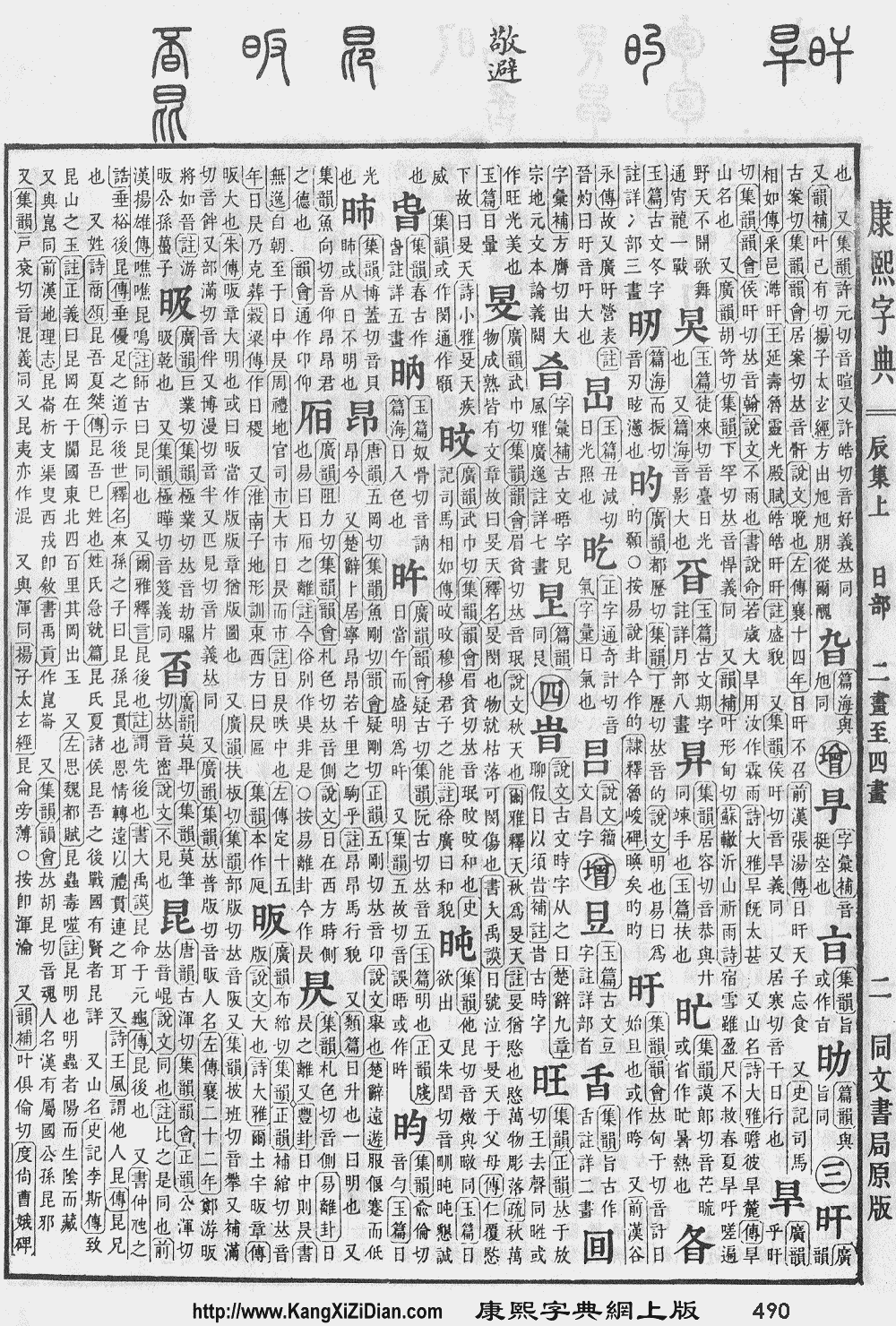
- Kangxi Dictionary: page 490, character 6
- Dai Kanwa Jiten: character 13752
- Dae Jaweon: page 851, character 7
- Hanyu Da Zidian (first edition): volume 2, page 1486, character 8
- Unihan data for U+65F1
Chinese
| simp. and trad. |
旱 | |
|---|---|---|
Glyph origin
Characters in the same phonetic series (干) (Zhengzhang, 2003)
| Old Chinese | |
|---|---|
| 訐 | *krads, *krads, *ked, *kad |
| 肝 | *kaːn |
| 竿 | *kaːn |
| 干 | *kaːn |
| 奸 | *kaːn |
| 玕 | *kaːn |
| 汗 | *kaːn, *ɡaːn, *ɡaːns |
| 迀 | *kaːn |
| 忓 | *kaːn, *ɡaːns |
| 鳱 | *kaːn |
| 邗 | *kaːn, *ɡaːn |
| 秆 | *kaːnʔ |
| 矸 | *kaːnʔ, *kaːns, *ɡaːns |
| 仠 | *kaːnʔ |
| 皯 | *kaːnʔ |
| 衦 | *kaːnʔ |
| 簳 | *kaːnʔ |
| 擀 | *kaːnʔ |
| 旰 | *kaːns |
| 盰 | *kaːns |
| 幹 | *kaːns |
| 杆 | *kaːns |
| 骭 | *kaːns, *ɡraːns |
| 桿 | *kaːnʔ |
| 趕 | *kaːnʔ |
| 稈 | *kaːnʔ |
| 刊 | *kʰaːn |
| 靬 | *kʰaːn, *kʰaːns, *kreːn, *kan |
| 衎 | *kʰaːnʔ, *kʰaːns |
| 犴 | *ŋaːn, *ŋaːns |
| 豻 | *ŋaːn, *ŋaːns, *ɦŋaːns, *ŋ̊ʰraːn |
| 頇 | *ŋaːns, *hŋaːn, *ŋaːd |
| 岸 | *ŋɡaːns |
| 鼾 | *qʰaːn, *ɢaːns |
| 罕 | *qʰaːnʔ, *qʰaːns |
| 焊 | *qʰaːnʔ, *ɡaːns |
| 蔊 | *qʰaːnʔ |
| 虷 | *ɡaːn |
| 旱 | *ɡaːnʔ |
| 皔 | *ɡaːnʔ |
| 釬 | *ɡaːns |
| 扞 | *ɡaːns |
| 閈 | *ɡaːns |
| 馯 | *ɡaːns, *kʰraːn |
| 捍 | *ɡaːns, *ɡraːnʔ |
| 悍 | *ɡaːns |
| 銲 | *ɡaːns |
| 垾 | *ɡaːns |
| 駻 | *ɡaːns |
| 睅 | *ɡʷranʔ |
| 娨 | *ɡraːns |
| 飦 | *kan |
| 赶 | *ɡan, *ɡʷad |
| 軒 | *qʰan |
| 蓒 | *qʰan |
| 酐 | *qʰaːŋʔ |
| 澣 | *ɡʷaːnʔ |
Etymology
From the same Proto-Sino-Tibetan root as 乾 (OC *kaːn, *ɡran, “dry”) (Schuessler, 2007).
Pronunciation
Definitions
旱
- drought; dry spell; aridness
- 防旱 ― fánghàn ― to take precautions against drought
- 旱既大甚,蘊隆蟲蟲。 [Pre-Classical Chinese, trad.]
- From: The Classic of Poetry, c. 11th – 7th centuries BCE, translated based on James Legge's version
- Hàn jì dà shèn, yùnlóng chóngchóng. [Pinyin]
- The drought is excessive;
Its fervours become more and more tormenting.
旱既大甚,蕴隆虫虫。 [Pre-Classical Chinese, simp.]
- drought-stricken
- (attributive) unrelated to water
- on land or not in a paddy field
- 旱稻 ― hàndào ― dry rice
- 旱船 ― hànchuán ― (please add an English translation of this usage example)
- land route
- 起旱 ― qǐhàn ― take an overland route
Synonyms
- (drought):
Dialectal synonyms of 旱 (“drought”) [map]
Compounds
- 久旱不雨 (jiǔhànbùyǔ)
- 乾旱/干旱 (gānhàn)
- 亢旱 (kànghàn)
- 伏旱
- 大旱雲霓/大旱云霓 (dàhànyúnní)
- 天旱 (tiānhàn)
- 抗旱 (kànghàn)
- 撐旱船/撑旱船
- 旱井
- 旱傘/旱伞 (hànsǎn)
- 旱冰 (hànbīng)
- 旱地 (hàndì)
- 旱天 (hàntiān)
- 旱天雷
- 旱季
- 旱年
- 旱性植物
- 旱情 (hànqíng)
- 旱橋/旱桥
- 旱潦
- 旱澇/旱涝 (hànlào)
- 旱澇保收/旱涝保收
- 旱災/旱灾 (hànzāi)
- 旱煙/旱烟 (hànyān)
- 旱煙筒/旱烟筒
- 旱煙袋/旱烟袋 (hànyāndài)
- 旱獺/旱獭 (hàntǎ)
- 旱生植物 (hànshēng zhíwù)
- 旱田 (hàntián)
- 旱祭
- 旱秧田
- 旱稻 (hàndào)
- 旱稻兒/旱稻儿
- 旱船
- 旱船舞
- 旱苗 (hànmiáo)
- 旱苗得雨
- 旱象
- 旱路 (hànlù)
- 旱軍/旱军
- 旱道 (hàndào)
- 旱道兒/旱道儿
- 旱魃 (hànbá)
- 旱魃為虐/旱魃为虐
- 旱鴨子/旱鸭子 (hànyāzi)
- 旱麓
- 枯旱
- 水旱 (shuǐhàn)
- 水旱不收
- 水旱碼頭/水旱码头
- 涔旱
- 秋旱
- 耐旱 (nàihàn)
- 苦旱 (kǔhàn)
- 荒旱
- 蟲霜水旱/虫霜水旱
- 起旱 (qǐhàn)
- 跑旱船 (pǎohànchuán)
- 遍地荒旱
References
- “Entry #3226”, in 臺灣閩南語常用詞辭典 [Dictionary of Frequently-Used Taiwan Minnan] (overall work in Mandarin and Hokkien), Ministry of Education, R.O.C., 2023.
Japanese
Kanji
旱
- This term needs a translation to English. Please help out and add a translation, then remove the text
{{rfdef}}.
Compounds
Etymology 1
/hi1deri/: *pideri > ɸideri > çideri. The nominalization of the verb 日照る (hideru).
Alternative forms
Pronunciation
- IPA(key): [çideri]
Pronunciation
- IPA(key): [kã̠ɴ]
Korean
Etymology
From Middle Chinese 旱 (MC hanX).
Recorded as Middle Korean ᅘᅡᆫ〯 (Yale: hhan) in Dongguk Jeongun (東國正韻 / 동국정운), 1448.
Recorded as Middle Korean 한〯 (hǎn) (Yale: han) in Hunmong Jahoe (訓蒙字會 / 훈몽자회), 1527.
Compounds
Vietnamese
This article is issued from Wiktionary. The text is licensed under Creative Commons - Attribution - Sharealike. Additional terms may apply for the media files.