佹

佹 U+4F79, 佹
CJK UNIFIED IDEOGRAPH-4F79
← 佸
[U+4F78]
CJK Unified Ideographs 佺 →
[U+4F7A]

Translingual

Han character

佹 (Kangxi radical 9, 人+6, 8 strokes, cangjie input 人弓一山 (ONMU), four-corner 27212, composition ⿰亻危)

  1. depend upon
  2. support
  3. go against

References

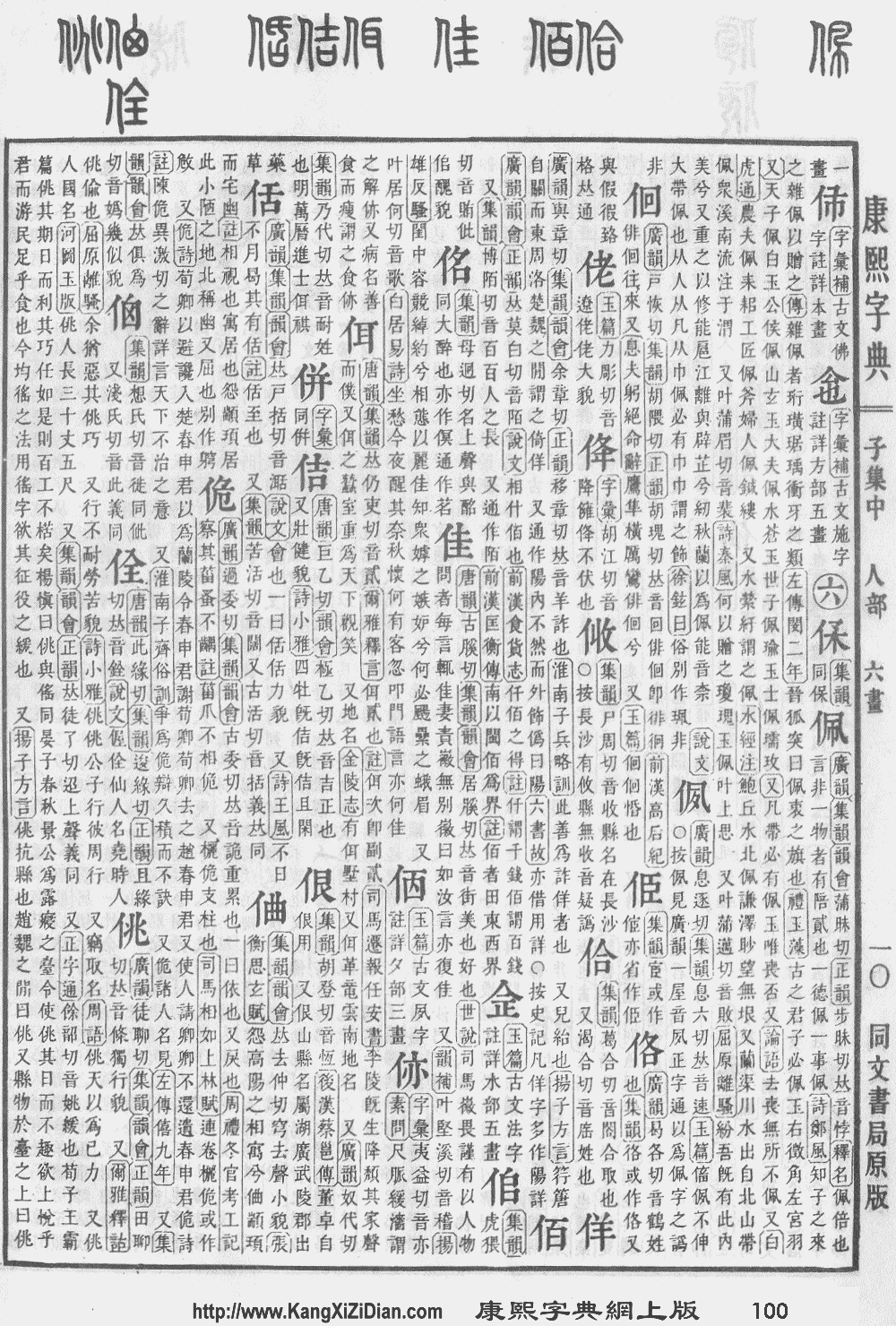
  • Kangxi Dictionary: page 100, character 27
  • Dai Kanwa Jiten: character 566
  • Dae Jaweon: page 213, character 5
  • Hanyu Da Zidian (first edition): volume 1, page 151, character 2
  • Unihan data for U+4F79

Chinese

simp. and trad.
佹

Glyph origin

Pronunciation 1


Rime
Character 佹
Reading # 1/1
Initial (聲) 見 (28)
Final (韻) 支 (14)
Tone (調) Rising (X)
Openness (開合) Closed
Division (等) III
Fanqie 過委切
Baxter kjweX
Reconstructions
Zhengzhang
Shangfang
/kˠiuᴇX/
Pan
Wuyun
/kʷᵚiɛX/
Shao
Rongfen
/kiuɛX/
Edwin
Pulleyblank
/kjwiə̆X/
Li
Rong
/kjueX/
Wang
Li
/kǐweX/
Bernard
Karlgren
/kwie̯X/
Expected
Mandarin
Reflex
guǐ
Expected
Cantonese
Reflex
gwai2
Zhengzhang system (2003)
Character 佹
Reading # 1/1
No. 12777
Phonetic
component
危
Rime
group
歌
Rime
subdivision
3
Corresponding
MC rime
詭
Old
Chinese
/*krolʔ/

Definitions

佹

  1. (literary) to deviate
  2. † to be piled up
  3. (literary) Alternative form of 詭/诡 (guǐ, “strange; deceitful”)

Compounds

  • 佹侘
  • 佹僪
  • 佹常
  • 佹形僪狀/佹形僪状
  • 佹瑣/佹琐
  • 佹異/佹异
  • 佹詩/佹诗
  • 佹誕/佹诞
  • 佹辭/佹辞
  • 佹辯/佹辩
  • 欐佹/𪲔佹

Pronunciation 2


Definitions

佹

  1. † almost; nearly
  2. (literary, in the 佹...佹... construction) now …, now …

Compounds

  • 佹佹
  • 佹得
  • 佹得佹失

Japanese

Kanji

佹

(uncommon “Hyōgai” kanji)

  1. depend upon
  2. support
  3. go against

Readings

Korean

Hanja

佹 • (gwe) (hangeul 궤, revised gwe, McCune–Reischauer kwe)

  1. strange
  2. deceive
  3. go against
This article is issued from Wiktionary. The text is licensed under Creative Commons - Attribution - Sharealike. Additional terms may apply for the media files.