跪
| ||||||||
Translingual
Han character
跪 (Kangxi radical 157, 足+6, 13 strokes, cangjie input 口一弓一山 (RMNMU), four-corner 67112, composition ⿰𧾷危)
References
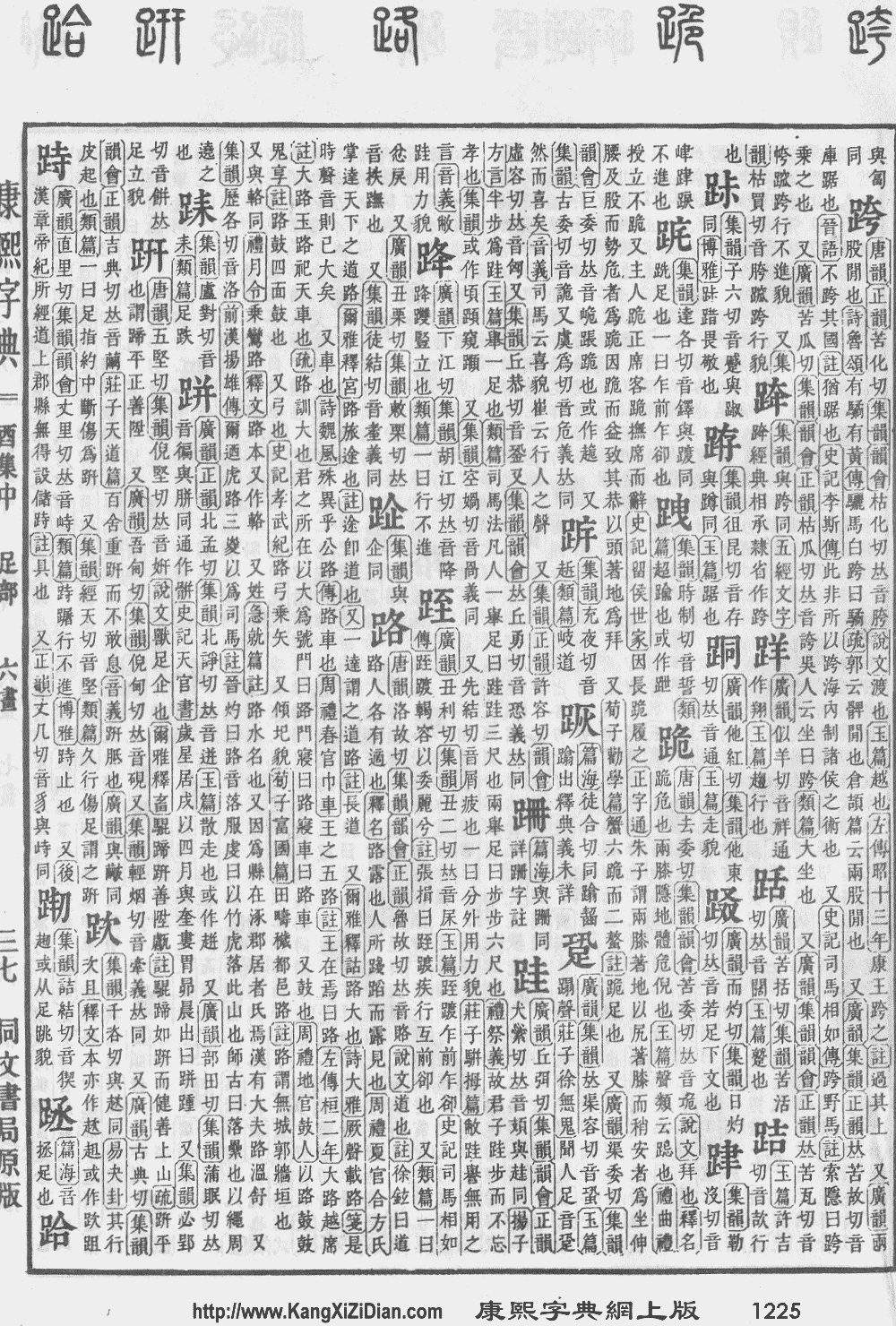
- Kangxi Dictionary: page 1225, character 13
- Dai Kanwa Jiten: character 37516
- Dae Jaweon: page 1696, character 29
- Hanyu Da Zidian (first edition): volume 6, page 3704, character 3
- Unihan data for U+8DEA
Chinese
| simp. and trad. |
跪 | |
|---|---|---|
Glyph origin
Characters in the same phonetic series (危) (Zhengzhang, 2003)
Phono-semantic compound (形聲/形声, OC *kʰrolʔ, *ɡrolʔ) : semantic 足 (“foot”) + phonetic 危 (OC *ŋrol).
Etymology
Perhaps connected with Proto-Vietic *t-kuːlʔ (> Vietnamese gối (“knee”)) (Schuessler, 2007). For the semantic relationship, compare English kneel. Also compare Proto-Sino-Tibetan *koj (“bend; curved; lap; bosom”) (STEDT).
Pronunciation
Definitions
跪
- to kneel
- † foot
- 蟹六跪而二螯,非蛇蟺之穴無可寄託者,用心躁也。 [Classical Chinese, trad.]
- From: Xunzi, c. 3rd century BCE
- Xiè liù guì ér èr áo, fēi shé shàn zhī xué wú kě jìtuō zhě, yòngxīn zào yě. [Pinyin]
- The crab has six feet and two pincers, yet without the dens of snakes and eels, it has no place to take shelter. This is because its mind is impatient.
蟹六跪而二螯,非蛇蟺之穴无可寄托者,用心躁也。 [Classical Chinese, simp.]
- (figuratively) to kowtow; to show obedience to
Japanese
Kanji
跪
- This term needs a translation to English. Please help out and add a translation, then remove the text
{{rfdef}}.
Korean
Hanja
跪 (eum 궤 (gwe))
- This term needs a translation to English. Please help out and add a translation, then remove the text
{{rfdef}}.
Vietnamese
This article is issued from Wiktionary. The text is licensed under Creative Commons - Attribution - Sharealike. Additional terms may apply for the media files.