過
See also: 过
| ||||||||
Translingual
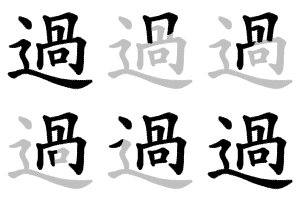
| Stroke order | |||
|---|---|---|---|
 | |||
| Japanese | 過 |
|---|---|
| Simplified | 过 |
| Traditional | 過 |
Alternative forms
Note that the box in the upper part of 咼 differs in simplified Chinese – in simplified Chinese fonts it is on the left, while in Japanese and traditional Chinese it is on the right (as seen in the Kangxi dictionary).
Han character
過 (Kangxi radical 162, 辵+8 in Chinese, 辵+9 in Japanese, 11 strokes in Chinese, 12 strokes in Japanese, cangjie input 卜月月口 (YBBR), four-corner 37302, composition ⿺辶咼)
References
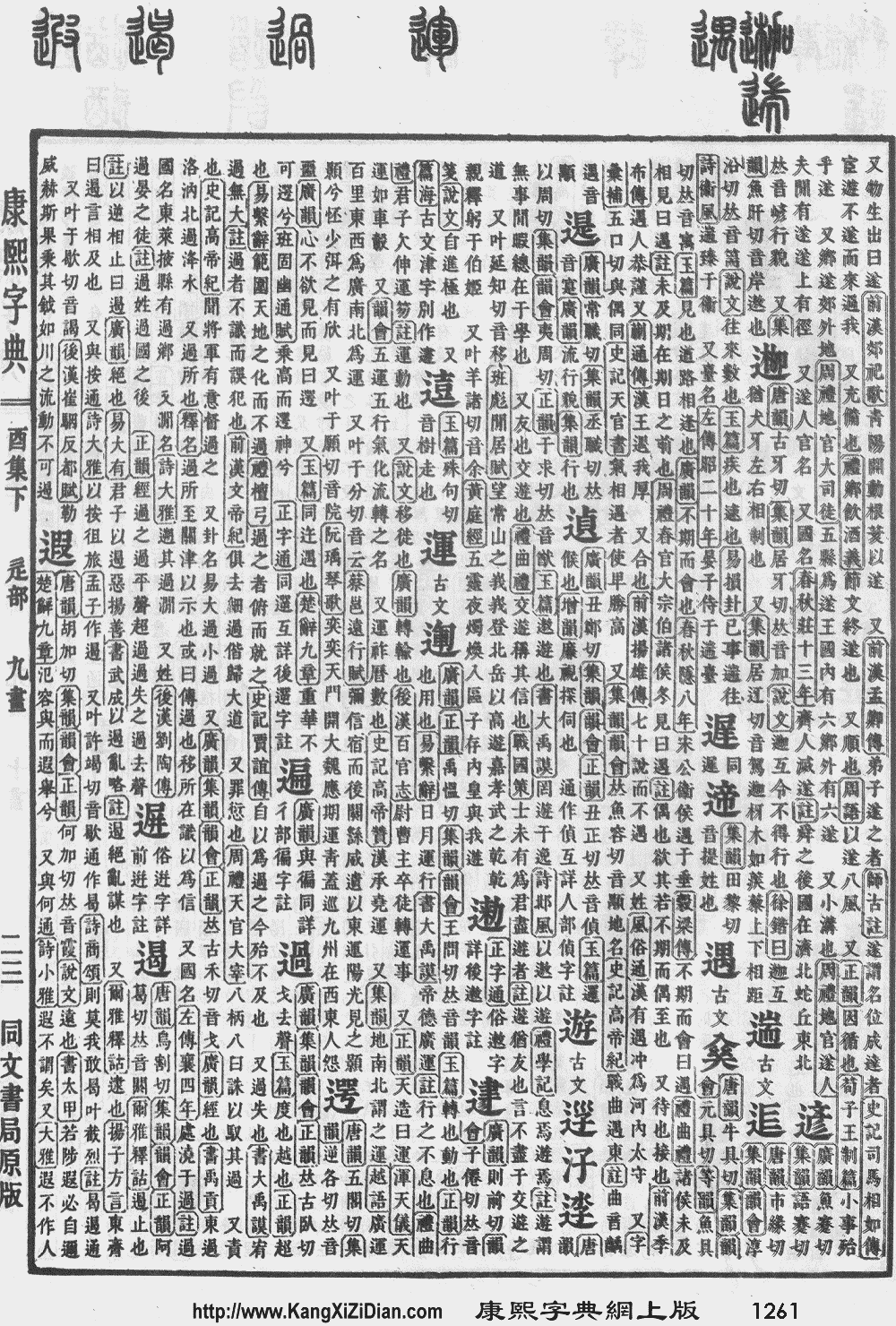
- Kangxi Dictionary: page 1261, character 22
- Dai Kanwa Jiten: character 39002
- Dae Jaweon: page 1753, character 6
- Hanyu Da Zidian (first edition): volume 6, page 3849, character 8
- Unihan data for U+904E
Chinese
| trad. | 過 | |
|---|---|---|
| simp. | 过 | |
| alternative forms | 𬨨 | |
Glyph origin
| Historical forms of the character 過 | |||
|---|---|---|---|
| Western Zhou | Warring States | Shuowen Jiezi (compiled in Han) | |
| Bronze inscriptions | Chu slip and silk script | Qin slip script | Small seal script |
 |
 |
 |
 |
Characters in the same phonetic series (冎) (Zhengzhang, 2003)
| Old Chinese | |
|---|---|
| 碢 | *l'oːl |
| 腡 | *ɡ·roːl, *kʷroːl |
| 過 | *kloːl, *kloːls |
| 渦 | *kloːl, *qloːl |
| 鍋 | *kloːl |
| 楇 | *kloːl, *ɡloːls |
| 瘑 | *kloːl |
| 緺 | *koːl, *kroːl, *kʷroːl |
| 堝 | *kloːl |
| 濄 | *kloːl, *qloːl |
| 鐹 | *kloːlʔ, *kloːls |
| 薖 | *kʰloːl |
| 簻 | *kʰloːl, *kr'oːl |
| 禍 | *ɡloːlʔ |
| 窩 | *qloːl |
| 萵 | *qloːl |
| 檛 | *kr'oːl |
| 膼 | *kr'oːl |
| 蝸 | *kroːl, *kʷroːl |
| 媧 | *kroːl, *kʷroːl |
| 騧 | *kroːl, *kʷroːl |
| 冎 | *kroːlʔ |
| 剮 | *kroːlʔ |
| 諣 | *qʰroːls, *qʰʷroːls |
| 歄 | *kʷroːl |
| 咼 | *kʰʷroːl |
| 喎 | *kʰʷroːl |
Phono-semantic compound (形聲/形声, OC *kloːl, *kloːls) : semantic 辵 (“walk”) + phonetic 咼 (OC *kʰʷroːl).
Etymology 1
From Proto-Sino-Tibetan *m/s-ka-j (“to go, to stride”) (STEDT). Related to 跨 (OC *kʰʷraː, *kʰʷraːʔ, *kʰʷraːs, *kʰʷaːs, “to pass over”) and 騎 (OC *ɡral, *ɡrals, “to ride”).
Pronunciation
Definitions
過
- to cross; to pass; to go across; to pass through
- (of time) to pass by; to pass
- to spend time; to live
- to transfer; to move to
- to cause to go through
- to go over; to look at carefully; to go through
- to exceed; to surpass; to be over
- excessive; undue; overboard
- to pass an exam
- verbal complement
- indicating passing by; over; by
- indicating a change in direction; over; away
- indicating an excess in degree or amount; past; through; by
- indicating superiority; better than
- (Cantonese) indicating that an event is worthwhile
- 呢間茶樓啲點心又貴又唔係特別好食,真係食唔過。 [Cantonese, trad.]
- ni1 gaan1 caa4 lau4 di1 dim2 sam1 jau6 gwai3 jau6 m4 hai6 dak6 bit6 hou2 sik6, zan1 hai6 sik6 m4 gwo3. [Jyutping]
- The dim sum at this restaurant is quite expensive and not particularly tasty, so it's not worth eating.
呢间茶楼啲点心又贵又唔系特别好食,真系食唔过。 [Cantonese, simp.]
- (chiefly literary or Cantonese) adjectival complement indicating an excess in degree or amount; more ... than
- 子曰:「由也好勇過我,無所取材。」 [Classical Chinese, trad.]
- From: The Analects of Confucius, c. 475 – 221 BCE
- Zǐyuē: “Yóu yě hào yǒng guò wǒ, wú suǒ qǔ cái.” [Pinyin]
- Upon which the Master said, "Zhong You is fonder of daring than I am. He does not exercise his judgment upon matters."
子曰:「由也好勇过我,无所取材。」 [Classical Chinese, simp.]
- particle indicating that an event or state has occurred already; ever; already
- (Cantonese, Gan) particle indicating repetition of an event; again
- too; excessively
- fault; blemish; mistake
- (Cantonese, chiefly university slang) to pass
- (literary) to pay a visit; to visit; to call on
- (euphemistic) to die; to pass away
- (Cantonese, dated) used to indicates the target or recipient of an action: to
- 1894, J. Dyer Ball, Readings in Cantonese Colloquial, page 18:
- 天使講完、個啲女人、心好歡喜、卽時走去話過門徒知。 [Cantonese, trad.]
- tin1 si3 gong2 jyun4, go3 di1 neoi5 jan4-2, sam1 hou2 fun1 hei2, zik1 si4 zau2 heoi3 waa6 gwo3 mun4 tou4 zi1. [Jyutping]
- [After the angels said this, t]he women were very glad indeed they ran as quickly as they could to tell the disciples.
天使讲完、个啲女人、心好欢喜、即时走去话过门徒知。 [Cantonese, simp.]
- 1907, 《舊新約全書·廣東話》, 詩篇 [Psalm] 59:17:
- 你係我之力量、我要歌頌你、因上帝係我圍牆、施恩過我 [Cantonese, trad.]
- nei5 hai6 ngo5 zi1 lik6 loeng6, ngo5 jiu3 go1 zung6 nei5, jan1 soeng6 dai3 hai6 ngo5 wai4 coeng4, si1 jan1 gwo3 ngo5 [Jyutping]
- Unto thee, O my strength, will I sing: for God is my defence, and the God of my mercy [literally, bestows mercy on me].
你系我之力量、我要歌颂你、因上帝系我围墙、施恩过我 [Cantonese, simp.]
- (Cantonese) This term needs a translation to English. Please help out and add a translation, then remove the text
{{rfdef}}. - Classifier for occurrences: time
Synonyms
Dialectal synonyms of 太 (“too; excessively”) [map]
- (to pay a visit):
- 上門/上门 (shàngmén)
- 串 (literary, or in compounds)
- 串門/串门 (chuànmén) (colloquial)
- 串門子/串门子 (chuàn ménzi) (colloquial)
- 參訪/参访 (cānfǎng) (formal)
- 坐人家 (zo5 ren2 ga) (Xiang)
- 坐尞 (Hakka)
- 拜望 (bàiwàng) (polite)
- 拜訪/拜访 (bàifǎng) (polite)
- 探問/探问 (tànwèn)
- 探望 (tànwàng)
- 探視/探视 (tànshì)
- 探親/探亲 (tànqīn) (to visit one's relatives or spouse)
- 探訪/探访 (tànfǎng)
- 登門/登门 (dēngmén)
- 看望 (kànwàng)
- 省親/省亲 (xǐngqīn) (literary, to visit one's parents or elders)
- 瞧 (qiáo) (colloquial)
- 訪問/访问 (fǎngwèn)
- 走訪/走访 (zǒufǎng)
- 造訪/造访 (zàofǎng)
Usage notes
Compounds
- 一過眼兒/一过眼儿
- 不好過/不好过
- 不是過/不是过
- 不為過/不为过 (bùwéiguò)
- 不而過/不而过 (put-jî-kò)
- 不貳過/不贰过 (bù'èrguò)
- 不過/不过 (bùguò)
- 不過問/不过问
- 不過如此/不过如此
- 不過意/不过意 (bùguòyì)
- 不過是/不过是
- 不過爾爾/不过尔尔 (bùguò'ěr'ěr)
- 事過境遷/事过境迁 (shìguòjìngqiān)
- 五過/五过
- 人口過剩/人口过剩 (rénkǒu guòshèng)
- 代人受過/代人受过
- 以功補過/以功补过
- 以功覆過/以功覆过
- 供過/供过
- 供過於求/供过于求 (gōngguòyúqiú)
- 信得過/信得过 (xìndéguò)
- 兩手過膝/两手过膝
- 八仙過海/八仙过海 (bāxiānguòhǎi)
- 再來過/再来过
- 分過太平/分过太平
- 功僅補過/功仅补过
- 功過/功过 (gōngguò)
- 功過參半/功过参半
- 功過相酬/功过相酬
- 勸善規過/劝善规过
- 口過/口过 (kǒuguò)
- 名過其實/名过其实 (míngguòqíshí)
- 咎過/咎过
- 回過/回过
- 垂手過膝/垂手过膝
- 夠過兒/够过儿
- 大不過/大不过
- 大呼過癮/大呼过瘾
- 大喜過望/大喜过望 (dàxǐguòwàng)
- 大過/大过 (dàguò)
- 太過/太过 (tàiguò)
- 好過/好过 (hǎoguò)
- 如風過耳/如风过耳
- 委過/委过 (wěiguò)
- 孔鯉過庭/孔鲤过庭
- 孫過庭/孙过庭
- 容頭過身/容头过身
- 寡過/寡过
- 將功折過/将功折过
- 將功補過/将功补过 (jiānggōngbǔguò)
- 對過/对过 (duìguò)
- 小過/小过 (xiǎoguò)
- 小過年/小过年
- 小過門兒/小过门儿
- 左不過/左不过
- 度過/度过 (dùguò)
- 得過/得过
- 得過且過/得过且过 (déguòqiěguò)
- 忙不過來/忙不过来
- 忒過/忒过
- 思過/思过 (sīguò)
- 思過半/思过半
- 悔過/悔过 (huǐguò)
- 悔過書/悔过书
- 悔過自懺/悔过自忏
- 悔過自新/悔过自新 (huǐguòzìxīn)
- 悔過自責/悔过自责
- 懸的過高/悬的过高
- 才過子建/才过子建
- 才過屈宋/才过屈宋
- 打過/打过
- 打過偏手/打过偏手
- 拉下過/拉下过
- 拗不過/拗不过
- 抵不過/抵不过
- 招搖過市/招摇过市 (zhāoyáoguòshì)
- 拾遺舉過/拾遗举过
- 挫過/挫过
- 挺過去/挺过去
- 掉過來/掉过来
- 掉過兒/掉过儿
- 掂過兒/掂过儿
- 掉過頭/掉过头
- 掩鼻而過/掩鼻而过
- 提過/提过
- 撂過手/撂过手
- 撧過來/𪮖过来
- 撈過界/捞过界
- 操之過急/操之过急 (cāozhīguòjí)
- 擔當不過/担当不过
- 擦肩而過/擦肩而过 (cājiān'érguò)
- 擦身而過/擦身而过 (cāshēn'érguò)
- 改過/改过 (gǎiguò)
- 改過不吝/改过不吝
- 改過向善/改过向善
- 改過從善/改过从善
- 改過從新/改过从新
- 改過自新/改过自新 (gǎiguòzìxīn)
- 改過遷善/改过迁善
- 放過/放过 (fàngguò)
- 放過一馬/放过一马
- 放馬過來/放马过来 (fàngmǎ guòlái)
- 救過不贍/救过不赡
- 救過補闕/救过补阙
- 文過/文过 (wénguò)
- 文過遂非/文过遂非
- 文過飾非/文过饰非 (wénguòshìfēi)
- 易過借火/易过借火
- 時過境遷/时过境迁 (shíguòjìngqiān)
- 朝過夕改/朝过夕改
- 末過/末过
- 未過門/未过门
- 桃花過渡/桃花过渡
- 棄過圖新/弃过图新
- 毋過/毋过 (m̄-kù)
- 氣不過/气不过
- 求過於供/求过于供
- 沒有過/没有过
- 沒渾過事/没浑过事
- 沒過/没过
- 渡過/渡过 (dùguò)
- 濾過作用/滤过作用
- 無心之過/无心之过 (wúxīnzhīguò)
- 無過/无过
- 煙雲過眼/烟云过眼
- 熬不過/熬不过
- 爭功諉過/争功诿过
- 犯過/犯过
- 理過其辭/理过其辞
- 當不過/当不过
- 當面錯過/当面错过
- 白駒過隙/白驹过隙 (báijūguòxì)
- 百代過客/百代过客
- 看不過/看不过
- 相過/相过
- 督過/督过
- 瞞天過海/瞒天过海 (mántiānguòhǎi)
- 瞧不過/瞧不过
- 知過必改/知过必改
- 矯枉過正/矫枉过正 (jiǎowǎngguòzhèng)
- 矯枉過直/矫枉过直
- 磕過頭的/磕过头的
- 神經過敏/神经过敏 (shénjīng guòmǐn)
- 福過災生/福过灾生
- 秋風過耳/秋风过耳
- 穿房過屋/穿房过屋
- 窗間過馬/窗间过马
- 精力過人/精力过人
- 經過/经过 (jīngguò)
- 罪過/罪过 (zuìguò)
- 翻過兒/翻过儿
- 翻過筋斗
- 老鼠過街/老鼠过街
- 聞過則喜/闻过则喜
- 聞過色喜/闻过色喜
- 自視過高/自视过高
- 莫過/莫过
- 蝗蟲過境/蝗虫过境
- 螃蟹過河/螃蟹过河
- 衣錦過鄉/衣锦过乡
- 補過/补过 (bǔguò)
- 見過世面/见过世面
- 觀過知仁/观过知仁
- 言之過早/言之过早 (yánzhīguòzǎo)
- 言之過甚/言之过甚
- 言過其實/言过其实 (yánguòqíshí)
- 計功補過/计功补过
- 計過自訟/计过自讼
- 記過/记过 (jìguò)
- 說不過/说不过
- 說不過去/说不过去 (shuōbuguòqù)
- 說事過錢/说事过钱
- 說得過去/说得过去 (shuōdeguòqù)
- 諒得過/谅得过
- 諉過/诿过 (wěiguò)
- 諱敗推過/讳败推过
- 諫過/谏过
- 諱過稱善/讳过称善
- 譽過其實/誉过其实
- 護過飾非/护过饰非
- 責躬省過/责躬省过
- 走過場/走过场 (zǒuguòchǎng)
- 赸過/赸过
- 越過/越过 (yuèguò)
- 超過/超过 (chāoguò)
- 路過/路过 (lùguò)
- 迸不過/迸不过
- 逃弗過/逃弗过
- 退思補過/退思补过
- 透不過氣/透不过气
- 逢年過節/逢年过节 (féngniánguòjié)
- 通過/通过 (tōngguò)
- 透過/透过 (tòuguò)
- 透風就過/透风就过
- 過一過/过一过
- 過下來/过下来
- 過三關/过三关 (guòsānguān)
- 過不去/过不去 (guòbùqù)
- 過世/过世 (guòshì)
- 過之/过之
- 過了/过了
- 過五關/过五关
- 過人/过人 (guòrén)
- 過人才略/过人才略
- 過付/过付
- 過來/过来 (guòlái)
- 過來人/过来人 (guòláirén)
- 過傢伙/过家伙
- 過兒/过儿
- 過兩天/过两天
- 過冬/过冬 (guòdōng)
- 過分/过分 (guòfèn)
- 過到/过到
- 過則勿憚改/过则勿惮改 (guòzéwùdàngǎi)
- 過剩/过剩 (guòshèng)
- 過動兒/过动儿
- 過勞死/过劳死 (guòláosǐ)
- 過勿憚改/过勿惮改
- 過化存神/过化存神
- 過午/过午
- 過半/过半 (guòbàn)
- 過半數/过半数
- 過去/过去 (guòqù)
- 過去式/过去式 (guòqùshì)
- 過口/过口
- 過問/过问 (guòwèn)
- 過堂/过堂 (guòtáng)
- 過堂風/过堂风
- 過場/过场 (guòchǎng)
- 過境/过境 (guòjìng)
- 過境稅/过境税
- 過夏/过夏
- 過夜/过夜 (guòyè)
- 過天/过天
- 過失/过失 (guòshī)
- 過失傷害/过失伤害
- 過失殺人/过失杀人 (guòshī shārén)
- 過失致死/过失致死
- 過如/过如
- 過嫁妝/过嫁妆
- 過子/过子
- 過客/过客 (guòkè)
- 過小年/过小年
- 過山/过山
- 過山車/过山车 (guòshānchē)
- 過山龍/过山龙
- 過帳/过帐
- 過年/过年
- 過年兒/过年儿
- 過度/过度 (guòdù)
- 過庭/过庭
- 過庭之訓/过庭之训
- 過廳/过厅
- 過往/过往 (guòwǎng)
- 過後/过后 (guòhòu)
- 過從/过从 (guòcóng)
- 過得去/过得去 (guòdeqù)
- 過從甚密/过从甚密
- 過得著/过得著
- 過心/过心 (guòxīn)
- 過愛/过爱
- 過意/过意
- 過意不去/过意不去 (guòyìbùqù)
- 過慮/过虑 (guòlǜ)
- 過戶/过户 (guòhù)
- 過房/过房 (guòfáng)
- 過所/过所
- 過房兒子/过房儿子
- 過房書/过房书
- 過手/过手
- 過折了/过折了
- 過招/过招
- 過排/过排
- 過敏/过敏 (guòmǐn)
- 過敏原/过敏原
- 過數/过数 (guòshù)
- 過於/过于 (guòyú)
- 過日/过日
- 過日子/过日子 (guò rìzi)
- 過明路/过明路
- 過是/过是
- 過晌/过晌
- 過時/过时 (guòshí)
- 過時不候/过时不候
- 過景/过景
- 過會/过会
- 過望/过望 (guòwàng)
- 過期/过期 (guòqī)
- 過木梳/过木梳
- 過梁
- 過橋/过桥 (guòqiáo)
- 過橋抽板/过桥抽板 (guòqiáochōubǎn)
- 過橋拆橋/过桥拆桥
- 過橋費/过桥费 (guòqiáofèi)
- 過此以往/过此以往
- 過歷/过历
- 過氣/过气 (guòqì)
- 過水麵/过水面
- 過江之鯽/过江之鲫
- 過沖/过冲
- 過河卒子/过河卒子
- 過河抽板/过河抽板
- 過河拆橋/过河拆桥 (guòhéchāiqiáo)
- 過活/过活 (guòhuó)
- 過淋/过淋
- 過渡/过渡 (guòdù)
- 過渡內閣/过渡内阁
- 過渡時期/过渡时期
- 過渡灣/过渡湾 (Guòdùwān)
- 過渡金屬/过渡金属 (guòdù jīnshǔ)
- 過漫/过漫
- 過激/过激 (guòjī)
- 過濾/过滤 (guòlǜ)
- 過火/过火 (guòhuǒ)
- 過犯/过犯 (guòfàn)
- 過猶不及/过犹不及 (guòyóubùjí)
- 過獎/过奖 (guòjiǎng)
- 過班/过班
- 過甚/过甚 (guòshèn)
- 過甚其實/过甚其实
- 過甚其詞/过甚其词
- 過生日/过生日
- 過當/过当 (guòdàng)
- 過當防衛/过当防卫
- 過病氣/过病气
- 過癮/过瘾 (guòyǐn)
- 過盛必衰/过盛必衰
- 過目/过目 (guòmù)
- 過目不忘/过目不忘 (guòmùbùwàng)
- 過目成誦/过目成诵
- 過眼/过眼
- 過眼煙雲/过眼烟云
- 過眼雲煙/过眼云烟
- 過眼風燈/过眼风灯
- 過硬/过硬 (guòyìng)
- 過磅/过磅 (guòbàng)
- 過福/过福
- 過禮/过礼
- 過秤/过秤 (ɡuòchèng)
- 過程/过程 (guòchéng)
- 過稱/过称
- 過節/过节 (guòjié)
- 過節兒/过节儿
- 過篩子/过筛子
- 過細/过细 (guòxì)
- 過網/过网
- 過縱/过纵
- 過繼/过继 (guòjì)
- 過羅/过罗
- 過而能改/过而能改
- 過耳秋風/过耳秋风
- 過聽/过听
- 過肩摔/过肩摔
- 過與/过与
- 過舌/过舌
- 過茶/过茶
- 過蒙/过蒙
- 過處/过处
- 過街樓/过街楼
- 過街老鼠/过街老鼠 (guòjiē lǎoshǔ)
- 過言/过言 (guòyán)
- 過訪/过访 (guòfǎng)
- 過話/过话 (guòhuà)
- 過誤/过误
- 過謙/过谦 (guòqiān)
- 過譽/过誉 (guòyù)
- 過費/过费
- 過賣/过卖
- 過贓犯法/过赃犯法
- 過路/过路 (guòlù)
- 過路人/过路人 (guòlùrén)
- 過路客/过路客
- 過路的/过路的
- 過路財神/过路财神
- 過路買賣/过路买卖
- 過身/过身 (guòshēn)
- 過載/过载 (guòzài)
- 過逾/过逾
- 過道/过道 (guòdào)
- 過過身/过过身
- 過遣/过遣
- 過酒/过酒
- 過重/过重 (guòzhòng)
- 過量/过量 (guòliàng)
- 過錯/过错 (guòcuò)
- 過錢/过钱
- 過錄/过录
- 過錳酸鉀/过锰酸钾 (guòměngsuānjiǎ)
- 過門/过门 (guòmén)
- 過門不入/过门不入
- 過門兒/过门儿
- 過門錢/过门钱
- 過關/过关 (guòguān)
- 過關斬將/过关斩将 (guòguānzhǎnjiàng)
- 過限/过限
- 過陰/过阴
- 過隙/过隙
- 過隙白駒/过隙白驹
- 過雲雨/过云雨 (guòyúnyǔ)
- 過電/过电 (guòdiàn)
- 過露/过露
- 過頭/过头 (guòtóu)
- 過風/过风
- 過飯/过饭
- 過飽和/过饱和 (guòbǎohé)
- 遠超過/远超过
- 遷善改過/迁善改过
- 邁過隅頭/迈过隅头
- 酒過三巡/酒过三巡
- 重大過失/重大过失
- 錯身而過/错身而过
- 錯過/错过 (cuòguò)
- 錢過北斗/钱过北斗
- 閃過/闪过
- 閉門思過/闭门思过 (bìménsīguò)
- 閉閣思過/闭阁思过
- 開過眼/开过眼
- 防衛過當/防卫过当
- 附過還職/附过还职
- 陳義過高/陈义过高
- 難過/难过 (nánguò)
- 雨過天晴/雨过天晴
- 雨過天青/雨过天青
- 雲煙過眼/云烟过眼
- 青過於藍/青过于蓝
- 面壁思過/面壁思过 (miànbìsīguò)
- 面紅過耳/面红过耳
- 顧不過來/顾不过来
- 顧得過來/顾得过来
- 風流罪過/风流罪过
- 飄洋過海/飘洋过海
- 飛象過河/飞象过河 (fēixiàngguòhé)
- 飛過海/飞过海
- 飾非文過/饰非文过 (shìfēiwénguò)
- 飾非遂過/饰非遂过
- 養不教,父之過/养不教,父之过 (yǎngbùjiào, fùzhīguò)
- 駟之過隙/驷之过隙
- 高軒過/高轩过
Pronunciation
Pronunciation
References
- “過”, in 漢語多功能字庫 (Multi-function Chinese Character Database), 香港中文大學 (the Chinese University of Hong Kong), 2014–
- “Entry #10182”, in 臺灣閩南語常用詞辭典 [Dictionary of Frequently-Used Taiwan Minnan] (overall work in Mandarin and Hokkien), Ministry of Education, R.O.C., 2023.
Japanese
| Shinjitai | 過 | |
| Kyūjitai [1] |
過󠄁 過+ 󠄁?(Adobe-Japan1) |
 |
| 過󠄃 過+ 󠄃?(Hanyo-Denshi) (Moji_Joho) | ||
| The displayed kanji may be different from the image due to your environment. See here for details. | ||
Readings
- Go-on: か (ka, Jōyō)←くわ (kwa, historical)
- Kan-on: か (ka, Jōyō)←くわ (kwa, historical)
- Kun: あやまつ (ayamatsu, 過つ, Jōyō); あやまち (ayamachi, 過ち, Jōyō); あやまち (ayamachi, 過); すぐ (sugu, 過ぐ); すぐす (sugusu, 過ぐす); すぐる (suguru, 過ぐる); すぎる (sugiru, 過ぎる, Jōyō); すぎ (sugi, 過); すごす (sugosu, 過ごす, Jōyō); すごす (sugosu, 過す); よぎる (yogiru, 過ぎる); よぎる (yogiru, 過る)
References
- “過”, in 漢字ぺディア (Kanjipedia) (in Japanese), 日本漢字能力検定協会, 2015–2024
- Matsumura, Akira, editor (2006), 大辞林 [Daijirin] (in Japanese), Third edition, Tōkyō: Sanseidō, →ISBN
Korean
Vietnamese
Han character
過: Hán Nôm readings: qua, quá, góa/goá, quớ, quở
- chữ Hán form of qua (“to pass; to go over”).
- 1910, Sơn Hậu Diễn Ca, sheet 1a
- 䀡運𡗶㐌挌過頭。
- Xem vận trời đã gác qua đầu.
- Seeing that fate has been set over (my) head.
- 1910, Sơn Hậu Diễn Ca, sheet 1a
- chữ Hán form of quá (“too (much); over”).
- circa 15th century, Nguyễn Trãi, Lê triều Nguyễn tướng công Gia huấn ca, Quan Văn Ðường tàng bản (1907), lines 7-8
- 𠳒咹涅於朱坤, 拯𢧚多過多言𡭧芇。
- Lời ăn nết ở cho khôn, chẳng nên đa quá đa ngôn chút nào.
- Speak and act like a lady, but speak not too much lest you blunder.
- circa 15th century, Nguyễn Trãi, Lê triều Nguyễn tướng công Gia huấn ca, Quan Văn Ðường tàng bản (1907), lines 7-8
This article is issued from Wiktionary. The text is licensed under Creative Commons - Attribution - Sharealike. Additional terms may apply for the media files.