偩
| ||||||||
Translingual
Han character
偩 (Kangxi radical 9, 人+9, 11 strokes, cangjie input 人弓月金 (ONBC), four-corner 27286, composition ⿰亻負)
References
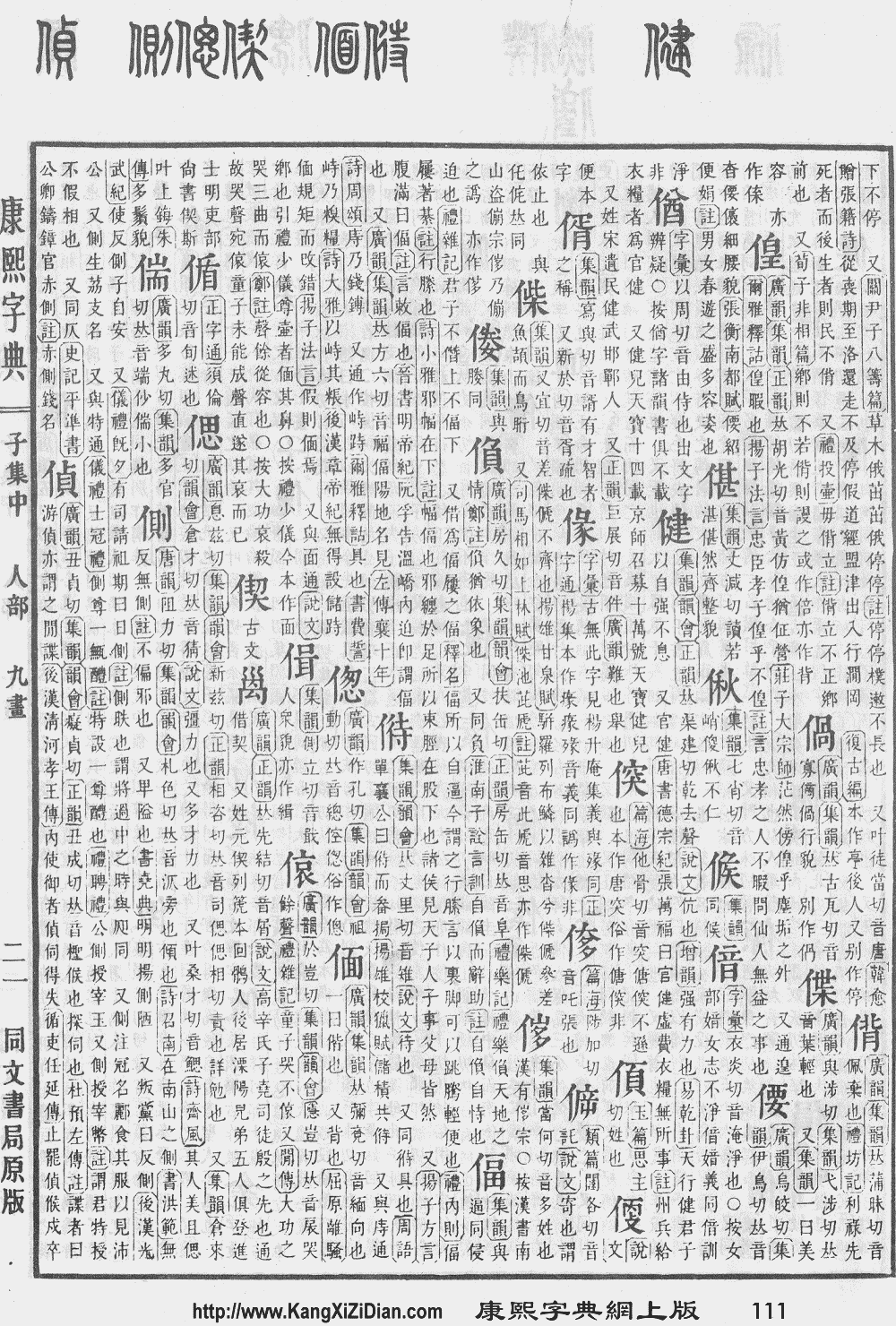
- Kangxi Dictionary: page 111, character 22
- Dai Kanwa Jiten: character 886
- Dae Jaweon: page 237, character 19
- Hanyu Da Zidian (first edition): volume 1, page 193, character 9
- Unihan data for U+5069
Chinese
| trad. | 偩 | |
|---|---|---|
| simp. | 𰁾 | |
Glyph origin
Pronunciation
Definitions
偩
- † This term needs a translation to English. Please help out and add a translation, then remove the text
{{rfdef}}.- 禮樂偩天地之情 [Classical Chinese, trad.]
- From: The Book of Rites, c. 4th – 2nd century BCE
- lǐyuè fù tiāndì zhī qíng [Pinyin]
- Ceremonies and music resemble the nature of Heaven and Earth.
礼乐𰁾天地之情 [Classical Chinese, simp.]
- † Alternative form of 負/负 (fù, “to rely on; to depend on”)
Japanese
Kanji
偩
- This term needs a translation to English. Please help out and add a translation, then remove the text
{{rfdef}}.
Korean
Hanja
偩 • (bu) (hangeul 부, revised bu, McCune–Reischauer pu)
- This term needs a translation to English. Please help out and add a translation, then remove the text
{{rfdef}}.
This article is issued from Wiktionary. The text is licensed under Creative Commons - Attribution - Sharealike. Additional terms may apply for the media files.