情
| ||||||||
Translingual
| Traditional | 情 |
|---|---|
| Simplified | 情 |
| Japanese | 情 |
| Korean | 情 |
| Stroke order (Mainland China) | |||
|---|---|---|---|
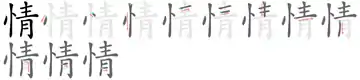 | |||
| Stroke order (Taiwan) | |||
|---|---|---|---|
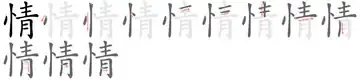 | |||
| Stroke order (Mainland China) | |||
|---|---|---|---|
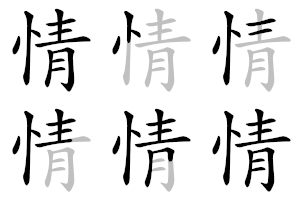 | |||
Alternative forms
- In mainland China, Hong Kong (based on its educational standard), Japanese kanji and Vietnamese Hán Nôm, the bottom right component is written ⺝ with a vertical 丨 left stroke.
- In Taiwan, the bottom right component is written 月 with a curved 丿 left stroke.
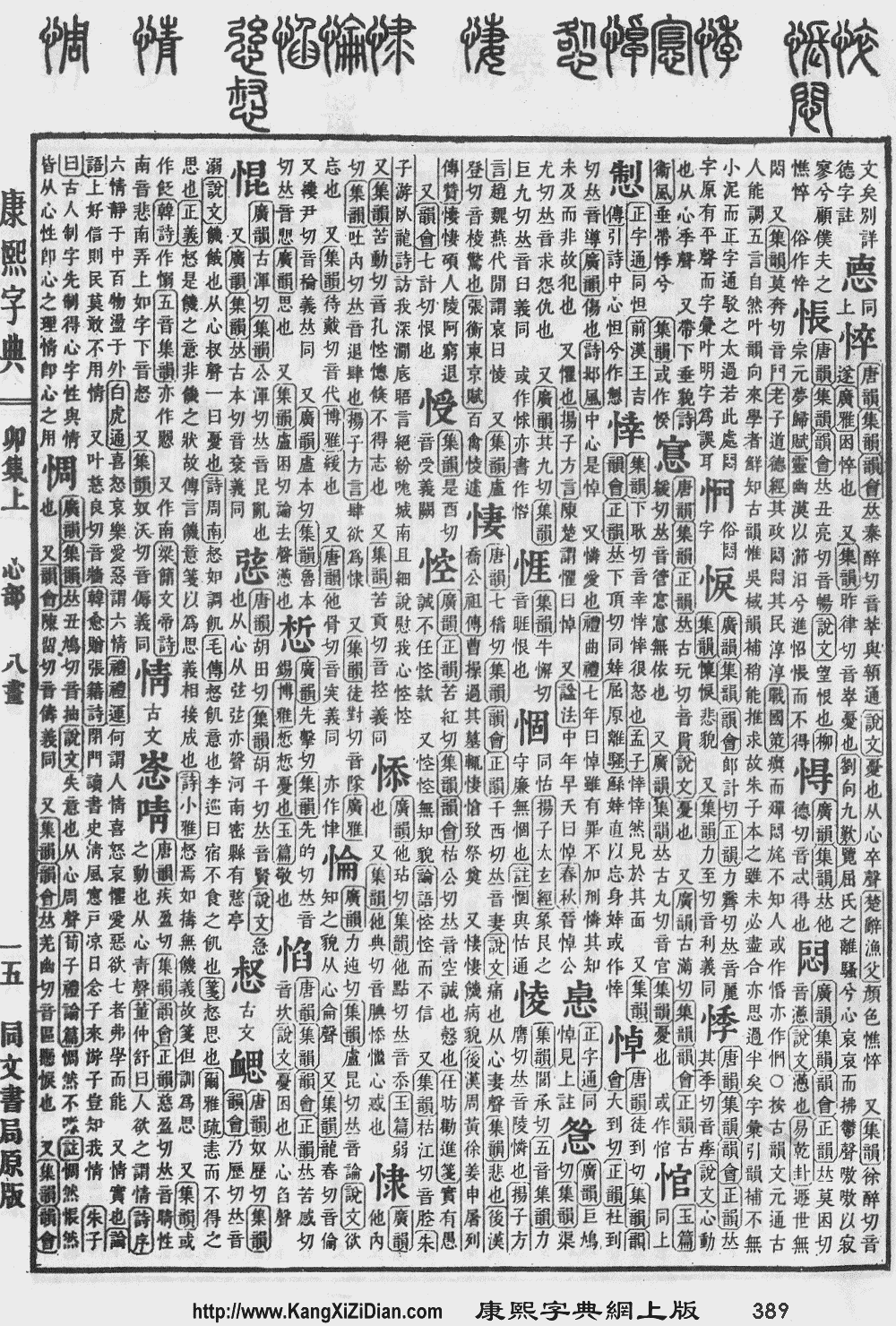
- In Korean hanja, the bottom right component is written 円 which is the historical form found in the Kangxi Dictionary.
Han character
情 (Kangxi radical 61, 心+8, 11 strokes, cangjie input 心手一月 (PQMB), four-corner 95027, composition ⿰忄青(GHTJV) or ⿰忄靑(K))
Derived characters
- 𫠽
References
- Kangxi Dictionary: page 389, character 31
- Dai Kanwa Jiten: character 10756
- Dae Jaweon: page 723, character 17
- Hanyu Da Zidian (first edition): volume 4, page 2312, character 13
- Unihan data for U+60C5
Chinese
| trad. | 情 | |
|---|---|---|
| simp. # | 情 | |
| 2nd round simp. | 𰑊 | |
| alternative forms | 啨 𢚏 ⿰忄𤯞 ⿰十青 | |
Glyph origin
| Old Chinese | |
|---|---|
| 猜 | *sʰlɯː |
| 輤 | *sʰleːns |
| 綪 | *sʰleːns, *ʔsreːŋ |
| 倩 | *sʰleːns, *sʰleŋs |
| 棈 | *sʰleːns |
| 蒨 | *sʰeːns |
| 篟 | *sʰeːns |
| 生 | *sʰleːŋ, *sreŋs |
| 牲 | *sreŋ |
| 笙 | *sreŋ |
| 甥 | *sreŋ |
| 鉎 | *sreŋ, *sleːŋ |
| 珄 | *sreŋ |
| 鼪 | *sreŋ, *sreŋs |
| 猩 | *sreŋ, *seːŋ |
| 狌 | *sreŋ |
| 眚 | *sreŋʔ |
| 貹 | *sreŋs |
| 崝 | *zreːŋ |
| 精 | *ʔsleŋ, *ʔsleŋs |
| 菁 | *ʔsleŋ |
| 鶄 | *ʔsleŋ, *sʰleːŋ |
| 蜻 | *ʔsleŋ, *sʰleːŋ |
| 鼱 | *ʔsleŋ |
| 婧 | *ʔsleŋ, *zleŋs, *zleŋʔ |
| 睛 | *ʔsleŋ, *sʰleŋʔ |
| 箐 | *ʔsleŋ |
| 聙 | *ʔsleŋ |
| 旌 | *ʔsleŋ |
| 清 | *sʰleŋ |
| 圊 | *sʰleŋ |
| 請 | *sʰleŋʔ, *zleŋs, *zleŋ |
| 凊 | *sʰleŋs |
| 䝼 | *zleŋs, *zleŋ |
| 靚 | *zleŋs |
| 情 | *zleŋ |
| 晴 | *zleŋ |
| 夝 | *zleŋ |
| 靜 | *zleŋʔ |
| 靖 | *zleŋʔ |
| 睲 | *seŋʔ, *seːŋs |
| 惺 | *seŋʔ, *seːŋ |
| 性 | *sleŋs |
| 姓 | *sleŋs |
| 靗 | *l̥ʰeŋs |
| 鯖 | *ʔljeŋ, *sʰleːŋ |
| 青 | *sʰleːŋ |
| 靘 | *sʰleːŋ, *sʰleːŋs |
| 掅 | *sʰleːŋs |
| 胜 | *sleːŋ |
| 曐 | *sleːŋ |
| 星 | *sleːŋ |
| 鮏 | *sleːŋ |
| 腥 | *seːŋ, *seːŋs |
| 鯹 | *seːŋ |
| 醒 | *seːŋ, *seːŋʔ, *seːŋs |
| 篂 | *seːŋ |
Phono-semantic compound (形聲/形声, OC *zleŋ) : semantic 心 (“heart”) + phonetic 青 (OC *sʰleːŋ).
Etymology
Its meaning "feeling" prompts Benedict (1976) to connect it to Proto-Sino-Tibetan *s-niŋ (“heart; brain; mind”); while its other meaning "proper nature, situation" suggests cognacy to 生 (shēng, “to live, life”) (Boltz, 1976), though the initials of 情 (OC *dzeŋ) vs. 生 (OC *srêŋ) are difficult to reconcile (Schuessler, 2007) – not withstanding Zhengzhang (2003)'s reconstructions 情 (OC *zleŋ) vs. 生 (OC *sʰleːŋ).
Pronunciation
Definitions
情
Compounds
- 一往情深 (yīwǎngqíngshēn)
- 七情 (qīqíng)
- 下情 (xiàqíng)
- 上情下達/上情下达
- 不了情
- 不情
- 不著情
- 世情 (shìqíng)
- 中情
- 丰情 (fēngqíng)
- 主情造意
- 事情
- 交情 (jiāoqíng)
- 人情 (rénqíng)
- 任情
- 作情
- 來情/来情
- 俗情
- 偷情 (tōuqíng)
- 傳情/传情 (chuánqíng)
- 傷情/伤情
- 兒女之情/儿女之情
- 兒女情多/儿女情多
- 兒女情長/儿女情长
- 入情入理 (rùqíngrùlǐ)
- 內情/内情 (nèiqíng)
- 兩情相悅/两情相悦 (liǎngqíngxiāngyuè)
- 六情
- 其情可憫/其情可悯
- 冤情
- 別情/别情 (biéqíng)
- 前情 (qiánqíng)
- 割情
- 劇情/剧情 (jùqíng)
- 動情/动情 (dòngqíng)
- 勾情
- 匿情
- 危情 (wēiqíng)
- 即景生情
- 厚情
- 友情 (yǒuqíng)
- 同情 (tóngqíng)
- 合情合理 (héqínghélǐ)
- 同氣之情/同气之情
- 吝情
- 含情 (hánqíng)
- 周情孔思
- 商情 (shāngqíng)
- 國情/国情 (guóqíng)
- 埋情
- 多情 (duōqíng)
- 奪情/夺情
- 好情 (hǎoqíng)
- 姦情/奸情 (jiānqíng)
- 嬌情/娇情
- 定情 (dìngqíng)
- 官情紙薄/官情纸薄
- 客情
- 宦情
- 容情 (róngqíng)
- 寄情 (jìqíng)
- 寡情
- 實情/实情 (shíqíng)
- 專情/专情
- 常情 (chángqíng)
- 幽情 (yōuqíng)
- 徇情
- 徑情/径情 (jìngqíng)
- 微情
- 心情 (xīnqíng)
- 忘情 (wàngqíng)
- 性情 (xìngqíng)
- 怡情悅性/怡情悦性
- 怡情理性
- 怡情養性/怡情养性
- 思惹情牽/思惹情牵
- 恩情 (ēnqíng)
- 恣情
- 恆情/恒情
- 悖理違情/悖理违情
- 情不自勝/情不自胜
- 情不自堪
- 情不自禁 (qíngbùzìjīn)
- 情之所鍾/情之所钟
- 情事 (qíngshì)
- 情人 (qíngrén)
- 情佚
- 情何以堪 (qínghéyǐkān)
- 情侶/情侣 (qínglǚ)
- 情偽/情伪
- 情僧錄/情僧录
- 情分 (qíngfèn)
- 情切 (qíngqiè)
- 情勢/情势 (qíngshì)
- 情同一家
- 情同手足
- 情同骨肉
- 情同魚水/情同鱼水
- 情味 (qíngwèi)
- 情商 (qíngshāng)
- 情在言外
- 情場/情场 (qíngchǎng)
- 情報/情报 (qíngbào)
- 情境 (qíngjìng)
- 情夫 (qíngfū)
- 情婦/情妇 (qíngfù)
- 情孚意合
- 情實/情实
- 情形 (qíngxíng)
- 情志 (qíngzhì)
- 情怯
- 情急 (qíngjí)
- 情思 (qíngsī)
- 情性 (qíngxìng)
- 情恕理遣
- 悲情 (bēiqíng)
- 情意 (qíngyì)
- 情感 (qínggǎn)
- 情愛/情爱 (qíng'ài)
- 情態/情态 (qíngtài)
- 情愫 (qíngsù)
- 情慾/情欲 (qíngyù)
- 情懷/情怀 (qínghuái)
- 情投意合 (qíngtóuyìhé)
- 情投意洽
- 情操 (qíngcāo)
- 情敵/情敌 (qíngdí)
- 情文並茂/情文并茂
- 情景 (qíngjǐng)
- 情書/情书 (qíngshū)
- 情有可原 (qíngyǒukěyuán)
- 情有獨鍾/情有独钟 (qíngyǒudúzhōng)
- 情欲 (qíngyù)
- 情款
- 情歌 (qínggē)
- 情殺/情杀 (qíngshā)
- 情況/情况 (qíngkuàng)
- 情海
- 情深似海
- 情深意重
- 情深義重/情深义重
- 情深骨肉
- 情溢於表/情溢于表
- 情熟
- 情狀/情状 (qíngzhuàng)
- 情理 (qínglǐ)
- 情田
- 情由 (qíngyóu)
- 情痴
- 情真意摯/情真意挚
- 情知 (qíngzhī)
- 情種/情种 (qíngzhǒng)
- 情竇/情窦
- 情節/情节 (qíngjié)
- 情素 (qíngsù)
- 情結/情结 (qíngjié)
- 情網/情网 (qíngwǎng)
- 情緒/情绪 (qíngxù)
- 情緣/情缘 (qíngyuán)
- 情義/情义 (qíngyì)
- 情腸/情肠
- 情至意盡/情至意尽
- 情致 (qíngzhì)
- 情色 (qíngsè)
- 情若手足
- 情見乎言/情见乎言
- 情見乎辭/情见乎辞
- 情見力屈/情见力屈
- 情見勢屈/情见势屈
- 情見勢竭/情见势竭
- 情詞懇切/情词恳切
- 情詞易工/情词易工
- 情詩/情诗
- 情話/情话 (qínghuà)
- 情語/情语
- 情調/情调 (qíngdiào)
- 情誼/情谊 (qíngyì)
- 情變/情变 (qíngbiàn)
- 情貌
- 情賞/情赏
- 情趣 (qíngqù)
- 情逾骨肉
- 情郎 (qíngláng)
- 情采
- 情重如山
- 情長紙短/情长纸短
- 情隨事遷/情随事迁 (qíngsuíshìqiān)
- 情非得已 (qíngfēidéyǐ)
- 情面 (qíngmiàn)
- 情韻/情韵
- 情願/情愿 (qíngyuàn)
- 意合情投
- 感情 (gǎnqíng)
- 愛情/爱情 (àiqíng)
- 意惹情牽/意惹情牵
- 慰情勝無/慰情胜无
- 戀情/恋情 (liànqíng)
- 戰情/战情
- 才情 (châi-chêng) (Min Nan)
- 手足之情
- 手足情深
- 打情
- 承情
- 抒情 (shūqíng)
- 拿情
- 推情準理/推情准理
- 揆情度理
- 摯情/挚情
- 攄情/摅情
- 政情
- 放情丘壑
- 故劍情深/故剑情深
- 敢情
- 敵情/敌情 (díqíng)
- 文情 (wénqíng)
- 方情
- 日久生情 (rìjiǔshēngqíng)
- 旱情 (hànqíng)
- 春情 (chūnqíng)
- 有情 (yǒuqíng)
- 望雲之情/望云之情
- 未了情
- 東道之情/东道之情
- 柔情 (róuqíng)
- 根情
- 案情 (ànqíng)
- 欠情
- 殉情 (xùnqíng)
- 民情 (mínqíng)
- 求情 (qiúqíng)
- 沒情沒緒/没情没绪
- 沒情沒趣/没情没趣
- 深情 (shēnqíng)
- 淫情浪態/淫情浪态
- 渭陽之情/渭阳之情
- 溫情/温情 (wēnqíng)
- 激情 (jīqíng)
- 濫情/滥情 (lànqíng)
- 災情/灾情 (zāiqíng)
- 為情造文/为情造文
- 烏鳥之情/乌鸟之情
- 無情/无情 (wúqíng)
- 煽情 (shānqíng)
- 熱情/热情 (rèqíng)
- 物情
- 生情發意/生情发意
- 生情見景/生情见景
- 生情造意
- 用情 (yòngqíng)
- 留情 (liúqíng)
- 略跡原情/略迹原情 (lüèjìyuánqíng)
- 疑情
- 病情 (bìngqíng)
- 痴情 (chīqíng)
- 發情/发情 (fāqíng)
- 盛情 (shèngqíng)
- 盡情/尽情 (jìnqíng)
- 直情徑行/直情径行
- 看景生情
- 真情 (zhēnqíng)
- 睹物生情
- 睹物興情/睹物兴情
- 瞻情顧意/瞻情顾意
- 知情 (zhīqíng)
- 矯情/矫情
- 神情 (shénqíng)
- 私情 (sīqíng)
- 移情 (yíqíng)
- 稱情/称情
- 穩情/稳情
- 空頭情/空头情
- 管情
- 純情/纯情 (chúnqíng)
- 紙短情長/纸短情长
- 細情/细情
- 絕情/绝情 (juéqíng)
- 綺情/绮情
- 緣情體物/缘情体物
- 縱情/纵情 (zòngqíng)
- 置水之情
- 群情 (qúnqíng)
- 義重情深/义重情深
- 聲情並茂/声情并茂 (shēngqíngbìngmào)
- 膠漆之情/胶漆之情
- 臉面之情/脸面之情
- 至情 (zhìqíng)
- 舊情/旧情 (jiùqíng)
- 舐犢情深/舐犊情深 (shìdúqíngshēn)
- 色情 (sèqíng)
- 薄情 (bóqíng)
- 虛情/虚情
- 蟲情/虫情
- 行情 (hángqíng)
- 表情 (biǎoqíng)
- 衷情 (zhōngqíng)
- 補情/补情
- 襟情
- 見個情/见个情
- 見景生情/见景生情
- 親情/亲情 (qīnqíng)
- 觸景生情/触景生情 (chùjǐngshēngqíng)
- 言情小說/言情小说 (yánqíng xiǎoshuō)
- 託情/托情
- 討情/讨情
- 詩情/诗情
- 詳情/详情 (xiángqíng)
- 說情/说情 (shuōqíng)
- 調情/调情 (tiáoqíng)
- 談情說愛/谈情说爱 (tánqíngshuō'ài)
- 講情/讲情
- 豔情/艳情 (yànqíng)
- 豪情 (háoqíng)
- 貌合情離/貌合情离
- 貌是情非
- 貪情/贪情
- 趕情/赶情
- 軍情/军情 (jūnqíng)
- 輿情/舆情 (yúqíng)
- 辭情/辞情
- 近情
- 送情 (sòngqíng)
- 通情
- 道情 (dàoqíng)
- 遣興陶情/遣兴陶情
- 選情/选情 (xuǎnqíng)
- 郭華情罪/郭华情罪
- 鄉情/乡情 (xiāngqíng)
- 酌情 (zhuóqíng)
- 野情
- 鍾情/钟情 (zhōngqíng)
- 閒情/闲情
- 閨情/闺情
- 關情/关情
- 降情
- 陳情/陈情 (chénqíng)
- 隆情
- 隱情/隐情 (yǐnqíng)
- 難以為情/难以为情
- 離情/离情 (líqíng)
- 難為情/难为情 (nánwéiqíng)
- 雲情雨意/云情雨意
- 面子情兒/面子情儿
- 面情
- 順情/顺情
- 領情/领情 (lǐngqíng)
- 風情/风情 (fēngqíng)
- 首丘之情
- 香火情
- 骨肉情
- 高情
- 魚水情/鱼水情
- 鶼鰈情深/鹣鲽情深
Japanese
| Shinjitai | 情 | |
| Kyūjitai [1] |
情󠄁 情+ 󠄁?(Adobe-Japan1) |
 |
| 情󠄃 情+ 󠄃?(Hanyo-Denshi) (Moji_Joho) | ||
| The displayed kanji may be different from the image due to your environment. See here for details. | ||
Readings
Compounds
- 風情 (fuzei, “taste; elegance; appearance”)
Derived terms
- 情感 (jōkan): emotion
- 情事 (jōji): love affair
- 情勢 (jōsei): situation
- 情報 (jōhō): information
- 情熱 (jōnetsu): enthusiasm
- 愛情 (aijō): love
- 詩情 (shijō): poetic sentiment
- 事情 (jijō): state of affairs
- 実情 (jitsujō): real condition; actual circumstances
- 非情 (hijō): heartlessness
- 表情 (hyōjō): facial expression
- 風情 (fūjō): appearance; outward attitude
- 熱情 (netsujō): passion
- 友情 (yūjō): friendship
- 旅情 (ryojō): travel weariness
References
- “情”, in 漢字ぺディア (Kanjipedia) (in Japanese), 日本漢字能力検定協会, 2015–2024
- Matsumura, Akira, editor (2006), 大辞林 [Daijirin] (in Japanese), Third edition, Tōkyō: Sanseidō, →ISBN
Korean
Compounds
- 감정 (感情, gamjeong, “emotion”)
- 격정 (激情, gyeokjeong, “passion”)
- 동정 (同情, dongjeong, “sympathy”)
- 무정 (無情, mujeong, “emotionless”)
- 민정 (民情, minjeong, “state of the common people's lives”)
- 발정 (發情, baljeong, “oestrus; rut”)
- 색정 (色情, saekjeong, “sexual urge; sexual desire; lust”)
- 서정 (抒情, seojeong, “lyricism”)
- 실정 (實情, siljeong, “the real situation”)
- 심정 (心情, simjeong, “feeling”)
- 애정 (愛情, aejeong, “love”)
- 역정 (逆情, yeokjeong, “anger; rage”)
- 정가 (情歌, jeongga, “love song”)
- 정경 (情景, jeonggyeong, “sad scene”)
- 정보 (情報, jeongbo, “information”)
- 정색 (情色, jeongsaek, “erotica”)
- 정취 (情趣, jeongchwi, “artistic mood; touch”)
- 정황 (情況, jeonghwang, “circumstances; conditions”)
- 풍정 (風情, pungjeong, “elegance”)
Vietnamese
Han character
情: Hán Việt readings: tình[1][2][3][4][5]
情: Nôm readings: tành[1][2][3][6][4][5][7], tình[1][2][4][7], dềnh[1][3][6], rình[1][3], thanh[1], xênh[1], tạnh[3]
Compounds
- 情歌 (tình ca)
- 情況 (tình huống)
- 情願 (tình nguyện)
- 情狀 (tình trạng)
- 愛情 (ái tình)
- 風情 (phong tình)
- 色情 (sắc tình)
- 情報 (tình báo)
- 抒情 (trữ tình)
References
- Nguyễn (2014).
- Nguyễn et al. (2009).
- Trần (2004).
- Bonet (1899).
- Génibrel (1898).
- Hồ (1976).
- Taberd & Pigneau de Béhaine (1838).