冶
| ||||||||
Translingual
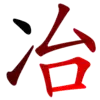
| Stroke order | |||
|---|---|---|---|
 | |||
Han character
冶 (Kangxi radical 15, 冫+5, 7 strokes, cangjie input 戈一戈口 (IMIR), four-corner 33160, composition ⿰冫台)
Derived characters
- 𬜷
References
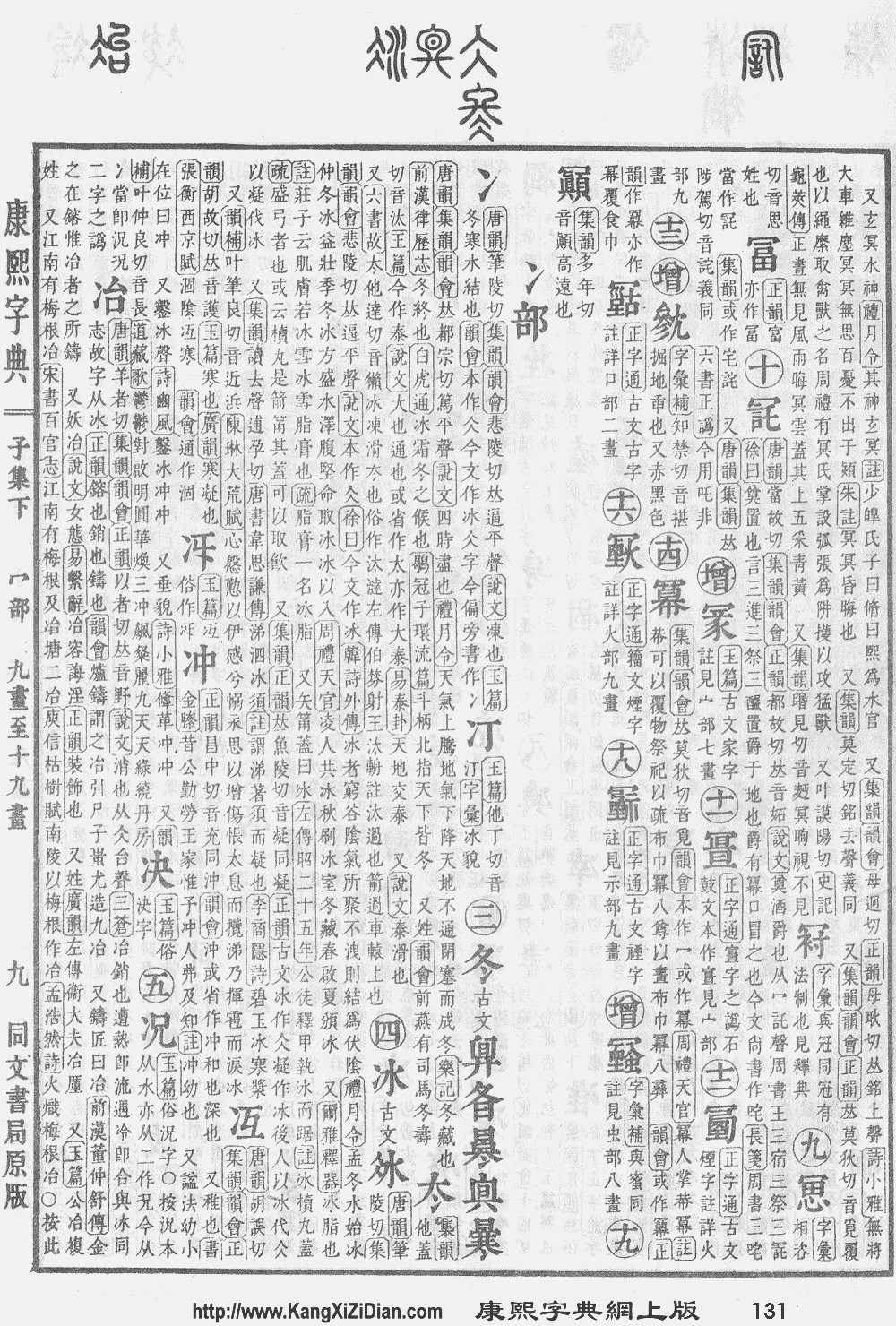
- Kangxi Dictionary: page 131, character 31
- Dai Kanwa Jiten: character 1621
- Dae Jaweon: page 295, character 2
- Hanyu Da Zidian (first edition): volume 1, page 296, character 7
- Unihan data for U+51B6
Chinese
| simp. and trad. |
冶 | |
|---|---|---|
Glyph origin
| Historical forms of the character 冶 | ||
|---|---|---|
| Western Zhou | Shuowen Jiezi (compiled in Han) | Liushutong (compiled in Ming) |
| Bronze inscriptions | Small seal script | Transcribed ancient scripts |
 |
 |
 |
Pronunciation
Japanese
Korean
Etymology
From Middle Chinese 冶 (MC yaeX).
| Historical Readings | ||
|---|---|---|
| Middle Korean | ||
| Text | Eumhun | |
| Gloss (hun) | Reading | |
| Hunmong Jahoe, 1527 | 불무 (Yale: pwùlmwù) | 야〯 (Yale: yă) |
Pronunciation
- (SK Standard/Seoul) IPA(key): [ja̠(ː)]
- Phonetic hangul: [야(ː)]
- Though still prescribed in Standard Korean, most speakers in both Koreas no longer distinguish vowel length.
Hanja
Compounds
Compounds
- 야공 (冶工, yagong, “smelter”)
- 야금 (冶金, yageum, “metallurgy”)
- 야동 (冶動, yadong, “porn video”)
- 야사 (冶寫, yasa, “NSFW photo”)
- 야설 (冶說, yaseol, “erotic fiction”)
- 야용 (冶容, yayong, “dressing up seductively”)
- 단야 (鍛冶, danya, “smelting”)
- 도야 (陶冶, doya, “self-cultivation”)
Vietnamese
Han character
- This term needs a translation to English. Please help out and add a translation, then remove the text
{{rfdef}}.
References
This article is issued from Wiktionary. The text is licensed under Creative Commons - Attribution - Sharealike. Additional terms may apply for the media files.