剌

See also: 刺
剌 U+524C, 剌
CJK UNIFIED IDEOGRAPH-524C
← 剋
[U+524B]
CJK Unified Ideographs 前 →
[U+524D]

Translingual

Han character

剌 (Kangxi radical 18, 刀+7, 9 strokes, cangjie input 木中中弓 (DLLN), four-corner 52900, composition ⿰束刂)

References

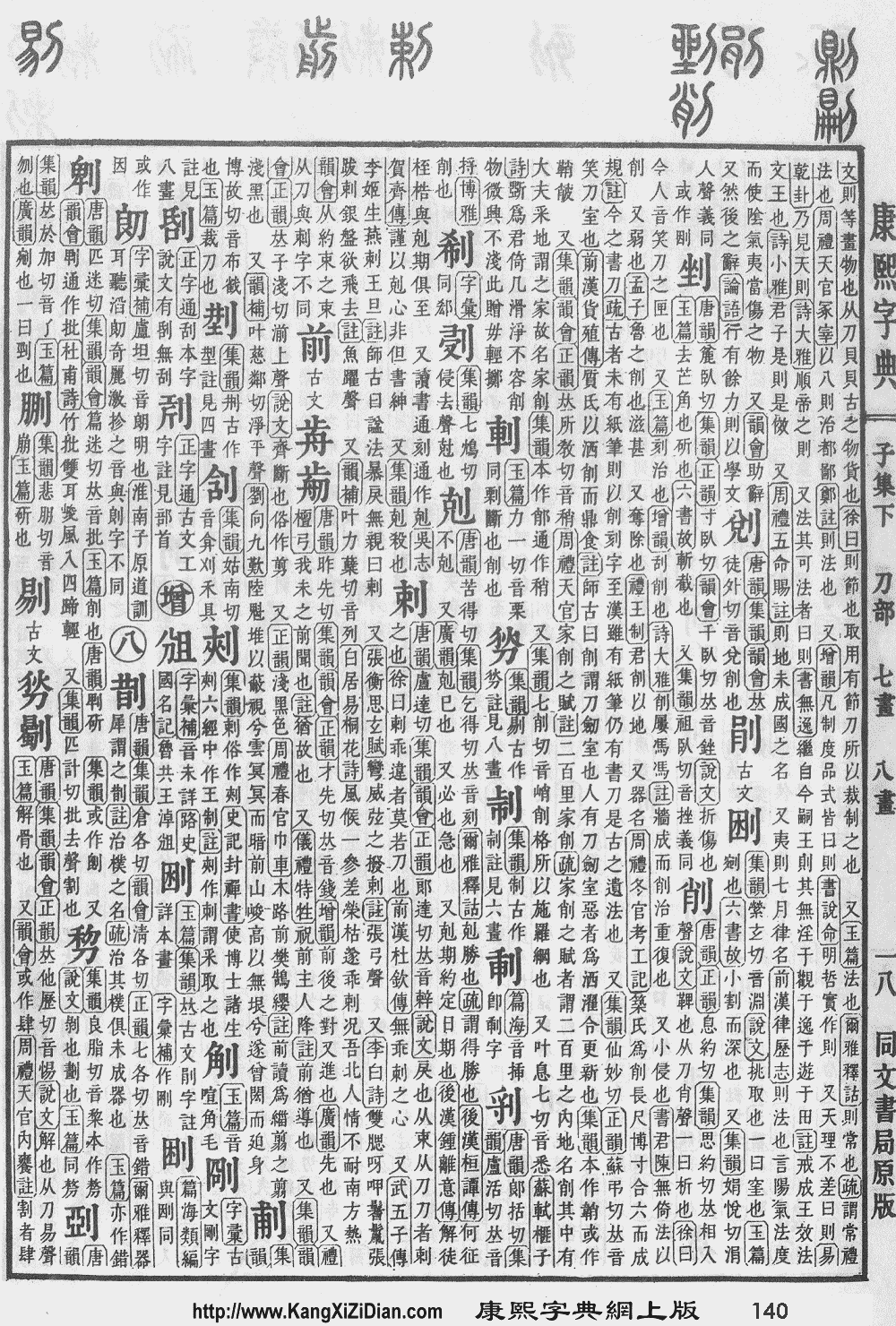
  • Kangxi Dictionary: page 140, character 14
  • Dai Kanwa Jiten: character 2010
  • Dae Jaweon: page 318, character 5
  • Hanyu Da Zidian (first edition): volume 1, page 339, character 6
  • Unihan data for U+524C

Chinese

simp. and trad.
剌

Glyph origin

Historical forms of the character 剌
Shang Western Zhou Warring States Shuowen Jiezi (compiled in Han) Liushutong (compiled in Ming)
Oracle bone script Bronze inscriptions Chu slip and silk script Small seal script Transcribed ancient scripts

Pronunciation 1


Rime
Character 剌
Reading # 1/1
Initial (聲) 來 (37)
Final (韻) 曷 (63)
Tone (調) Checked (Ø)
Openness (開合) Open
Division (等) I
Fanqie 盧達切
Baxter lat
Reconstructions
Zhengzhang
Shangfang
/lɑt̚/
Pan
Wuyun
/lɑt̚/
Shao
Rongfen
/lɑt̚/
Edwin
Pulleyblank
/lat̚/
Li
Rong
/lɑt̚/
Wang
Li
/lɑt̚/
Bernard
Karlgren
/lɑt̚/
Expected
Mandarin
Reflex
là
Expected
Cantonese
Reflex
laat6
Baxter–Sagart system 1.1 (2014)
Character 剌
Reading # 1/1
Modern
Beijing
(Pinyin)
là
Middle
Chinese
‹ lat ›
Old
Chinese
/*mə.rˁat/ (~ C.rˁat ?)
English wicked; spicy

Notes for Old Chinese notations in the Baxter–Sagart system:

* Parentheses "()" indicate uncertain presence;
* Square brackets "[]" indicate uncertain identity, e.g. *[t] as coda may in fact be *-t or *-p;
* Angle brackets "<>" indicate infix;
* Hyphen "-" indicates morpheme boundary;

* Period "." indicates syllable boundary.
Zhengzhang system (2003)
Character 剌
Reading # 1/1
No. 7593
Phonetic
component
剌
Rime
group
月
Rime
subdivision
1
Corresponding
MC rime
剌
Old
Chinese
/*raːd/
Notes 金文象刀斷束使離散,
束非聲

Definitions

剌

  1. perverse; unreasonable
  2. to contradict; to violate
  3. Used in 剌剌 and 撥剌/拨剌.
  4. Used in transcription.

Compounds

  • 不剌
  • 不剌剌
  • 乾支剌/干支剌
  • 仰剌叉
  • 僻格剌子
  • 兀剌
  • 兀剌赤
  • 刮剌剌
  • 剌剌
  • 剌剌撒撒
  • 剌子
  • 剌戾
  • 剌謬/剌谬
  • 古剌水
  • 各剌剌
  • 大剌剌 (dàlàlà)
  • 寡剌
  • 忽剌八
  • 忽剌巴
  • 打剌孫/打剌孙 (dǎlàsūn)
  • 拔剌
  • 括剌剌
  • 措支剌
  • 搭剌 (dāla)
  • 搭剌子
  • 撥剌/拨剌
  • 撲剌剌/扑剌剌
  • 曳剌
  • 柵剌子/栅剌子
  • 歪剌骨
  • 活支剌
  • 淡不剌
  • 潑剌/泼剌
  • 潑剌剌/泼剌剌
  • 潑潑剌剌/泼泼剌剌
  • 澀剌剌的/涩剌剌的
  • 火剌剌
  • 熱剌剌/热剌剌
  • 生剌剌
  • 疏剌剌
  • 破不剌
  • 禿歪剌/秃歪剌
  • 答剌 (dāla)
  • 答剌孫/答剌孙
  • 答剌蘇/答剌苏
  • 答剌速
  • 花剌子模 (Huālàzǐmó)
  • 虎剌孩
  • 蠻聲哈剌/蛮声哈剌
  • 豁剌剌
  • 軟兀剌/软兀剌
  • 醜剌剌/丑剌剌

Pronunciation 2


Definitions

剌

  1. Alternative form of 拉 (lá, “to slash; to cut in two”)

Compounds

  • 剌剌塌塌
  • 剌口子
  • 剌心剌肝

Japanese

Kanji

剌

(uncommon “Hyōgai” kanji)

  1. opposed
  2. biased

Readings

Compounds

Korean

Hanja

剌 • (ral) (hangeul 랄, revised ral, McCune–Reischauer ral)

  1. This term needs a translation to English. Please help out and add a translation, then remove the text {{rfdef}}.

Vietnamese

Han character

剌: Hán Nôm readings: lạp, lạt

  1. This term needs a translation to English. Please help out and add a translation, then remove the text {{rfdef}}.
This article is issued from Wiktionary. The text is licensed under Creative Commons - Attribution - Sharealike. Additional terms may apply for the media files.