斷
See also: 断
| ||||||||
Translingual
Han character
斷 (Kangxi radical 69, 斤+14, 18 strokes, cangjie input 女戈竹一中 (VIHML), four-corner 22721, composition ⿰㡭斤)
References
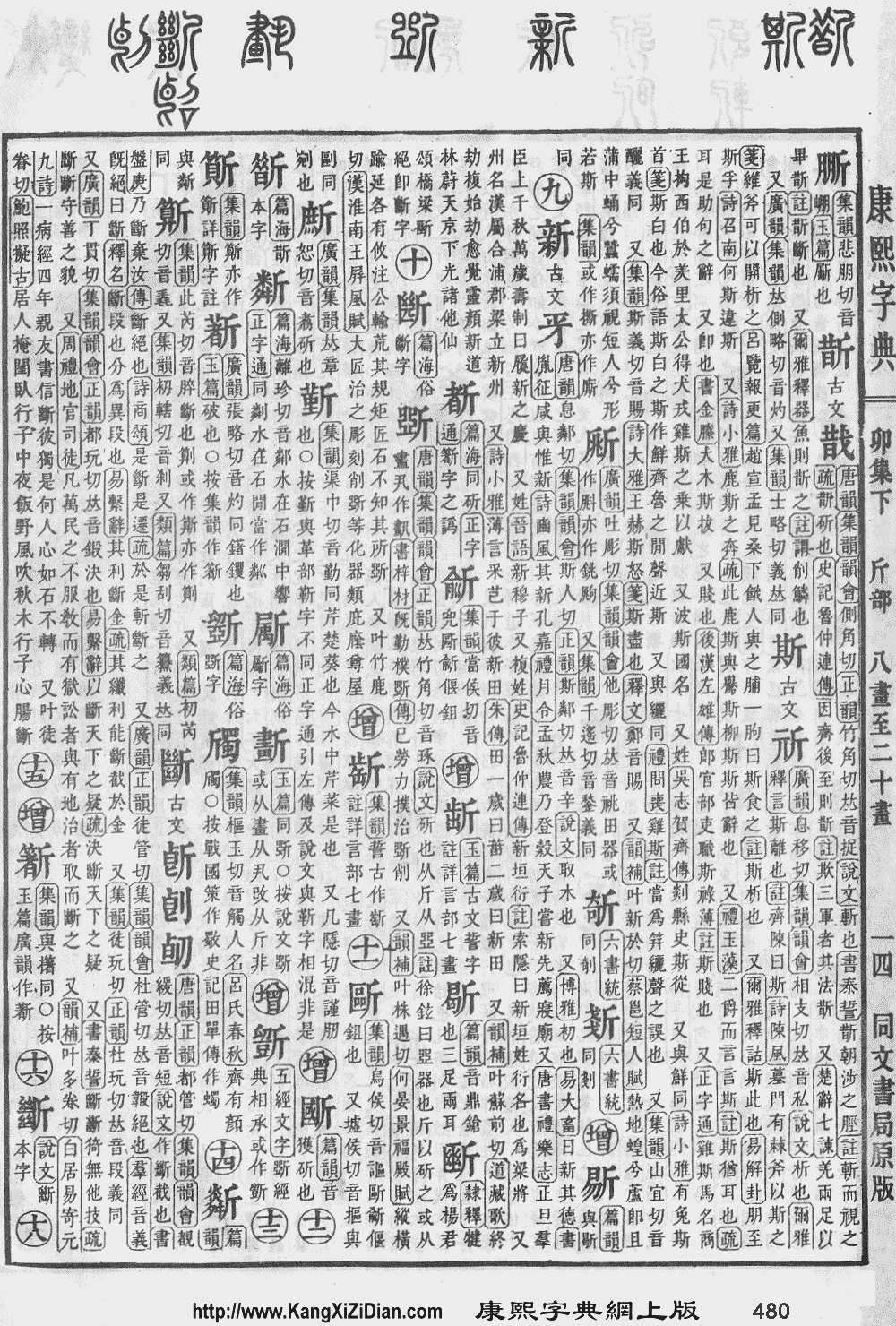
- Kangxi Dictionary: page 480, character 35
- Dai Kanwa Jiten: character 13611
- Dae Jaweon: page 841, character 22
- Hanyu Da Zidian (first edition): volume 3, page 2028, character 13
- Unihan data for U+65B7
Chinese
| trad. | 斷 | |
|---|---|---|
| simp. | 断 | |
| alternative forms | 𣃔 | |
Glyph origin
| Historical forms of the character 斷 | ||
|---|---|---|
| Western Zhou | Warring States | Shuowen Jiezi (compiled in Han) |
| Bronze inscriptions | Chu slip and silk script | Small seal script |
 |
 |
 |
Ideogrammic compound (會意/会意) : 𢇍 (“to cut”) + 斤 (“axe”).
Before the Qin dynasty, this character was written as 𠸿 or 𠜷. According to Shuowen, the left component is an old form of 叀.
Etymology
From Proto-Sino-Tibetan *dan (“cut”).
Pronunciation 1
Definitions
斷
- to break; to snap; to cut
- 斷木為杵,掘地為臼,臼杵之利,萬民以濟。 [Pre-Classical Chinese, trad.]
- From: I Ching, 11th – 8th century BCE
- Duàn mù wèi chǔ, jué dì wèi jiù, jiùchǔ zhī lì, wànmín yǐ jì. [Pinyin]
- They cut wood and fashioned it into pestles; they dug in the ground and formed mortars. Thus the myriads of the people received the benefit arising from the use of the pestle and mortar.
断木为杵,掘地为臼,臼杵之利,万民以济。 [Pre-Classical Chinese, simp.]- 抽刀斷水水更流,舉杯銷愁愁更愁。人生在世不稱意,明朝散髮弄扁舟。 [Classical Chinese, trad.]
- From: 宣州謝朓樓餞別校書叔雲 written by Li Bai
- Chōu dāo duàn shuǐ shuǐ gèng liú, jǔ bēi xiāo chóu chóu gèng chóu. Rénshēng zàishì bù chènyì, míngzhāo sànfà nòng piānzhōu. [Pinyin]
- I take out a knife and cut the water, but it only flows more violently; I raise my cup to drown my sorrows, but they only intensify. In my life I cannot live in the way I want; tomorrow morning I shall loosen my hair and get on a small boat.
抽刀断水水更流,举杯销愁愁更愁。人生在世不称意,明朝散发弄扁舟。 [Classical Chinese, simp.]
- to cut off; to sever; to interrupt
- 通話斷了。/通话断了。 ― Tōnghuà duàn le. ― The line has gone dead.
- 斷電/断电 ― duàndiàn ― to experience a power outage
- 斷交/断交 ― duànjiāo ― to sever ties
- 我先后綏乃祖乃父,乃祖乃父乃斷棄汝,不救乃死。 [Classical Chinese, trad.]
- From: The Book of Documents, circa 7th – 4th centuries BCE
- Wǒ xiānhòu suí nǎi zǔ nǎi fù, nǎi zǔ nǎi fù nǎi duàn qì rǔ, bù jiù nǎi sǐ. [Pinyin]
- Whereas my royal predecessors made your ancestors and fathers happy, they, your ancestors and fathers, will [now] cut you off and abandon you, and not save you from death.
我先后绥乃祖乃父,乃祖乃父乃断弃汝,不救乃死。 [Classical Chinese, simp.]- 過言不再,流言不極;不斷其威,不習其謀。 [Classical Chinese, trad.]
- From: The Book of Rites, c. 4th – 2nd century BCE
- Guòyán bù zài, liúyán bù jí; bù duàn qí wēi, bù xí qí móu. [Pinyin]
- He does not repeat any error of speech; any rumours against him he does not pursue up to their source; he does not allow his dignity to be interrupted; he does not dread to practise [beforehand] the counsels [which he gives].
过言不再,流言不极;不断其威,不习其谋。 [Classical Chinese, simp.]- 蘭芝初還時,府吏見丁寧,結誓不別離。今日違情義,恐此事非奇。自可斷來信,徐徐更謂之。 [Classical Chinese, trad.]
- From: Southeast the Peacock Flies, before 6th century CE, translated by Burton Watson
- Lánzhī chū huán shí, fǔlì jiàn dīngníng, jié shì bù biélí. Jīnrì wéi qíngyì, kǒng cǐ shì fēi qí. Zì kě duàn láixìn, xúxú gèng wèi zhī. [Pinyin]
- When I came home this time, the clerk pleaded with me again and again, and we made a vow that we'd never part. Today if I went against those feelings, I fear nothing lucky could come of it! Let us break off these negotiations, or say we need time to think it over slowly.
兰芝初还时,府吏见丁宁,结誓不别离。今日违情义,恐此事非奇。自可断来信,徐徐更谓之。 [Classical Chinese, simp.]
- to give up; to abstain from; to quit
- (Hokkien) to not have; to be without; there is not
Pronunciation 2
Definitions
斷
- to judge; to decide; to determine; to settle
- 忠臣孝子有過,必以其數斷。 [Classical Chinese, trad.]
- From: The Book of Lord Shang, circa 3rd century BCE, translated based on J.J.L. Duyvendak's version
- Zhōngchén xiàozǐ yǒu guò, bì yǐ qí shù duàn. [Pinyin]
- If loyal ministers and filial sons do wrong, they must be judged according to the full measure of their guilt.
忠臣孝子有过,必以其数断。 [Classical Chinese, simp.]
- (chiefly in the negative) absolutely; definitely; decidedly
- 1907, 《新舊約全書·廣東話》 [Canton Colloquial Bible], 聖經公會 [British and Foreign Bible Society], 馬太傳福音書 [Matthew] 5:20:
- 我話你知、倘若你嘅善義、唔勝得過讀書人與及𠵽唎㘔人嘅善義、斷唔入得天國。 [Cantonese, trad.]
- ngo5 waa6 nei5 zi1, tong2 joek6 nei5 ge3 sin6 ji6, m4 sing3 dak1 gwo3 duk6 syu1 jan4 jyu5 kap6 faat3 lei6 coi3 jan4 ge3 sin6 ji6, dyun3 m4 jap6 dak1 tin1 gwok3. [Jyutping]
- For I tell you that unless your righteousness surpasses that of the Pharisees and the teachers of the law, you will certainly not enter the kingdom of heaven. (New International Version)
我话你知、倘若你嘅善义、唔胜得过读书人与及𠵽唎𫬐人嘅善义、断唔入得天国。 [Cantonese, simp.]
- (Cantonese) to count in a certain unit
- 29th tetragram of the Taixuanjing; "decisiveness" (𝌢)

Compounds
- 一刀兩斷/一刀两断 (yīdāoliǎngduàn)
- 一筆勾斷/一笔勾断
- 七斷八續/七断八续
- 下斷/下断
- 不斷/不断 (bùduàn)
- 不斷頭/不断头
- 中斷/中断 (zhōngduàn)
- 乾斷/干断
- 了斷/了断 (liǎoduàn)
- 倒斷/倒断
- 傾移斷層/倾移断层
- 價值判斷/价值判断 (jiàzhí pànduàn)
- 優柔寡斷/优柔寡断 (yōuróuguǎduàn)
- 公斷/公断
- 公斷人/公断人
- 公斷法院/公断法院
- 切斷/切断 (qiēduàn)
- 分釵斷帶/分钗断带
- 判斷/判断 (pànduàn)
- 判斷力/判断力 (pànduànlì)
- 判斷句/判断句
- 判斷能力/判断能力
- 判斷詞/判断词 (pànduàncí)
- 剖斷/剖断
- 割恩斷義/割恩断义
- 割斷/割断 (gēduàn)
- 剿斷
- 勾斷/勾断
- 占斷
- 句斷/句断
- 同心斷金/同心断金
- 咬斷鐵/咬断铁
- 問斷/问断
- 喝神斷鬼/喝神断鬼
- 坐斷/坐断
- 壟斷/垄断 (lǒngduàn)
- 壟斷市場/垄断市场
- 壟斷獨登/垄断独登
- 壟斷資本/垄断资本
- 壯士斷腕/壮士断腕 (zhuàngshìduànwàn)
- 多謀善斷/多谋善断
- 夢斷魂勞/梦断魂劳
- 夢斷魂消/梦断魂消
- 夢斷黃粱/梦断黄粱
- 天斷/天断
- 好謀善斷/好谋善断
- 好謀無斷/好谋无断 (hàomóu wú duàn)
- 孟母斷織/孟母断织
- 定斷/定断
- 官斷/官断
- 宸斷/宸断
- 寡斷/寡断
- 審斷/审断
- 寸斷/寸断 (cùnduàn)
- 專斷/专断 (zhuānduàn)
- 專斷獨行/专断独行
- 平移斷層/平移断层
- 心疼肝斷/心疼肝断
- 恩斷意絕/恩断意绝
- 恩斷義絕/恩断义绝 (ēnduànyìjué)
- 意斷恩絕/意断恩绝
- 愁腸寸斷/愁肠寸断
- 慎謀能斷/慎谋能断
- 應機立斷/应机立断
- 懸斷/悬断
- 截斷/截断 (jiéduàn)
- 截斷眾流/截断众流
- 房謀杜斷/房谋杜断
- 打斷/打断 (dǎduàn)
- 扭斷/扭断
- 折斷/折断 (zhéduàn)
- 把斷/把断
- 投鞭斷流/投鞭断流
- 拔刀斷席/拔刀断席
- 推斷/推断 (tuīduàn)
- 接連不斷/接连不断 (jiēliánbùduàn)
- 攔前斷後/拦前断后
- 攛斷/撺断
- 放斷鷂/放断鹞
- 文身斷髮/文身断发
- 斫斷/斫断
- 斷七/断七
- 斷乎/断乎 (duànhū)
- 斷乎不可/断乎不可
- 斷事/断事
- 斷井頹垣/断井颓垣
- 斷交/断交 (duànjiāo)
- 斷代/断代 (duàndài)
- 斷代史/断代史 (duàndàishǐ)
- 斷口/断口
- 斷句/断句 (duànjù)
- 斷喝/断喝
- 斷垣殘壁/断垣残壁 (duànyuáncánbì)
- 斷壁殘垣/断壁残垣 (duànbìcányuán)
- 斷壁頹垣/断壁颓垣
- 斷奶/断奶 (duànnǎi)
- 斷子絕孫/断子绝孙 (duànzǐjuésūn)
- 斷定/断定 (duàndìng)
- 斷尾雄雞/断尾雄鸡
- 斷屠/断屠
- 斷層/断层 (duàncéng)
- 斷層掃描/断层扫描 (duàncéng sǎomiáo)
- 斷崖/断崖 (duànyá)
- 斷席/断席
- 斷幅殘紙/断幅残纸
- 斷弦/断弦 (duànxián)
- 斷後/断后 (duànhòu)
- 斷念/断念 (duànniàn)
- 斷怪除妖/断怪除妖
- 斷掌/断掌
- 斷斷/断断
- 斷斷續續/断断续续 (duànduànxùxù)
- 斷案/断案 (duàn'àn)
- 斷根/断根 (duàngēn)
- 斷根絕種/断根绝种
- 斷梗流萍/断梗流萍
- 斷梗飄萍/断梗飘萍
- 斷梗飄蓬/断梗飘蓬
- 斷梗飛蓬/断梗飞蓬
- 斷橋/断桥
- 斷檔/断档 (duàndàng)
- 斷正/断正
- 斷氣/断气 (duànqì)
- 斷水/断水 (duànshuǐ)
- 斷決如流/断决如流
- 斷治/断治
- 斷港絕潢/断港绝潢
- 斷火/断火
- 斷炊/断炊 (duànchuī)
- 斷無/断无
- 斷然/断然 (duànrán)
- 斷煙/断烟
- 斷爛朝報/断烂朝报
- 斷片/断片
- 斷獄/断狱 (duànyù)
- 斷種/断种
- 斷簡殘篇/断简残篇
- 斷簡殘編/断简残编
- 斷糧/断粮 (duànliáng)
- 斷紙餘墨/断纸余墨 (duànzhǐyúmò)
- 斷結/断结
- 斷絕/断绝 (duànjué)
- 斷絕往來/断绝往来
- 斷線/断线 (duànxiàn)
- 斷編殘簡/断编残简 (duànbiāncánjiǎn)
- 斷線風箏/断线风筝
- 斷線鷂子/断线鹞子
- 斷織/断织
- 斷續/断续 (duànxù)
- 斷脰決腹/断脰决腹
- 斷腸/断肠 (duàncháng)
- 斷腸花/断肠花
- 斷腸草/断肠草
- 斷臂說書/断臂说书
- 斷落/断落
- 斷虀畫粥/断虀画粥
- 斷袖/断袖 (duànxiù)
- 斷袖之寵/断袖之宠
- 斷袖分桃/断袖分桃
- 斷裂/断裂 (duànliè)
- 斷言/断言 (duànyán)
- 斷語/断语 (duànyǔ)
- 斷路/断路 (duànlù)
- 斷送/断送 (duànsòng)
- 斷遣/断遣
- 斷配/断配
- 斷酒/断酒
- 斷金/断金
- 斷金亭子/断金亭子
- 斷釵重合/断钗重合
- 斷長續短/断长续短
- 斷長補短/断长补短
- 斷除/断除
- 斷雁孤鴻/断雁孤鸿
- 斷難從命/断难从命
- 斷雨殘雲/断雨残云
- 斷電/断电 (duàndiàn)
- 斷非/断非
- 斷面/断面 (duànmiàn)
- 斷章取義/断章取义 (duànzhāngqǔyì)
- 斷章截句/断章截句
- 斷章摘句/断章摘句
- 斷頭/断头 (duàntóu)
- 斷頭將軍/断头将军
- 斷頭臺/断头台 (duàntóutái)
- 斷頭話/断头话
- 斷頭路/断头路
- 斷頭食/断头食
- 斷首捐軀/断首捐躯
- 斷髮文身/断发文身
- 斷魂/断魂 (duànhún)
- 斷鶴續鳧/断鹤续凫 (duànhèxùfú)
- 斷黑/断黑
- 明斷/明断
- 有撇斷/有撇断
- 望斷/望断
- 杖斷/杖断
- 枉斷/枉断
- 果斷/果断 (guǒduàn)
- 柔懦寡斷/柔懦寡断
- 柔腸寸斷/柔肠寸断 (róuchángcùnduàn)
- 柔茹寡斷/柔茹寡断
- 椎拍輐斷/椎拍𰺇断
- 機斷/机断
- 橫斷/横断 (héngduàn)
- 橫斷面/横断面 (héngduànmiàn)
- 正斷層/正断层
- 武斷/武断 (wǔduàn)
- 殘篇斷簡/残篇断简 (cánpiānduànjiǎn)
- 殘編斷簡/残编断简 (cánbiānduànjiǎn)
- 殘章斷簡/残章断简
- 殺伐決斷/杀伐决断
- 水斷陸絕/水断陆绝
- 沒倒斷/没倒断
- 決斷/决断 (juéduàn)
- 決斷如流/决断如流
- 沒斷的/没断的
- 決獄斷刑/决狱断刑
- 活斷層/活断层
- 浮萍斷梗/浮萍断梗
- 淚乾腸斷/泪干肠断
- 淒斷/凄断
- 溝中斷/沟中断
- 滔滔不斷/滔滔不断
- 源源不斷/源源不断 (yuányuánbùduàn)
- 漂零蓬斷/漂零蓬断
- 無倒斷/无倒断
- 熔斷/熔断 (róngduàn)
- 片斷/片断 (piànduàn)
- 物理診斷/物理诊断
- 猿腸寸斷/猿肠寸断
- 獨斷/独断 (dúduàn)
- 獨斷專行/独断专行 (dúduànzhuānxíng)
- 獨斷獨行/独断独行 (dúduàndúxíng)
- 獨行獨斷/独行独断
- 玉簫聲斷/玉箫声断
- 琴斷朱弦/琴断朱弦
- 當斷不斷/当断不断
- 當機立斷/当机立断 (dāngjīlìduàn)
- 目斷/目断
- 目斷飛鴻/目断飞鸿
- 目斷魂消/目断魂消
- 目斷魂銷/目断魂销
- 目斷鱗鴻/目断鳞鸿
- 眼穿腸斷/眼穿肠断
- 砍斷/砍断 (kǎnduàn)
- 破土斷木/破土断木
- 禁斷/禁断
- 科斷/科断
- 立斷/立断 (lìduàn)
- 筆斷意連/笔断意连
- 簡斷/简断
- 紅消香斷/红消香断
- 結斷/结断
- 綿綿不斷/绵绵不断
- 網路診斷/网路诊断
- 線斷風箏/线断风筝
- 縱斷面/纵断面 (zòngduànmiàn)
- 繩鋸木斷/绳锯木断
- 續斷/续断 (xùduàn)
- 義斷恩絕/义断恩绝
- 聽斷/听断
- 肝腸寸斷/肝肠寸断 (gānchángcùnduàn)
- 腸斷/肠断 (chángduàn)
- 臆斷/臆断
- 藕斷絲連/藕断丝连 (ǒuduànsīlián)
- 處斷/处断
- 行權立斷/行权立断 (xíngquánlìduàn)
- 裁斷/裁断 (cáiduàn)
- 言語道斷/言语道断
- 訊斷/讯断
- 診斷/诊断 (zhěnduàn)
- 評斷/评断 (píngduàn)
- 診斷試劑/诊断试剂
- 論斷/论断 (lùnduàn)
- 識文斷字/识文断字 (shíwénduànzì)
- 買斷/买断 (mǎiduàn)
- 賣斷/卖断
- 足謀寡斷/足谋寡断
- 路斷人稀/路断人稀
- 迴腸寸斷/回肠寸断
- 連綿不斷/连绵不断 (liánmiánbùduàn)
- 連續不斷/连续不断 (liánxùbùduàn)
- 逸塵斷鞅/逸尘断鞅
- 道斷/道断
- 遮斷/遮断 (zhēduàn)
- 鋸斷/锯断
- 鐵口直斷/铁口直断
- 鐵嘴直斷/铁嘴直断
- 間斷/间断
- 間斷不繼/间断不继
- 阻斷/阻断 (zǔduàn)
- 隔斷/隔断
- 隔皮斷貨/隔皮断货
- 隴斷/陇断
- 雄斷/雄断
- 雄雞斷尾/雄鸡断尾
- 音容淒斷/音容凄断
- 章決句斷/章决句断
- 預斷/预断 (yùduàn)
- 飄蓬斷梗/飘蓬断梗
- 香火不斷/香火不断
- 魭斷/𱇐断
- 鸞膠續斷/鸾胶续断
Korean
Hanja
Vietnamese
This article is issued from Wiktionary. The text is licensed under Creative Commons - Attribution - Sharealike. Additional terms may apply for the media files.