匐
| ||||||||
Translingual
Han character
匐 (Kangxi radical 20, 勹+9, 11 strokes, cangjie input 心一口田 (PMRW), four-corner 27620, composition ⿹勹畐)
Derived characters
- 𫕑 𨄑 蔔
References
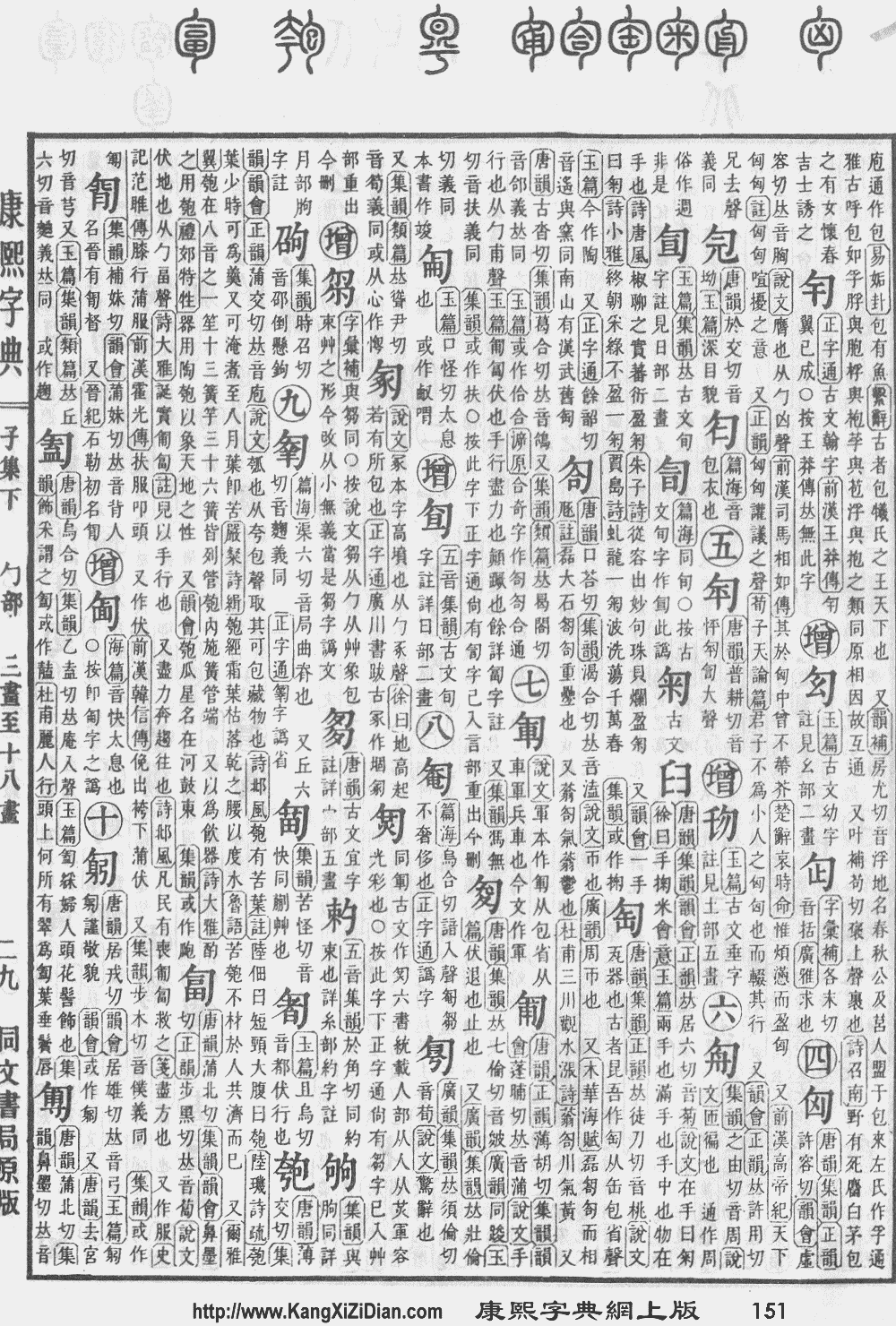
- Kangxi Dictionary: page 151, character 34
- Dai Kanwa Jiten: character 2545
- Dae Jaweon: page 341, character 18
- Hanyu Da Zidian (first edition): volume 1, page 260, character 5
- Unihan data for U+5310
Chinese
| simp. and trad. |
匐 | |
|---|---|---|
| 2nd round simp. | 伏 | |
| alternative forms | 𠣵 | |
Glyph origin
| Historical forms of the character 匐 | |
|---|---|
| Shuowen Jiezi (compiled in Han) | Liushutong (compiled in Ming) |
| Small seal script | Transcribed ancient scripts |
 |
 |
Characters in the same phonetic series (畐) (Zhengzhang, 2003)
Pronunciation
Compounds
- 匍匐 (púfú)
- 匍匐之救
- 匍匐前進/匍匐前进
- 匍匐奔喪/匍匐奔丧
- 匍匐莖/匍匐茎
- 壽陵匍匐/寿陵匍匐
References
- “匐”, in 漢語多功能字庫 (Multi-function Chinese Character Database), 香港中文大學 (the Chinese University of Hong Kong), 2014–
Japanese
Korean
Hanja
匐 • (bok) (hangeul 복, revised bok, McCune–Reischauer pok)
- This term needs a translation to English. Please help out and add a translation, then remove the text
{{rfdef}}.
This article is issued from Wiktionary. The text is licensed under Creative Commons - Attribution - Sharealike. Additional terms may apply for the media files.