叓
| ||||||||
Translingual
Han character
叓 (Kangxi radical 29, 又+5, 7 strokes, cangjie input 十中水 (JLE), composition ⿱𰀉又)
Derived characters
- 𠉕 𩣬 𠭏
References
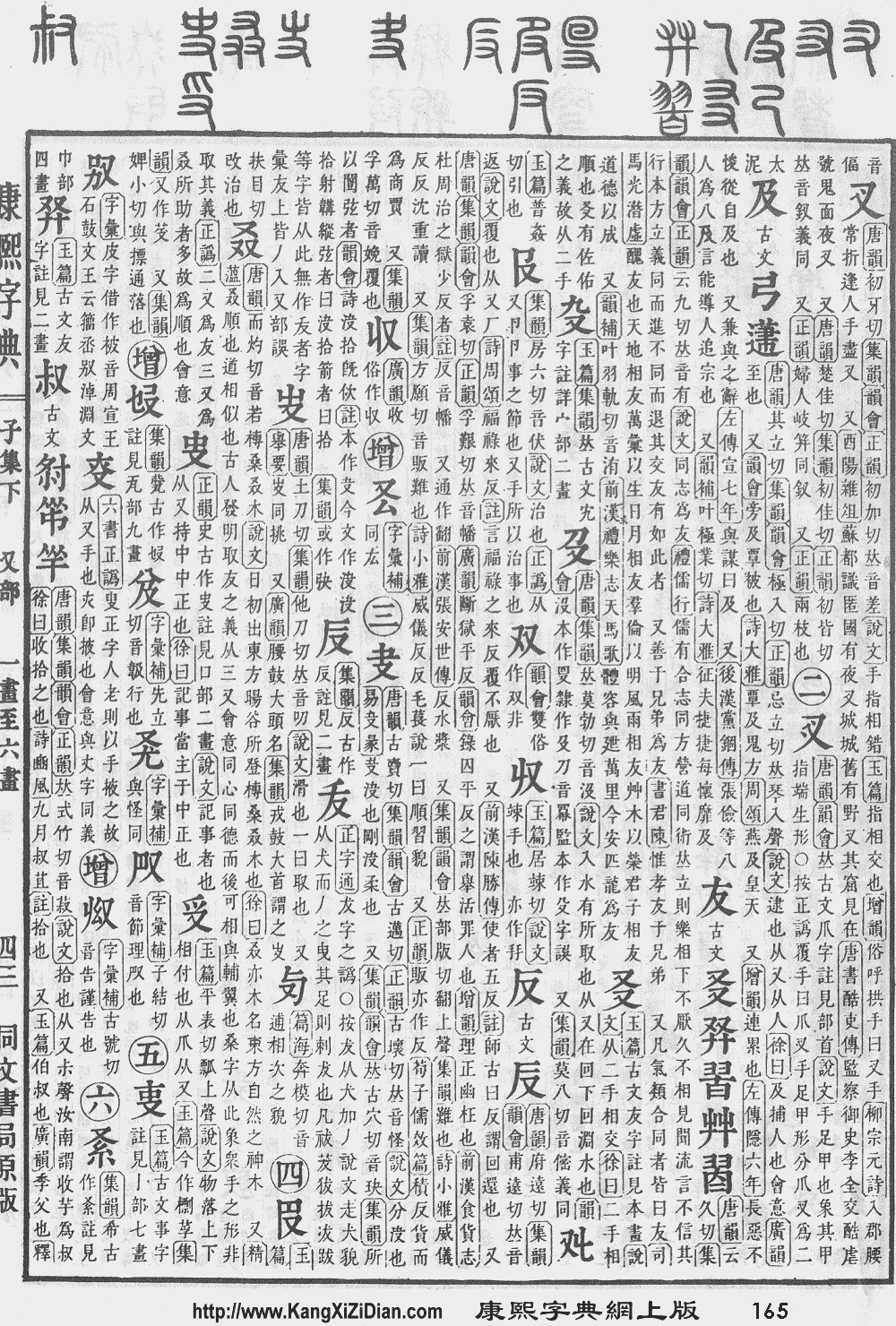
- Kangxi Dictionary: page 165, character 36
- Dai Kanwa Jiten: character 3146
- Dae Jaweon: page 376, character 16
- Hanyu Da Zidian (first edition): volume 1, page 394, character 10
- Unihan data for U+53D3
Chinese
Glyph origin
Ideogrammic compound (會意/会意) : 𰀉 (“a flag hoisted onto a frame”) + 又 (“hand”). Represents the work or duty assigned to a (lower) servant, who would e.g. hoist flags as part of their service, whence also the meaning “petty official”.[1]
Etymology 1
| For pronunciation and definitions of 叓 – see 事 (“thing; matter; task; work; job; career; etc.”). (This character is an ancient form of 事). |
Etymology 2
| For pronunciation and definitions of 叓 – see 吏 (“government official; petty official; etc.”). (This character is a variant form of 吏). |
References
- Shinmura, Izuru, editor (1998), 広辞苑 [Kōjien] (in Japanese), Fifth edition, Tōkyō: Iwanami Shoten, →ISBN
Japanese
Kanji
叓
Korean
Hanja
叓 • (sa) (hangeul 사)
- This term needs a translation to English. Please help out and add a translation, then remove the text
{{rfdef}}.
This article is issued from Wiktionary. The text is licensed under Creative Commons - Attribution - Sharealike. Additional terms may apply for the media files.