叹
| ||||||||
Translingual
Han character
叹 (Kangxi radical 30, 口+2, 5 strokes, cangjie input 口水 (RE), four-corner 67040, composition ⿰口又)
Derived characters
- 𡊙, 𠭵, 𠼡
Related characters
- 嘆 (Traditional Chinese)
- 歎 (Variant traditional form of 嘆 in Mainland China)
References
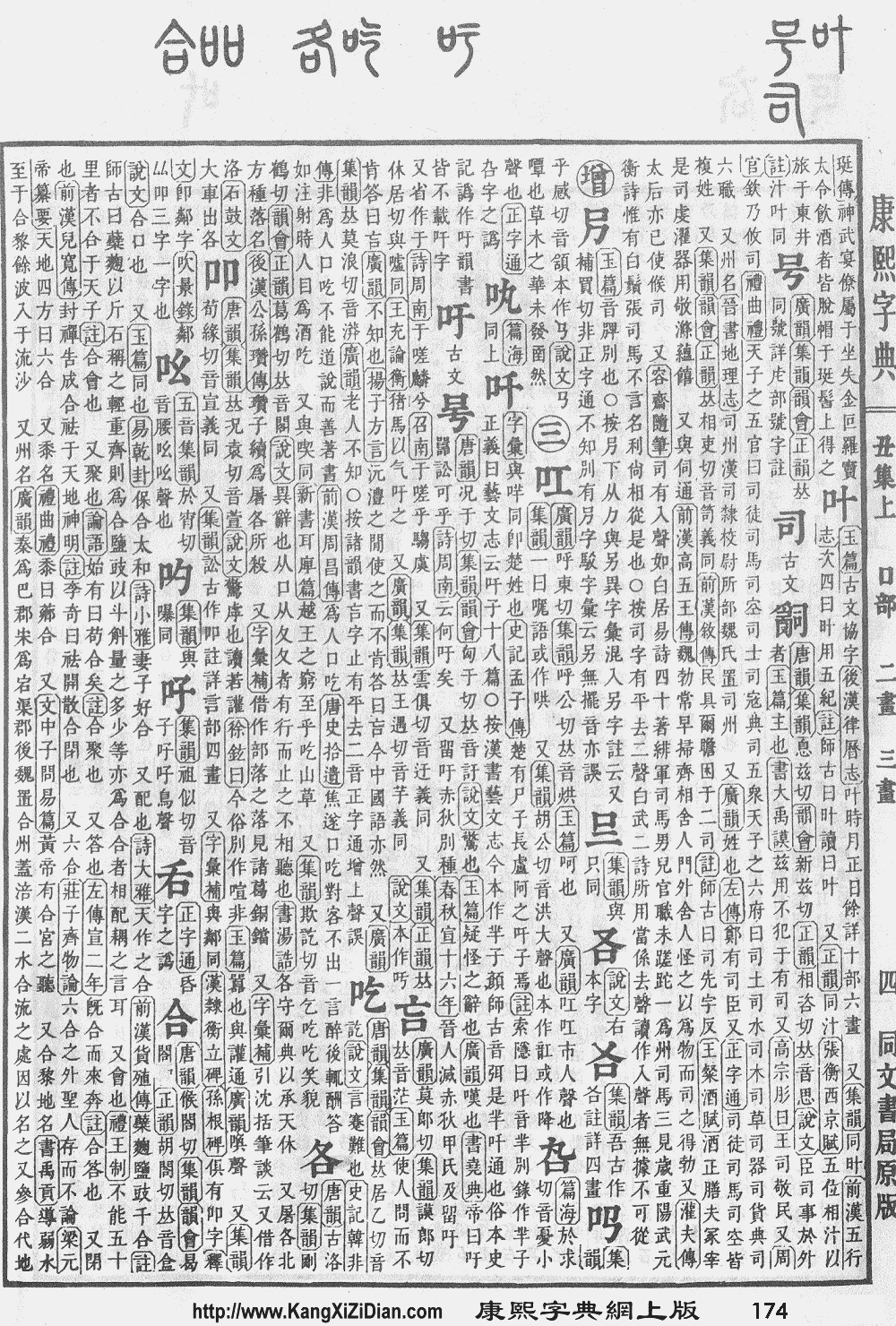
- Kangxi Dictionary: not present, would follow page 174, character 9
- Dai Kanwa Jiten: character 3265
- Dae Jaweon: page 386, character 5
- Hanyu Da Zidian (first edition): volume 1, page 575, character 4
- Unihan data for U+53F9
Chinese
Etymology 1
| For pronunciation and definitions of 叹 – see 嘆 (“to sigh; to chant; etc.”). (This character is the simplified form of 嘆). |
Notes:
|
Etymology 2
| For pronunciation and definitions of 叹 – see 歎 (“one of 24 literary genres from the Zhou dynasty, etc.”). (This character is the simplified form of 歎). |
Notes:
|
Etymology 3
| For pronunciation and definitions of 叹 – see 又 (“again; once more; both ... and ...; etc.”). (This character is recorded in one or more historical dictionaries as a variant form of 又). |
Pronunciation
Definitions
叹
- ‡ The meaning of this term is uncertain.
Japanese
Kanji
叹
- This term needs a translation to English. Please help out and add a translation, then remove the text
{{rfdef}}.
This article is issued from Wiktionary. The text is licensed under Creative Commons - Attribution - Sharealike. Additional terms may apply for the media files.