歎
| ||||||||
Translingual
Han character
歎 (Kangxi radical 76, 欠+11, 15 strokes, cangjie input 廿人弓人 (TONO), four-corner 47582, composition ⿰𦰩欠)
Derived characters
- 擹, 𤁤, 𣋸, 𣞔, 𪇽
Related characters
- 叹 (Simplified Chinese)
- 嘆 (Variant form of 歎 in Hong Kong)
References
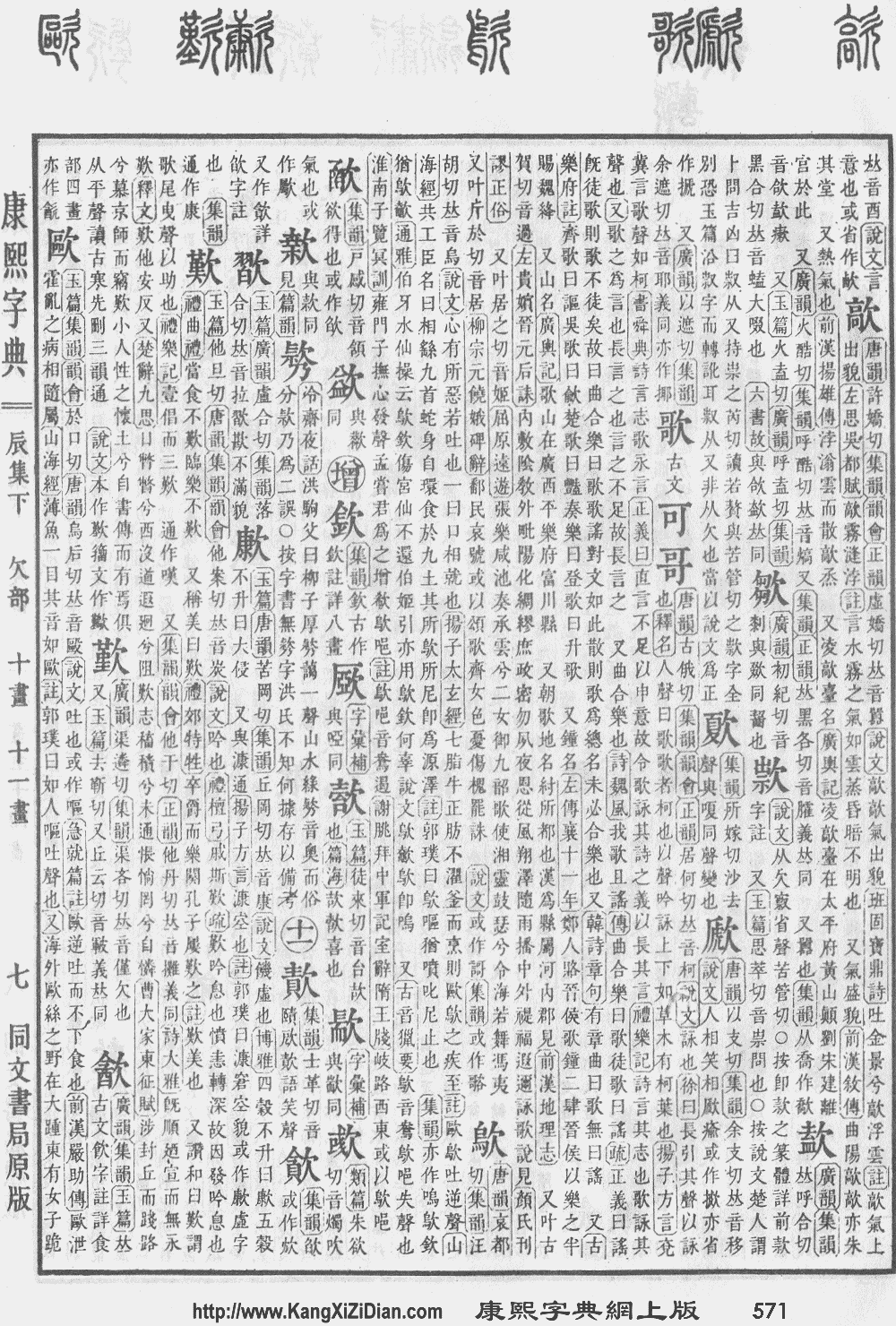
- Kangxi Dictionary: page 571, character 24
- Dai Kanwa Jiten: character 16182
- Dae Jaweon: page 959, character 18
- Hanyu Da Zidian (first edition): volume 3, page 2149, character 8
- Unihan data for U+6B4E
Chinese
| trad. | 歎/嘆 | |
|---|---|---|
| simp. | 叹* | |
| alternative forms | 歏 𪇽 𣥁 | |
Pronunciation
Definitions
歎
- Alternative form of 嘆 (tàn, “to sigh; to chant; to praise”)
- one of 24 literary genres from the Zhou dynasty
- a surname.
Coordinate terms
literary genre
Compounds
- 一倡三歎/一倡三叹
- 一唱三歎/一唱三叹 (yīchàngsāntàn)
- 三歎/三叹
- 九歎/九叹
- 仰天長歎/仰天长叹
- 仰屋竊歎/仰屋窃叹
- 北門之歎/北门之叹
- 可歎/可叹 (kětàn)
- 哀歎/哀叹 (āitàn)
- 咳聲歎氣/咳声叹气
- 唉聲歎氣/唉声叹气 (āishēngtànqì)
- 嗐聲歎氣/嗐声叹气
- 廢書而歎/废书而叹
- 怨歎/怨叹
- 悔毒之歎/悔毒之叹
- 悲歎/悲叹 (bēitàn)
- 慨歎/慨叹 (kǎitàn)
- 拍膝嗟歎/拍膝嗟叹
- 擊節歎賞/击节叹赏
- 望洋興歎/望洋兴叹 (wàngyángxīngtàn)
- 歎傷/叹伤
- 歎吁
- 歎喟/叹喟
- 歎嗟/叹嗟
- 歎息/叹息 (tànxī)
- 歎恨/叹恨
- 歎惋/叹惋 (tànwǎn)
- 歎惜/叹惜 (tànxī)
- 歎服/叹服 (tànfú)
- 歎氣/叹气 (tànqì)
- 歎為觀止/叹为观止 (tànwéiguānzhǐ)
- 歎皇陵/叹皇陵
- 歎美/叹美 (tànměi)
- 歎羨/叹羡
- 歎老嗟卑/叹老嗟卑
- 歎賞/叹赏 (tànshǎng)
- 浩歎/浩叹
- 牛山歎/牛山叹
- 白頭之歎/白头之叹
- 自怨自歎/自怨自叹
- 詠歎/咏叹 (yǒngtàn)
- 讚歎/赞叹 (zàntàn)
- 蹙眉長歎/蹙眉长叹
- 金聖歎/金圣叹
- 驚歎/惊叹 (jīngtàn)
Japanese
| Shinjitai (extended) |
Shinjitai (extended) |
歎󠄀 歎+ 󠄀?(Adobe-Japan1) |
 |
|
| 歎󠄂 歎+ 󠄂?(Hanyo-Denshi) (Moji_Joho) | ||||
| Kyūjitai | 歎 |  | ||
| The displayed kanji may be different from the image due to your environment. See here for details. | ||||
Kanji
歎
(“Jinmeiyō” kanji used for names)
- This term needs a translation to English. Please help out and add a translation, then remove the text
{{rfdef}}.
Vietnamese
Han character
歎: Hán Việt readings: thán (
歎: Nôm readings: than[4][3], thăn[4][3]
- This term needs a translation to English. Please help out and add a translation, then remove the text
{{rfdef}}.
References
- Trần (2004).
- Bonet (1899).
- Génibrel (1898).
- Hồ (1976).
This article is issued from Wiktionary. The text is licensed under Creative Commons - Attribution - Sharealike. Additional terms may apply for the media files.