司
| ||||||||
Translingual
| Stroke order | |||
|---|---|---|---|
 | |||
| Stroke order | |||
|---|---|---|---|
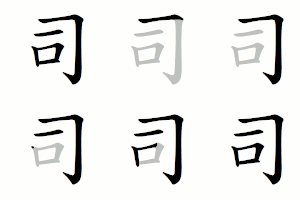 | |||
Han character
司 (Kangxi radical 30, 口+2, 5 strokes, cangjie input 尸一口 (SMR), four-corner 17620, composition ⿹𠃌𠮛)
Derived characters
References
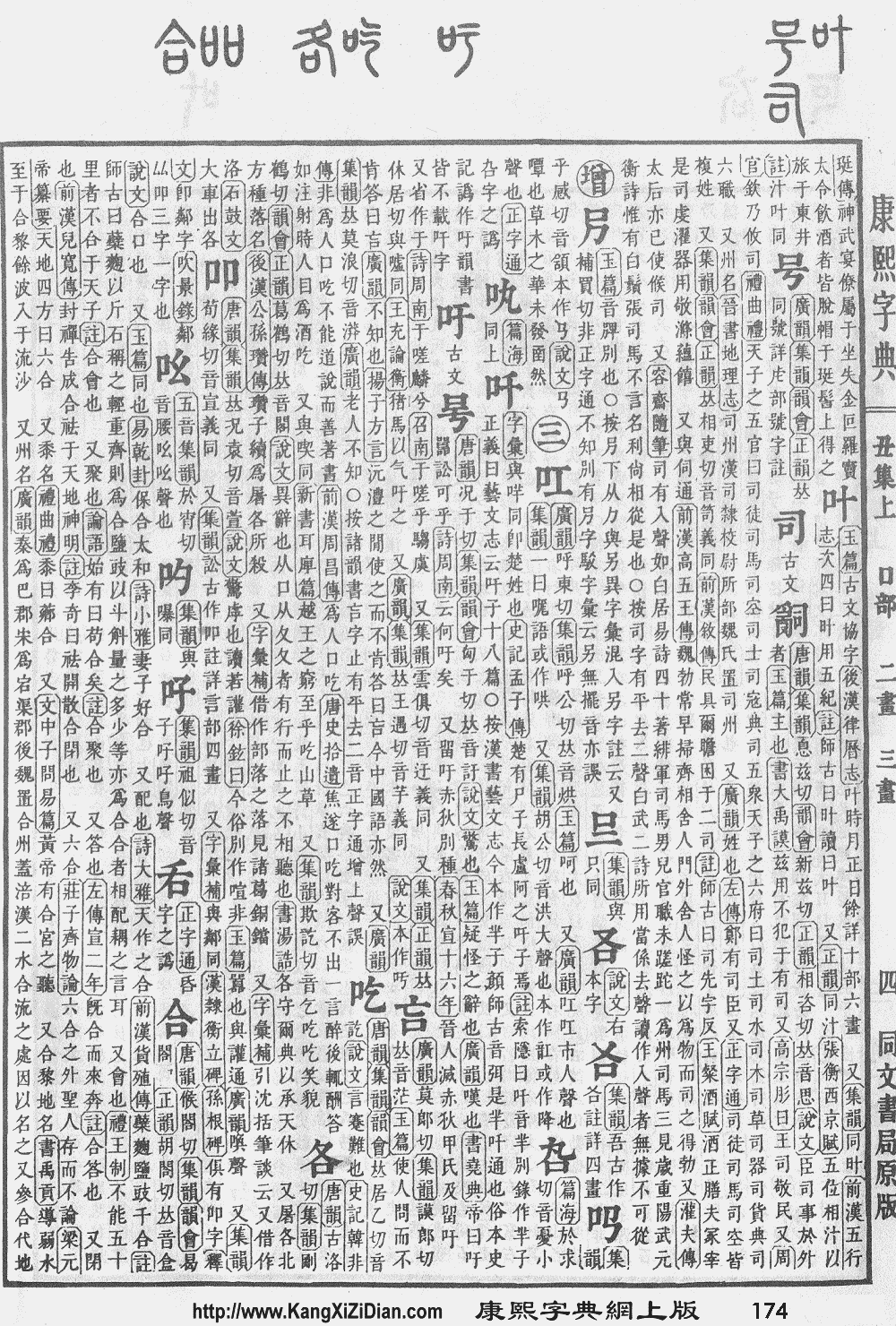
- Kangxi Dictionary: page 174, character 3
- Dai Kanwa Jiten: character 3257
- Dae Jaweon: page 385, character 8
- Hanyu Da Zidian (first edition): volume 1, page 572, character 8
- Unihan data for U+53F8
Chinese
| simp. and trad. |
司 | |
|---|---|---|
| alternative forms | 𤔲 | |
Glyph origin
| Historical forms of the character 司 | |||
|---|---|---|---|
| Shang | Western Zhou | Shuowen Jiezi (compiled in Han) | Liushutong (compiled in Ming) |
| Oracle bone script | Bronze inscriptions | Small seal script | Transcribed ancient scripts |
 |
 |
 |
 |
Characters in the same phonetic series (司) (Zhengzhang, 2003)
Unknown.
Etymology
From Proto-Sino-Tibetan *zə; cognate with Proto-Kukish */ca/, Mru caŋ (“to do, to make”), and Tibetan མཛད་པ (mdzad pa), མཛོད (mdzod), from underlying */m-za-t/ "to do, to act", possibly also related to བཟོ (bzo, “work, labour”) (Schuessler, 2007). Schuessler disputes Löffler's (1966) proposed connection to 乍 (OC *zraːɡs, “to do, work, make”) due to phonological difficulties.
Unger (1984) posits a possible relationship with Tibetan རྫི་པོ (rdzi po, “herdsman”).
Pronunciation
Compounds
- 丁司壋/丁司垱 (Dīngsīdàng)
- 三司 (sānsī)
- 上司 (shàngsī)
- 三司使
- 三法司
- 仲介公司
- 保全公司
- 保險公司/保险公司 (bǎoxiǎn gōngsī)
- 光桿司令/光杆司令
- 兩合公司/两合公司
- 公司 (gōngsī)
- 公司債/公司债
- 公司債券/公司债券
- 公司法 (gōngsīfǎ)
- 公司行號/公司行号
- 公司重整
- 公證公司/公证公司
- 兵馬司/兵马司
- 冥司
- 凡立司
- 分公司 (fēngōngsī)
- 分司
- 判司
- 勒克司
- 勾司人
- 南司
- 卡司 (kǎsī)
- 司事 (sīshì)
- 司令 (sīlìng)
- 司令員/司令员 (sīlìngyuán)
- 司令官 (sīlìngguān)
- 司令臺/司令台
- 司令部 (sīlìngbù)
- 司倉/司仓
- 司儀/司仪 (sīyí)
- 司公 (sīgōng)
- 司務/司务
- 司南 (sīnán)
- 司命
- 司售人員/司售人员
- 司城
- 司士
- 司奶 (sai-nai) (Min Nan)
- 司寇 (sīkòu)
- 司徒 (sītú)
- 司成
- 司戶/司户
- 司房
- 司晨
- 司更
- 司會/司会
- 司機/司机 (sījī)
- 司法 (sīfǎ)
- 司法官 (sīfǎ guān)
- 司法機關/司法机关
- 司法權/司法权 (sīfǎquán)
- 司法獨立/司法独立
- 司法行政
- 司法警察 (sīfǎ jǐngchá)
- 司法院 (Sīfǎyuàn)
- 司爐/司炉 (sīlú)
- 司牧
- 司理
- 司直
- 司禮/司礼
- 司空 (sīkōng)
- 司空伎倆/司空伎俩
- 司空見慣/司空见惯 (sīkōngjiànguàn)
- 司舵
- 司藥/司药
- 司號員/司号员
- 司農/司农 (sīnóng)
- 司鐸/司铎 (sīduó)
- 司長/司长 (sīzhǎng)
- 司隸/司隶 (sīlì)
- 司隸校尉/司隶校尉 (sīlì xiàowèi)
- 司馬/司马 (sīmǎ)
- 司馬法/司马法
- 司馬門/司马门
- 司馬青衫/司马青衫
- 吐司 (tǔsī)
- 各司其事
- 吃官司 (chī guānsi)
- 員司/员司
- 四司六局
- 土司 (tǔsī)
- 壽司/寿司 (shòusī)
- 大司客
- 大司徒
- 大司空
- 大司馬/大司马 (dàsīmǎ)
- 大眾公司/大众公司
- 大祭司
- 官司
- 客將司/客将司
- 客帳司/客帐司
- 密司脫/密司脱
- 密昔司
- 專司/专司
- 布政司 (bùzhèngsī)
- 市舶司 (shìbósī)
- 庫司/库司
- 廣儲司/广储司
- 所司
- 打官司
- 投資公司/投资公司
- 押司
- 拜耳公司
- 控股公司 (kònggǔ gōngsī)
- 握股公司
- 教坊司
- 文君司馬/文君司马
- 有司 (yǒusī)
- 有司徹/有司彻
- 有限公司 (yǒuxiàn gōngsī)
- 本司三院
- 本司院
- 東司/东司 (dōngsī)
- 毛司
- 江州司馬/江州司马
- 沒頭官司/没头官司
- 法司
- 派司
- 無限公司/无限公司 (wúxiàn gōngsī)
- 牝雞司晨/牝鸡司晨 (pìnjīsīchén)
- 牧司
- 百司
- 百福司 (Bǎifúsī)
- 百貨公司/百货公司 (bǎihuò gōngsī)
- 盎司 (àngsī)
- 監司/监司
- 祭司 (jìsī)
- 稅務司/税务司
- 筆墨官司/笔墨官司
- 總公司/总公司 (zǒnggōngsī)
- 總司令/总司令 (zǒngsīlìng)
- 職司/职司
- 股份公司 (gǔfèn gōngsī)
- 臺司/台司
- 興業公司/兴业公司
- 舊司/旧司 (Jiùsī)
- 航空公司 (hángkōng gōngsī)
- 船公司
- 蔡司
- 藍德公司/蓝德公司
- 藩司
- 行政司法
- 袞司/衮司
- 見慣司空/见惯司空
- 貝司/贝司 (bèisī)
- 費司/费司
- 起司 (qǐsī)
- 起司蛋糕 (qǐsī dàngāo)
- 通政司 (Tōngzhèngsī)
- 金融公司 (jīnróng gōngsī)
- 開司米/开司米 (kāisīmǐ)
- 開司米龍/开司米龙
- 陰司/阴司 (yīnsī)
- 頂頭上司/顶头上司
References
- “司”, in 漢語多功能字庫 (Multi-function Chinese Character Database), 香港中文大學 (the Chinese University of Hong Kong), 2014–
Japanese
Readings
Compounds
Etymology 1
| Kanji in this term |
|---|
| 司 |
| つかさ Grade: 4 |
| kun’yomi |
| For pronunciation and definitions of 司 – see the following entry. | ||
| ||
| (This term, 司, is an alternative spelling of the above term.) |
Etymology 2
| Kanji in this term |
|---|
| 司 |
| まもる Grade: 4 |
| nanori |
Korean
Hanja
司 (eum 사 (sa))
- This term needs a translation to English. Please help out and add a translation, then remove the text
{{rfdef}}.
Vietnamese
This article is issued from Wiktionary. The text is licensed under Creative Commons - Attribution - Sharealike. Additional terms may apply for the media files.