吓
See also: 嚇
| ||||||||
Translingual
| Stroke order | |||
|---|---|---|---|
 | |||
Han character
吓 (Kangxi radical 30, 口+3, 6 strokes, cangjie input 口一卜 (RMY), composition ⿰口下)
References
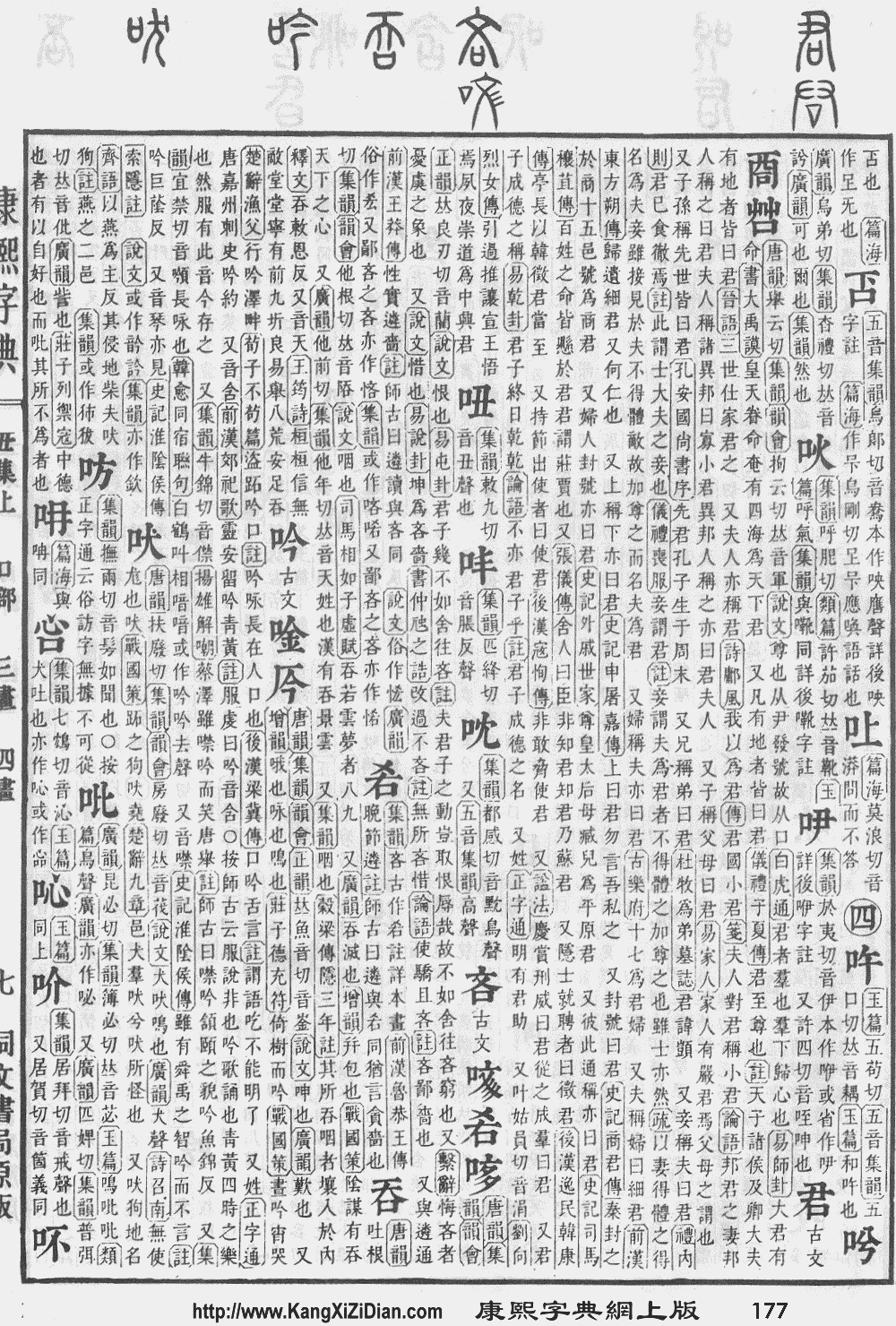
- Kangxi Dictionary: not present, would follow page 177, character 2
- Dai Kanwa Jiten: character 3306
- Dae Jaweon: page 394, character 5
- Hanyu Da Zidian (first edition): volume 1, page 577, character 2
- Unihan data for U+5413
Chinese
Etymology 1
| For pronunciation and definitions of 吓 – see 嚇 (“to frighten; to scare; to be afraid; to be scared; to be frightened; etc.”). (This character is the simplified form of 嚇). |
Notes:
|
Pronunciation 1
Definitions
吓 (Cantonese)
- grammatical particle used to emphasise an activity which goes on for a brief moment. for a while; for a moment
- This term needs a translation to English. Please help out and add a translation, then remove the text
{{rfdef}}.
Synonyms
- (Mandarin) 一下 (yīxià)
Pronunciation 2
Definitions
吓 (Cantonese)
Pronunciation 3
Definitions
吓 (Cantonese)
- Used to an ongoing action that is interrupted by some other action. The verb is always reduplicated.
Japanese
This article is issued from Wiktionary. The text is licensed under Creative Commons - Attribution - Sharealike. Additional terms may apply for the media files.