下
| ||||||||
 | ||||||||
Translingual
| Stroke order | |||
|---|---|---|---|
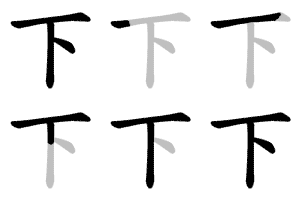 | |||
| Stroke order | |||
|---|---|---|---|
 | |||
Han character
下 (Kangxi radical 1, 一+2, 3 strokes, cangjie input 一卜 (MY), four-corner 10230, composition ⿱一卜)
Derived characters
References
- Kangxi Dictionary: page 76, character 10
- Dai Kanwa Jiten: character 14
- Dae Jaweon: page 147, character 1
- Hanyu Da Zidian (first edition): volume 1, page 7, character 1
- Unihan data for U+4E0B
Chinese
| simp. and trad. |
下 | |
|---|---|---|
| alternative forms | 丅 ancient 𠄟 | |
Glyph origin
| Historical forms of the character 下 | ||||||||||||||||||||||||||||||||||||||||||||||||||||||
|---|---|---|---|---|---|---|---|---|---|---|---|---|---|---|---|---|---|---|---|---|---|---|---|---|---|---|---|---|---|---|---|---|---|---|---|---|---|---|---|---|---|---|---|---|---|---|---|---|---|---|---|---|---|---|
| Shang | Western Zhou | Spring and Autumn | Warring States | Shuowen Jiezi (compiled in Han) | Liushutong (compiled in Ming) | |||||||||||||||||||||||||||||||||||||||||||||||||
| Oracle bone script | Bronze inscriptions | Bronze inscriptions | Bronze inscriptions | Chu slip and silk script | Qin slip script | Ancient script | Small seal script | Transcribed ancient scripts | ||||||||||||||||||||||||||||||||||||||||||||||
 |
 |
 |
 |
 |
 |
 |
 |
 | ||||||||||||||||||||||||||||||||||||||||||||||
||||||||
|
References: Mostly from Richard Sears' Chinese Etymology site (authorisation),
| ||||||||||||||||||||||||||||||||||||||||||||||||||||||


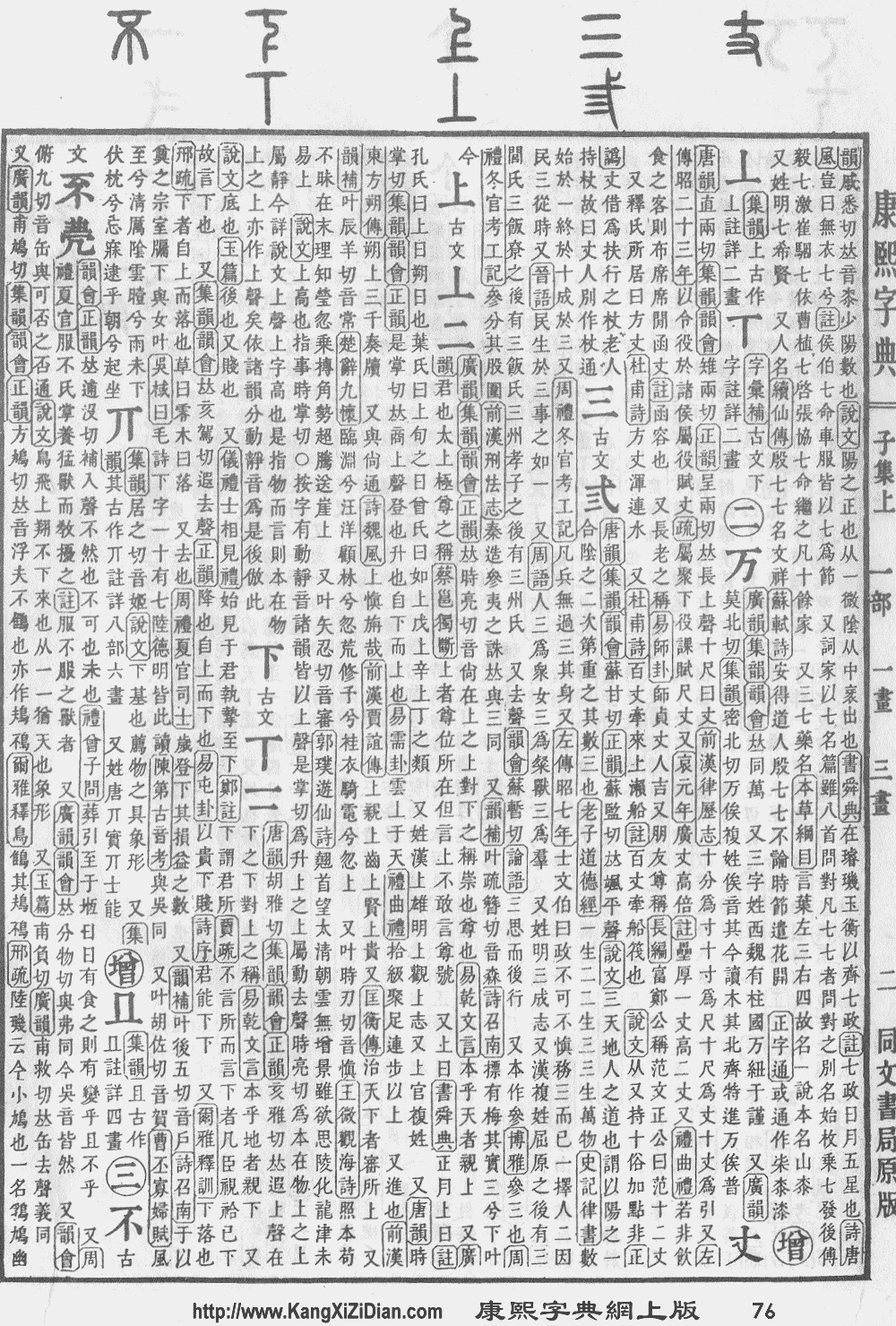
In oracle bone script, it is an ideogram (指事) that shows the concept of "down" by showing one line below another (contrast 上). This form evolved into 下 in later scripts, the character used today.
Etymology
From Proto-Sino-Tibetan *(k/g)la-k/j/t (“to fall”) (STEDT):
- inside Sinitic, cognate with 落 (OC *ɡ·raːɡ, “to fall, to drop”), 露 (OC *ɡ·raːɡs, “dew”), 陊 (OC *l'aːlʔ, *l'alʔ, “to collapse”) and 阤 (OC *l'alʔ, *hljalʔ, “hillside, slope”);
- outside Sinitic, cognate with Mizo tla ~ tlâk (“to fall”), thla ~ thlâk (“to drop”), Burmese ကျ (kya., “to fall”) and ချ (hkya., “to drop”).
Schuessler (2007) instead proposed an Austroasiatic origin by comparing 下 (OC *ɡraːʔ, “to descend, down, below”) to Khmer [script needed] (gra'ka, “be low, debased”); additionally, he suggested that Sino-Tibetan influence had possibly caused the weakening of foreign final *-k to OC final *-ʔ. He derives the departing tone (去聲) pronunciation via two derivations:
- 下 (OC *ɡraːs, “to be put down”) is an exopassive derivation (ibid.);
- 下 (OC *ɡraːs, “to descend, to fall”) is a later, general departing tone derivative (ibid.).
Pronunciation
Definitions
下
- (lower; inferior; located below)
- Antonym: 上
- (intransitive) (to go to a lower place)
- Antonym: 上
- to go down; to descend (as complement) downwards; down
- 你快下來。/你快下来。 ― Nǐ kuài xià lái. ― Come down here.
- 下海 ― xiàhǎi ― to go to sea
- 下樓/下楼 ― xiàlóu ― to go downstairs
- 下山 ― xiàshān ― to go down the mountain
- 走下 ― zǒuxià ― to walk down
- 落下 ― luòxià ― to fall down
- 跳下深淵/跳下深渊 ― tiàoxià shēnyuān ― to jump down to an abyss
- (as complement) completely, thoroughly
- to get out of; to leave; to alight; to get off
- 下船 ― xiàchuán ― to disembark from a boat
- 下床 ― xiàchuáng ― to get out of bed
- † to go to somewhere considered poor or inferior
- (colloquial) Short for 下線 (“to log out”).
- (transitive) (to move something to a lower place)
- (with limited objects, often figuratively) to put something down
- 下筆/下笔 ― xiàbǐ ― to start writing (lit., "to put the inkbrush down")
- 下腳/下脚 ― xiàjiǎo ― to have a small place to stand in (lit., "to put the feet down")
- 下藥/下药 ― xiàyào ― to drug someone (lit., "to put the drug down")
- 下榻 ― xiàtà ― to stay the night (lit., "to put the bed down")
- to give or issue something to an inferior person
- 下令 ― xiàlìng ― to issue an order
- to send an invitation
- † to conquer
- (with limited objects, often figuratively) to put something down
- (a short time)
Synonyms
| Variety | Location | Words |
|---|---|---|
| Formal (Written Standard Chinese) | 下, 落 (Chiefly Cantonese) | |
| Mandarin | Beijing | 下 |
| Taiwan | 下 | |
| Yantai (Muping) | 下 | |
| Jinan | 下 | |
| Wanrong | 下 | |
| Xi'an | 下 | |
| Yinchuan | 下 | |
| Xining | 下 | |
| Ürümqi | 下 | |
| Yangzhou | 下 | |
| Malaysia | 下 | |
| Singapore | 下 | |
| Cantonese | Guangzhou | 落 |
| Hong Kong | 落 | |
| Yangjiang | 落 | |
| Nanning | 落 | |
| Kuala Lumpur (Guangfu) | 落 | |
| Singapore (Guangfu) | 落 | |
| Gan | Nanchang | 下 |
| Pingxiang | 下 | |
| Hakka | Meixian | 落 |
| Jin | Taiyuan | 下 |
| Xinzhou | 下 | |
| Northern Min | Jian'ou | 下 |
| Southern Min | Xiamen | 落 |
| Quanzhou | 落 | |
| Zhangzhou | 落 | |
| Zhao'an | 落 | |
| Taipei | 落 GT | |
| Penang (Hokkien) | 落 | |
| Singapore (Hokkien) | 落 | |
| Manila (Hokkien) | 落 | |
| Chaozhou | 落 | |
| Shantou | 落 | |
| Jieyang | 落 | |
| Singapore (Teochew) | 落 | |
| Wenchang | 落 | |
| Haikou | 落 | |
| Qionghai | 落 | |
| Singapore (Hainanese) | 落 | |
| Zhongshan Min | Shaxi (Longdu) | 落 |
| Wu | Shanghai | 落 |
| Suzhou | 落 | |
| Hangzhou | 下, 落 | |
| Hangzhou (Yuhang) | 落 | |
| Wenzhou | 落 | |
| Jinhua | 落 | |
| Note | GT - General Taiwanese (no specific region identified) | |
| Variety | Location | Words |
|---|---|---|
| Formal (Written Standard Chinese) | 一下 | |
| Mandarin | Taiwan | 一下, 看看 |
| Malaysia | 一下 | |
| Singapore | 一下 | |
| Cantonese | Guangzhou | 下 |
| Hong Kong | 下 | |
| Macau | 下 | |
| Kuala Lumpur (Guangfu) | 下 | |
| Singapore (Guangfu) | 下 | |
| Southern Min | Xiamen | 看覓 |
| Quanzhou | 看覓 | |
| Zhangzhou | 看覓 | |
| Taipei | 看覓 | |
| Kaohsiung | 看覓 | |
| Penang (Hokkien) | 看覓 | |
| Singapore (Hokkien) | 看覓, 一下 | |
| Manila (Hokkien) | 覓, 看覓, 一下 | |
| Chaozhou | 睇, 下睇 | |
| Shantou | 一下 | |
| Singapore (Teochew) | 睇 | |
| Wu | Shanghai | 看, 一記, 一下 often with non-monosyllabic verbs |
| Suzhou | 看, 一下 | |
| Ningbo | 看 | |
| Variety | Location | Words |
|---|---|---|
| Formal (Written Standard Chinese) | 低 | |
| Mandarin | Beijing | 低 |
| Taiwan | 低 | |
| Jinan | 低 | |
| Xi'an | 低 | |
| Wuhan | 低, 矮 | |
| Chengdu | 矮, 低 | |
| Yangzhou | 低 | |
| Hefei | 低, 矮 | |
| Malaysia | 低 | |
| Singapore | 低 | |
| Cantonese | Guangzhou | 低 |
| Hong Kong | 低 | |
| Taishan | 低 | |
| Yangjiang | 低 | |
| Singapore (Guangfu) | 低 | |
| Gan | Nanchang | 低, 矮 |
| Hakka | Meixian | 低, 矮 |
| Jin | Taiyuan | 低 |
| Northern Min | Jian'ou | 矮 |
| Eastern Min | Fuzhou | 下, 矮 |
| Southern Min | Xiamen | 下 |
| Quanzhou | 下 | |
| Jinjiang | 下 | |
| Zhangzhou | 下 | |
| Tainan | 下 | |
| Penang (Hokkien) | 下 | |
| Singapore (Hokkien) | 下 | |
| Manila (Hokkien) | 下 | |
| Chaozhou | 下, 矮 | |
| Shantou | 下 | |
| Jieyang | 下 | |
| Singapore (Teochew) | 下 | |
| Pontianak (Teochew) | 下 | |
| Singapore (Hainanese) | 低 | |
| Wu | Suzhou | 低 |
| Ningbo | 低, 矮 | |
| Zhoushan | 低, 矮 | |
| Wenzhou | 低, 矮 | |
| Xiang | Changsha | 低, 矮, 下 |
| Shuangfeng | 低, 矮 | |
See also
- 落 (luò)
Compounds
- 一下 (yīxià)
- 一下子 (yīxiàzi)
- 一匡天下 (yīkuāngtiānxià)
- 一氣之下/一气之下 (yīqì zhīxià)
- 一決高下/一决高下 (yījuégāoxià)
- 一無下落/一无下落
- 一統天下/一统天下 (yītǒng tiānxià)
- 一聲令下/一声令下
- 一較高下/一较高下 (yījiàogāoxià)
- 一鼓而下
- 一齊天下/一齐天下
- 七上八下 (qīshàngbāxià)
- 七八下裡/七八下里
- 下一肩
- 下下
- 上下 (shàngxià)
- 上下一心
- 上上下下 (shàngshàngxiàxià)
- 上下交困
- 上下其手 (shàngxiàqíshǒu)
- 上下同心
- 上下床 (shàngxiàchuáng)
- 上下文 (shàngxiàwén)
- 下三濫/下三滥 (xiàsānlàn)
- 下三爛/下三烂 (xiàsānlàn)
- 上下爭輝/上下争辉
- 上下相安
- 下三等
- 下三面
- 下不了臺/下不了台
- 下不來/下不来
- 下不來臺/下不来台
- 下不去
- 下不為例/下不为例 (xiàbùwéilì)
- 下世 (xiàshì)
- 下乘 (xiàchéng)
- 下九
- 下井投石
- 下交
- 下人 (xiàrén)
- 下令 (xiàlìng)
- 下伏
- 下作 (xiàzuo)
- 下位 (xiàwèi)
- 下作黃子/下作黄子
- 下來/下来 (xiàlái)
- 下停
- 下僚
- 下元
- 下元節/下元节
- 下凡 (xiàfán)
- 下列 (xiàliè)
- 下利
- 下剩
- 下劑/下剂
- 下功夫 (xià gōngfu)
- 下劣 (xiàliè)
- 下勁/下劲 (xiàjìn)
- 下午 (xiàwǔ)
- 下午茶 (xiàwǔchá)
- 下半夜 (xiàbànyè)
- 下半天 (xiàbàntiān)
- 下半年 (xiàbànnián)
- 下半旗 (xiàbànqí)
- 下半晌 (xiàbànshǎng)
- 下半月 (xiàbànyuè)
- 下半輩子/下半辈子
- 下去 (xiàqù)
- 下口
- 下吏
- 上吐下瀉/上吐下泻 (shàngtùxiàxiè)
- 上和下睦
- 下品 (xiàpǐn)
- 下咽 (xiàyān)
- 下哨
- 下問/下问 (xiàwèn)
- 下喬入幽/下乔入幽
- 下嚥/下咽 (xiàyàn)
- 下回 (xiàhuí)
- 下國/下国
- 下土
- 下地 (xiàdì)
- 下地獄/下地狱
- 下坂走丸
- 下坪 (Xiàpíng)
- 下坡 (xiàpō)
- 下垂 (xiàchuí)
- 下坡走馬/下坡走马
- 下坡路 (xiàpōlù)
- 下坡運動/下坡运动
- 下城里
- 下堂 (xiàtáng)
- 下堂妻
- 下場/下场
- 下場白/下场白
- 下場門/下场门
- 下場頭/下场头
- 下塵/下尘
- 下墜/下坠
- 下壓力/下压力
- 下士 (xiàshì)
- 下壽/下寿
- 下夜
- 下大夫
- 下女 (xiànǚ)
- 下妾
- 下妻 (Xiàqī)
- 下嫁 (xiàjià)
- 下子
- 下存
- 下學/下学 (xiàxué)
- 下宋窯/下宋窑 (Xiàsòngyáo)
- 下官
- 下定 (xiàdìng)
- 下室
- 下家 (xiàjiā)
- 下宮/下宫 (Xiàgōng)
- 下小茶
- 下層/下层 (xiàcéng)
- 下層階級/下层阶级
- 下屬/下属 (xiàshǔ)
- 下屯 (Xiàtún)
- 下山 (xiàshān)
- 下峪 (Xiàyù)
- 下崽 (xiàzǎi)
- 下工
- 下工夫 (xià gōngfu)
- 下巴
- 下巴頦/下巴颏 (xiàbakē)
- 下帖子
- 下席
- 下帷
- 下幣/下币
- 下平
- 下床
- 下床氣/下床气
- 下店
- 下廚/下厨 (xiàchú)
- 下弦
- 下彩
- 下得
- 下得去
- 下心 (xiàxīn)
- 下情 (xiàqíng)
- 下情上達/下情上达
- 上情下達/上情下达
- 下意
- 下愚
- 下愚不移
- 下意識/下意识 (xiàyìshí)
- 下懷/下怀 (xiàhuái)
- 下截
- 下戰書/下战书
- 下戶/下户
- 下房
- 下才
- 下手 (xiàshǒu)
- 下拜 (xiàbài)
- 下挫 (xiàcuò)
- 下插定
- 下操
- 下擺/下摆 (xiàbǎi)
- 下放 (xiàfàng)
- 下文 (xiàwén)
- 下新店 (Xiàxīndiàn)
- 下斷/下断
- 下方 (xiàfāng)
- 下旬 (xiàxún)
- 下旨
- 下晚
- 下晝/下昼 (xiàzhòu)
- 下晡
- 下書/下书 (xiàshū)
- 上有天堂,下有蘇杭/上有天堂,下有苏杭 (shàng yǒu tiāntáng, xià yǒu Sūháng)
- 下服
- 下本錢/下本钱
- 下板兒/下板儿
- 下查埠
- 下梢
- 下梆子
- 下梢頭/下梢头
- 下棋 (xiàqí)
- 下椗
- 下榻 (xiàtà)
- 下樓/下楼 (xiàlóu)
- 下檔/下档
- 下欠
- 下次 (xiàcì)
- 下款
- 下武
- 下死勁/下死劲
- 下死的
- 下死眼
- 下毒 (xiàdú)
- 下毒手 (xiàdúshǒu)
- 下民
- 下氣/下气
- 下氣怡色/下气怡色
- 下水
- 下水禮/下水礼
- 下水船
- 下水道 (xiàshuǐdào)
- 上求下告
- 下江 (Xiàjiāng)
- 下江人
- 下江先生
- 下沉 (xiàchén)
- 下注 (xiàzhù)
- 下泉
- 下河堤 (Xiàhédī)
- 下油鍋/下油锅
- 下流 (xiàliú)
- 下洲 (Xiàzhōu)
- 下流社會/下流社会
- 下浣
- 下消
- 下海 (xiàhǎi)
- 下浮 (xiàfú)
- 下淡水溪
- 下港 (ē-káng) (Min Nan)
- 下游 (xiàyóu)
- 下滑 (xiàhuá)
- 下溜頭/下溜头
- 上漏下溼/上漏下湿
- 下澤/下泽
- 下澣
- 下澤車/下泽车
- 下瀉/下泻
- 下火 (xiàhuǒ)
- 下焉者 (xiàyānzhě)
- 下焦
- 下狀/下状
- 下狠
- 下獄/下狱 (xiàyù)
- 下班 (xiàbān)
- 下田 (xiàtián)
- 下界 (xiàjiè)
- 下番
- 下疳 (xiàgān)
- 下痢 (xiàlì)
- 下的
- 下皮
- 下盤/下盘
- 下眼相看
- 下石
- 下碇
- 下磐
- 下神
- 下視丘/下视丘 (xiàshìqiū)
- 下福 (Xiàfú)
- 下禮/下礼
- 下程
- 下種/下种
- 上竄下跳/上窜下跳 (shàngcuànxiàtiào)
- 下第 (xiàdì)
- 下策 (xiàcè)
- 下筆/下笔 (xiàbǐ)
- 下等 (xiàděng)
- 下筆千言/下笔千言
- 下筆如神/下笔如神 (xiàbǐ rú shén)
- 下筆成篇/下笔成篇
- 下筆成章/下笔成章
- 下筆有神/下笔有神
- 下等植物
- 下節/下节
- 下箸
- 下紅/下红
- 下級/下级 (xiàjí)
- 下網/下网 (xiàwǎng)
- 下緬甸/下缅甸 (Xià Miǎndiàn)
- 下罟 (Xiàgǔ)
- 下聘 (xiàpìn)
- 下聯/下联 (xiàlián)
- 下肚 (xiàdù)
- 下肢 (xiàzhī)
- 下腰
- 下腳/下脚
- 下腳兒/下脚儿
- 下腳料/下脚料 (xiàjiǎoliào)
- 下腸繫膜動脈/下肠系膜动脉 (xià chángxìmó dòngmài)
- 下腳貨/下脚货
- 下臂
- 下臣
- 下臺/下台 (xiàtái)
- 下臺階/下台阶 (xià táijiē)
- 下船 (xiàchuán)
- 下茶
- 下葬 (xiàzàng)
- 下落 (xiàluò)
- 下藥/下药 (xiàyào)
- 下處/下处
- 下蛋 (xiàdàn)
- 下蛋雞/下蛋鸡
- 下蠱/下蛊
- 下行 (xiàxíng)
- 上行下效 (shàngxíngxiàxiào)
- 下行文
- 下裝/下装
- 下裡/下里
- 下襬/下摆 (xiàbǎi)
- 下詔/下诏 (xiàzhào)
- 下語/下语
- 下課/下课 (xiàkè)
- 上諱下諱/上讳下讳
- 下議院/下议院 (xiàyìyuàn)
- 下谷坪 (Xiàgǔpíng)
- 下貧/下贫
- 下賤/下贱 (xiàjiàn)
- 下走
- 下足
- 下跌 (xiàdiē)
- 下路
- 下跪 (xiàguì)
- 下路人
- 下身 (xiàshēn)
- 下車/下车 (xiàchē)
- 下車之始/下车之始
- 下車伊始/下车伊始
- 下車作威/下车作威
- 下車泣罪/下车泣罪
- 下輩/下辈 (xiàbèi)
- 下輩子/下辈子 (xiàbèizi)
- 下辛 (Xiàxīn)
- 下辛店 (Xiàxīndiàn)
- 下逐客令
- 下達/下达 (xiàdá)
- 下邊/下边
- 下邑
- 下部 (xiàbù)
- 下都
- 下鄉/下乡 (xiàxiāng)
- 下鄰/下邻
- 下酒 (xiàjiǔ)
- 下酒物
- 下酒菜 (xiàjiǔcài)
- 下采
- 下里 (xiàlǐ)
- 下里巴人 (xiàlǐbārén)
- 下野 (xiàyě)
- 下鍋/下锅 (xiàguō)
- 下門/下门 (Xiàmén)
- 下關/下关 (Xiàguān)
- 下降 (xiàjiàng)
- 下限 (xiàxiàn)
- 下院 (xiàyuàn)
- 下陳/下陈
- 下陷 (xiàxiàn)
- 下陸/下陆 (Xiàlù)
- 下陳橋/下陈桥 (Xiàchénqiáo)
- 下隸/下隶
- 下雨 (xiàyǔ)
- 下雪 (xiàxuě)
- 下面 (xiàmiàn)
- 下頦/下颏 (xiàhái)
- 下頷/下颔 (xiàhàn)
- 下頭/下头 (xiàtou)
- 下頭人/下头人
- 下顎/下颚 (xià'è)
- 下顧/下顾
- 下風/下风 (xiàfēng)
- 下飯/下饭 (xiàfàn)
- 下飯菜兒/下饭菜儿
- 下首 (xiàshǒu)
- 下馬/下马 (xiàmǎ)
- 下馬威/下马威 (xiàmǎwēi)
- 下馬杯/下马杯
- 下馬碑/下马碑 (xiàmǎbēi)
- 下馬陵/下马陵
- 下馬飯/下马饭
- 下駟/下驷
- 下體/下体 (xiàtǐ)
- 下麵/下面 (xiàmiàn)
- 下黷/下黩
- 不下 (bùxià)
- 不上不下 (bùshàngbùxià)
- 不下氣/不下气
- 不分高下
- 不在意下
- 不在話下/不在话下 (bùzàihuàxià)
- 不忍下手
- 不恥下問/不耻下问 (bùchǐxiàwèn)
- 不為人下/不为人下
- 不相上下 (bùxiāngshàngxià)
- 不知下落
- 世風日下/世风日下 (shìfēng rìxià)
- 丟下/丢下
- 乾撇下/干撇下
- 五行並下/五行并下
- 五行俱下
- 以下 (yǐxià)
- 伏下 (fúxià)
- 低下 (dīxià)
- 低三下四 (dīsānxiàsì)
- 低聲下氣/低声下气 (dīshēng xiàqì)
- 低顏下膝/低颜下膝
- 低首下心
- 依人籬下/依人篱下
- 倒下 (dǎoxià)
- 倒下鉤子/倒下钩子
- 做下
- 做下來/做下来
- 僭上偪下
- 僵持不下 (jiāngchíbùxià)
- 儘底下/尽底下
- 兩下/两下 (liǎngxià)
- 兩三下/两三下
- 兩下子/两下子 (liǎngxiàzi)
- 兩下裡/两下里
- 兩不相下/两不相下
- 兩勢下/两势下
- 兵臨城下/兵临城下 (bīnglínchéngxià)
- 兼善天下
- 凹下
- 出此下策
- 刀下留人 (dāoxiàliúrén)
- 分高下 (fēn gāoxià)
- 刻下 (kèxià)
- 創下/创下 (chuàngxià)
- 剩下 (shèngxià)
- 劃下道來/划下道来
- 劉唐下書/刘唐下书
- 劉蕡下第/刘𰱟下第
- 十年窗下
- 十行俱下
- 升高自下
- 半上落下
- 卑下 (bēixià)
- 南下 (nánxià)
- 卸下 (xièxià)
- 另有下文
- 合下
- 名下 (míngxià)
- 名下無虛/名下无虚
- 吃不下
- 名傳天下/名传天下
- 名滿天下/名满天下
- 名聞天下/名闻天下
- 名高天下
- 吳下阿蒙/吴下阿蒙
- 和顏下氣/和颜下气
- 嚥下/咽下 (yànxià)
- 四下 (sìxià)
- 四下無人/四下无人
- 四下裡/四下里 (sìxià lǐ)
- 地下
- 在下 (zàixià)
- 地下修文
- 地下化
- 地下夫人
- 地下室 (dìxiàshì)
- 地下工作
- 地下工廠/地下工厂
- 地下投資/地下投资
- 地下有知
- 地下核爆
- 地下核試/地下核试
- 地下水 (dìxiàshuǐ)
- 地下水位
- 地下水面
- 地下油行
- 地下的
- 地下經濟/地下经济
- 地下舞廳/地下舞厅
- 地下莖/地下茎
- 地下街 (dìxiàjiē)
- 地下資源/地下资源
- 地下道 (dìxiàdào)
- 地下錢莊/地下钱庄
- 地下鐵/地下铁 (dìxiàtiě)
- 地下電臺/地下电台
- 地層下陷/地层下陷
- 地盤下陷/地盘下陷
- 坐下 (zuòxià)
- 坐天下
- 垂下
- 垓下
- 城下之盟 (chéngxiàzhīméng)
- 垓下歌
- 堆下笑
- 塞下曲
- 大赦天下
- 天下 (tiānxià)
- 天下一家
- 天下事
- 天下人
- 天下多故
- 天下大亂/天下大乱 (tiānxiàdàluàn)
- 天下大勢/天下大势
- 天下太平 (tiānxiàtàipíng)
- 天下從風/天下从风
- 天下文宗
- 天下歸心/天下归心 (tiānxiàguīxīn)
- 天下洶洶/天下汹汹
- 天下為一/天下为一
- 天下為公/天下为公 (tiānxiàwéigōng)
- 天下為家/天下为家
- 天下無敵/天下无敌 (tiānxiàwúdí)
- 天下無雙/天下无双 (tiānxiàwúshuāng)
- 天下第一 (tiānxiàdìyī)
- 天下蒼生/天下苍生
- 天下鼎沸
- 天底下 (tiāndǐxia)
- 奈上祝下
- 妄下雌黃/妄下雌黄
- 委決不下/委决不下
- 威振天下
- 威震天下
- 宇下
- 安下 (ānxià)
- 安營下寨/安营下寨 (ānyíngxiàzhài)
- 定下
- 定天下
- 家下 (jiāxià)
- 家下人
- 容不下 (róngbùxià)
- 家天下
- 寄下
- 寄人籬下/寄人篱下 (jìrénlíxià)
- 富甲天下 (fùjiǎ tiānxià)
- 對症下藥/对症下药 (duìzhèngxiàyào)
- 就湯下麵/就汤下面
- 居下訕上/居下讪上
- 屈身下士
- 居高不下 (jūgāobùxià)
- 居高臨下/居高临下 (jūgāolínxià)
- 屋下架屋
- 屋下蓋屋/屋下盖屋
- 屬下/属下 (shǔxià)
- 巖牆之下/岩墙之下
- 川底下 (Chuāndǐxià)
- 差不上下
- 巴人下里
- 席卷天下
- 帳下/帐下 (zhàngxià)
- 平下氣/平下气
- 平天下 (píngtiānxià)
- 年下
- 床下安床 (chuángxià'ānchuáng)
- 底下 (dǐxià)
- 底下人 (dǐxiarén)
- 底下奏樂/底下奏乐
- 廝下/厮下
- 廚下/厨下 (chúxià)
- 廟下/庙下 (Miàoxià)
- 廚下兒/厨下儿
- 形而下 (xíng'érxià)
- 從天而下/从天而下
- 徹上徹下/彻上彻下
- 心下 (xīnxià)
- 忐上忑下
- 忽上忽下
- 怡聲下氣/怡声下气
- 急轉直下/急转直下 (jízhuǎnzhíxià)
- 恥居人下/耻居人下
- 惡濕居下/恶湿居下
- 意下 (yìxià)
- 戲下/戏下
- 房下
- 手下 (shǒuxià)
- 手下人
- 手下留情 (shǒuxiàliúqíng)
- 手底下
- 手援天下
- 手背朝下
- 打下 (dǎxià)
- 扔下
- 打下手的
- 打下馬威/打下马威
- 打天下
- 把下
- 承上啟下/承上启下
- 投井下石 (tóujǐngxiàshí)
- 承歡膝下/承欢膝下 (chénghuān xīxià)
- 投石下井
- 折節下交/折节下交
- 折節下士/折节下士
- 找臺階下/找台阶下
- 投阱下石
- 拉下水
- 拖下水
- 抹下臉/抹下脸
- 拉下臉/拉下脸
- 拉上補下/拉上补下
- 拉下過/拉下过
- 拉下馬/拉下马
- 抹不下來/抹不下来
- 招賢下士/招贤下士
- 拉躺下
- 拿下 (náxià)
- 按下
- 拿下馬來/拿下马来
- 捺下
- 接下
- 掉下 (diàoxià)
- 推賢下士/推贤下士
- 掃除天下/扫除天下
- 損上益下/损上益下
- 撇下
- 撂下
- 撂下臉來/撂下脸来
- 摘鞍下馬/摘鞍下马
- 播名天下
- 擱下/搁下
- 擱不下/搁不下
- 攀下
- 擲下/掷下
- 擺撥不下/摆拨不下
- 攔下/拦下
- 收下
- 攻下 (gōngxià)
- 放下 (fàngxià)
- 放下屠刀 (fàngxiàtúdāo)
- 放下臉/放下脸
- 放下身段
- 放下黑臉/放下黑脸
- 放心不下
- 放眼天下
- 敬上愛下/敬上爱下
- 旗下 (qíxià)
- 日下 (rìxià)
- 日下無雙/日下无双
- 昧下
- 星前月下
- 時下/时下 (shíxià)
- 普天下 (pǔtiānxià)
- 普天之下 (pǔtiānzhīxià)
- 暴下
- 暫且擱下/暂且搁下
- 月下 (yuèxià)
- 月下老人 (Yuèxià Lǎorén)
- 月下花前
- 月下風前/月下风前
- 月下香
- 有兩下子/有两下子 (yǒu liǎngxiàzi)
- 李下
- 李下無蹊/李下无蹊
- 李下瓜田 (lǐxiàguātián)
- 東下/东下
- 林下
- 林下風氣/林下风气
- 林下風範/林下风范
- 林下風致/林下风致
- 柱下史
- 柔聲下氣/柔声下气
- 根兒底下/根儿底下
- 標下/标下
- 樓下/楼下 (lóuxià)
- 樓底下/楼底下 (lóudǐxià)
- 橫行天下/横行天下
- 權傾天下/权倾天下
- 欺上罔下
- 正中下懷/正中下怀 (zhèngzhòngxiàhuái)
- 正冠李下
- 正身率下
- 歷下/历下
- 殿下 (diànxià)
- 母儀天下/母仪天下
- 每下愈況/每下愈况 (měixiàyùkuàng)
- 每況愈下/每况愈下 (měikuàngyùxià)
- 比個高下/比个高下
- 水下 (shuǐxià)
- 求賢下士/求贤下士
- 汗下
- 江下
- 汗下如雨
- 汗如雨下
- 江河日下 (jiānghé rìxià)
- 沒下/没下
- 沒上下/没上下
- 沒下梢/没下梢
- 沒上沒下/没上没下
- 沉下臉/沉下脸
- 沒高下/没高下
- 治下 (zhìxià)
- 泉下 (quánxià)
- 泣下如雨
- 泣下沾襟
- 泣如雨下
- 泥沙俱下
- 河汾門下/河汾门下
- 浮下水
- 涕泗交下
- 涕淚交下/涕泪交下
- 涕淚俱下/涕泪俱下
- 涕筆俱下/涕笔俱下
- 浪跡天下/浪迹天下
- 淌下
- 淚下交頤/泪下交颐
- 淚下如雨/泪下如雨 (lèi xià rú yǔ)
- 淚如雨下/泪如雨下 (lèirúyǔxià)
- 滴下
- 潤下/润下
- 澄清天下
- 潸然淚下/潸然泪下
- 火下
- 灶下 (zàoxià)
- 灶下婢
- 灶下養/灶下养
- 炕上地下
- 無下箸處/无下箸处
- 無從下手/无从下手
- 燈下/灯下
- 爆炸下限
- 爨下
- 爨底下 (Cuàndǐxià)
- 爬下
- 爬上爬下
- 爭持不下/争持不下
- 牛山下涕
- 獨步天下/独步天下 (dúbùtiānxià)
- 王天下
- 現下/现下 (xiànxià)
- 瓜田李下 (guātiánlǐxià)
- 甘拜下風/甘拜下风 (gānbàixiàfēng)
- 甘處下流/甘处下流
- 甲天下
- 畎畝下才/畎亩下才
- 留下 (liúxià)
- 當下/当下 (dāngxià)
- 百日天下
- 皮下出血
- 皮下注射
- 皮下移植
- 皮下組織/皮下组织 (píxià zǔzhī)
- 盆下
- 益上損下/益上损下
- 目下 (mùxià)
- 目下十行
- 目無下塵/目无下尘
- 直下
- 直上直下
- 直瀉而下/直泻而下
- 省下
- 看不下去
- 相形之下
- 相持不下 (xiāngchíbùxià)
- 眼下 (yǎnxià)
- 眼底下 (yǎndǐxià)
- 瞞上欺下/瞒上欺下
- 矢下如雨
- 知人下士
- 碧桃花下
- 禮賢下士/礼贤下士 (lǐxiánxiàshì)
- 私下 (sīxià)
- 私底下
- 稷下
- 稷下先生
- 稷下學派/稷下学派
- 窗下
- 立下 (lìxià)
- 等一下 (děng yīxià)
- 筆下/笔下 (bǐxià)
- 筆下功夫/笔下功夫
- 筆下超生/笔下超生
- 等米下鍋/等米下锅
- 等而下之 (děng'érxiàzhī)
- 節下/节下 (jiéxia)
- 管下
- 經緯天下/经纬天下
- 縱橫天下/纵横天下
- 罔上虐下
- 群下
- 老死牖下
- 耳下腺 (ěrxiàxiàn)
- 聞名天下/闻名天下 (wénmíngtiānxià)
- 聲淚俱下/声泪俱下 (shēnglèijùxià)
- 肩上肩下
- 胃下垂 (wèixiàchuí)
- 胯下 (kuàxià)
- 脅下/胁下
- 胯下之辱
- 腋下 (yèxià)
- 腳下/脚下 (jiǎoxià)
- 腳下人/脚下人
- 腦下垂體/脑下垂体 (nǎoxiàchuítǐ)
- 腦下腺/脑下腺
- 腳底下/脚底下
- 腳底下人/脚底下人
- 膝下 (xīxià)
- 膝下猶虛/膝下犹虚
- 臨危下石/临危下石
- 自鄶以下/自郐以下
- 舌下神經/舌下神经 (shéxià shénjīng)
- 舌下腺 (shéxiàxiàn)
- 舍下 (shèxià)
- 花下子
- 花前月下
- 落下 (luòxià)
- 葉下珠/叶下珠 (yèxiàzhū)
- 落井下石 (luòjǐngxiàshí)
- 董生下帷
- 虛下/虚下
- 虛心下氣/虚心下气
- 言下之意 (yánxiàzhīyì)
- 該下/该下
- 誇下海口/夸下海口
- 說不下去/说不下去
- 諂上抑下/谄上抑下
- 謙以下士/谦以下士
- 謙恭下士/谦恭下士
- 謙謙下士/谦谦下士
- 謙遜下士/谦逊下士
- 譽塞天下/誉塞天下
- 譽滿天下/誉满天下
- 豐下/丰下
- 豐上銳下/丰上锐下
- 買上告下/买上告下
- 貴賤高下/贵贱高下
- 赧顏汗下/赧颜汗下
- 走下坡 (zǒuxiàpō)
- 走遍天下 (zǒubiàntiānxià)
- 足下 (zúxià)
- 趴下 (pāxia)
- 跪下 (guìxià)
- 蹀躞不下
- 身下
- 躺下 (tǎngxià)
- 軍臨城下/军临城下
- 輦下/辇下
- 輦轂下/辇毂下 (niǎngǔxià)
- 轂下/毂下
- 轅下駒/辕下驹
- 轍環天下/辙环天下
- 這下/这下 (zhèxià)
- 這下子/这下子
- 通身上下
- 逮下
- 過下來/过下来
- 道濟天下/道济天下
- 適中下懷/适中下怀
- 那下
- 郊壇下窯/郊坛下窑
- 部下 (bùxià)
- 鄉下/乡下
- 鄉下人/乡下人 (xiāngxiarén)
- 鄴下文學/邺下文学
- 釉下彩
- 重侍下
- 鐵下心/铁下心
- 門下/门下 (ménxià)
- 門下士/门下士
- 門下省/门下省 (Ménxiàshěng)
- 閣下/阁下 (géxià)
- 闕下/阙下
- 闖天下/闯天下
- 附上罔下
- 附下罔上
- 降下 (jiàngxià)
- 院下 (Yuànxià)
- 陛下 (bìxià)
- 陵上虐下
- 陳蕃下榻/陈蕃下榻
- 階下/阶下 (jiēxià)
- 階下囚/阶下囚 (jiēxiàqiú)
- 雙管齊下/双管齐下 (shuāngguǎnqíxià)
- 難分高下/难分高下
- 零下 (língxià)
- 面壁下帷
- 鞭笞天下
- 頂下/顶下
- 頦下癭/颏下瘿
- 頷下之珠/颔下之珠
- 頭上抹下/头上抹下
- 頭上末下/头上末下
- 頷下腺/颔下腺
- 顎下腺/颚下腺
- 風前月下/风前月下
- 飛機下蛋/飞机下蛋
- 食不下咽
- 餘下/余下 (yúxià)
- 首下尻高
- 駑下/驽下
- 騎虎難下/骑虎难下 (qíhǔnánxià)
- 體下/体下
- 高下 (gāoxià)
- 高下任心
- 高下其手
- 高下在心 (gāoxià zài xīn)
- 高高下下
- 麾下 (huīxià)
- 黑下
- 黑燈下火/黑灯下火
- 鼓下
References
- “下”, in 漢語多功能字庫 (Multi-function Chinese Character Database), 香港中文大學 (the Chinese University of Hong Kong), 2014–
- Dictionary of Chinese Character Variants (教育部異體字字典), A00005
- “Entry #175”, in 臺灣閩南語常用詞辭典 [Dictionary of Frequently-Used Taiwan Minnan] (overall work in Mandarin and Hokkien), Ministry of Education, R.O.C., 2023.
Japanese
Readings
Compounds
Etymology 1
| Kanji in this term |
|---|
| 下 |
| した Grade: 1 |
| kun’yomi |
/sita/ → /ɕita/
From Old Japanese, from Proto-Japonic *sita.
Noun
下 • (shita)
- the underneath
- Antonym: 上 (ue)
- 1928, Motojirō Kajii, Sakura no ki no shita ni wa [Under the cherry trees], Modern kanji and kana edition:
- 桜の樹の下には屍体が埋まっている!これは信じていいことなんだよ。
- Sakura no ki no shita ni wa shitai ga umatte iru! Kore wa shinjite ii koto na n da yo.
- There are dead bodies buried under the cherry trees! This is something you should believe.
- 桜の樹の下には屍体が埋まっている!これは信じていいことなんだよ。
Etymology 2
| Kanji in this term |
|---|
| 下 |
| しも Grade: 1 |
| kun’yomi |
⟨simo1⟩ → /simʷo/ → /ɕimo/
From Old Japanese, from Proto-Japonic *simo.
Noun
下 • (shimo)
Derived terms
- 下一段活用 (shimo ichidan katsuyō)
- 下総 (Shimōsa)
- 下掛かる (shimogakaru)
- 下期 (shimoki)
- 下五 (shimogo)
- 下肥 (shimogoe)
- 下座 (shimoza)
- 下々 (shimojimo)
- 下女中 (shimojochū)
- 下野 (shimotsuke)
- 下手 (shimote)
- 下二段活用 (shimo nidan katsuyō)
- 下の句 (shimo no ku)
- 下関 (Shimonoseki)
- 下ネタ (shimoneta)
- 下半期 (shimohanki)
- 下半身 (shimohanshin)
- 下膨れ (shimobukure)
- 僕 (shimobe), 下部 (shimobe)
- 下屋敷 (shimoyashiki)
- 風下 (kazashimo)
- 上下 (kamishimo), 裃 (kamishimo)
- 川下 (kawashimo)
- 水下 (minashimo)
Noun
下 • (moto)
Etymology 4
| Kanji in this term |
|---|
| 下 |
| げ Grade: 1 |
| goon |
From Middle Chinese 下 (MC haeX|haeH).
The 呉音 (goon, literally “Wu sound”) reading, so likely the initial borrowing from Middle Chinese.
Pronunciation
Etymology 5
| Kanji in this term |
|---|
| 下 |
| か Grade: 1 |
| kan’on |
From Middle Chinese 下 (MC haeX|haeH).
The 漢音 (kan'on, literally “Han sound”) reading, so likely a later borrowing from Middle Chinese.
Pronunciation
- IPA(key): [ka̠]
References
- Matsumura, Akira, editor (2006), 大辞林 [Daijirin] (in Japanese), Third edition, Tōkyō: Sanseidō, →ISBN
- NHK Broadcasting Culture Research Institute, editor (1998), NHK日本語発音アクセント辞典 [NHK Japanese Pronunciation Accent Dictionary] (in Japanese), Tōkyō: NHK Publishing, →ISBN
- Matsumura, Akira, editor (2006), 大辞林 [Daijirin] (in Japanese), Third edition, Tōkyō: Sanseidō, →ISBN
- Matsumura, Akira (1995) 大辞泉 [Daijisen] (in Japanese), First edition, Tōkyō: Shogakukan, →ISBN
Korean
Hanja
Okinawan
References
- 1896: 沖縄語典 (Okinawa Goten, “Okinawan Dictionary”). In Japanese. http://kindai.ndl.go.jp/info:ndljp/pid/992016/46
Old Japanese
Etymology 1
From Proto-Japonic *sita.
Noun
下 (sita) (kana した)
- the below
- looking down
- 711–712, Kojiki, poem 57:
- ...佐斯夫袁佐斯夫能紀斯賀斯多迩淤斐陀弖流波毘呂由都麻都婆岐...
- ...sasibu wo sasibu no2 ki2 si ga sita ni opi2dateru pabi1ro2 yu tu ma-tubaki1...
- (please add an English translation of this quotation)
- a place
- 711–712, Kojiki, poem 5:
- ..多久夫須麻佐夜具賀斯多爾阿和由岐能和加夜流牟泥遠多久豆怒能斯路岐多陀牟岐...
- ...takubusuma sayagu ga sita ni wakayaru mune wo takuduno1 no2 siro1ki1 tadamuki...
- (please add an English translation of this quotation)
- Antonym: 上 (upe2)
- looking down
Derived terms
- 下問ひ, 下訪ひ (sitado1pi1)
- 下泣き (sitanaki1)
- 天の下 (ame2no2sita)
Descendants
- Japanese: 下 (shita)
Etymology 2
From Proto-Japonic *simo.
Descendants
- Japanese: 下 (shimo)
Vietnamese
Han character
下: Hán Việt readings: hạ[1][2][3]
下: Nôm readings: hạ[1][2][3]
- chữ Hán form of hạ (“to lower; to bring down; to take down”).
References
- Nguyễn (2014).
- Nguyễn et al. (2009).
- Trần (2004).