哃
| ||||||||
Translingual
Han character
哃 (Kangxi radical 30, 口+6, 9 strokes, cangjie input 口月一口 (RBMR), four-corner 67020, composition ⿰口同)
Further reading
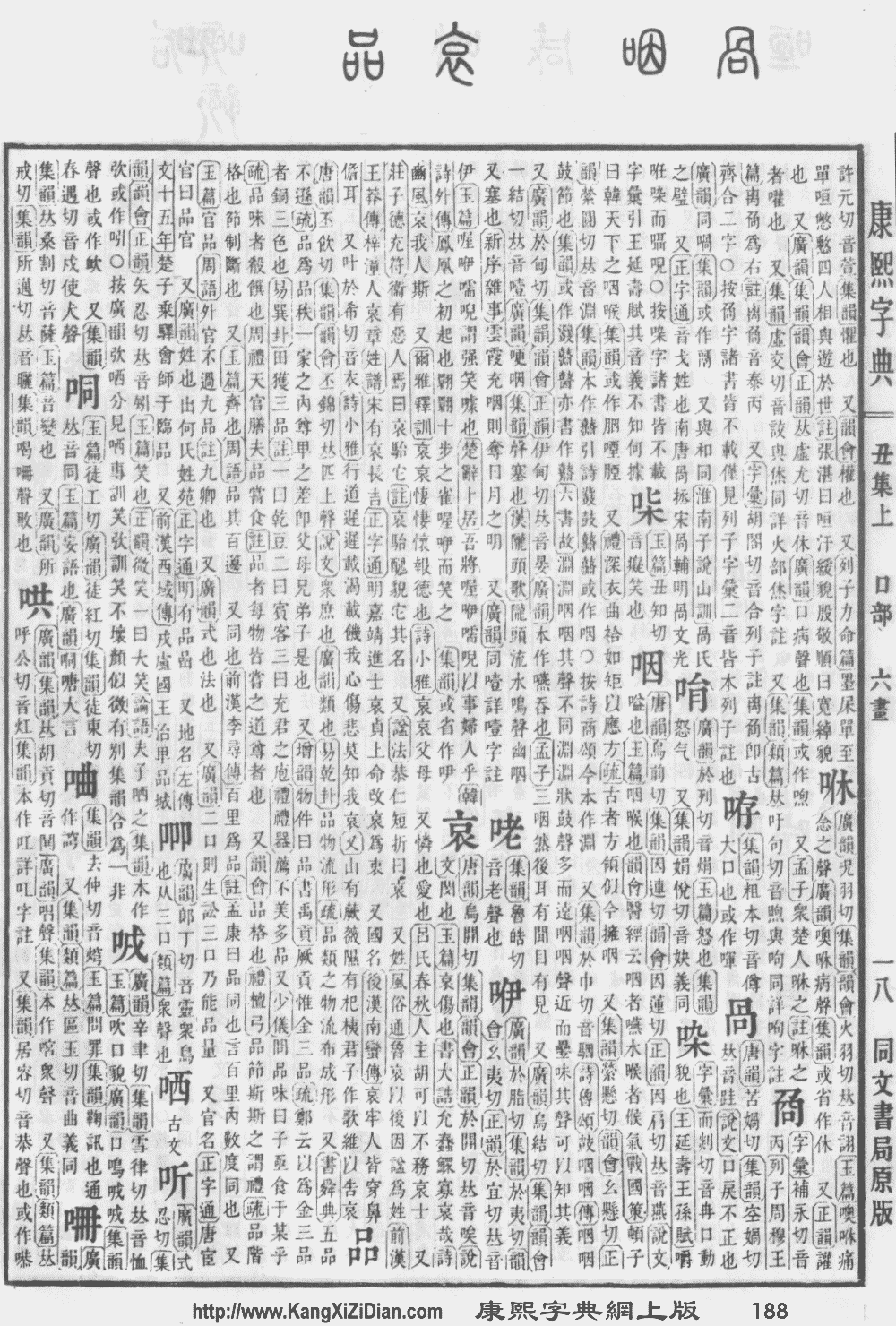
- Kangxi Dictionary: page 188, character 17
- Dai Kanwa Jiten: character 3585
- Dae Jaweon: page 408, character 4
- Hanyu Da Zidian (first edition): volume 1, page 615, character 7
- Unihan data for U+54C3
Chinese
| simp. and trad. |
哃 | |
|---|---|---|
Glyph origin
Characters in the same phonetic series (同) (Zhengzhang, 2003)
| Old Chinese | |
|---|---|
| 鮦 | *duʔ, *doːŋ, *doŋʔ |
| 侗 | *tʰoːŋ, *tʰoːŋʔ, *doːŋ |
| 恫 | *tʰoːŋ, *doːŋs |
| 痌 | *tʰoːŋ |
| 同 | *doːŋ |
| 仝 | *zlon, *doːŋ |
| 銅 | *doːŋ |
| 桐 | *doːŋ |
| 峒 | *doːŋ, *doːŋs |
| 硐 | *doːŋ, *doːŋʔ |
| 筒 | *doːŋ, *doːŋs |
| 洞 | *doːŋ, *doːŋs |
| 烔 | *doːŋ |
| 挏 | *doːŋ, *doːŋʔ |
| 酮 | *doːŋ, *doːŋʔ |
| 鲖 | |
| 眮 | *doːŋ, *doːŋʔ, *doːŋs |
| 衕 | *doːŋ, *doːŋs |
| 哃 | *doːŋ |
| 絧 | *doːŋ, *doːŋs |
| 姛 | *doːŋʔ |
| 詷 | *doːŋʔ, *doːŋs |
| 胴 | *doːŋs |
| 駧 | *doːŋs |
| 迵 | *doːŋs |
| 戙 | *doːŋs |
Pronunciation
References
- “哃”, in 漢語多功能字庫 (Multi-function Chinese Character Database), 香港中文大學 (the Chinese University of Hong Kong), 2014–
Japanese
Kanji
哃
- This term needs a translation to English. Please help out and add a translation, then remove the text
{{rfdef}}.
Korean
Hanja
哃 • (dong) (hangeul 동, revised dong, McCune–Reischauer tong)
- This term needs a translation to English. Please help out and add a translation, then remove the text
{{rfdef}}.
This article is issued from Wiktionary. The text is licensed under Creative Commons - Attribution - Sharealike. Additional terms may apply for the media files.