紅
| ||||||||
Translingual
Han character
紅 (Kangxi radical 120, 糸+3, 9 strokes, cangjie input 女火一 (VFM), four-corner 21910, composition ⿰糹工)
References
- Kangxi Dictionary: page 916, character 1
- Dai Kanwa Jiten: character 27243
- Dae Jaweon: page 1343, character 8
- Hanyu Da Zidian (first edition): volume 5, page 3363, character 5
- Unihan data for U+7D05
Chinese
| trad. | 紅 | |
|---|---|---|
| simp. | 红 | |
Glyph origin
| Historical forms of the character 紅 |
|---|
| Shuowen Jiezi (compiled in Han) |
| Small seal script |
 |
| Old Chinese | |
|---|---|
| 缸 | *kroːŋ, *ɡroːŋ |
| 篢 | *kluːmʔ, *koːŋ |
| 贑 | *kluːmʔ |
| 涳 | *ŋr'oːŋ, *kʰroːŋ, *kʰoːŋ |
| 江 | *kroːŋ |
| 肛 | *kroːŋ, *qʰroːŋ |
| 扛 | *kroːŋ |
| 杠 | *kroːŋ |
| 豇 | *kroːŋ |
| 茳 | *kroːŋ |
| 釭 | *kroːŋ, *koːŋ, *kuːŋ |
| 矼 | *kroːŋ |
| 玒 | *kroːŋ, *koːŋ |
| 虹 | *kroːŋs, *koːŋs, *ɡoːŋ |
| 腔 | *kʰroːŋ |
| 崆 | *kʰroːŋ, *kʰoːŋ |
| 羫 | *kʰroːŋ |
| 控 | *kʰroːŋ, *kʰoːŋs |
| 椌 | *kʰroːŋ, *kʰoːŋ |
| 悾 | *kʰroːŋ, *kʰoːŋ, *kʰoːŋs |
| 跫 | *kʰroːŋ, *kʰoŋ, *ɡoŋ |
| 啌 | *qʰroːŋ |
| 谾 | *qʰroːŋ, *qʰoːŋ |
| 舡 | *qʰroːŋ |
| 缻 | *ɡroːŋ |
| 項 | *ɡroːŋʔ |
| 屸 | *ɡ·roːŋ |
| 功 | *koːŋ |
| 工 | *koːŋ |
| 疘 | *koːŋ |
| 魟 | *koːŋ, *qʰoːŋ, *ɡoːŋ |
| 攻 | *koːŋ, *kuːŋ |
| 愩 | *koːŋ |
| 碽 | *koːŋ |
| 貢 | *koːŋs |
| 羾 | *koːŋs |
| 空 | *kʰoːŋ, *kʰoːŋs |
| 箜 | *kʰoːŋ |
| 硿 | *kʰoːŋ |
| 埪 | *kʰoːŋ |
| 鵼 | *kʰoːŋ |
| 倥 | *kʰoːŋ, *kʰoːŋʔ, *kʰoːŋs |
| 鞚 | *kʰoːŋs |
| 叿 | *qʰoːŋ |
| 嗊 | *qʰoːŋʔ |
| 訌 | *ɡoːŋ |
| 紅 | *ɡoːŋ |
| 仜 | *ɡoːŋ |
| 葒 | *ɡoːŋ |
| 渱 | *ɡoːŋ |
| 鴻 | *ɡoːŋ, *ɡoːŋʔ |
| 汞 | *ɡoːŋʔ |
| 澒 | *ɡoːŋʔ |
| 鞏 | *koŋʔ |
| 巩 | *koŋʔ |
| 銎 | *kʰoŋ, *qʰoŋ |
| 恐 | *kʰoŋʔ, *kʰoŋs |
| 蛩 | *ɡoŋ |
| 筇 | *ɡoŋ |
| 桏 | *ɡoŋ |
| 邛 | *ɡoŋ |
Phono-semantic compound (形聲/形声, OC *ɡoːŋ) : semantic 糸 (“silk”) + phonetic 工 (OC *koːŋ).
Etymology
彤 (OC *l'uːŋ, “red”) could be a variant of 紅 (OC *ɡoːŋ) (Schuessler, 2007). May be related to 虹 (OC *kroːŋs, *ɡoːŋ, “rainbow”).
Originally referred to lighter shades of red; gradually replaced 赤 (chì, “red”) as the basic color term for "red".
Pronunciation 1
Definitions
紅
- red
- (colloquial) popular; in vogue
- 翻紅/翻红 ― fānhóng ― to be popular again
- 董晨宇介紹,這種突然病毒式紅起來的詞彙又稱「米姆」,像「雨女無瓜」這樣由老電視劇而來的「米姆」也有先例。 [MSC, trad.]
- From: 2019 June 18, 陆宇婷 (Lu Yuting), 蒋肖斌 (Jiang Xiaobin), 《“雨女无瓜”成流行语,老剧靠“梗”翻红》, in China Youth Daily, page 8
- Dǒng Chényǔ jièshào, zhè zhǒng tūrán bìngdúshì hóng qǐlái de cíhuì yòu chēng “mǐmǔ”, xiàng “yǔnǚwúguā” zhèyàng yóu lǎo diànshìjù ér lái de “mǐmǔ” yě yǒu xiānlì. [Pinyin]
- (please add an English translation of this usage example)
董晨宇介绍,这种突然病毒式红起来的词汇又称「米姆」,像「雨女无瓜」这样由老电视剧而来的「米姆」也有先例。 [MSC, simp.]
- the red clothes and bunting used on festive occasions
- festive occasion; wedding
- (figurative) revolutionary; Communist; Red
- (business, finance) bonus; extra dividend
- (literary) flower
- (literary) beautiful woman
- (literary) blood
- (euphemistic, Cantonese, Hakka) blood tofu
- a surname: Hong
Synonyms
- (red):
Compounds
- 一串紅/一串红 (yīchuànhóng)
- 一品紅/一品红 (yīpǐnhóng)
- 一捻紅/一捻红
- 一炮而紅/一炮而红 (yīpào'érhóng)
- 一紅二白/一红二白
- 下紅/下红
- 乾紅/干红
- 亮紅燈/亮红灯
- 伊紅/伊红 (yīhóng)
- 倚翠偎紅/倚翠偎红
- 偎紅倚翠/偎红倚翠
- 傳紅/传红
- 傳紅線/传红线
- 出紅差/出红差
- 分外眼紅/分外眼红
- 分紅/分红 (fēnhóng)
- 剛果紅/刚果红 (gāngguǒhóng)
- 剔紅/剔红
- 千日紅/千日红
- 千紅萬紫/千红万紫
- 口紅/口红 (kǒuhóng)
- 吃紅/吃红
- 呼紅叫六/呼红叫六
- 品紅/品红 (pǐnhóng)
- 唱紅白臉/唱红白脸
- 坐紅椅子/坐红椅子
- 堆紅/堆红
- 大紅/大红 (dàhóng)
- 大紅人/大红人
- 大紅大紫/大红大紫 (dàhóngdàzǐ)
- 大紅大綠/大红大绿
- 大紅日子/大红日子
- 大紅袍/大红袍 (dàhóngpáo)
- 夭紅/夭红
- 女兒紅/女儿红 (nǚ'érhóng)
- 女紅/女红 (nǚgōng)
- 奼紫嫣紅/姹紫嫣红 (chàzǐyānhóng)
- 嫣紅/嫣红 (yānhóng)
- 小紅/小红
- 山裡紅/山里红
- 心紅/心红
- 愁紅慘綠/愁红惨绿
- 慘綠愁紅/惨绿愁红
- 批紅判白/批红判白
- 披紅/披红 (pīhóng)
- 披紅挂綵/披红挂彩
- 掛紅/挂红
- 掛紅燈/挂红灯
- 描紅/描红 (miáohóng)
- 搶紅/抢红
- 映山紅/映山红 (yìngshānhóng)
- 春紅/春红
- 月月紅/月月红 (yuèyuèhóng)
- 朱紅/朱红 (zhūhóng)
- 杏紅/杏红
- 染紅/染红 (rǎnhóng)
- 柳綠桃紅/柳绿桃红
- 柳綠花紅/柳绿花红
- 桃紅/桃红 (táohóng)
- 桃紅柳綠/桃红柳绿
- 棗紅色/枣红色
- 橘紅/橘红 (júhóng)
- 正中紅心/正中红心
- 殘紅/残红 (cánhóng)
- 殷紅 (yānhóng)
- 水紅/水红
- 汞溴紅/汞溴红 (gǒngxiùhóng)
- 泡沫紅茶/泡沫红茶
- 泛紅/泛红
- 洋紅/洋红 (yánghóng)
- 浮紅/浮红
- 淺紅/浅红 (qiǎnhóng)
- 滿堂紅/满堂红 (mǎntánghóng)
- 滿江紅/满江红
- 漲紅/涨红
- 滿臉通紅/满脸通红
- 滿臉飛紅/满脸飞红
- 滿面紅脹/满面红胀
- 滿面通紅/满面通红
- 滿面飛紅/满面飞红
- 潮紅/潮红 (cháohóng)
- 火紅/火红 (huǒhóng)
- 炮竹紅/炮竹红
- 熠熠紅星/熠熠红星
- 燈紅酒綠/灯红酒绿 (dēnghóngjiǔlǜ)
- 燭影搖紅/烛影摇红
- 爭紅鬥紫/争红斗紫
- 牽紅線/牵红线
- 狀元紅/状元红
- 猩紅/猩红 (xīnghóng)
- 猩紅熱/猩红热 (xīnghóngrè)
- 玫瑰紅/玫瑰红 (méiguihóng)
- 甲基紅/甲基红 (jiǎjīhóng)
- 當罏紅袖/当𬙎红袖
- 白髮紅顏/白发红颜 (báifǎ hóngyán)
- 百日紅/百日红 (bǎirìhóng)
- 百紫千紅/百紫千红
- 眼紅/眼红 (yǎnhóng)
- 硃紅/朱红 (zhūhóng)
- 祁紅/祁红 (qíhóng)
- 萬紅千紫/万红千紫
- 萬紫千紅/万紫千红 (wànzǐqiānhóng)
- 穿紅著綠/穿紅着綠
- 竄紅/窜红 (cuānhóng)
- 粉吝紅慳/粉吝红悭
- 粉紅/粉红 (fěnhóng)
- 粟紅貫朽/粟红贯朽
- 紅中/红中 (hóngzhōng)
- 紅事/红事 (hóngshì)
- 紅五類/红五类
- 紅人/红人 (hóngrén)
- 紅位移/红位移
- 紅倌/红倌
- 紅光/红光 (hóngguāng)
- 紅光滿面/红光满面 (hóngguāngmǎnmiàn)
- 紅光紫霧/红光紫雾 (hóng guāng zǐ wù)
- 紅冬冬/红冬冬
- 紅利/红利 (hónglì)
- 紅包/红包 (hóngbāo)
- 紅包場/红包场 (hóngbāochǎng)
- 紅十字會/红十字会 (Hóngshízìhuì)
- 紅口白舌/红口白舌
- 紅單子/红单子
- 紅土/红土 (hóngtǔ)
- 紅圪墶/红圪垯 (Hónggēda)
- 紅坪/红坪 (Hóngpíng)
- 紅城/红城 (Hóngchéng)
- 紅堂/红堂 (Hóngtáng)
- 紅場/红场 (Hóngchǎng)
- 紅塵/红尘 (hóngchén)
- 紅壤/红壤 (hóngrǎng)
- 紅外線/红外线 (hóngwàixiàn)
- 紅契/红契 (hóngqì)
- 紅女/红女
- 紅妝/红妆
- 紅姑娘/红姑娘 (hónggūniang)
- 紅姨/红姨
- 紅娘/红娘 (hóngniáng)
- 紅字黑押/红字黑押
- 紅孩兒/红孩儿
- 紅學/红学 (hóngxué)
- 紅安/红安 (Hóng'ān)
- 紅定/红定
- 紅寶石/红宝石 (hóngbǎoshí)
- 紅寶石婚/红宝石婚
- 紅寺堡/红寺堡 (Hóngsìbǔ)
- 紅將軍/红将军
- 紅尾伯勞/红尾伯劳
- 紅山/红山 (Hóngshān)
- 紅山文化/红山文化 (Hóngshān wénhuà)
- 紅山窯/红山窑 (Hóngshānyáo)
- 紅岩寺/红岩寺 (Hóngyánsì)
- 紅峰/红峰 (Hóngfēng)
- 紅崖/红崖 (Hóngyá)
- 紅嶺/红岭 (Hónglǐng)
- 紅巾/红巾
- 紅幫/红帮 (Hóngbāng)
- 紅彤彤/红彤彤 (hóngtóngtóng)
- 紅得發紫/红得发紫
- 紅心/红心 (hóngxīn)
- 紅愁綠慘/红愁绿惨
- 紅扑扑
- 紅拂/红拂
- 紅拂記/红拂记
- 紅撲撲/红扑扑 (hóngpūpū)
- 紅教/红教 (Hóngjiào)
- 紅旗/红旗 (hóngqí)
- 紅旗報捷/红旗报捷
- 紅旗手/红旗手
- 紅日三竿/红日三竿
- 紅日當午/红日当午
- 紅春/红春 (Hóngchūn)
- 紅星/红星 (hóngxīng)
- 紅暈/红晕
- 紅木/红木 (hóngmù)
- 紅杉/红杉
- 紅杏出牆/红杏出墙 (hóngxìngchūqiáng)
- 紅杏尚書/红杏尚书
- 紅杉軍/红杉军
- 紅柳/红柳 (hóngliǔ)
- 紅柳灘/红柳滩 (Hóngliǔtān)
- 紅桃/红桃 (hóngtáo)
- 紅梅記/红梅记
- 紅梨記/红梨记
- 紅棉/红棉 (hóngmián)
- 紅棗/红枣 (hóngzǎo)
- 紅椅子/红椅子
- 紅榜/红榜 (hóngbǎng)
- 紅槍會/红枪会
- 紅樣/红样
- 紅樓/红楼
- 紅樓夢/红楼梦 (Hónglóumèng)
- 紅模子/红模子
- 紅樹/红树 (hóngshù)
- 紅橋/红桥 (Hóngqiáo)
- 紅樹林/红树林 (hóngshùlín)
- 紅檜/红桧 (hóngkuài)
- 紅毛/红毛 (hóngmáo)
- 紅毛城/红毛城 (Hóngmáochéng)
- 紅毛番/红毛番 (hóngmáofān)
- 紅毯/红毯 (hóngtǎn)
- 紅汞水/红汞水
- 紅沙/红沙 (Hóngshā)
- 紅河/红河 (Hóng Hé)
- 紅油/红油 (hóngyóu)
- 紅海/红海 (Hónghǎi)
- 紅消香斷/红消香断
- 紅淨/红净
- 紅淚/红泪
- 紅潤/红润 (hóngrùn)
- 紅潮/红潮 (hóngcháo)
- 紅灼灼/红灼灼
- 紅焰/红焰 (Hóngyàn)
- 紅煤/红煤
- 紅燈/红灯 (hóngdēng)
- 紅燒/红烧 (hóngshāo)
- 紅燈綠酒/红灯绿酒
- 紅燒肉/红烧肉 (hóngshāoròu)
- 紅牌/红牌 (hóngpái)
- 紅牙/红牙 (hóngyá)
- 紅牙板/红牙板
- 紅玉/红玉 (hóngyù)
- 紅生/红生
- 紅男綠女/红男绿女
- 紅瘦綠肥/红瘦绿肥
- 紅白事/红白事 (hóngbáishì)
- 紅白大事/红白大事 (hóngbáidàshì)
- 紅白大禮/红白大礼
- 紅皮書/红皮书
- 紅盤/红盘
- 紅眼/红眼 (hóngyǎn)
- 紅眼病/红眼病 (hóngyǎnbìng)
- 紅砒/红砒
- 紅磚/红砖
- 紅磷/红磷 (hónglín)
- 紅票/红票
- 紅種人/红种人 (hóngzhǒngrén)
- 紅籌/红筹 (hóngchóu)
- 紅籌股/红筹股 (hóngchóugǔ)
- 紅粉/红粉 (hóngfěn)
- 紅粉佳人/红粉佳人 (hóngfěnjiārén)
- 紅粉知己/红粉知己
- 紅粉青樓/红粉青楼
- 紅粉青蛾/红粉青蛾
- 紅糖/红糖 (hóngtáng)
- 紅糯米/红糯米
- 紅紅綠綠/红红绿绿
- 紅素/红素
- 紅納襖/红纳袄
- 紅紫亂朱/红紫乱朱
- 紅絲/红丝
- 紅絲待選/红丝待选
- 紅絲暗繫/红丝暗系
- 紅絲硯/红丝砚
- 紅絲繩/红丝绳
- 紅綠帖子/红绿帖子
- 紅綠燈/红绿灯 (hónglǜdēng)
- 紅線/红线 (hóngxiàn)
- 紅線傳/红线传
- 紅線盜盒/红线盗盒
- 紅繡鞋/红绣鞋
- 紅纓槍/红缨枪
- 紅脣/红唇 (hóngchún)
- 紅脣族/红唇族
- 紅腐貫朽/红腐贯朽
- 紅腳/红脚
- 紅腫/红肿 (hóngzhǒng)
- 紅腳笭/红脚笭
- 紅臉/红脸
- 紅臉兒漢/红脸儿汉
- 紅與黑/红与黑
- 紅色/红色 (hóngsè)
- 紅色廣場/红色广场
- 紅色恐怖/红色恐怖 (hóngsè kǒngbù)
- 紅色政權/红色政权
- 紅花/红花 (hónghuā)
- 紅花套/红花套 (Hónghuātào)
- 紅花綠葉/红花绿叶
- 紅茄苳/红茄苳
- 紅茶/红茶 (hóngchá)
- 紅茸/红茸
- 紅葉/红叶 (hóngyè)
- 紅葉之題/红叶之题
- 紅葡萄藤/红葡萄藤
- 紅葉題詩/红叶题诗
- 紅藥/红药 (hóngyào)
- 紅藥水/红药水 (hóngyàoshuǐ)
- 紅藻/红藻 (hóngzǎo)
- 紅蛋/红蛋 (hóngdàn)
- 紅螺/红螺
- 紅蟹/红蟹
- 紅血球/红血球 (hóngxuèqiú)
- 紅衛/红卫 (Hóngwèi)
- 紅衛兵/红卫兵 (hóngwèibīng)
- 紅衣主教/红衣主教 (hóngyī zhǔjiào)
- 紅衰翠減/红衰翠减
- 紅袖添香/红袖添香
- 紅裝/红装
- 紅襟/红襟
- 紅角兒/红角儿
- 紅記記/红记记
- 紅豆/红豆 (hóngdòu)
- 紅豔豔/红艳艳 (hóngyànyàn)
- 紅躑躅/红踯躅
- 紅軍/红军 (hóngjūn)
- 紅輪/红轮 (hónglún)
- 紅通通/红通通 (hóngtōngtōng)
- 紅運/红运 (hóngyùn)
- 紅鉛/红铅
- 紅銅/红铜 (hóngtóng)
- 紅陶/红陶
- 紅雨/红雨 (hóngyǔ)
- 紅雲/红云
- 紅霞/红霞
- 紅露酒/红露酒
- 紅青/红青
- 紅頂商人/红顶商人 (hóngdǐng shāngrén)
- 紅頂子/红顶子 (hóngdǐngzi)
- 紅頭/红头
- 紅頭子/红头子
- 紅頭蠅/红头蝇
- 紅頭阿三/红头阿三
- 紅頭黑炭/红头黑炭
- 紅顏/红颜 (hóngyán)
- 紅顏命薄/红颜命薄
- 紅顏薄命/红颜薄命 (hóngyánbómìng)
- 紅馬廟/红马庙 (Hóngmǎmiào)
- 紅鬍子/红胡子
- 紅魚/红鱼 (hóngyú)
- 紅鶴/红鹤 (hónghè)
- 紅鸞/红鸾
- 紅鸞照命/红鸾照命
- 紅黑帽/红黑帽
- 紅墨/红墨
- 紅墨水/红墨水
- 紅龜/红龟
- 紛紅駭綠/纷红骇绿
- 綠女紅男/绿女红男
- 綠慘紅愁/绿惨红愁
- 綠暗紅稀/绿暗红稀
- 綠煙紅霧/绿烟红雾
- 緋紅/绯红 (fēihóng)
- 綠肥紅瘦/绿肥红瘦
- 羞紅/羞红
- 翠消紅減/翠消红减
- 耳紅面赤/耳红面赤
- 聖誕紅/圣诞红 (shèngdànhóng)
- 肉紅/肉红
- 肌紅素/肌红素
- 脣紅齒白/唇红齿白
- 臉紅/脸红 (liǎnhóng)
- 臉紅心跳/脸红心跳
- 臉紅耳赤/脸红耳赤
- 臉紅頭脹/脸红头胀
- 花紅/花红 (huāhóng)
- 花紅柳綠/花红柳绿 (huāhóngliǔlǜ)
- 茶紅酒禮/茶红酒礼
- 落紅/落红 (luòhóng)
- 葉紅素/叶红素
- 藏紅花/藏红花 (zànghónghuā)
- 藻紅素/藻红素
- 血紅/血红 (xuèhóng)
- 血紅素/血红素 (xuèhóngsù)
- 血紅蛋白/血红蛋白 (xuèhóng dànbái)
- 西紅柿/西红柿 (xīhóngshì)
- 見紅/见红 (jiànhóng)
- 見錢眼紅/见钱眼红
- 貓尾紅/猫尾红
- 貫朽粟紅/贯朽粟红
- 赭紅/赭红
- 走紅/走红 (zǒuhóng)
- 走紅運/走红运
- 軟紅/软红
- 通紅/通红 (tōnghóng)
- 遠紅外線/远红外线
- 酒綠燈紅/酒绿灯红
- 金紅石/金红石 (jīnhóngshí)
- 銀紅/银红
- 長紅/长红
- 開紅燈/开红灯
- 開紅盤/开红盘
- 闖紅燈/闯红灯 (chuǎng hóngdēng)
- 除紅捉綠/除红捉绿
- 雁來紅/雁来红 (yànláihóng)
- 雙紅/双红
- 青紅燈/青红灯
- 青紅皂白/青红皂白 (qīnghóngzàobái)
- 面紅/面红 (miànhóng)
- 面紅耳熱/面红耳热
- 面紅耳赤/面红耳赤 (miànhóng'ěrchì)
- 面紅過耳/面红过耳
- 面紅面赤/面红面赤
- 飛紅/飞红
- 鬥雪紅/斗雪红
- 鮮紅/鲜红 (xiānhóng)
- 鶴頂紅/鹤顶红
- 齒白脣紅/齿白唇红
Pronunciation 2
Definitions
紅
- † Substitute character for 功 (gōng).
- † Substitute character for 工 (gōng).
- Placename in the State of Lu during the Spring and Autumn Period in Chinese history, northeast of modern Tai'an, Shandong.
Pronunciation 3
References
- “Entry #5382”, in 臺灣閩南語常用詞辭典 [Dictionary of Frequently-Used Taiwan Minnan] (overall work in Mandarin and Hokkien), Ministry of Education, R.O.C., 2023.
Japanese
Readings
- Go-on: ぐ (gu)
- Kan-on: こう (kō, Jōyō)
- Kan’yō-on: く (ku, Jōyō †)
- Kun: くれない (kurenai, 紅, Jōyō)←くれなゐ (kurenawi, 紅, historical); べに (beni, 紅, Jōyō); あかい (akai, 紅い); もみ (momi, 紅)
- Nanori: あかし (akashi); あかね (akane); あかり (akari); いろ (iro); かのう (kanō); くう (kū); くれ (kure); くれい (kurei); くれお (kureo); くれな (kurena); くれん (kuren); まどか (madoka); れな (rena)
Compounds
- 紅一点 (kōitten, “single point of crimson → the one different thing in a field of sameness; often refers to a lone woman in a crowd of men”)
- 紅雨 (kōu)
- 紅河 (Kōga)
- 紅花 (kōka)
- 紅霞 (kōka)
- 紅顔 (kōgan)
- 紅木 (kōki)
- 紅教 (Kōkyō)
- 紅閨 (kōkei)
- 紅血 (kōketsu)
- 紅格子 (kogōshi)
- 紅脂 (kōshi)
- 紅色 (kōshoku)
- 紅藻 (kōsō)
- 紅藻植物 (kōsō shokubutsu)
- 紅藻類 (kōsō-rui)
- 紅茶 (kōcha, “black tea”)
- 紅潮 (kōchō)
- 紅梅 (kōbai)
- 紅白 (kōhaku)
- 紅粉 (kōfun)
- 紅幇 (Kōhō)
- 紅帽 (kōbō)
- 紅葉 (kōyō, “autumn colors, the turning of the leaves”)
- 紅涙 (kōrui)
- 紅蓮 (guren, “red lotus”)
- 暗紅 (ankō)
- 女紅 (jokō)
- 鮮紅 (senkō)
- 丹紅 (tankō)
- 堆紅 (tsuikō)
- 剔紅 (tekikō), 剔紅 (tekkō)
- 柳緑花紅 (ryūryokukakō)
- 縷紅 (rukō), 縷紅草 (rukōsō)
- 紅型 (bingata)
- 紅絹 (momi)
- 紅葉づ (momizu)
- 百日紅 (sarusuberi), 百日紅 (hyakujitsukō, “crape myrtle”)
- 紅幇 (Honpan)
Etymology 1

| Kanji in this term |
|---|
| 紅 |
| くれない Grade: 6 |
| kun’yomi |
⟨kure no2 awi⟩ → /kurenawi/ → /kurenai/
From Old Japanese.
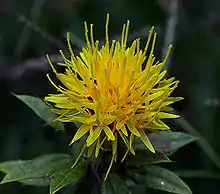
Shift from 呉の藍 (Kure no ai),[1][2] itself a compound of 呉 (Kure, “China”) + の (no, possessive particle) + 藍 (ai, “indigo → dye”)). The safflower, from which the crimson dye was extracted, was brought to Japan from China.
Noun
紅 • (kurenai) ←くれなゐ (kurenawi)?
- the color crimson, a vivid red edging towards pink
- Synonyms: 紅色 (kurenai-iro, kōshoku, beni-iro), 丹紅 (tankō)
- the safflower (Carthamus tinctorius), from which this color is extracted
- 905, Kokin Wakashū (book 13, poem 661)
- 紅の色にはいでじ隠れ沼の下にかよひて恋は死ぬとも
- kurenai no iro ni wa ideji kakure nu no shita ni kayoite koi wa shinu to mo
- I shall not show it as a safflower flaunts its red―not though I perish of a love kept as secret as streams in a hidden marsh.[3]
- 紅の色にはいでじ隠れ沼の下にかよひて恋は死ぬとも
- 905, Kokin Wakashū (book 13, poem 661)
- a 伽羅 (kyara)-class incense
Derived terms
- 紅の (kurenai no, pillow word)
- 紅色 (kurenai-iro)
- 紅縅 (kurenai odoshi)
- 紅菊 (kurenai-giku)
- 紅格子 (kurenai-gōshi)
- 紅絞り (kurenai shibori)
- 紅芋茎 (kurenai zuiki, “red taro stems; red aroid”)
- 紅裾濃 (kurenai susogo)
- 紅の装束 (kurenai no sōzoku)
- 紅染 (kurenai-zome), 紅染め (kurenai-zome)
- 紅匂い (kurenai nioi)
- 紅の薄様 (kurenai no usuyō)
- 紅の塵 (kurenai no chiri)
- 紅の涙 (kurenai no namida)
- 紅の葉 (kurenai no wa)
- 紅の袴 (kurenai no hakama, “red hakama”)
- 紅の筆 (kurenai no fude)
- 紅の文 (kurenai no fumi)
- 紅紅葉 (kurenai momiji)
- 薄紅 (usu-kurenai, “light pink, light crimson”)
- 唐紅 (Kara-kurenai), 韓紅 (kara-kurenai, “Chinese red”)
- 白紅 (shiro-kurenai)
- 爪紅 (tsumakurenai), 端紅 (tsumakurenai)
- 爪紅 (tsumagure)
- 中紅 (naka-kurenai, “medium crimson”)
- 直紅 (hita-kurenai)
- 皆紅 (minagurenai)
- 夕紅 (yū-kurenai)
Proverbs
Etymology 2

| Kanji in this term |
|---|
| 紅 |
| べに Grade: 6 |
| kun’yomi |
*/peni/ → /beni/
First attested in The Pillow Book, completed in 1002.
Shift from *heni, attested in the Wamyō Ruijushō (938 CE) with the original sense of "rouge".
The ni is definitely 丹 (ni, “red earth, cinnabar”), while the initial pe/be remains uncertain.
Noun
紅 • (beni)
- the color crimson, a vivid red edging towards pink
- Synonyms: 紅色 (kurenai-iro, kōshoku, beni-iro), 丹紅 (tankō)
- Short for 紅花 (benibana). the safflower (Carthamus tinctorius), from which this color is extracted
- the crimson pigment extracted from safflower petals, used in cosmetics and as a food coloring
- Synonym: 臙脂 (enji)
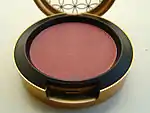
- rouge (red cosmetic traditionally made from safflowers)
- Synonym: 頬紅 (hōbeni)
- lipstick, lip liner (also traditionally made from safflowers)
- Synonym: 口紅 (kuchibeni)
Derived terms
- 紅赤 (beni-aka)
- 紅あぐー (beni agū)
- 紅板 (benīta)
- 紅色 (beni-iro)
- 紅鬱金 (beni ukon)
- 紅空木 (beni utsugi)
- 紅絵 (benie)
- 紅緒 (benio)
- 紅白粉 (beni oshiroi)
- 紅貝 (benigai)
- 紅返し (benigaeshi)
- 紅萼 (benigaku), 紅額 (benigaku)
- 紅蟹 (benigani)
- 紅鉄漿 (benikane)
- 紅殻 (Benigara)
- 紅革 (benikawa), 紅皮 (benikawa)
- 紅隈 (beniguma)
- 紅栗毛 (beni kurige)
- 紅粉 (beniko)
- 紅合歓 (beni gōkan)
- 紅格子 (beni-gōshi)
- 紅鮭 (benizake), 紅鱒 (benimasu)
- 紅差し指 (benisashi yubi)
- 紅皿 (benizara)
- 紅小灰蝶 (beni shijimi)
- 紅羊歯 (beni shida)
- 紅下翅 (beni shitaba)
- 紅紫檀 (beni shitan)
- 紅絞り (beni-shibori)
- 紅生姜 (beni shōga)
- 紅天蛾 (beni suzume)
- 紅雀 (benisuzume)
- 紅摺り絵 (beni-zurie)
- 紅染 (beni-zome), 紅染め (beni-zome)
- 紅茸 (benitake)
- 紅猪口 (beni choku), 紅猪口 (beni choko)
- 紅付け指 (benitsuke yubi)
- 紅鶴 (benizuru, “flamingo”)
- 紅天狗茸 (beni tengutake)
- 紅灯台 (beni dōdan)
- 紅の木 (beni no ki), 紅木 (beninoki)
- 紅鳩 (benibato)
- 紅花 (benibana, “safflower”)
- 紅檜 (benihi)
- 紅日陰蝶 (beni hikage)
- 紅鶸 (benihiwa)
- 紅筆 (benifude)
- 紅猿子 (benimashiko), 紅増子 (benimashiko)
- 紅雪 (beniyuki)
- 紅林檎 (beni ringo)
- 愛嬌紅 (aikyō beni), 愛敬紅 (aikyō beni)
- 油紅 (aburabeni)
- 天が紅 (ama ga beni), 尼が紅 (ama ga beni)
- 丑紅 (ushibeni)
- 薄紅 (usubeni, “light pink, light crimson”)
- 寒紅 (kanbeni)
- 口紅 (kuchibeni)
- 笹紅 (sasabeni)
- 四方紅 (shihō beni)
- 食紅 (shokubeni)
- 卵紅 (tamagobeni)
- 爪紅 (tsumabeni), 端紅 (tsumabeni)
- 天地紅 (tenchi beni)
- 唐紅 (tōbeni)
- 練紅 (neribeni), 練り紅 (neribeni), 煉紅 (neribeni), 煉り紅 (neribeni)
- 血紅 (noribeni), 糊紅 (noribeni)
- 縁紅弁慶 (fuchibeni benkei)
- 棒紅 (bōbeni)
- 頬紅 (hōbeni)
Idioms

Etymology 4

| Kanji in this term |
|---|
| 紅 |
| もみ Grade: 6 |
| kun’yomi |
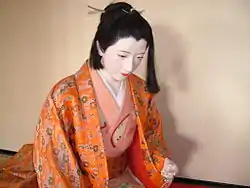
From 揉み (momi, “kneading”, stem form of verb momu), by extension from the kneading of cloth during the dyeing process.
Alternative forms
- 紅絹
Noun
紅 • (momi)
Etymology 5
| Kanji in this term |
|---|
| 紅 |
| こう Grade: 6 |
| kan’on |
From Middle Chinese 紅 (MC huwng).
Noun
紅 • (kō)
Idioms
Derived terms
References
- Matsumura, Akira (1995) 大辞泉 [Daijisen] (in Japanese), First edition, Tōkyō: Shogakukan, →ISBN
- Matsumura, Akira, editor (2006), 大辞林 [Daijirin] (in Japanese), Third edition, Tōkyō: Sanseidō, →ISBN
- Helen Craig McCullough (1985) Brocade by Night: Kokin Wakashū and the Court Style in Japanese Classical Poetry, Stanford University Press, →ISBN, page 264
Korean
Old Japanese
Etymology
Shift from 呉の藍 (Kure no2 awi),[1][2] itself a compound of 呉 (Kure, “China”) + の (no2, possessive particle) + 藍 (awi, “indigo → dye”).
Noun
紅 (kurenawi) (kana くれなゐ)
- a safflower, Carthamus tinctorius
- , text here
- 春苑紅尓保布桃花下照道尓出立𡢳嬬
- paru no2 so2no2 kurenawi nipopu momo no2 pana sitaderu mi1ti ni idetatu woto2me1
- (please add an English translation of this usage example)
- , text here
Derived terms
- 紅の (kurenawi no2, pillow word)
- 紅色 (kurenawi-iro2)
- 紅の末摘花 (kurenawi no2 suwetumupana)
References
- Matsumura, Akira (1995) 大辞泉 [Daijisen] (in Japanese), First edition, Tōkyō: Shogakukan, →ISBN
- Matsumura, Akira, editor (2006), 大辞林 [Daijirin] (in Japanese), Third edition, Tōkyō: Sanseidō, →ISBN
Vietnamese
Chữ Hán
紅: Hán Việt readings: hồng (
紅: Nôm readings: hồng[1][2][4][5][3], hường[2][6][5], hông[7]
Compounds
References
- Nguyễn (2014).
- Nguyễn et al. (2009).
- Trần (2004).
- Bonet (1899).
- Génibrel (1898).
- Hồ (1976).
- Taberd & Pigneau de Béhaine (1838).