啦
| ||||||||
Translingual
Han character
啦 (Kangxi radical 30, 口+8, 11 strokes, cangjie input 口手卜廿 (RQYT), four-corner 60018, composition ⿰口拉)
References
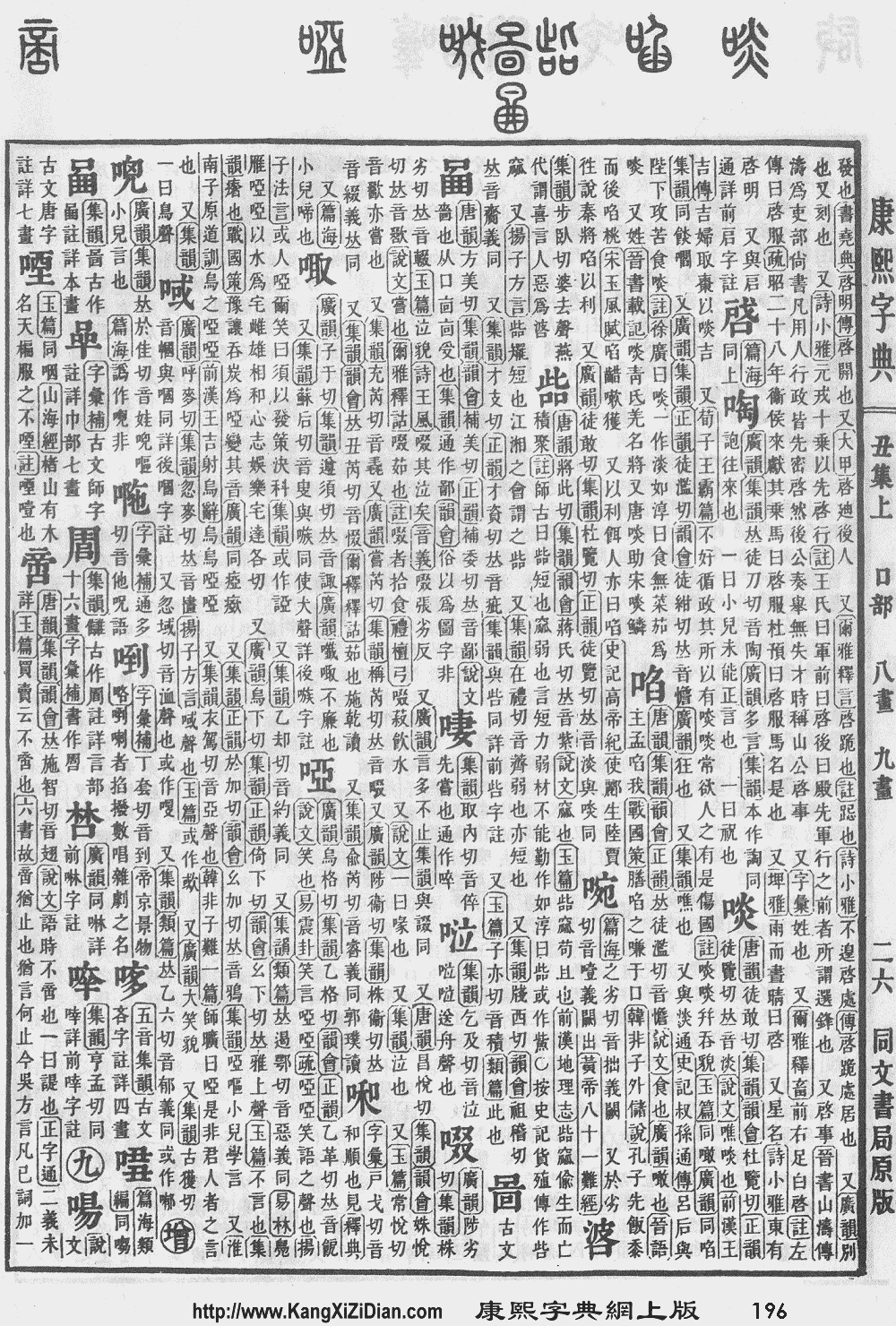
- Kangxi Dictionary: not present, would follow page 196, character 26
- Dai Kanwa Jiten: character 3882
- Dae Jaweon: page 418, character 17
- Hanyu Da Zidian (first edition): volume 1, page 636, character 5
- Unihan data for U+5566
Chinese
Glyph origin
Phono-semantic compound (形聲/形声) : semantic 口 (“mouth”) + phonetic 拉.
Pronunciation
Definitions
啦
Pronunciation
Definitions
啦
- This term needs a translation to English. Please help out and add a translation, then remove the text
{{rfdef}}.
Pronunciation
Definitions
啦
- (Cantonese) Placed at the end of a sentence in imperatives making it sound more like a request than an order.
- (onomatopoeia) cheering sound
Usage notes
- Without the particle, the example is very impersonal and straightforward, whilst it is softened down with the particle 啦.
- The usage of this particle is usually spoken, but its written form can be used in some informal writing. With more formal settings of writing, the Mandarin particle 吧 (baa6) is used instead.
Synonyms
- (interjection): (Mandarin) 吧 (ba)
Descendants
Pronunciation
Definitions
啦
- (Southern Min) Placed at the end of a sentence to denote completion of an action.
- (Southern Min) Placed at the end of a sentence to denote dissatisfaction and perfunctoriness.
- (Philippine Hokkien) Placed at the end of a sentence to denote affirmation.
- 我食飽咯啦 [Philippine Hokkien, trad.]
- Góa chia̍h-pá--lo͘--la [Pe̍h-ōe-jī]
- I've eaten already, ok. / I'm full now, alright.
我食饱咯啦 [Philippine Hokkien, simp.]
Pronunciation
Definitions
啦 (Shanghainese)
- Placed on the end of a sentence to indicate a yes-no question.
- 功課做好啦? [Shanghainese, trad.]
- From: 2007, Qian Nairong, 上海话大词典, page 310
- 1kon-khu 5tsu-hau-la [Wugniu]
- Have you finished your homework?
功课做好啦? [Shanghainese, simp.]
Pronunciation
Definitions
啦 (Shanghainese)
- Used to indicate a persistent questioning tone
- 哪能辦啦? [Shanghainese, trad.]
- From: 2007, Qian Nairong, 上海话大词典, page 310
- 6na-nen 5pe 0la [Wugniu]
- How do you do this?
哪能办啦? [Shanghainese, simp.]
- Used to indicate berating tone
Japanese
Kanji
啦
- This term needs a translation to English. Please help out and add a translation, then remove the text
{{rfdef}}.
Readings
- Go-on: ろう (rō)←ろふ (rofu, historical)
- Kan-on: ろう (rō)←らふ (rafu, historical)
Vietnamese
This article is issued from Wiktionary. The text is licensed under Creative Commons - Attribution - Sharealike. Additional terms may apply for the media files.