做
See also: 作
| ||||||||
Translingual
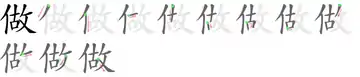
| Stroke order | |||
|---|---|---|---|
 | |||
Han character
做 (Kangxi radical 9, 人+9, 11 strokes, cangjie input 人十口大 (OJRK), four-corner 28240, composition ⿰亻故)
Derived characters
- 𠼏
References
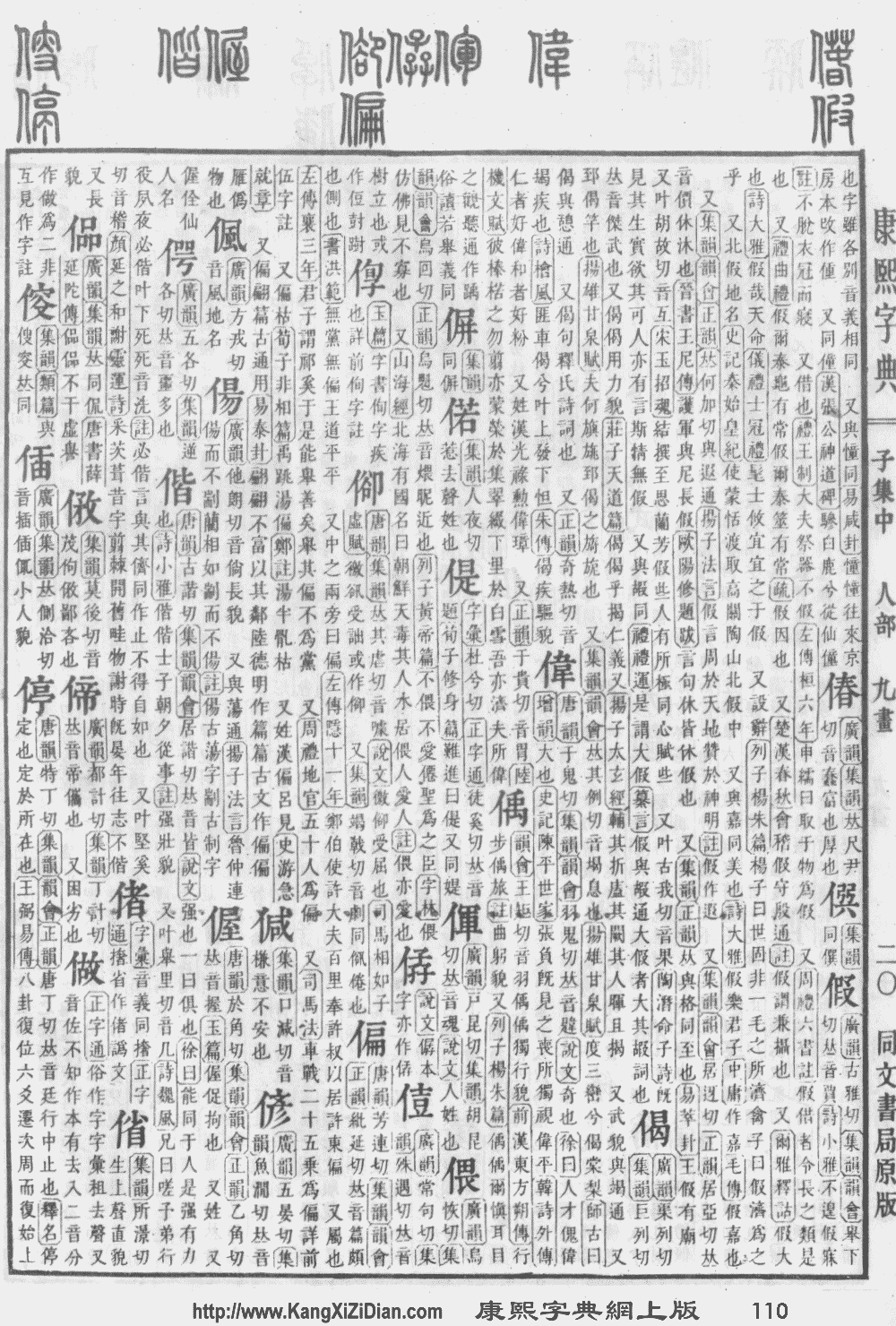
- Kangxi Dictionary: page 110, character 29
- Dai Kanwa Jiten: character 861
- Dae Jaweon: page 236, character 13
- Hanyu Da Zidian (first edition): volume 1, page 186, character 18
- Unihan data for U+505A
Chinese
| simp. and trad. |
做 | |
|---|---|---|
Etymology
Colloquial form of the departing-tone variant of 作 (MC tsaH, “to do”), to differentiate from the checked-tone variant (now represented by 作). Loss of checked codas in Mandarin has resulted in homophony of the two.
Pronunciation
Definitions
做
Synonyms
- (to do):
Compounds
- 不做聲/不做声
- 不做肉
- 伏低做小
- 作做
- 便做
- 便做到
- 便做道
- 倣做/仿做
- 做一路
- 做七 (zuòqī)
- 做下
- 做下來/做下来
- 做三日
- 做不是
- 做主 (zuòzhǔ)
- 做事 (zuòshì)
- 做人 (zuòrén)
- 做人家
- 做人情 (zuò rénqíng)
- 做人處事/做人处事
- 做伙 (chò-hóe)
- 做作 (zuòzuo)
- 做伴 (zuòbàn)
- 做保
- 做倒包
- 做光
- 做公的
- 做出事來/做出事来
- 做出場/做出场
- 做分上
- 做功果
- 做功課/做功课 (zuò gōngkè)
- 做嘴臉/做嘴脸
- 做圈套
- 做壽/做寿 (zuòshòu)
- 做夢/做梦 (zuòmèng)
- 做大
- 做大頭/做大头
- 做好事
- 做好做惡/做好做恶
- 做好做歉
- 做好做歹
- 做好看
- 做媒 (zuòméi)
- 做孝
- 做學問/做学问 (zuò xuéwèn)
- 做官 (zuòguān)
- 做客 (zuòkè)
- 做小
- 做小伏低
- 做尾巴
- 做屏風/做屏风
- 做工 (zuògōng)
- 做工夫
- 做幌子
- 做廣告/做广告
- 做引線/做引线
- 做張做勢/做张做势
- 做張做智/做张做智
- 做張做致/做张做致
- 做後門/做后门
- 做得 (zuòde)
- 做得了
- 做愛/做爱 (zuò'ài)
- 做我不著
- 做戲/做戏 (zuòxì)
- 假戲真做/假戏真做
- 做手
- 做手腳/做手脚 (zuò shǒujiǎo)
- 做掉 (zuòdiào)
- 做排場/做排场
- 做操
- 做文章 (zuò wénzhāng)
- 做春夢/做春梦
- 做朝
- 做東/做东 (zuòdōng)
- 做東道/做东道
- 做格
- 做案
- 做樁/做桩
- 做歉做好
- 做死
- 做法 (zuòfǎ)
- 做法子
- 做派 (zuòpài)
- 做活
- 做滿月/做满月
- 做牌
- 做牛做馬/做牛做马 (zuòniúzuòmǎ)
- 做牽頭/做牵头
- 做甚
- 做生
- 做生意 (zuò shēngyi)
- 做生日 (zuòshēngrì)
- 做生活
- 做百日
- 做的個/做的个
- 做眉眼
- 做眼
- 做眼色 (zuò yǎnsè)
- 做神做鬼
- 做禮拜/做礼拜
- 做秀 (zuòxiù)
- 做空頭/做空头
- 做節/做节
- 做籠子/做笼子 (zuòlóngzǐ)
- 做線/做线
- 做翻
- 做聲/做声 (zuòshēng)
- 做胚
- 做腔
- 做腔作勢/做腔作势
- 做腳/做脚
- 做臉/做脸
- 做臉兒/做脸儿
- 做莊/做庄 (zuòzhuāng)
- 做菜 (zuòcài)
- 做處/做处
- 做親/做亲
- 做買賣/做买卖 (zuò mǎimài)
- 做賊心虛/做贼心虚 (zuòzéixīnxū)
- 做道場/做道场 (zuòdàochǎng)
- 做道理
- 做道路
- 做針線/做针线
- 做門戶/做门户
- 做陣/做阵 (chò-tīn)
- 做面子
- 做面皮
- 做頭/做头
- 做飯/做饭 (zuòfàn)
- 做鬼 (zuòguǐ)
- 做鬼臉/做鬼脸 (zuò guǐliǎn)
- 光說不做/光说不做 (guāngshuōbùzuò)
- 兩頭做大/两头做大
- 叫做 (jiàozuò)
- 啞子做夢/哑子做梦
- 喬做胡為/乔做胡为
- 大做文章 (dàzuòwénzhāng)
- 好人難做/好人难做
- 好吃懶做/好吃懒做 (hàochīlǎnzuò)
- 小題大做/小题大做 (xiǎotídàzuò)
- 巴家做活
- 幹家做活/干家做活
- 愛親做親/爱亲做亲
- 把做
- 捉班做勢/捉班做势
- 推聾做啞/推聋做哑
- 敢做敢當/敢做敢当 (gǎnzuògǎndāng)
- 更做
- 更做到
- 更做道
- 服低做小
- 歹做出
- 毫不做作
- 沒做擺佈/没做摆布
- 沒做道理/没做道理
- 潑做/泼做
- 生做 (seⁿ-chò)
- 當做/当做 (dàngzuò)
- 白做
- 看事做事
- 緊差緊做/紧差紧做
- 胡做喬為/胡做乔为
- 蠻做/蛮做
- 訂做/订做 (dìngzuò)
- 說做就做/说做就做
- 說到做到/说到做到 (shuōdàozuòdào)
- 貪吃懶做/贪吃懒做
- 身做身當/身做身当
- 重新做人 (chóngxīnzuòrén)
- 麻做一團/麻做一团
Further reading
- “Entry #6937”, in 臺灣閩南語常用詞辭典 [Dictionary of Frequently-Used Taiwan Minnan] (overall work in Mandarin and Hokkien), Ministry of Education, R.O.C., 2023.
Japanese
Korean
Vietnamese
This article is issued from Wiktionary. The text is licensed under Creative Commons - Attribution - Sharealike. Additional terms may apply for the media files.