喉
| ||||||||
Translingual
Han character
喉 (Kangxi radical 30, 口+9, 12 strokes, cangjie input 口人弓大 (RONK), four-corner 67034, composition ⿰口侯)
Derived characters
- 𪅺
References
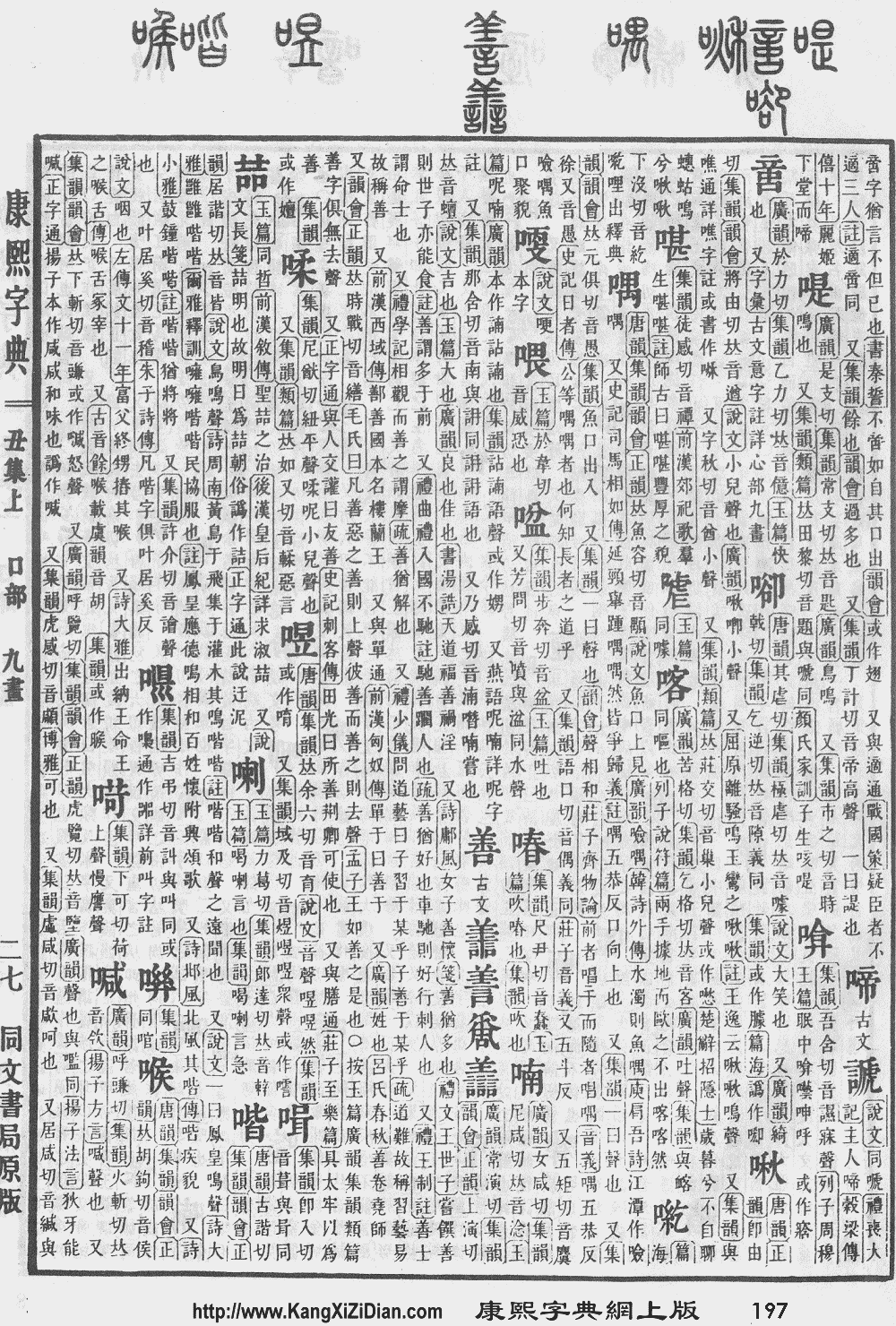
- Kangxi Dictionary: page 197, character 31
- Dai Kanwa Jiten: character 3913
- Dae Jaweon: page 419, character 8
- Hanyu Da Zidian (first edition): volume 1, page 657, character 4
- Unihan data for U+5589
Chinese
| trad. | 喉 | |
|---|---|---|
| simp. # | 喉 | |
| alternative forms | 㗋 𦞈 𦞕 | |
Glyph origin
Phono-semantic compound (形聲/形声, OC *ɡoː) : semantic 口 (“mouth”) + phonetic 侯 (OC *ɡoː).
Etymology
From Proto-Sino-Tibetan *ku (“neck; throat”) (STEDT); compare Chepang गुक् (“throat”) (Schuessler, 2007). Also compare Proto-Mon-Khmer *kɔʔ (“neck”), whence Mon ကံ (kaʹ, “neck”), Khmer ក (kɑɑ, “neck”), Vietnamese cổ (“neck”) (Schuessler, 2007).
Pronunciation
Definitions
喉
Synonyms
See also
- 咽 (yān, “pharynx”)
Compounds
- 割喉 (gēhóu)
- 咽喉 (yānhóu)
- 咽喉要路
- 喉吻
- 喉咽 (hóuyān)
- 喉嚨/喉咙 (hóulóng, “throat”)
- 喉塞音
- 喉急
- 喉擦音
- 喉炎 (hóuyán)
- 喉片
- 喉痧
- 喉癌 (hóu'ái)
- 喉科 (hóukē)
- 喉管 (hóuguǎn)
- 喉結/喉结 (hóujié)
- 喉舌 (hóushé)
- 喉衿
- 喉鏡/喉镜 (hóujìng)
- 喉長氣短/喉长气短
- 喉音 (hóuyīn)
- 喉頭/喉头 (hóutóu)
- 喉風/喉风
- 囀喉/啭喉
- 大喉嚨/大喉咙 (dàhóulóng)
- 如鯁在喉/如鲠在喉
- 弔喉/吊喉
- 扼喉撫背/扼喉抚背 (èhóufǔbèi)
- 拊背扼喉
- 摩喉羅/摩喉罗
- 撫背扼喉/抚背扼喉
- 歌喉 (gēhóu)
- 潤喉/润喉 (rùnhóu)
- 為民喉舌/为民喉舌
- 煙生喉舌/烟生喉舌
- 猴急 (hóují)
- 珠喉
- 發喉急/发喉急
- 白喉 (báihóu)
- 白喉疫苗
- 結喉/结喉 (jiéhóu)
- 耳鼻喉科 (ěrbíhóukē)
- 衿喉
- 襟喉
- 見血封喉/见血封喉
- 調喉/调喉
- 調喉嗓/调喉嗓
- 鎖喉/锁喉 (suǒhóu)
- 骨鯁在喉/骨鲠在喉 (gǔgěngzàihóu)
Descendants
References
- “喉”, in 漢語多功能字庫 (Multi-function Chinese Character Database), 香港中文大學 (the Chinese University of Hong Kong), 2014–
Japanese
Etymology 1
| Kanji in this term |
|---|
| 喉 |
| のど Grade: S |
| kun’yomi |
| Alternative spelling |
|---|
| 咽 |
/nomito/ > /nomto/ > /nomdo/ > /nondo/ > /nodo/.
Noun
喉 • (nodo)
Synonyms
- 咽喉 (inkō)
Pronunciation
- IPA(key): [ko̞ː]
Etymology 3
| Kanji in this term |
|---|
| 喉 |
| Grade: S |
| irregular |
| Alternative spelling |
|---|
| 咽 |
/nomito/ > /nomto/ > /nomdo/ > /nondo/.
Pronunciation
- IPA(key): [nõ̞ndo̞]
Pronunciation
- IPA(key): [no̞mʲido̞]
Noun
喉 • (nomido)
- throat
- 794, Shin'yaku Kegonkyō Ongi Shiki, page 57:
- 喉吻 下无粉反 口邊也 唇兩邊也 上音呉 訓乃美土
- (please add an English translation of this quotation)
Etymology 5
| Kanji in this term |
|---|
| 喉 |
| Grade: S |
| irregular |
| Alternative spelling |
|---|
| 咽 |
Compound of 飲み (nomi, “drink”) + 門 (to, “passage”). Nomi is the nominalized form of the verb 飲む (nomu, “to drink”).
Pronunciation
- IPA(key): [no̞mʲito̞]
Noun
喉 • (nomito)
- throat
- 794, Shin'yaku Kegonkyō Ongi Shiki, page 81:
- 咽咀 上於見反 咽倭云能美等 咀嚼也 咀才與反 倭言久不
- (please add an English translation of this quotation)
References
- Matsumura, Akira, editor (2006), 大辞林 [Daijirin] (in Japanese), Third edition, Tōkyō: Sanseidō, →ISBN
- NHK Broadcasting Culture Research Institute, editor (1998), NHK日本語発音アクセント辞典 [NHK Japanese Pronunciation Accent Dictionary] (in Japanese), Tōkyō: NHK Publishing, →ISBN
- Unknown (794) Yoshinori Kobayashi, editor, Shin'yaku Kegonkyō Ongi Shiki (Kojisho Ongi Shūsei) (in Japanese), volume 1, Kyūko Shoin, published 1978, →ISBN.
- Takeuchi, Rizō (1962) Nara Ibun: Volume 3 (in Japanese), Tōkyō: Tōkyōdō Shuppan, →ISBN.
Korean
Etymology
From Middle Chinese 喉 (MC huw).
Recorded as Middle Korean ᅘᅮᇢ (Yale: hhwuw) in Dongguk Jeongun (東國正韻 / 동국정운), 1448.
Recorded as Middle Korean 후 (hwu) (Yale: hwu) in Hunmong Jahoe (訓蒙字會 / 훈몽자회), 1527.
Compounds
Okinawan
Pronunciation
- IPA(key): [nuːdiː]
Derived terms
- 喉弦 (nūdījiru, “vocal cords”)
References
- “ぬーでぃー【喉】” in JLect - Japonic Languages and Dialects Database Dictionary, 2019.