候
| ||||||||
Translingual
| Stroke order | |||
|---|---|---|---|
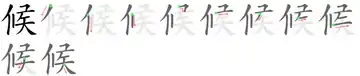 | |||
Han character
候 (Kangxi radical 9, 人+8, 10 strokes, cangjie input 人中弓大 (OLNK), four-corner 27234, composition ⿰⿰亻丨⿱⿱𠃍一矢 or ⿰⿰亻丨⿱⿱乛一矢)
Derived characters
- 𤠣, 𥱌, 𦃺, 𩌖, 𩺟, 𬑟, 𬫺
References
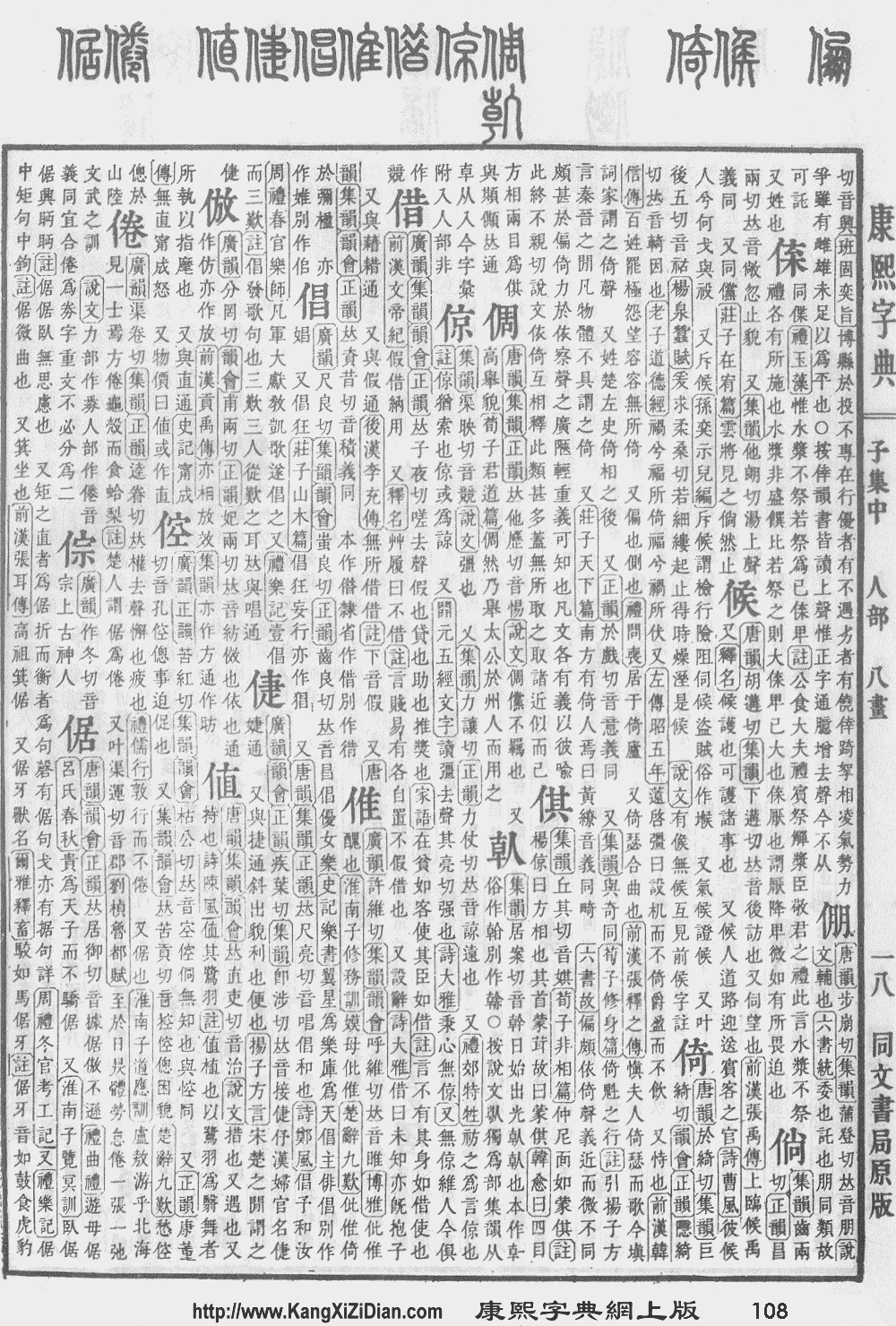
- Kangxi Dictionary: page 108, character 4
- Dai Kanwa Jiten: character 775
- Dae Jaweon: page 229, character 15
- Hanyu Da Zidian (first edition): volume 1, page 178, character 5
- Unihan data for U+5019
Chinese
| trad. | 候 | |
|---|---|---|
| simp. # | 候 | |
| 2nd round simp. | 𫶬 | |
| alternative forms | 𠋫 𠊱 | |
Glyph origin
Phono-semantic compound (形聲/形声, OC *ɡoːs) : semantic 亻 + phonetic 矦 (OC *ɡoː), as 𠊱. The 矦 component (here in modified form where the first 丿 stroke is omitted and the second 丿 stroke is written as a 丨 stroke) is an ancient form of 侯 (hóu).
Pronunciation
Definitions
候
- to reconnoitre; to scout
- to observe; to survey
- to wait for; to await
- to respectfully await
- to visit; to send one's respects to
- to wait on; to attend to; to take care of
- to forecast; to predict (by divination)
- (historical) scout; lookout; vanguard
- (historical) Alternative form of 堠 (hòu, “fortress”)
- (historical) official
- (historical) posthouse; station
- (historical) pentad (ancient time unit composed of five days)
- climate; season
- omen; sign; portent
- (traditional Chinese medicine) to examine (pulse)
- (traditional Chinese medicine) medical sign and symptom
- (dialectal) to pay for (a bill)
Compounds
- 三部九候
- 不候
- 久候
- 乾燥氣候/干燥气候
- 佇候 (zhùhòu)
- 伺候
- 侍候 (shìhòu)
- 俟候
- 候人
- 候光
- 候問/候问
- 候場/候场
- 候審/候审 (hòushěn)
- 候教
- 候旨
- 候機室/候机室 (hòujīshì)
- 候溫/候温
- 候用
- 候缺
- 候脈/候脉 (hòumài)
- 候蟲/候虫
- 候補/候补 (hòubǔ)
- 候診/候诊 (hòuzhěn)
- 候診室/候诊室 (hòuzhěnshì)
- 候賬/候账
- 候車/候车 (hòuchē)
- 候車室/候车室 (hòuchēshì)
- 候選/候选 (hòuxuǎn)
- 候選人/候选人 (hòuxuǎnrén)
- 候館/候馆
- 候鳥/候鸟 (hòuniǎo)
- 候鴈
- 兆候 (zhàohòu)
- 全天候 (quántiānhòu)
- 占候
- 問候/问候 (wènhòu)
- 回候
- 堂候官
- 夏候鳥/夏候鸟
- 大氣候/大气候 (dàqìhòu)
- 天候 (tiānhòu)
- 失候
- 存候
- 季候 (jìhòu)
- 季風氣候/季风气候
- 守候 (shǒuhòu)
- 官員祇候/官员祇候
- 寒帶氣候/寒带气候
- 小時候/小时候
- 少候
- 徵候/征候 (zhēnghòu)
- 恭候 (gōnghòu)
- 成氣候/成气候 (chéngqìhou)
- 承顏候色/承颜候色
- 拜候
- 拱候
- 探候
- 摸氣候/摸气候
- 斥候 (chìhòu)
- 斬監候/斩监候
- 時候/时候
- 有時候/有时候
- 望候
- 極地氣候/极地气候
- 氣候/气候 (qìhòu)
- 氣候學/气候学 (qìhòuxué)
- 氣候順化/气候顺化
- 沙漠氣候/沙漠气候
- 海洋氣候/海洋气候
- 測候/测候 (cèhòu)
- 火候 (huǒhòu)
- 烽候
- 物候
- 症候 (zhènghòu)
- 病候 (bìnghòu)
- 症候群 (zhènghòuqún)
- 癥候/症候
- 祗候
- 祗候人
- 稍候 (shāohòu)
- 立候
- 等候 (děnghòu)
- 節候/节候
- 聽候/听候 (tīnghòu)
- 聽候官身/听候官身
- 聽候發落/听候发落
- 臺候/台候
- 苔原氣候/苔原气候
- 草原氣候/草原气候
- 虞候
- 覘候/觇候
- 診候/诊候
- 證候/证候
- 警候
- 迎候 (yínghòu)
- 這時候/这时候
- 過時不候/过时不候
- 靜候/静候 (jìnghòu)
- 順候/顺候
- 風候/风候
- 風雲氣候/风云气候
- 高地氣候/高地气候
- 鵠候/鹄候
- 麥候/麦候
- 黃梅時候/黄梅时候
References
- “候”, in 漢語多功能字庫 (Multi-function Chinese Character Database), 香港中文大學 (the Chinese University of Hong Kong), 2014–
Japanese
Readings
Compounds
Etymology 1
| Kanji in this term |
|---|
| 候 |
| こう Grade: 4 |
| on’yomi |
From Middle Chinese 候 (MC huwH). The kan'on pronunciation, so likely a later borrowing.
Derived terms
Compounds
Etymology 2
| Kanji in this term |
|---|
| 候 |
| うかみ Grade: 4 |
| kun’yomi |
(This etymology is missing or incomplete. Please add to it, or discuss it at the Etymology scriptorium. Particularly: “Daijirin-only entry, probable RFD”)
Etymology 3
| Kanji in this term |
|---|
| 候 |
| そうろう Grade: 4 |
| kun’yomi |
/saburaɸu/ → /sauraɸu/ → /soːroː/
A sound shift from 侍う (saburau, “to serve by one's side”), historical さぶらふ. (Can this(+) etymology be sourced?)
Alternative forms
- 候ふ (archaic)
Pronunciation
- IPA(key): [so̞ːɾo̞ː]
Derived terms
Compounds
- 居候 (isōrō, “freeloader, sponger”)
- 候文 (sōrōbun, “epistolary style”)
Pronunciation
- IPA(key): [so̞ɾo̞]
Verb
候 • (soro)
(alternative reading hiragana す, rōmaji su)
(alternative reading hiragana そう, rōmaji sou, historical hiragana さう)
- (archaic) to be; auxiliary used in place of -ある after で or に when forming a copula
- 1863 August 11, Nakaoka Shintarō, 中岡慎太郎全集, 日付望月清平、小畑孫二郎、河野万寿弥宛:
- 止め候は如何、実に可慨之至に候事。
- Tome soro wa ikan, jitsu ni nagekubeki no itari ni soro koto.
- How can he be stopped? It is a truly lamentable result.
- 止め候は如何、実に可慨之至に候事。
- (archaic) to do; auxiliary used in place of -ます after the 連用形 (ren'yōkei, “continuative or stem form”) of a verb
- 1939, Takamori Saigō, 遺牘:
- 誠に可笑事に御座候。
- Makoto ni waraubeki koto ni gozaisoro.
- It is verily a laughable thing.
- 誠に可笑事に御座候。
Etymology 5
| Kanji in this term |
|---|
| 候 |
| ぞうろ Grade: 4 |
| kun’yomi |
/zauro/ → /zoːro/
Stem of rendaku form 候う (zōrou), used in compounds. (Can this(+) etymology be sourced?)
Pronunciation
- IPA(key): [d͡zo̞ːɾo̞]
References
- Matsumura, Akira, editor (2006), 大辞林 [Daijirin] (in Japanese), Third edition, Tōkyō: Sanseidō, →ISBN
Korean
Etymology
From Middle Chinese 候 (MC huwH).
| Historical readings |
|---|
|
Pronunciation
- (SK Standard/Seoul) IPA(key): [ɸʷu]
- Phonetic hangul: [후]