困
See also: 睏
| ||||||||
Translingual
| Stroke order | |||
|---|---|---|---|
 | |||
Han character
困 (Kangxi radical 31, 囗+4, 7 strokes, cangjie input 田木 (WD) or 難田木 (XWD), four-corner 60904, composition ⿴囗木)
References
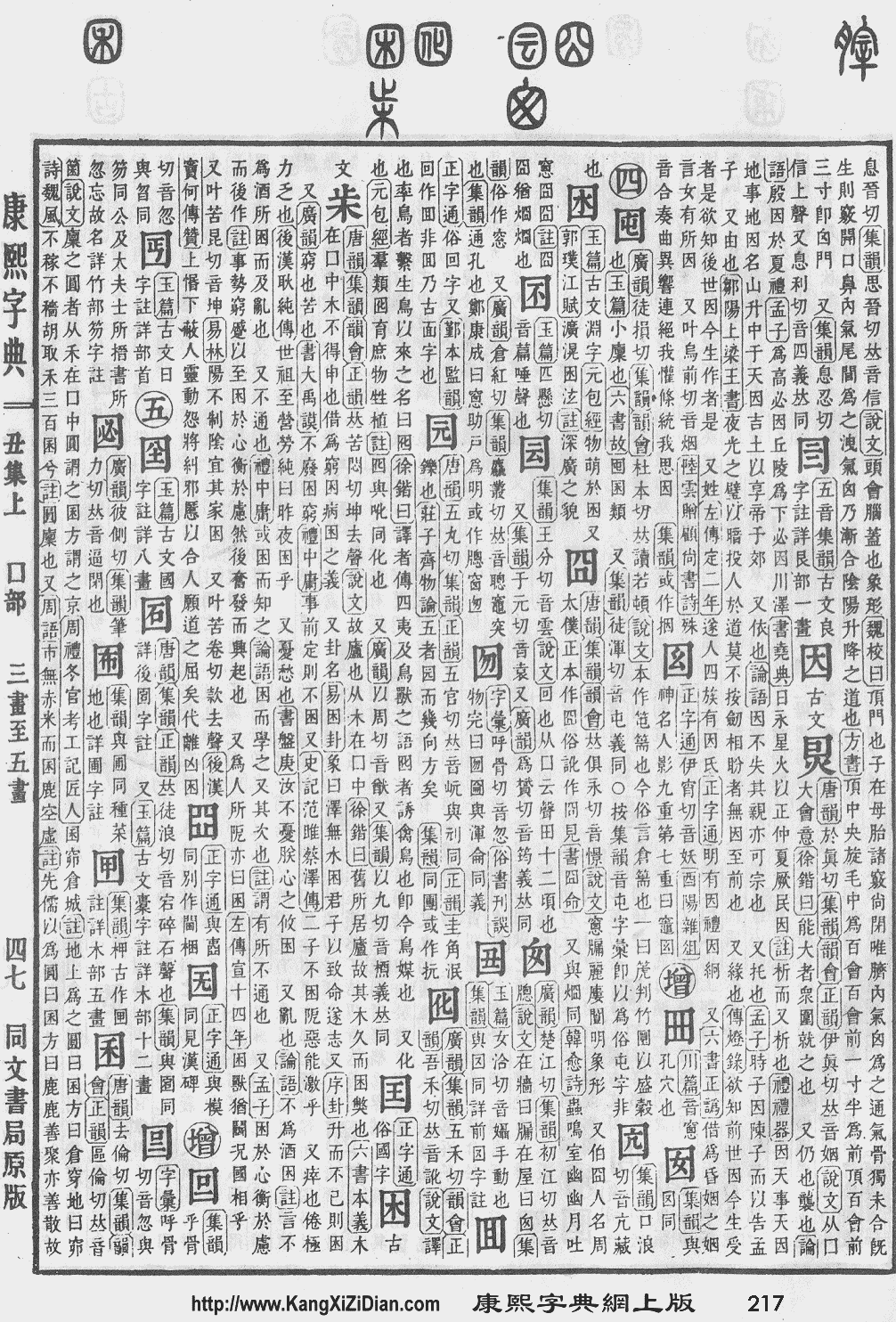
- Kangxi Dictionary: page 217, character 20
- Dai Kanwa Jiten: character 4717
- Dae Jaweon: page 445, character 3
- Hanyu Da Zidian (first edition): volume 1, page 714, character 7
- Unihan data for U+56F0
Chinese
Glyph origin
| Historical forms of the character 困 | ||
|---|---|---|
| Shang | Shuowen Jiezi (compiled in Han) | Liushutong (compiled in Ming) |
| Oracle bone script | Small seal script | Transcribed ancient scripts |
 |
 |
 |
Characters in the same phonetic series (困) (Zhengzhang, 2003)
Ideogrammic compound (會意/会意) : 囗 (“surround”) + 木 (“wood”). Probably the original form of 梱 (OC *ŋɡuːn, *kʰuːnʔ, “doorsill”) and 閫 (OC *kʰuːnʔ, “doorsill”).
Pronunciation
Definitions
困
Synonyms
Dialectal synonyms of 餓 (“hungry”) [map]
Compounds
- 上下交困
- 乏困 (fákùn)
- 交困 (jiāokùn)
- 人困馬乏/人困马乏 (rénkùn-mǎfá)
- 偃蹇困窮/偃蹇困穷
- 內外交困/内外交困 (nèiwàijiāokùn)
- 兵疲馬困/兵疲马困
- 力困筋乏
- 勞困/劳困
- 受困 (shòukùn)
- 困乏 (kùnfá)
- 困人
- 困住 (kùnzhù)
- 困倦 (kùnjuàn)
- 困厄 (kùn'è)
- 困境 (kùnjìng)
- 困學/困学
- 困守
- 困局 (kùnjú)
- 困心衡慮/困心衡虑
- 困惑 (kùnhuò)
- 困憊/困惫
- 困擾/困扰 (kùnrǎo)
- 困歇
- 困滯/困滞
- 困獸/困兽 (kùnshòu)
- 困獸之鬥/困兽之斗
- 困獸猶鬥/困兽犹斗
- 困畏
- 困知勉行
- 困窘 (kùnjiǒng)
- 困窮/困穷 (kùnqióng)
- 困苦 (kùnkǔ)
- 困處/困处 (kùnchǔ)
- 困處泥塗/困处泥涂
- 困覺/困觉 (kùnjiào)
- 困話/困话
- 困蹙
- 困躓/困踬
- 困阨
- 困阻
- 困隘
- 困難/困难
- 困頓/困顿 (kùndùn)
- 困騰騰/困腾腾
- 困鬥/困斗
- 國困民艱/国困民艰
- 國窮民困/国穷民困
- 圍困/围困 (wéikùn)
- 坐困 (zuòkùn)
- 坐困愁城
- 孱困
- 形疲神困
- 急人之困
- 扶危救困
- 扶危濟困/扶危济困
- 救困扶危 (jiù kùn fúwēi)
- 昏困
- 春困
- 春困秋乏
- 潛蛟困鳳/潜蛟困凤
- 濟困扶危/济困扶危
- 疲困 (píkùn)
- 皮困秋
- 禽困覆車/禽困覆车
- 窘困 (jiǒngkùn)
- 窮困/穷困 (qióngkùn)
- 紓困/纾困 (shūkùn)
- 肚困
- 脫困/脱困 (tuōkùn)
- 艱困/艰困
- 解困 (jiěkùn)
- 貧困/贫困 (pínkùn)
- 軟困/软困
- 酒困
- 顛連困苦/颠连困苦
- 飢困/饥困
- 龍困淺灘/龙困浅滩
Etymology 2
| For pronunciation and definitions of 困 – see 睏 (“sleepy; tired; to sleep”). (This character is the simplified and variant form of 睏). |
Notes:
|
References
- “困”, in 漢語多功能字庫 (Multi-function Chinese Character Database), 香港中文大學 (the Chinese University of Hong Kong), 2014–
Japanese
Korean
Etymology
(This etymology is missing or incomplete. Please add to it, or discuss it at the Etymology scriptorium. Particularly: “Middle Korean readings, if any”)
Pronunciation
- (SK Standard/Seoul) IPA(key): [ko̞n]
- Phonetic hangul: [곤]
Vietnamese
This article is issued from Wiktionary. The text is licensed under Creative Commons - Attribution - Sharealike. Additional terms may apply for the media files.