空
| ||||||||
Translingual
| Stroke order | |||
|---|---|---|---|
 | |||
Han character
空 (Kangxi radical 116, 穴+3, 8 strokes, cangjie input 十金一 (JCM), four-corner 30101, composition ⿱穴工)
Derived characters
References
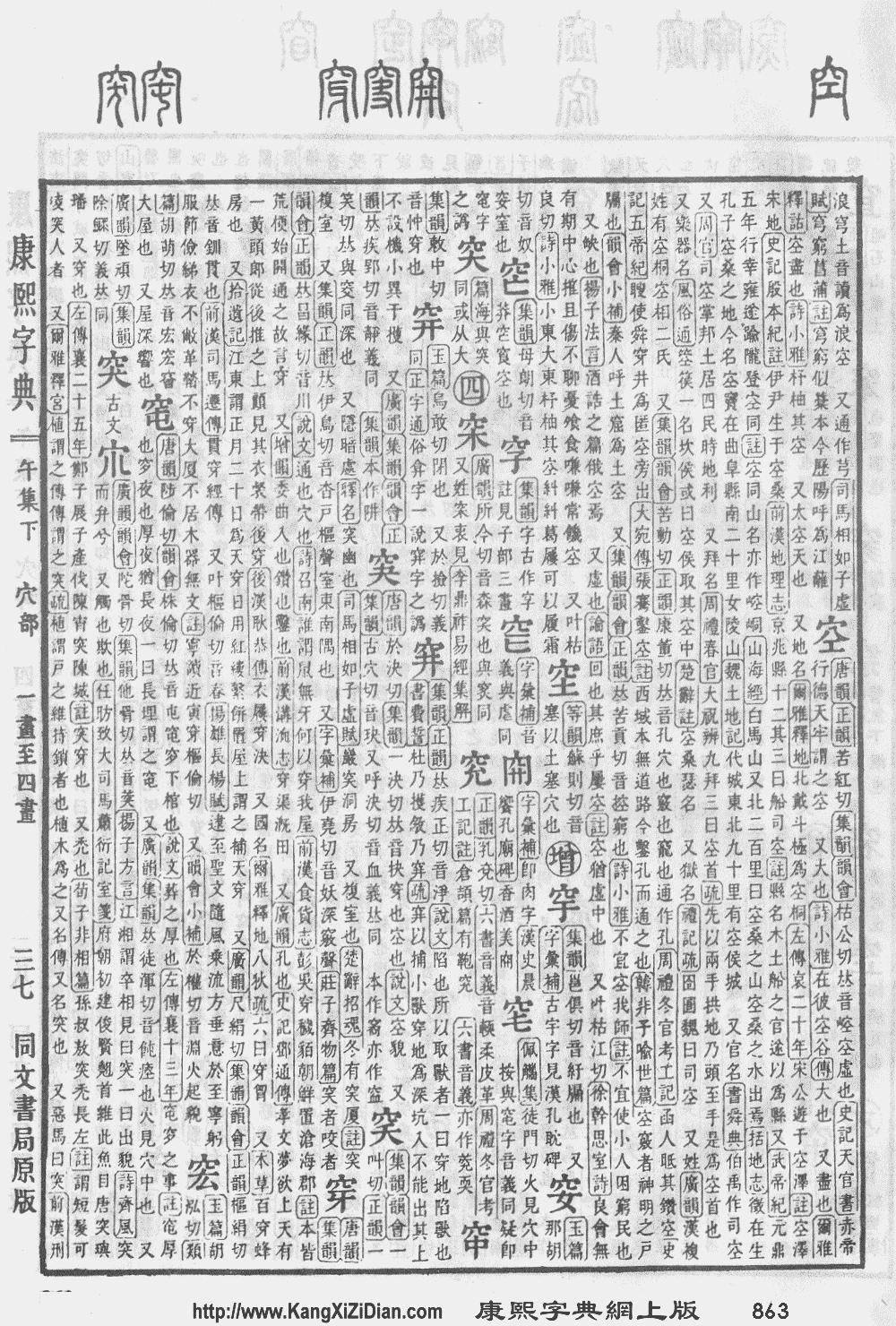
- Kangxi Dictionary: page 863, character 1
- Dai Kanwa Jiten: character 25415
- Dae Jaweon: page 1289, character 8
- Hanyu Da Zidian (first edition): volume 4, page 2719, character 8
- Unihan data for U+7A7A
Chinese
| trad. | 空 | |
|---|---|---|
| simp. # | 空 | |
| alternative forms | 𠀝 𫞹 𰁕 𢦉 | |
Glyph origin
| Historical forms of the character 空 |
|---|
| Shuowen Jiezi (compiled in Han) |
| Small seal script |
 |
| Old Chinese | |
|---|---|
| 缸 | *kroːŋ, *ɡroːŋ |
| 篢 | *kluːmʔ, *koːŋ |
| 贑 | *kluːmʔ |
| 涳 | *ŋr'oːŋ, *kʰroːŋ, *kʰoːŋ |
| 江 | *kroːŋ |
| 肛 | *kroːŋ, *qʰroːŋ |
| 扛 | *kroːŋ |
| 杠 | *kroːŋ |
| 豇 | *kroːŋ |
| 茳 | *kroːŋ |
| 釭 | *kroːŋ, *koːŋ, *kuːŋ |
| 矼 | *kroːŋ |
| 玒 | *kroːŋ, *koːŋ |
| 虹 | *kroːŋs, *koːŋs, *ɡoːŋ |
| 腔 | *kʰroːŋ |
| 崆 | *kʰroːŋ, *kʰoːŋ |
| 羫 | *kʰroːŋ |
| 控 | *kʰroːŋ, *kʰoːŋs |
| 椌 | *kʰroːŋ, *kʰoːŋ |
| 悾 | *kʰroːŋ, *kʰoːŋ, *kʰoːŋs |
| 跫 | *kʰroːŋ, *kʰoŋ, *ɡoŋ |
| 啌 | *qʰroːŋ |
| 谾 | *qʰroːŋ, *qʰoːŋ |
| 舡 | *qʰroːŋ |
| 缻 | *ɡroːŋ |
| 項 | *ɡroːŋʔ |
| 屸 | *ɡ·roːŋ |
| 功 | *koːŋ |
| 工 | *koːŋ |
| 疘 | *koːŋ |
| 魟 | *koːŋ, *qʰoːŋ, *ɡoːŋ |
| 攻 | *koːŋ, *kuːŋ |
| 愩 | *koːŋ |
| 碽 | *koːŋ |
| 貢 | *koːŋs |
| 羾 | *koːŋs |
| 空 | *kʰoːŋ, *kʰoːŋs |
| 箜 | *kʰoːŋ |
| 硿 | *kʰoːŋ |
| 埪 | *kʰoːŋ |
| 鵼 | *kʰoːŋ |
| 倥 | *kʰoːŋ, *kʰoːŋʔ, *kʰoːŋs |
| 鞚 | *kʰoːŋs |
| 叿 | *qʰoːŋ |
| 嗊 | *qʰoːŋʔ |
| 訌 | *ɡoːŋ |
| 紅 | *ɡoːŋ |
| 仜 | *ɡoːŋ |
| 葒 | *ɡoːŋ |
| 渱 | *ɡoːŋ |
| 鴻 | *ɡoːŋ, *ɡoːŋʔ |
| 汞 | *ɡoːŋʔ |
| 澒 | *ɡoːŋʔ |
| 鞏 | *koŋʔ |
| 巩 | *koŋʔ |
| 銎 | *kʰoŋ, *qʰoŋ |
| 恐 | *kʰoŋʔ, *kʰoŋs |
| 蛩 | *ɡoŋ |
| 筇 | *ɡoŋ |
| 桏 | *ɡoŋ |
| 邛 | *ɡoŋ |
Phono-semantic compound (形聲/形声, OC *kʰoːŋ, *kʰoːŋs) : semantic 穴 (“cave, hole”) + phonetic 工 (OC *koːŋ).
Etymology
From Proto-Sino-Tibetan *(g/k)uŋ (“hole; orifice; inner part”). 孔 (OC *kʰloːŋʔ, “hole”) is probably the endoactive derivation of 空 (OC *kʰoːŋ, “hollow; empty”) (Schuessler, 2007). Cognate with Tibetan ཁུང (khung, “hole”), Jingpho ladi hku (“nostril”), Chepang घाङ् (gʰaŋ, “hole”), Burmese ခေါင်း (hkaung:, “cavity”), Naxi ko³³ (“cave; hole; pit”) (STEDT).
Pronunciation 1
Definitions
空
- empty; hollow; void
- exhausted; emptied
- open; spacious; vast
- quiet and still; secluded
- lacking substance; fictitious; fabricated
- (Eastern Min) hungry
- air; sky; atmosphere
- space; outer space; cosmos; universe
- (Buddhism) sunyata; emptiness; void of the world of the senses
- (Taoism) emptiness and quiet
- in vain; for nothing
- only (left, remain, etc.)
- to exhaust
- to miss the target
- (Southern Min, Taiwanese Hakka) hole; cavity
Synonyms
- (empty):
| Variety | Location | Words |
|---|---|---|
| Formal (Written Standard Chinese) | 空 | |
| Mandarin | Beijing | 空 |
| Taiwan | 空 | |
| Jinan | 空 | |
| Xi'an | 空 | |
| Wuhan | 空 | |
| Chengdu | 空 | |
| Yangzhou | 空 | |
| Hefei | 空 | |
| Cantonese | Guangzhou | 空, 吉 |
| Hong Kong | 空, 吉 | |
| Taishan | 空 | |
| Yangjiang | 空 | |
| Gan | Nanchang | 空 |
| Hakka | Meixian | 空 |
| Jin | Taiyuan | 空 |
| Northern Min | Jian'ou | 空 |
| Eastern Min | Fuzhou | 空 |
| Southern Min | Xiamen | 空 |
| Quanzhou | 空 | |
| Zhangzhou | 空 | |
| Tainan | 空 | |
| Chaozhou | 空 | |
| Jieyang | 空 | |
| Wu | Suzhou | 空 |
| Wenzhou | 空 | |
| Xiang | Changsha | 空 |
| Shuangfeng | 空 | |
- (hungry):
- (hole):
| Variety | Location | Words |
|---|---|---|
| Classical Chinese | 孔, 洞, 穴 | |
| Formal (Written Standard Chinese) | 孔, 洞, 孔洞, 空洞, 空穴 | |
| Mandarin | Beijing | 窟窿 |
| Jinan | 窟窿 | |
| Luoyang | 窟窿 | |
| Wanrong | 窟窿 | |
| Xi'an | 窟窿子, 窟窿 | |
| Wuhan | 窟窿, 窟眼, 洞洞, 洞 | |
| Chengdu | 窟窿, 洞洞, 洞 | |
| Liuzhou | 窿 | |
| Yangzhou | 洞, 窟窿 | |
| Nanjing | 窟窿 | |
| Hefei | 窟窿, 洞 | |
| Singapore | 洞 | |
| Cantonese | Guangzhou | 窿, 咕窿 |
| Hong Kong | 窿, 咕窿 | |
| Taishan | 孔 | |
| Yangjiang | 窿 | |
| Kuala Lumpur (Guangfu) | 窿 | |
| Singapore (Guangfu) | 窿 | |
| Gan | Nanchang | 洞 |
| Hakka | Meixian | 窿仔, 窿空仔 |
| Miaoli (N. Sixian) | 空 | |
| Pingtung (Neipu; S. Sixian) | 空 | |
| Hsinchu County (Zhudong; Hailu) | 空 | |
| Taichung (Dongshi; Dabu) | 空 | |
| Hsinchu County (Qionglin; Raoping) | 空 | |
| Yunlin (Lunbei; Zhao'an) | 空 | |
| Jin | Taiyuan | 窟窿, 窟子 |
| Northern Min | Jian'ou | 川 |
| Eastern Min | Fuzhou | 空空 |
| Southern Min | Xiamen | 空, 空口 |
| Quanzhou | 空 | |
| Zhangzhou | 空口 | |
| Zhangzhou (Changtai) | 空 | |
| Taipei | 空 | |
| Penang (Hokkien) | 空 | |
| Singapore (Hokkien) | 空 | |
| Manila (Hokkien) | 空 | |
| Chaozhou | 空 | |
| Jieyang | 空, 洞 | |
| Haifeng | 空 | |
| Singapore (Teochew) | 空 | |
| Singapore (Hainanese) | 空 | |
| Southern Pinghua | Nanning (Tingzi) | 窿 |
| Wu | Suzhou | 洞 |
| Wenzhou | 洞, 窟, 窟窿 | |
| Jinhua | 窟窿 | |
| Xiang | Changsha | 洞, 洞子 |
| Shuangfeng | 眼貢, 洞 | |
Compounds
- 一場空/一场空
- 一掃而空/一扫而空 (yīsǎo'érkōng)
- 一紙空文/一纸空文 (yīzhǐkōngwén)
- 三度空間/三度空间
- 上空 (shàngkōng)
- 三維空間/三维空间
- 不空
- 不落空
- 中空 (zhōngkōng)
- 乘空
- 二空
- 低空 (dīkōng)
- 先缺後空/先缺后空
- 兩手空空/两手空空 (liǎngshǒukōngkōng)
- 公空
- 凌空 (língkōng)
- 利空
- 利空出盡/利空出尽
- 制空
- 制空權/制空权 (zhìkōngquán)
- 前出後空/前出后空
- 前空翻 (qiánkōngfān)
- 劈空
- 匏瓜空懸/匏瓜空悬
- 十室九空 (shíshìjiǔkōng)
- 十轉九空/十转九空
- 升空 (shēngkōng)
- 半空 (bànkōng)
- 半空中
- 半空裡/半空里
- 司空 (sīkōng)
- 司空伎倆/司空伎俩
- 司空見慣/司空见惯 (sīkōngjiànguàn)
- 吃空茶
- 唱空城計/唱空城计 (chàng kōngchéngjì)
- 囊空如洗
- 四大皆空
- 四度空間/四度空间
- 團空/团空
- 土空
- 坐吃山空
- 塌空
- 壓縮空氣/压缩空气 (yāsuō kōngqì)
- 外太空 (wàitàikōng)
- 多空交戰/多空交战
- 夜空 (yèkōng)
- 大司空
- 天空 (tiānkōng)
- 太空 (tàikōng)
- 太空人 (tàikōngrén)
- 太空傳播/太空传播
- 太空劇場/太空剧场
- 太空城
- 太空塵/太空尘
- 太空探險/太空探险
- 太空梭 (tàikōngsuō)
- 太空條約/太空条约
- 太空槍/太空枪
- 太空武器
- 太空漫步 (tàikōng mànbù)
- 太空病
- 太空科學/太空科学 (tàikōng kēxué)
- 太空站 (tàikōngzhàn)
- 太空總署/太空总署
- 太空船 (tàikōngchuán)
- 太空艙/太空舱
- 太空藝術/太空艺术
- 太空衣
- 太空被
- 太空裝/太空装
- 太空軌道/太空轨道
- 太空通訊/太空通讯
- 太空醫學/太空医学
- 太空食物
- 天馬行空/天马行空 (tiānmǎxíngkōng)
- 好空
- 妙手空空
- 季子囊空
- 孫悟空/孙悟空 (Sūn Wùkōng)
- 寶山空回/宝山空回 (bǎoshānkōnghuí)
- 對空射擊/对空射击
- 對空策/对空策
- 平空 (píngkōng)
- 幻夢成空/幻梦成空
- 座無空席/座无空席
- 弄空頭/弄空头
- 彈空說嘴/弹空说嘴
- 徒託空言/徒托空言
- 徒陳空文/徒陈空文
- 性空
- 憑空/凭空 (píngkōng)
- 憑空捏造/凭空捏造
- 憑空杜撰
- 懸空/悬空 (xuánkōng)
- 懷空/怀空
- 懸空電車/悬空电车
- 扎空槍
- 打空
- 扒街淘空
- 打高空 (dǎgāokōng)
- 扯空砑光
- 抖空竹 (dǒu kōngzhú)
- 拋空/抛空 (pāokōng)
- 拏空/拿空
- 挑空
- 挖空心思 (wākōngxīnsī)
- 指空話空/指空话空
- 掏空 (tāokōng)
- 排空而至
- 撲個空/扑个空
- 撲空/扑空 (pūkōng)
- 擺空架子/摆空架子
- 放空 (fàngkōng)
- 放空氣/放空气 (fàngkōngqì)
- 放空炮
- 旌旗蔽空
- 星空 (xīngkōng)
- 時空/时空 (shíkōng)
- 晴空 (qíngkōng)
- 晴空亂流/晴空乱流
- 晴空萬里 (qíngkōngwànlǐ)
- 書空/书空
- 書空咄咄/书空咄咄
- 杼軸其空/杼轴其空
- 架空 (jiàkōng)
- 架謊鑿空/架谎凿空
- 橫空/横空 (héngkōng)
- 殷浩書空
- 沖空機/冲空机
- 浮空
- 海闊天空/海阔天空 (hǎikuòtiānkōng)
- 淘空
- 漫空
- 澄空
- 濃蔭蔽空/浓荫蔽空
- 烈日當空/烈日当空 (lièrìdāngkōng)
- 烈焰騰空/烈焰腾空
- 獨守空房/独守空房
- 生存空間/生存空间 (shēngcún kōngjiān)
- 生活空間/生活空间
- 當空/当空 (dāngkōng)
- 白首空歸/白首空归
- 白駒空谷/白驹空谷
- 盛況空前/盛况空前
- 目空一切 (mùkōngyīqiè)
- 目空四海
- 真空 (zhēnkōng)
- 真空包裝/真空包装 (zhēnkōng bāozhuāng)
- 真空泵 (zhēnkōngbèng)
- 真空管 (zhēnkōngguǎn)
- 眼空四海
- 破空 (pòkōng)
- 硬語盤空/硬语盘空
- 碧空 (bìkōng)
- 磅空
- 礨空 (lěikǒng)
- 視覺空間/视觉空间 (shìjué kōngjiān)
- 萬人空巷/万人空巷 (wànrénkōngxiàng)
- 萬境歸空/万境归空
- 空中 (kōngzhōng)
- 空中交易
- 空中加油
- 空中堡壘/空中堡垒
- 空中大學/空中大学
- 空中夫妻
- 空中學校/空中学校
- 空中客車/空中客车 (Kōngzhōng Kèchē)
- 空中封鎖/空中封锁
- 空中小姐 (kōngzhōng xiǎojiě)
- 空中少爺/空中少爷 (kōngzhōng shàoyé)
- 空中巴士 (Kōngzhōng Bāshì)
- 空中教學/空中教学
- 空中樓閣/空中楼阁 (kōngzhōnglóugé)
- 空中禁區/空中禁区
- 空中纜車/空中缆车
- 空中花園/空中花园 (Kōngzhōng Huāyuán)
- 空中芭蕾
- 空中護航/空中护航
- 空中走廊
- 空中造雨
- 空中霸王
- 空中飛人/空中飞人 (kōngzhōngfēirén)
- 空中飛車/空中飞车 (kōngzhōng fēichē)
- 空亡
- 空侗
- 空優迷彩/空优迷彩
- 空兒/空儿 (kòngr)
- 空函
- 空前 (kōngqián)
- 空前未有 (kōngqiánwèiyǒu)
- 空前盛況/空前盛况
- 空前絕後/空前绝后 (kōngqiánjuéhòu)
- 空劫
- 空勞/空劳
- 空勞神思/空劳神思
- 空勤 (kōngqín)
- 空包彈/空包弹 (kōngbāodàn)
- 空匱/空匮
- 空即是色 (kōng jí shì sè)
- 空口 (kōngkǒu)
- 空口無憑/空口无凭 (kōngkǒuwúpíng)
- 空口說/空口说
- 空名
- 空吸
- 空喊
- 空喀
- 空城 (kōngchéng)
- 空城計/空城计 (kōngchéngjì)
- 空堂
- 空大
- 空大老脬
- 空姐 (kōngjiě)
- 空宗
- 空對空/空对空
- 空屋
- 空屋率
- 空山 (kōngshān)
- 空帖拜年
- 空幻 (kōnghuàn)
- 空廓 (kōngkuò)
- 空廬/空庐
- 空弦落雁
- 空弮
- 空心幣/空心币
- 空心架子
- 空心湯圓/空心汤圆
- 空心湯糰/空心汤团
- 空心磚/空心砖
- 空心菜 (kōngxīncài)
- 空心蘿蔔/空心萝卜
- 空想 (kōngxiǎng)
- 空懷/空怀
- 空戰/空战 (kōngzhàn)
- 空手 (kōngshǒu)
- 空手而回
- 空手道 (kōngshǒudào)
- 空投 (kōngtóu)
- 空撥/空拨
- 空明
- 空曠/空旷 (kōngkuàng)
- 空服員/空服员 (kōngfúyuán)
- 空林
- 空架子 (kōngjiàzi)
- 空桑
- 空桑子
- 空桐樹/空桐树
- 空橋/空桥
- 空歡喜/空欢喜 (kōng huānxǐ)
- 空氣/空气 (kōngqì)
- 空氣傳染/空气传染 (kōngqì chuánrǎn)
- 空氣機/空气机
- 空氣汙染/空气污染 (kōngqì wūrǎn)
- 空氣浴/空气浴
- 空氣調節/空气调节
- 空氣警報/空气警报
- 空氣軸承/空气轴承
- 空氣錘/空气锤
- 空氣鎗/空气枪
- 空氣閥/空气阀
- 空氣阻力/空气阻力
- 空水澄鮮/空水澄鲜
- 空泛 (kōngfàn)
- 空洞 (kōngdòng)
- 空濛/空蒙 (kōngméng)
- 空無一物/空无一物 (kōngwúyīwù)
- 空王
- 空疏 (kōngshū)
- 空疏無據/空疏无据
- 空盪盪/空荡荡 (kōngdàngdàng)
- 空相
- 空穴來風/空穴来风 (kōngxuéláifēng)
- 空空
- 空空兒/空空儿
- 空空如也 (kōngkōngrúyě)
- 空空洞洞
- 空空落落
- 空空蕩蕩/空空荡荡
- 空窗期 (kōngchuāngqī)
- 空竹 (kōngzhú)
- 空等
- 空群
- 空翻 (kōngfān)
- 空翻多
- 空腹 (kōngfù)
- 空腸/空肠 (kōngcháng)
- 空腹便便
- 空腦子/空脑子
- 空腹高心
- 空自
- 空興頭/空兴头
- 空花
- 空落落
- 空蕩/空荡 (kōngdàng)
- 空蕩蕩/空荡荡 (kōngdàngdàng)
- 空藏瓶
- 空虛/空虚 (kōngxū)
- 空號/空号 (kōnghào)
- 空蝕/空蚀
- 空襲/空袭 (kōngxí)
- 空襲警報/空袭警报
- 空言 (kōngyán)
- 空言無補/空言无补
- 空言虛語/空言虚语
- 空言虛辭/空言虚辞
- 空話/空话 (kōnghuà)
- 空說/空说
- 空語/空语
- 空調/空调 (kōngtiáo)
- 空論/空论 (kōnglùn)
- 空談/空谈 (kōngtán)
- 空調機/空调机
- 空調症/空调症
- 空調設備/空调设备
- 空谷
- 空谷傳聲/空谷传声
- 空谷傳響/空谷传响
- 空谷幽蘭/空谷幽兰
- 空谷足音
- 空費/空费 (kōngfèi)
- 空費時日/空费时日
- 空跑
- 空身 (kōngshēn)
- 空身人兒/空身人儿
- 空軍/空军 (kōngjūn)
- 空軍基地/空军基地 (kōngjūn jīdì)
- 空軍節/空军节
- 空轉/空转 (kōngzhuàn)
- 空造
- 空運/空运 (kōngyùn)
- 空鏡頭/空镜头
- 空鐘/空钟 (kōngzhōng)
- 空門/空门
- 空間/空间 (kōngjiān)
- 空間主義/空间主义 (kōngjiānzhǔyì)
- 空間分析/空间分析
- 空間圖形/空间图形
- 空間感/空间感
- 空間時代/空间时代
- 空間曲線/空间曲线
- 空間美/空间美
- 空間藝術/空间艺术
- 空閨/空闺
- 空闊/空阔 (kōngkuò)
- 空防 (kōngfáng)
- 空降 (kōngjiàng)
- 空降作戰/空降作战
- 空降兵 (kōngjiàngbīng)
- 空降部隊/空降部队
- 空際/空际 (kōngjì)
- 空集合 (kōngjíhé)
- 空難/空难 (kōngnàn)
- 空靈/空灵 (kōnglíng)
- 空青
- 空頭事/空头事
- 空頭冤家/空头冤家
- 空頭堡/空头堡
- 空頭情/空头情
- 空頭話/空头话
- 空頭謊/空头谎
- 空首
- 管制空域
- 籃外空心/篮外空心
- 精空
- 紙上空談/纸上空谈
- 網頁空間/网页空间
- 羅掘一空/罗掘一空
- 翻空
- 耳空
- 脫空/脱空
- 航空 (hángkōng)
- 航空信 (hángkōngxìn)
- 航空公司 (hángkōng gōngsī)
- 航空包裹
- 航空器 (hángkōngqì)
- 航空學校/航空学校
- 航空工程
- 航空攝影/航空摄影
- 航空母艦/航空母舰 (hángkōng mǔjiàn)
- 航空版
- 航空病
- 航空站 (hángkōngzhàn)
- 航空線/航空线
- 航空郵遞/航空邮递
- 航空醫學/航空医学
- 苦空
- 落空 (luòkōng)
- 蒼空/苍空 (cāngkōng)
- 蔽空
- 虛擬空間/虚拟空间 (xūnǐ kōngjiān)
- 虛空/虚空 (xūkōng)
- 蝨空捫/虱空扪
- 補空/补空
- 見慣司空/见惯司空
- 託之空言/托之空言
- 談空說有/谈空说有
- 賀喜撮空/贺喜撮空
- 買空倉/买空仓 (mǎikōngcāng)
- 買空賣空/买空卖空
- 賣空/卖空 (màikōng)
- 賣空買空/卖空买空
- 赤手空拳 (chìshǒukōngquán)
- 走空
- 跳空
- 迥空
- 遁入空門/遁入空门 (dùnrùkōngmén)
- 銀空山/银空山
- 銷售一空/销售一空
- 鏤空/镂空 (lòukōng)
- 鑿空/凿空 (záokōng)
- 鑿空指鹿/凿空指鹿
- 長空/长空 (chángkōng)
- 開放空間/开放空间
- 闖空門/闯空门
- 防空 (fángkōng)
- 防空壕 (fángkōngháo)
- 防空洞 (fángkōngdòng)
- 防空演習/防空演习
- 防空節/防空节
- 防空雷達/防空雷达
- 防空飛彈/防空飞弹
- 阿空卡瓜
- 陰空/阴空
- 隻手空拳/只手空拳
- 雕空
- 露空
- 霹空
- 非空
- 領空/领空 (lǐngkōng)
- 領空權/领空权
- 飽和空氣/饱和空气
- 騰空/腾空 (téngkōng)
- 騰空而起/腾空而起 (téngkōng'érqǐ)
- 高空 (gāokōng)
- 高空作業/高空作业 (gāokōng zuòyè)
- 高空彈跳/高空弹跳 (gāokōng tántiào)
- 高空病
- 高空跳傘/高空跳伞 (gāokōng tiàosǎn)
- 高空轟炸/高空轰炸
- 高空逆溫/高空逆温
- 鳳去樓空/凤去楼空
- 鳳去臺空/凤去台空
Pronunciation 2
Definitions
空
- to make empty; to impoverish
- to leave empty; to leave blank
- vacant; unoccupied; available
- spare time; free time; leisure
- empty space; room
- (of time) gap; interval; break
- chance; opportunity
- (Southern Min) zero
- 有這款情形請敲免費電話:空八空空空九二空空空。 [Hokkien, trad.]
- From: Jiansheng Chinese Medicine's TV commercial
- Ū chit khoán chêng-hêng chhiáⁿ khà bián-hùi tiān-ōe: khòng-pat-khòng-khòng khòng-kiú-jī khòng-khòng-khòng. [Pe̍h-ōe-jī]
- If you have such symptoms, please call our free hotline: 0800-092-000.
有这款情形请敲免费电话:空八空空空九二空空空。 [Hokkien, simp.]
Synonyms
- (zero):
- (spare time):
- (empty): (Cantonese) 吉
Compounds
- 不得空
- 偷空 (tōukòng)
- 做空頭/做空头
- 填空 (tiánkòng)
- 屢空/屡空
- 得空 (dékòng)
- 抄空兒/抄空儿
- 抽空 (chōukòng)
- 拖空子
- 拿空子
- 捉空
- 攙空/搀空
- 支空頭/支空头
- 有空 (yǒukòng)
- 沒得空兒/没得空儿
- 沒空/没空 (méikòng)
- 法定空地
- 瞅空兒/瞅空儿
- 空乏
- 空位
- 空便
- 空古絕今/空古绝今
- 空地 (kòngdì)
- 空地稅/空地税
- 空子 (kòngzi)
- 空心
- 空房
- 空暇 (kòngxiá)
- 空格兒/空格儿
- 空檔/空档
- 空當兒/空当儿
- 空當子/空当子
- 空白 (kòngbái)
- 空白點/空白点 (kòngbáidiǎn)
- 空缺 (kòngquē)
- 空肚兒/空肚儿
- 空閒/空闲 (kòngxián)
- 空隙 (kòngxì)
- 空頭/空头
- 空頭支票/空头支票
- 空頭敕/空头敕
- 空頭禍/空头祸
- 空額/空额 (kòng'é)
- 簞瓢屢空/箪瓢屡空
- 背空子
- 覷空/觑空
- 趁空
- 趕空兒/赶空儿
- 鑽空子/钻空子 (zuān kòngzi)
- 閒空/闲空 (xiánkòng)
Pronunciation 3
References
- “空”, in 漢語多功能字庫 (Multi-function Chinese Character Database), 香港中文大學 (the Chinese University of Hong Kong), 2014–
- Dictionary of Chinese Character Variants (教育部異體字字典), A02955
Japanese
Readings
- Go-on: く (ku); くう (kū, Jōyō)
- Kan-on: こう (kō)
- Kun: あく (aku, 空く, Jōyō); あける (akeru, 空ける, Jōyō); から (kara, 空, Jōyō); そら (sora, 空, Jōyō); うつける (utsukeru, 空ける); うつ (utsu, 空); うつお (utsuo, 空); うつぼ (utsubo, 空); うつろ (utsuro, 空ろ); うろ (uro, 空); すく (suku, 空く); むなしい (munashii, 空しい); あな (ana, 空)
- Nanori: たか (taka)
Compounds
- 空穂 (utsubo)
Etymology 1
| Kanji in this term |
|---|
| 空 |
| そら Grade: 1 |
| kun’yomi |
| Alternative spelling |
|---|
| 虚 |
⟨so1ra⟩ → */sʷora/ → /sora/
From Old Japanese, presumably from Proto-Japonic *sora.
Prefix
空 • (kara)
Derived terms
Etymology 3
| Kanji in this term |
|---|
| 空 |
| くう Grade: 1 |
| goon |
From Middle Chinese 空 (MC khuwng|khuwngH).
The Buddhist senses are a translation of Sanskrit शून्यता (śūnyatā).
Pronunciation
Noun
空 • (kū)
Derived terms
Etymology 4
| Kanji in this term |
|---|
| 空 |
| うろ Grade: 1 |
| kun’yomi |
| For pronunciation and definitions of 空 – see the following entry: うろ |
(The following entry is uncreated: うろ.)
Etymology 5
| Kanji in this term |
|---|
| 空 |
| うつお Grade: 1 |
| kun’yomi |
| For pronunciation and definitions of 空 – see the following entry: 虚 |
(The following entry is uncreated: 虚.)
Etymology 6
| Kanji in this term |
|---|
| 空 |
| うつぼ Grade: 1 |
| kun’yomi |
| For pronunciation and definitions of 空 – see the following entry: うつぼ |
(The following entry is uncreated: うつぼ.)
References
- Shōgaku Tosho (1988) 国語大辞典(新装版) [Unabridged Dictionary of Japanese (Revised Edition)] (in Japanese), Tōkyō: Shogakukan, →ISBN
- Matsumura, Akira, editor (2006), 大辞林 [Daijirin] (in Japanese), Third edition, Tōkyō: Sanseidō, →ISBN
Korean
Etymology
From Middle Chinese 空 (MC khuwng|khuwngH).
Hanja
| 0 | 1 → | 10 → | ||
|---|---|---|---|---|
| Native isol.: (slang) 빵 (ppang) Sino-Korean: 영 (yeong), 령 (ryeong), (as digit, not number) 공 (gong) Hanja: 零, 空 | ||||
Wikisource 空 (eumhun 빌 공 (bil gong))
Compounds
- 공간 (空間, gonggan)
- 공군 (空軍, gonggun)
- 공기 (空器, gonggi)
- 공기 (空氣, gonggi)
- 공담 (空談, gongdam)
- 공동 (空洞, gongdong)
- 공론 (空論, gongnon)
- 공리 (空理, gongni)
- 공복 (空腹, gongbok)
- 공상 (空想, gongsang)
- 공석 (空席, gongseok)
- 공수 (空輸, gongsu)
- 공습 (空襲, gongseup)
- 공언 (空言, gong'eon)
- 공연 (空然, gong'yeon)
- 공일 (空日, gong'il)
- 공장 (空腸, gongjang)
- 공적 (空寂, gongjeok)
- 공중 (空中, gongjung)
- 공지 (空地, gongji)
- 공책 (空冊, gongchaek)
- 공포 (空砲, gongpo)
- 공폭 (空爆, gongpok)
- 공핍 (空乏, gongpip)
- 공항 (空港, gonghang)
- 공허 (空虛, gongheo)
- 공활 (空豁, gonghwal)
- 가공 (架空, gagong)
- 고공 (高空, gogong)
- 누공 (壘空, nugong)
- 누공 (屢空, nugong)
- 등공 (騰空, deunggong)
- 반공 (半空, ban'gong)
- 방공 (防空, banggong)
- 벽공 (碧空, byeokgong)
- 영공/령공 (領空, yeonggong/ryeonggong)
- 용공 (聳空, yonggong)
- 익공 (匿空, ikgong)
- 일공 (一空, ilgong)
- 저공 (低空, jeogong)
- 진공 (眞空, jin'gong)
- 착공 (鑿空, chakgong)
- 창공 (蒼空, changgong)
- 천공 (天空, cheon'gong)
- 청공 (晴空, cheonggong)
- 청공 (靑空, cheonggong)
- 폐공 (蔽空, pyegong)
- 항공 (航空, hanggong)
- 허공 (虛空, heogong)
- 방공호 (防空壕, banggongho)
- 항공기 (航空機, hanggonggi)
- 항공사 (航空社, hanggongsa)
- 손오공 (孫悟空, Sonogong)
Okinawan
Etymology
| Kanji in this term |
|---|
| 空 |
| すら Grade: 1 |
| kun’yomi |
Borrowed from Japanese 空 (sora) (or more exactly, an earlier form of it).
As remarked by Igarashi (2022),[1] the inherited meaning of this term in Ryukyuan languages is not "sky", but "treetop".
Pronunciation
- IPA(key): /suɾa/
References
- Igarashi, Yosuke. "Reconstruction of Ryukyuan tone classes of Middle Japanese Class 2.4 and 2.5 nouns".
Vietnamese
Han character
空: Hán Việt readings: không (
空: Nôm readings: không[1][2][3][4][5][6], khung[1][2][3], khỏng[3][7][6], khong[1], cung[3], khống[4]
Compounds
- 空間 (không gian)
- 空虚 (không hư)
- 空氣 (không khí)
- 空軍 (không quân)
- 空襲 (không tập)
- 空手 (không thủ)
- 空中 (không trung)
- 空想 (không tưởng)
- 真空 (chân không)
- 航空 (hàng không)
- 虛空 (hư không)
- 防空 (phòng không)
- 數空 (số không)
- 太空 (thái không)
- 孫悟空 (Tôn Ngộ Không)
References
- Nguyễn (2014).
- Nguyễn et al. (2009).
- Trần (2004).
- Bonet (1899).
- Génibrel (1898).
- Taberd & Pigneau de Béhaine (1838).
- Hồ (1976).